Life on Abram Lake
Life as a rural physician Mama in the backwoods of Northwestern Ontario
You can’t act right if you don’t feel right.
“Dr. Sprague, call from the Regional Phones doc! I’m transferring it back to you,” shouts the ER clerk. I grab the receiver as my cellphone concurrently alarms in my scrub pocket. ‘Shit, it’s the radiologist likely calling me about the CT head results for Room 5,’ I internally grumble. Tethered to the landline, I toss my cell at one of the nurses, “Tell him I’ll just be 3 minutes.” Head pressed to the phone, I listen to my physician colleague on the other end tell a familiar story: “Sending a patient down to you. 35-year-old male, IV drug use, presenting with fever, back pain. Doing labs, starting him on Vanco, but he’ll need a CT to rule-out an epidural abscess.” “Ok, got it. Sounds good,” I reply, my eyes trained on the Trauma room ahead of me. Through the glass window of the doctor’s charting area, I squint to make out the stats on the monitor above the bed. Numbers in blue and red tell another story of the patient lying in the gurney below. Her expression is obscured by an obscenely large mask that covers her nose and mouth, strapped tightly against her face. A tube connects the mask to a ventilator, pushing oxygenated air into her lungs with her every breath. Uncontrolled diabetes, end-stage kidney disease and congestive heart failure – a deadly trifecta so often seen in our ER. As her kidneys fail, fluid builds up in her lungs and the already stressed heart slowly packs it in. She’s sick and I’m worried. I do my best to manage her failing body and pray that the ICU calls me back sooner rather than later.
I take the next call from the Radiologist. A subdural hematoma; bleeding between the layers that envelope the brain. ‘Well, shit,’ I curse again, ‘that will need a call to the neurosurgeon in Thunder Bay and likely transfer out.’ I grab the patient’s chart off the rack and quickly scan the department before I get back onto the phone.
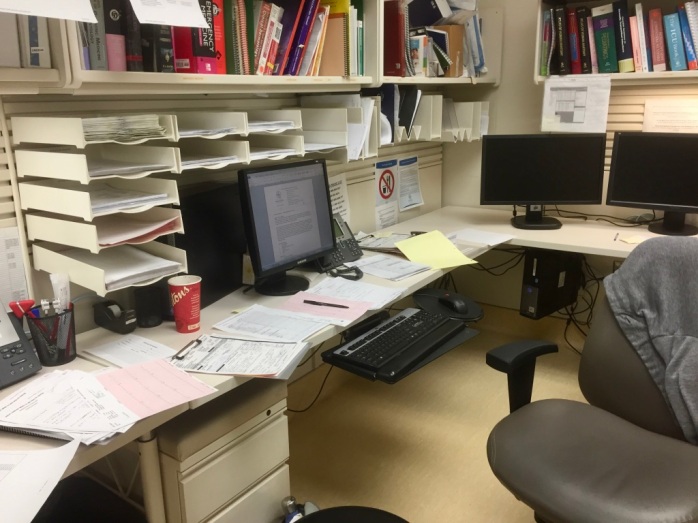
As usual, the ER is full to the brim. As the receiving centre for our local community of five thousand, as well as our catchment area which provides service to 33 Anishinaabe communities and some 40,000 people living in fly-in-access only Nations across Northwestern Ontario, our rural, family medicine-run hospital sees it all. From the North, our patients are triaged in the nursing stations to be the sickest of the sick. These patients fly in a near-constant stream via air ambulance to our little ER. The result is a high volume, high acuity department staffed by three nurses and one family physician. No consultant physicians nearby, no ICU, no respiratory therapists, no mental health specialists. Our nearest tertiary care centres are hundreds of kilometres away; to the East, in Thunder Bay and to the West, in Winnipeg. It’s a rewarding, but also challenging and often terrifying place to work.

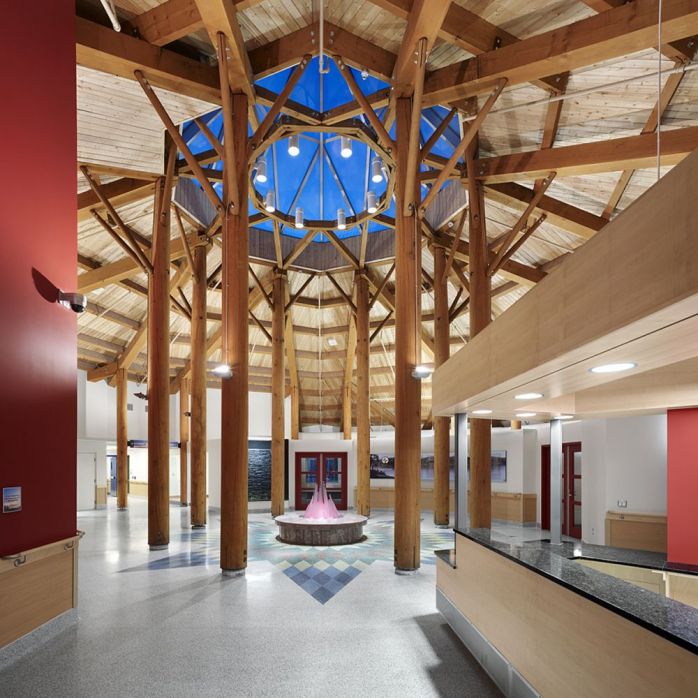

Stretchers line the hallways of our tiny shop: a kidney infection in S1, alcohol withdrawal in S2, back pain needing morphine and likely admission in S3. The isolation room holds a young woman actively miscarrying at twelve weeks awaiting a lifesaving OR procedure to stop her heavy bleeding. The nurses cajole and beg her to not leave for a smoke. She’s indifferent, marching to the exit with a cigarette at her lips dragging her IV pole behind her. The nurses look at me, ‘Do something about this,’ they appeal with their eyes. I motion for the security guard to accompany her and continue to take stock of the flooded department.
Room 1: Elder, failure to cope at home, needing admission. Room 2: 5-month-old baby with a fever. Waiting for me to assess. Room 3: A hockey-loving teen with a possible broken wrist. X-rays ordered. Room 4: Another patient on a BiPap ventilator; her diaphragm unable to overcome the weight of her morbidly obese frame as carbon dioxide builds up in her bloodstream. Waiting for repeat labs. Room 5: Subdural hematoma. (Shit, I still have to call neurosurgery!) Assessment Room: a suicidal 15-year-old girl with a hard gaze. On a Form 1, awaiting transfer to psychiatry. The list goes on.


To my right, the box that holds patient charts awaiting to be seen by me overflows, clipboards piled high, spilling onto the floor. My stomach grumbles and contracts. I can tell the nurses are tense and patients are angry at the wait, lashing out at the support staff. “I’ve been waiting here for hours! When am I gonna get seen!? This place is fucked,” I hear someone yell as the door to triage opens to the full waiting room.
I feel my own anger boil up. I’m overwhelmed and recognize the familiar sense of burnout as I shift the blame of a struggling system onto the patient for their illness. Before I can make another move, the clerk grabs my attention yet again. Another phone call from the Regional Phones doctor requesting another Medivac to be sent to me. This time, it’s a young woman presenting to the nursing station after her third near-fatal suicide attempt in as many months. “She needs physician assessment and then probably can just go to out-patient counselling,” my colleague suggests.
Then, I break. It happens swiftly, uncontrollably. “Out-patient counselling?!,” I bark. “She’s going to need to be Formed! And obviously sent to Psych. Have you even called them yet?” I’m yelling into the phone, my face flushed. “You don’t have to be angry, you know,” my colleague retorts. My knuckles are white, gripping the receiver. “Just send her,” I manage to sputter as I slam the phone down, instantly feeling the shame wash over me. I have never spoken to a colleague this way before in my entire career. I squeeze my eyes shut and plead for the universe to swallow me whole.
The beeping of the two ventilators continues to fill the space in my brain, incessant.

Backtrack to the summer of 2019 and I am on a glorious solo trip in Toronto to attend a wellness conference hosted by the Canadian Women in Medicine Association. The conference boasted a very non-conventional agenda focusing on leadership, sex, parenting and self-care. I had also chosen to attend a pre-conference workshop specifically on parenting of little ones. Up until that point, I had been fumbling along in my journey as a parent to Henry (then 4 years) and Alice (3 years). Unlike my role as a physician, there was no lengthy training, no years of study, no exams and no dedicated immersion into the topic; one day I wasn’t a mother and then the next, I was.
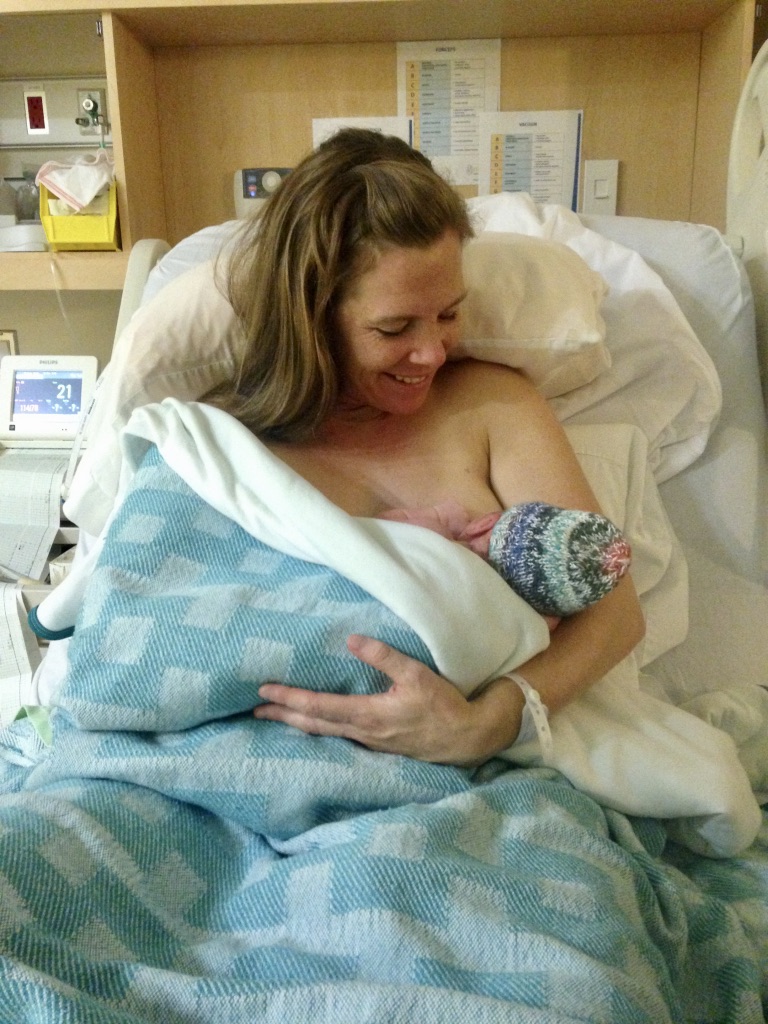
In front of me stood a slight woman in her 50s, unruly brown hair framing her expressive face. Speaking enthusiastically with a New York accent, she bounced around the stage, arms waving wildly. At that time, I was (and still am!) thick in the season of daily parenting battles with my littles. I clung to her every word like a lifeline. I had no idea that the next few hours would drastically change my approach to parenting.
Over the three-hour workshop, Joanna Faber, co-author of ‘How to Talk so Little Kids Will Listen’ dropped pearl after pearl as I scribbled furiously on scraps of paper. One statement, however, struck me profoundly:
“Kids can’t ACT right if they don’t FEEL right”.
It was so simple but the clarity of her message was like an awakening. Kids aren’t inherently bad when they are acting out. Instead, they may be struggling with big emotions, hungry or tired. “Think of how difficult it is to keep your cool when YOU are tired/hungry/under pressure,” Faber carried on. I nodded empathically. I thought of all of the times I had lost my temper on the kids while gripped with anxiety about work or when I hadn’t acted my best with a colleague or patient when I was simply burnt out; exhausted, out of empathy and out of patience.


Up until that workshop, my approach to getting through the daily grind was a combination of pleading, bribing and threats (depending on how desperate I was feeling at that moment). If you are a parent of littles, you can empathize with the sheer frustration and anger that arises with the constant ‘No’s’ that you face at every turn.
“Henry, can you please go for a pee before bed?”
“No! I need to finish my LEGO creation. I don’t want to go to bed! Nooooooo!”
“Alice, can you please eat your dinner? Alice, please eat your dinner! ALICE, EAT YOUR DINNER PLEASE!”
“No, no, no! I don’t want to! No! It’s yuck! I don’t like it.”
Every. Step. Of. The. Way.
I often think of what life would be like if I just asked once, and they just miraculously did what I asked. Imagine! But alas, with two young spirited kids, life wasn’t as smooth as I wanted it to be.
These daily struggles with the kids were causing much frustration amongst all of us. Every relationship in our family was being affected. Blake and I would fight, exhausted and wound tight after 45 minutes of begging, theatrics, threats and bribes just to get a few bites of dinner into them each night. Even the dog would run off to the neighbour’s to escape the chaos of the morning hustle out the door.
There had to be a better way. How could I engage the kids to encourage connection and cooperation? How could I resolve the constant conflicts without punishments, threats and yelling?
The following tools from Faber and King’s “How to Talk so Little Kids Will Listen” have been instrumental in navigating the minute-to-minute outbursts from Alice and Henry. I hope that in sharing Faber’s pearls from her workshop and from her book can help you as they have helped me.
Faber’s method is grounded in the acknowledgement of the child’s feelings. “Without acknowledging,” Faber explains, “you’re working against yourself.” Seems simple enough, but how often do we truly support our kid’s perspective? In our house, our constant morning struggle with Henry is always centred around him not wanting to go to school. So engrossed in building LEGO ‘creations’, each morning is the same. “I don’t want to go to school! I hate school!” How quickly do we default to our immediate gut reactions: “You love school! Don’t say hate” (denial of feelings), or “Your friends all love school!” (comparisons), or “Why don’t you like school!?” (questions), or “Life is hard, sometimes you have to do things you don’t want to do” (advice/lecturing), etc.
Think of when you get home from a shitty day at work. You bust through the door and let it all out to your partner and he or she counters with similar responses – lectures, advice, telling us to suck it up, other people have it harder, etc. We would be PISSED OFF and likely storm away. What we often need is someone to just simply acknowledge how we feel. Responses from your partner which might be better-received could be: “Man that sucks! What a crappy day. Sounds brutal. Ugh!”
A mega pearl from Faber’s workshop that has stuck with me was that if you’re not sure how to respond to your child’s emotions, try it on yourself first. Remember, nothing is more infuriating than being told to calm down when you’re angry or being subjected to a philosophical lecture when you’re losing your cool about how a colleague acted at work.
How to handle emotions:
- Acknowledge feelings with words. All feelings must be accepted, some actions must be limited. Resist the immediate urge to counter. Sit on the BUTS! Try, ‘The problem is…’ instead. Name the feeling. Be DRAMATIC. Match the child’s emotion. Be genuine and real. Resist the urge to ask questions while the child is in distress.
- Acknowledge feelings with writing. Have your little one write a wish list that facilitates acceptance of feelings while limiting actions. Our kids are still too little, so often they dictate and I write it down.
- Acknowledge feelings with art. Have your child draw a picture of how they feel.
- Give in fantasy what you cannot give in reality. I often will take a picture with my phone for their ‘wish list’. I don’t actually manifest this wish list into anything, but they always feel validated when I do this.
- Acknowledge feelings with (almost) silent attention. “Ugh!” “Mmmm” “Ohh”
Although I’m far from perfect, I use ALL of the above tools on the daily. When Henry starts up, whining, “I don’t want to go to schoooooooool!” although I’m irritated and annoyed, I often grit my teeth, force my face to smile and say, “Man! You really don’t want to leave your LEGOs. You’re in the middle of creating a cool jet plane. You wish you could play LEGO all day, all night and NEVER go to school EVER. You’re so ANGRY (with an angry face, hands clenched) about having to go to school every day! UGH!!!!!”
Often this results in an empathic nodding and a big hug, then we carry on with the morning routine which goes much more smoothly than had I responded with, “Henry, just pull yourself together. You know that have to go to school! Why do we have to go through this EVERY SINGLE DAY!” It’s not perfect by any stretch, but it does help.

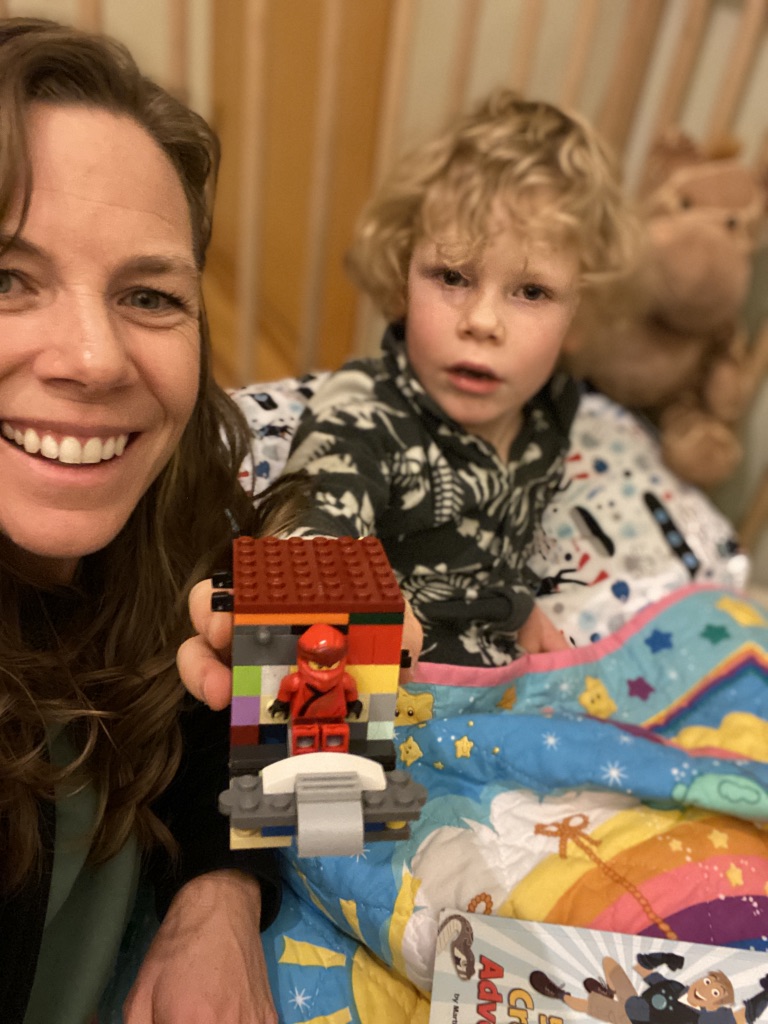
But, beyond learning how to navigate these huge emotional eruptions, what I really wanted to know from Faber’s workshop was how the hell do I get my kids to listen to me?! I feel like my mind is literally going to explode if I have to ask them to get their boots on one more time.
Pertaining to getting our kids to do as they are told, Faber initially described the reality of the child vs. the reality of the parent. To us, we are CONSTANTLY nagging our kids to do all of the things that they just have to do! But think about your kids. Their whole day is filled with being told what to do by adults. No one likes to be ordered around, myself included. Anytime someone tells me I have to do something, my immediate reaction is to balk and do the opposite. Sound familiar?!
Here are Faber’s tools for Engaging Cooperation:
- Be Playful. Turn a task into a game. This sounds exhausting, but Faber gave a life-changing point – kids are inherently exhausting! It’s more fun when we’re all tired and cheerful instead of tired and irritable. Why not try to make it a bit more enjoyable?
- Offer a choice. We all like to feel that we have some control and autonomy!
- Put the child in charge. Delegate! You’ll be surprised at what they will be able to accomplish. Kids are generally wired to please.
- Give information. Not a lecture, but explain simply why you’re asking them of something. Keep it brief.
- Say it with a word or a gesture. This saves the lecture that no one wants to listen to. Try to use a noun, not a verb. Jacket! Hat! Toothbrushing gesture.
- Describe what you see and forego the command. Appreciate the progress before pointing out what is left to be done.
- Describe how you feel. Express your anger or frustration with using ‘I’, rather than ‘you’. I love this one – it helps me when I’m so irritated. Instead of yelling “Don’t hit Alice! You are acting terribly tonight!” I try, “I DO NOT LIKE TO SEE KIDS GETTING HURT! I GET VERY UPSET TO SEE HITTING!”
- Write a note.
- Take action without insult. This one is huge. I’ve been reading a lot of Brene Brown’s work on shame which is inherently linked to one’s self-worth. Of course, we must limit some actions, but instead of shaming our kids (“You’re so bad! You’re a bad listener!”), try taking action without insulting your child (“I see you’re having a hard time containing all of that energy. Let’s read together rather than jumping from the couch onto the counter.”)

In real life, these tools don’t come easily. I’ve attended Faber’s workshop, listened to the audiobook AND have read the text twice and still I struggle. Two nights ago, I was at the dinner table with the kids. Blake was away so I was already feeling slightly overwhelmed. Henry was pent up with energy from his chaotic day at school. He was all over the place, jumping around in his seat, putting his feet on the table and generally pushing all of my buttons. HARD.

I have to be brutally honest here. There are times like this when I have to actively resist the physical temptation to grab him, haul him into his room and hit him. Yikes. It’s so scary to admit that in writing. But I do feel this way, especially if I’m not ‘feeling right’ myself.
At this particular occasion, I was doing all of my default parenting moves. “If you sit and eat quietly, you can watch ‘Wild Krats’ after dinner!”, and “If I see your feet on the table one more time, there will be no more dessert for you”, and “Please sit down! On your bum! Henry, on your bum! HENRY!” Nothing was working and I was losing… losing the battle and my mind along with it.
Then, I literally got out my phone and swiped to Faber’s “How to Talk” app, outlining all of the aforementioned tools. I took a breath and tried a different approach.
“I see socks on the table. I feel upset when stinky socks are on the table!” (describing how you feel), then “SOCKS!”, “STINKY FEET!” (saying it with a word). No luck. I tried again. “Henry, your feet are so full of sillies tonight. The problem is, feet do not belong on the table” (giving information). Still no luck. By this point, I’m seriously gritting my teeth and wishing that I had more of a stockpile of wine in the house. I went at it one more time. “Oh my goodness those socks are being so silly tonight. Henry, can you be in charge of keeping them dangling down?” (putting the kid in charge). Finally! The ticket. He pretended to be the ‘parent’ and scolded his feet and kept them off the table. Whew.

Next, after learning about dealing with big emotions and getting kids to cooperate, Faber went on to speak about resolving conflict. As parents, we are always disciplining our kids. In our house, that often looks like time-outs and removal of privileges (i.e. ‘No show tonight!’, ‘No dessert for you!’). But Faber had lots to say about those techniques. Oops. Guess I won’t be up for parent of the year!
“Punishment,” Faber explained, “can achieve quick results, but not without pitfalls. Punishment can cause escalating use of force. With punishing, your only recourse if it doesn’t work is punishing HARDER. Punishing doesn’t allow the child to fix the behaviour. When we put a child in a time-out, they don’t learn, instead, it allows for fixation on selfish thoughts that breeds resentment. They generally stew, feel angrier and more upset. Finally, kids who are bullied often become bullies themselves. We have to ask ourselves if we want our kids to use these methods on their peers and siblings. Remember, children will do as you DO, not as you SAY.”
This hit very close to home. I am constantly at our kids to treat others as they would want to be treated themselves. But, if our discipline strategy is focused on punishment, they are learning that when faced with a conflict, their only strategy is to inflict hurt or sadness on another. Faber also went on to empathize that if we train our kids that anytime they do something wrong, their parents will come at them heavy-handed and they will be much less likely to reach out when something bad happens in the future (i.e. teen years).
Hmmmm, ok so what are different strategies to handle things with your kid does something clearly ‘wrong’. I feel like I’m constantly disciplining one of the kids for fighting with their sibling. It’s exhausting.
Here are Faber’s tips to Resolving Conflict:
- Express your feelings strongly. Again, I love this, because it does allow me to get some of my own irritation out. “I DON’T LIKE IT WHEN I SEE KIDS PUSHING!” Focus on using ‘I’, rather than ‘you’.
- Show the child how to make amends. Instead of making the child feel worse by lashing out, teach them how they can make their sibling and themselves feel better.
- Offer a choice. Tell them what they CAN do instead of what they can’t.
- Take action without insult. Above all else, protect people and property. Remove the object causing the conflict or leave the environment causing the fight.
- Problem solving. This is a tool to use after the storm has passed. Maybe on a completely separate day when you have time and space to sit down with your child as this is a more involved process.
- Start by acknowledging the child’s feelings
- Describe the problem (briefly, don’t lecture)
- Ask for ideas, make a list and include them ALL
- Decide which ideas you can both agree on
- Try out your solutions
Again, this all seems to involve a LOT of time and energy and it does. There are definitely more circumstances in which I find myself resorting to inflicting time-outs than patiently working through the steps of a brainstorming session. BUT, the thing about parenting is that you can mess up and still have ENDLESS opportunities to try again. At our house, I mess up seemingly hundreds of times each day, but when we do get it right and things work out, it feels like the highest victory a parent can achieve.
So, Godspeed to all of the parents out there. You’re not alone. It’s ok to struggle but I hope some of Faber and King’s tools can help you to struggle just a tiny bit less. Good luck!


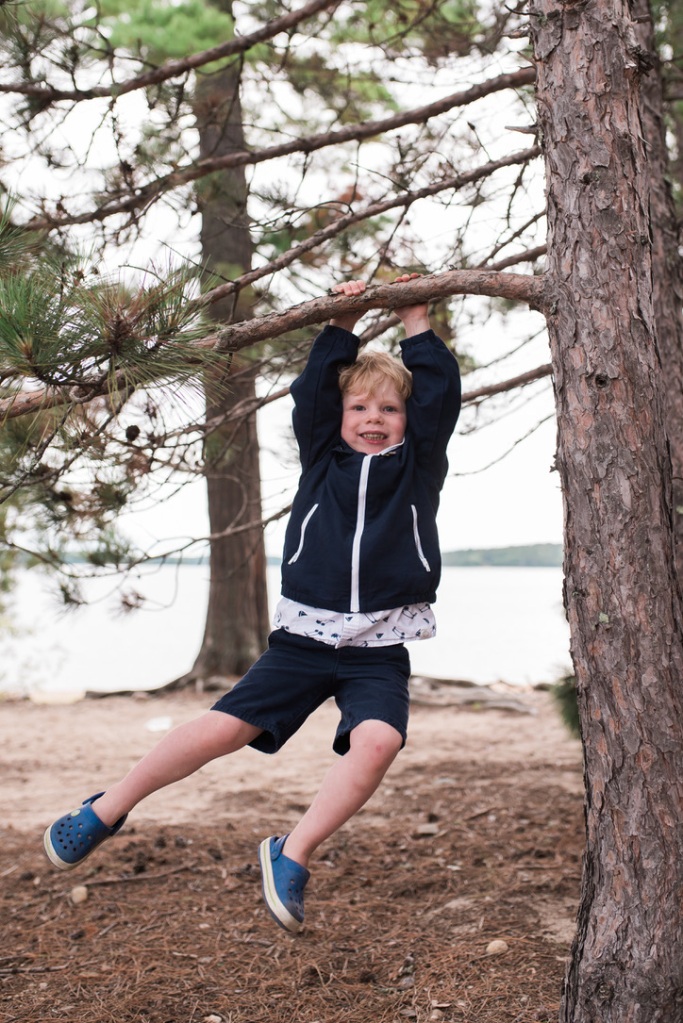


The Bounce Back
The ribbon retractors glint in the harsh OR lights as I pull back abdominal skin, fat and muscle to reveal the pearly white fascial layer. My colleague dives his arced needle through the fibrous connective tissue, running the suture along the incision, closing the hole, bite by bite. From the anesthetist’s speaker, an eclectic array of Pop 40 and classic rock music drifts through the otherwise quiet operating room. At the head of the OR table, on the other side of the blue drape, soft murmurs of wonder emit from the lips of the new parents whose lives were forever changed when their newborn was gently pulled from the mother’s womb. It’s the Friday morning scheduled c-section at the Meno Ya Win Health Centre and the case is proceeding routinely. As usual, the scrub nurse, my physician colleague and I chitchat as we work; the conversation drifts from grandkids, recent trips and to upcoming concerts in Winnipeg. At our small hospital in Northwestern Ontario, our personal lives are intertwined with our work; one of the best, and sometimes most challenging aspects of living and working in a small, isolated community.

As we chatter about our lives outside of the hospital walls, the scrub nurse eventually inquires as to how I have been doing lately. Just six months prior, in the same very hospital, I had had the immense privilege of creating a new family for our close friends as a surrogate when I delivered a perfect baby girl named Claire. After reassuring the nurse that I was well, and that Claire and our dear friends, Amy and Adam were also thriving, the scrub nurse went on to comment how I had so quickly ‘bounced back’ from Claire’s birth. Of course her comments were incredibly kind and well-intentioned, however, in that moment, like an opening reel to a film, hundreds of raw images flashed through my mind: me struggling to even sit up, so freshly post-partum; me tearfully realizing my inability to fasten my snowpants; me switching off my 5am alarm morning after morning to drag myself to the gym; me glaring angrily at the wall-sized gym mirrors, casting back my doughy reflection; me cursing and struggling into my pre-pregnancy jeans… It seemed almost comedic that my so-called ‘Bounce Back’ had apparently appeared effortless when in fact, it could not have been any further from reality.

The night before Claire was born 
Working out again, a week post-partum 
Ten months post-partum
In the months in which Claire had became my constant in-utero companion, my body had naturally softened and stretched in all of the ways that a woman’s body shifts in its efforts to host a growing life. Prior to Claire taking up residence in my uterus, I had been working diligently to regain my strength after having given birth to my own two children. Growing and giving birth to Claire will forever be a part of our family’s story and will be an experience that I truly will treasure forever. Although I will never regret my decision to help Adam and Amy become a beautiful family of three, I would be lying to say that the months that followed Claire’s departure from my body were days without adversity.

I am certain that, although I cannot truthfully speak for every post-partum woman, there are very few new Moms out there who truly revel in the wake of one’s physical self after giving birth. Stretchmarks, jiggling bellies, maternity pads, painfully engorged breasts, hemorrhoids and the true feeling of fear that one experiences when going to the bathroom for the first time. These war wounds, however, are usually negated by the finest eyelashes that you have ever laid eyes on, the impossibly minuscule toenails, those first incredulous smiles and the continuous and overwhelming sense of wonder that you cannot help feeling when you gaze into the face of your newborn. Who will she grow up to be? What will he look like as a teen? Who will be her first love? What will fuel his future passions? Despite the tortuous, sleepless nights and wreckage of one’s post-partum body, there is nothing sweeter in the world than snuggling your baby close.
Sadly, in the months following Claire’s birth, I secretly dragged around a sense of humiliation about the status of my post-partum body. Because there was no beautiful newborn to deflect my attention, it became a daily internal struggle. My delusion also extended to everyone around me. I assumed that in every encounter, people were quietly critiquing my pillowy abdomen, my perpetual dress in Lululemon leggings and baggy tops and my breathlessness from simply walking up a few stairs. I remember feeling the constant desire to ‘excuse’ my physical appearance by blurting out a qualifier every time that I met someone new; “I don’t always look like this! I swear. I just had a baby, only, the baby wasn’t mine… Which is actually why I don’t have a baby with me! Really, it’s not because I’m a terrible, neglectful Mom. Well, it’s just a long story really…”
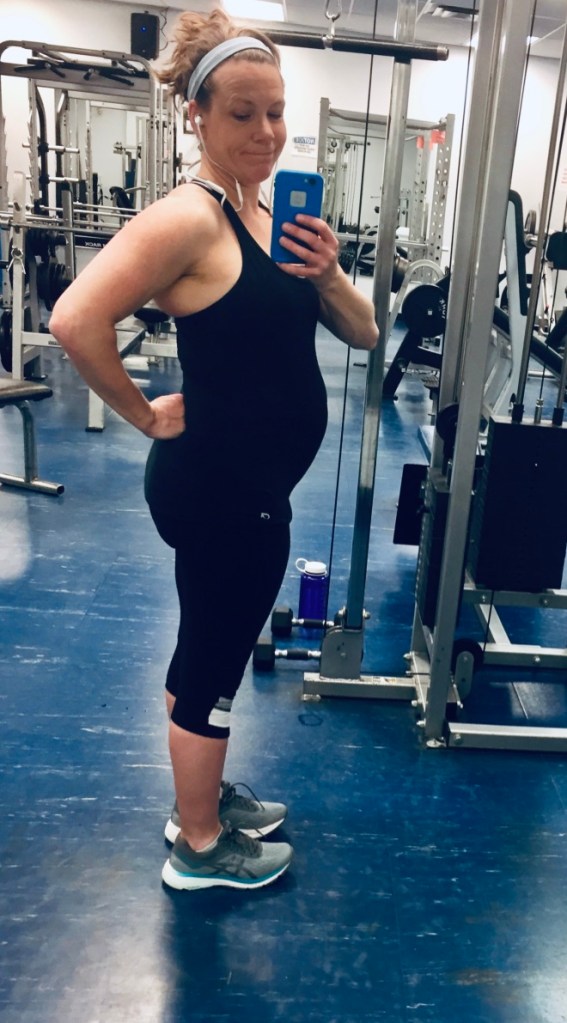
Getting back to the gym a week after Claire was born. 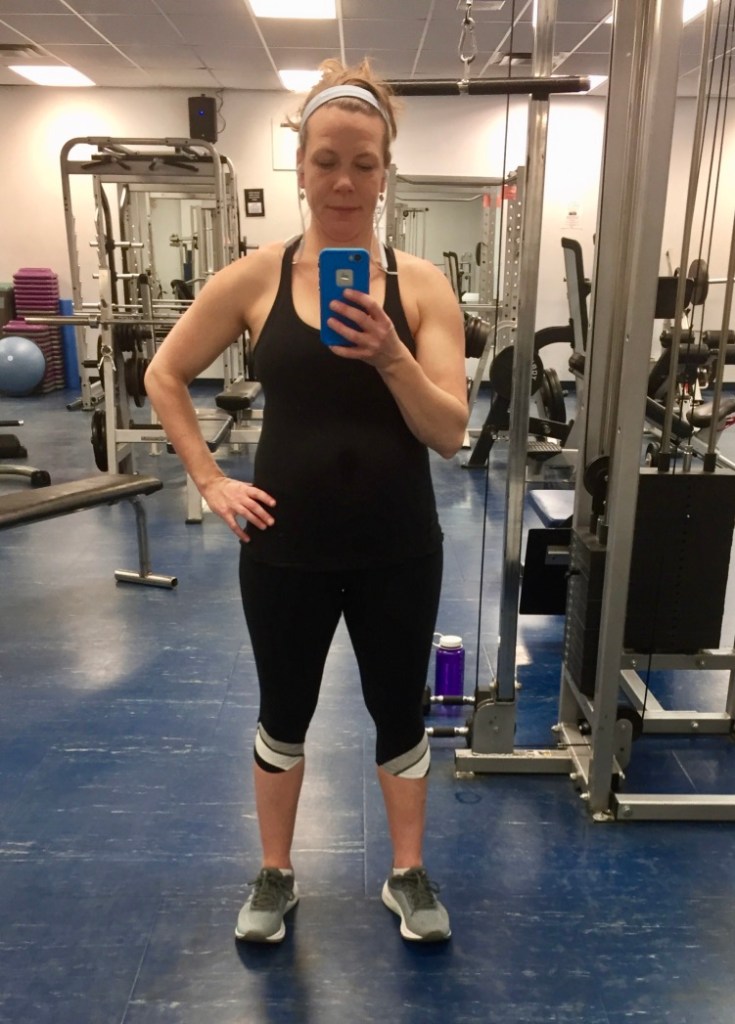
It was an intimidating and daunting task!
As I write this now, I feel physically pained for that woman. After undertaking one of the most selfless tasks that a person could possibly do, instead of celebrating her strength, she was drowning in shame.
Within weeks of Claire’s birth, our family took a short leave to Nelson, B.C. to escape the lingering Sioux Lookout winter and to enjoy a slice of rare, uninterrupted family time. During those four weeks of pregnancy leave, I fell deeply into the gratitude of purely being with the kids and with Blake. When your job constantly takes you away from your family at any given time, day or night, I was overjoyed to turn off my phone and say a simple ‘yes’ to every request to play LEGO or to read a book. As the kids were old enough to do a half days of ski school, Blake and I also had the opportunity to have a number of ski dates, bombing around the mountain and acting like teenagers. Under Blake’s tutelage, I even landed my first 360 at the age of 35 and just six weeks post-partum. It was so much fun!


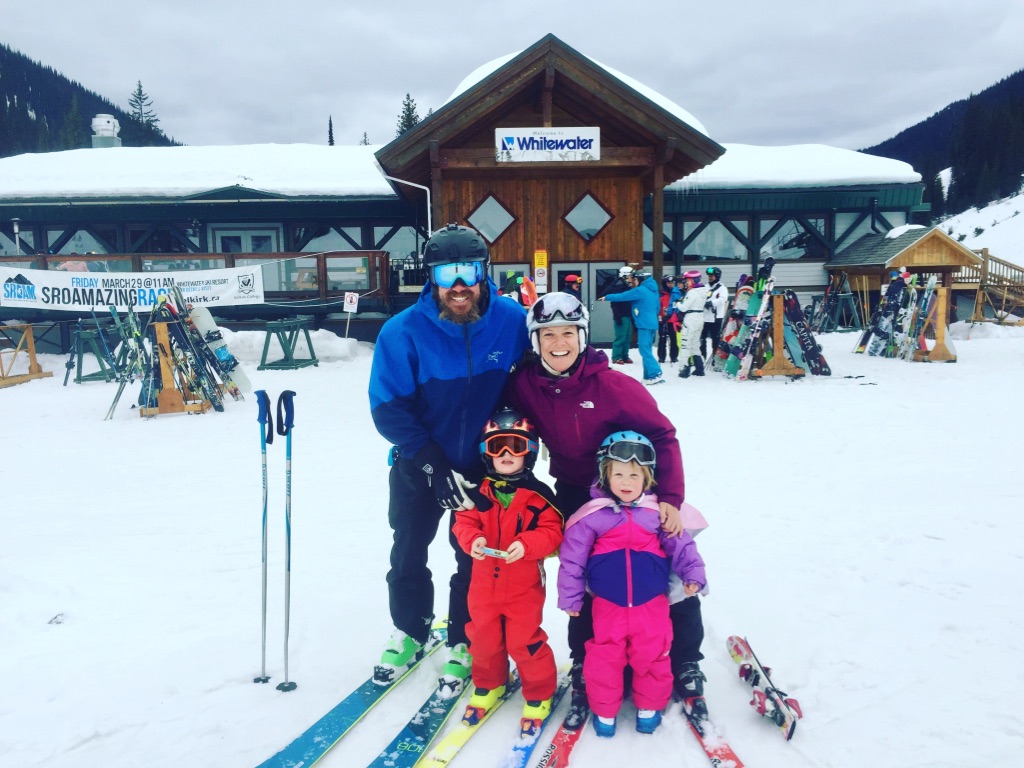
Despite the joy of those weeks together, I was internally struggling on the daily, embarrassed to even speak about my challenges to Blake. At one point, I was at the bunny hill with Alice; it was a beautiful, sunny day and I had ditched my ski jacket revealing my snowpants, gaping open at the front and held up by a pair of Blake’s suspenders. As I proudly watched Alice independently go up and down the rope-tow, I chatted with the liftie. ‘When are you due?’ he asked, pointing to my unbuttoned snowpants. ‘My wife has to ski like that too,’ he continued. ‘We are having a baby in a few months!’ I paused. Where to start? Do I just lie and say yes, I’m pregnant? Do I tell the truth and reveal that I’m only a few weeks post-partum? But, then I will also be inclined to explain that I was a surrogate because where the hell will he think that I ditched my six-week old? Do I honestly want to dive into my life story with a liftie? I simply smiled and nodded, feeling crushed.

I write this not for pity but to honestly lay out where the start line was for me. At the bottom. Right back at the start, in fact, it felt even MILES behind the start. Although, I wouldn’t admit it at the time to anyone, I felt physically and emotionally broken. Yet, despite it all, I was determined. I know that I am not many things, but having been raised by my mother, I do have resilience and work ethic down pat. So, I set a goal and got to work.
Weeks of workouts went by. Weeks of getting up at 5am, walking in the dark down the mountainside while the people of Nelson slept, just to get to the gym as they opened the doors. Weeks of learning how to move and challenge my body again. Weeks of fighting the constant self-judgements of how little weight I could lift and how soft I still looked in the changeroom mirrors. Weeks of those 5 am workouts, followed by the walk home straight UP the mountain, followed then by a day of carrying Alice around the challenging runs of Whitewater Ski Resort. Weeks of mindful eating, when all I really wanted to do was indulge in daily hot chocolate and freshly baked cinnamon buns. I literally was working my butt off. I couldn’t have possibly worked harder.


Four weeks later, back at home in Sioux Lookout, I weighed myself for the first time since our departure to Nelson. I had lost one pound. A SINGLUAR point on the scale. One minuscule little number. I felt enraged, defeated and beyond frustrated. I wanted so desperately to throw in the towel, to say ‘Screw this!’ I wanted so badly to just give up, to give into silencing my alarm, to give into the deserts, to give into those feelings of unworthiness and self-hate.
But damn it, I was determined. I kept at it. Mindful eating. Four workouts a week. Every week. For months and months. Despite long, continuous stretches of OB call and all of the demands of motherhood, I rarely missed a workout. I sank my teeth into my goal of feeling stronger, regaining my sense of self and losing the shameful self-talk around how I looked. I ploughed on.
I stopped focusing on the scale and started sitting up and noticing the benchmarks of what I was achieving. I started to lift more and more weight. I became excited for my 5am alarms. I started to walk around the gym like a boss, indifferent to how others may or may not have be perceiving me. The squat rack became a place of comfort, not a place of intimidation. I stopped glaring at my reflection and started feeling a sense of pride for those baby triceps that began to emerge. I stopped sweating in the effort of pulling on my skinny jeans. I started taking the stairs at work two at a time, bounding up without losing my breath. By the time I was nine-months post-partum, all of my non-scale victories had added up. In a celebratory shopping spree at Lululemon, kindly financed by Amy and Adam, I realized that I had even dropped two pant sizes.
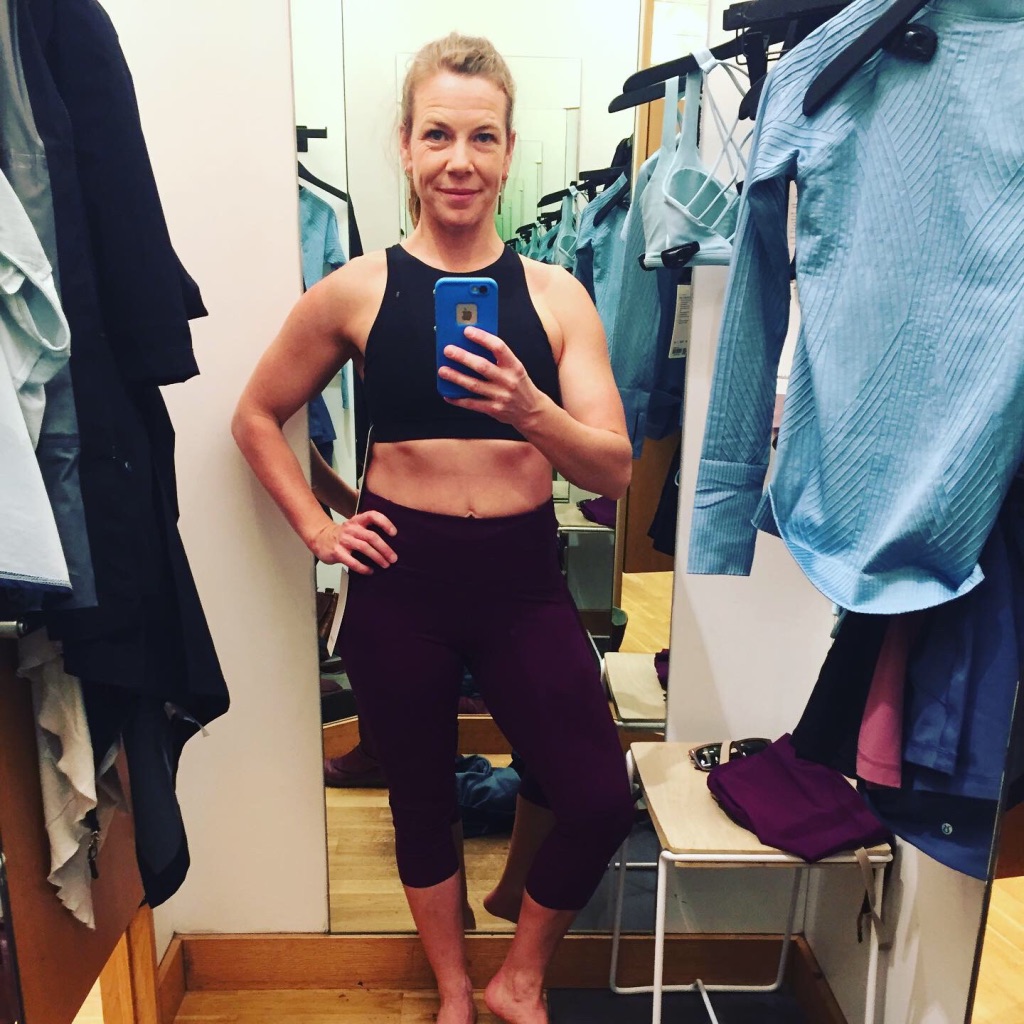
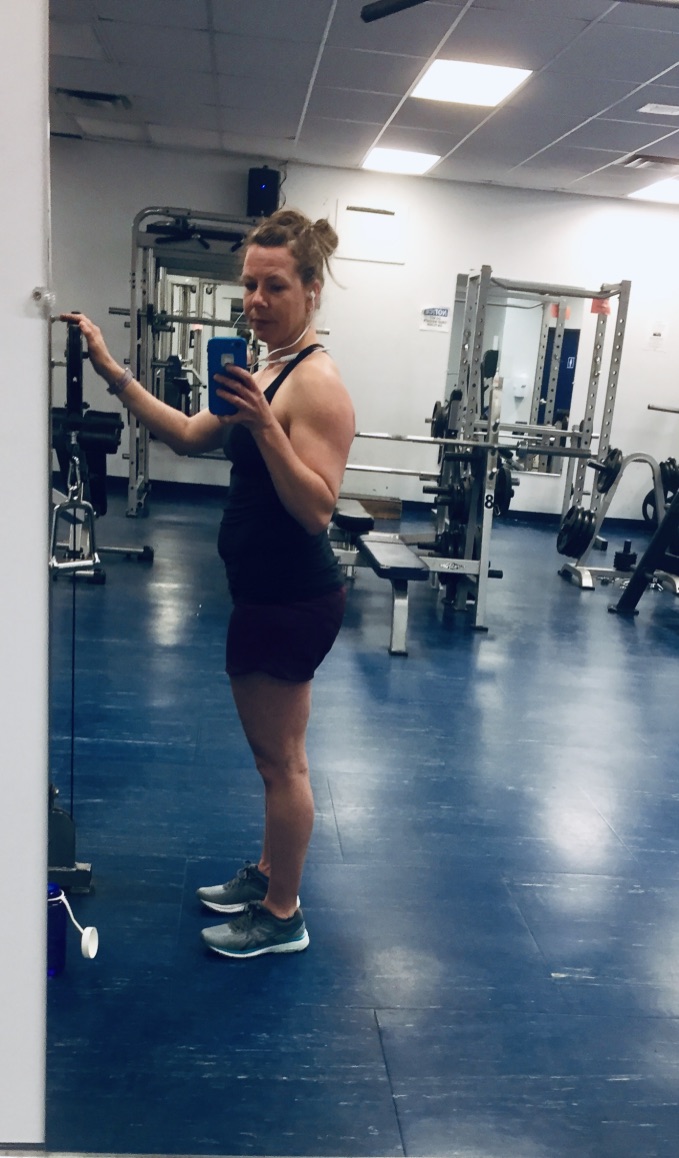
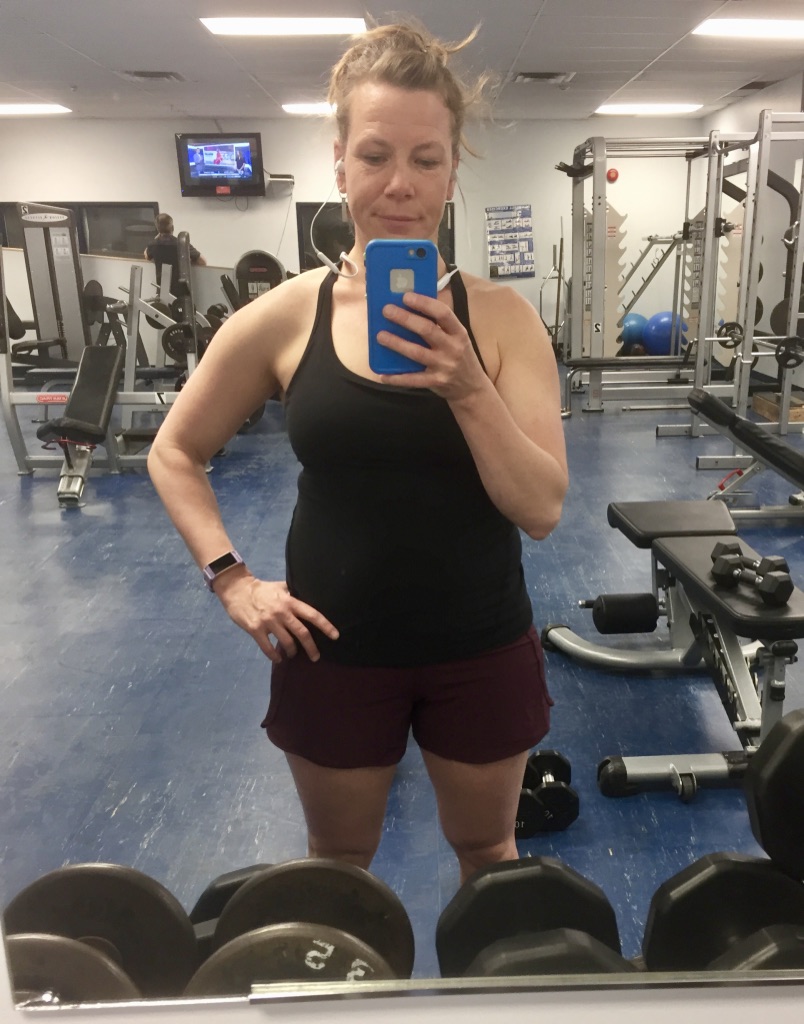
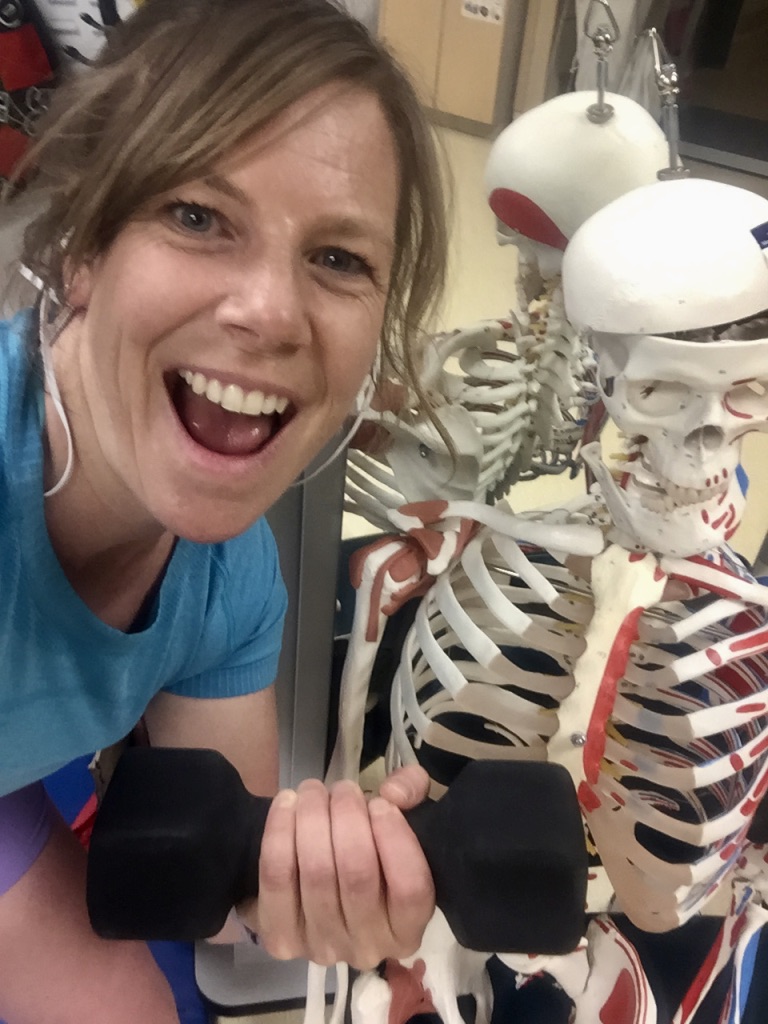

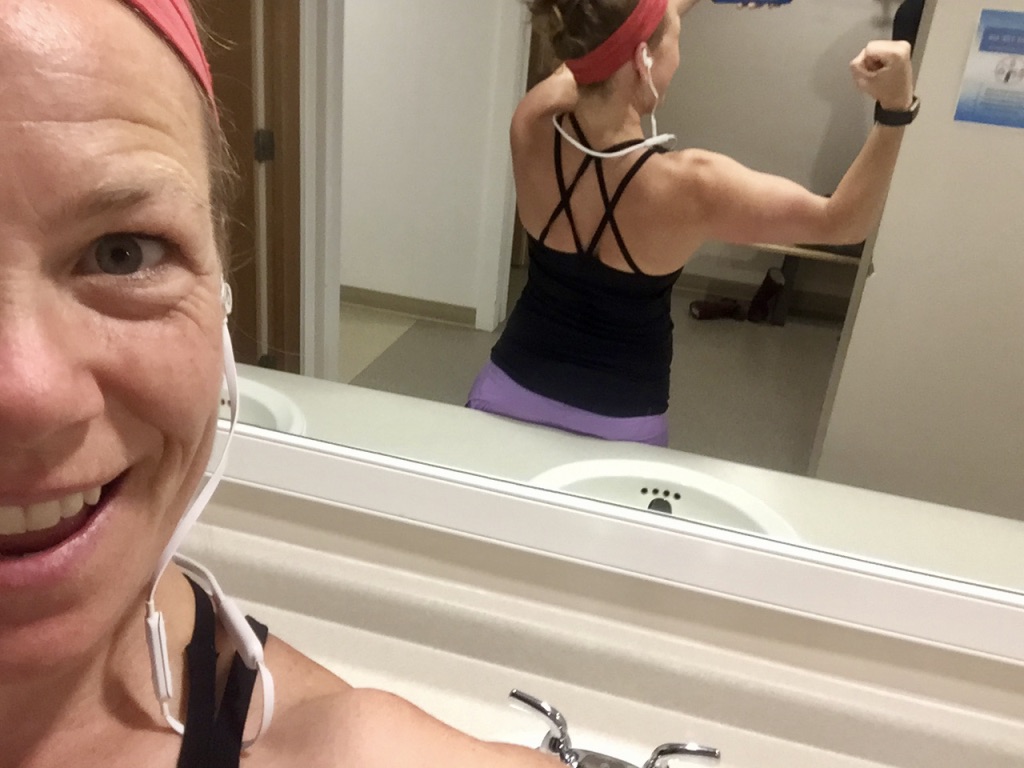

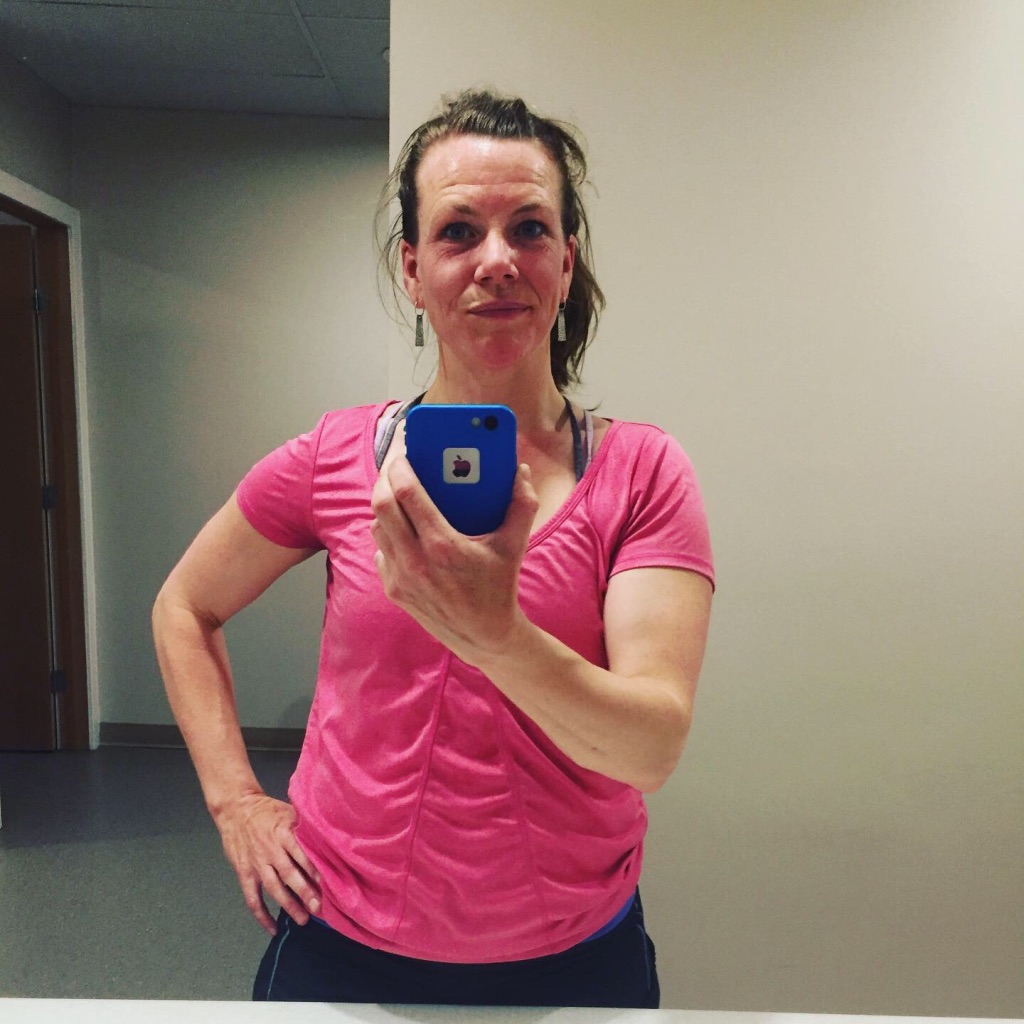


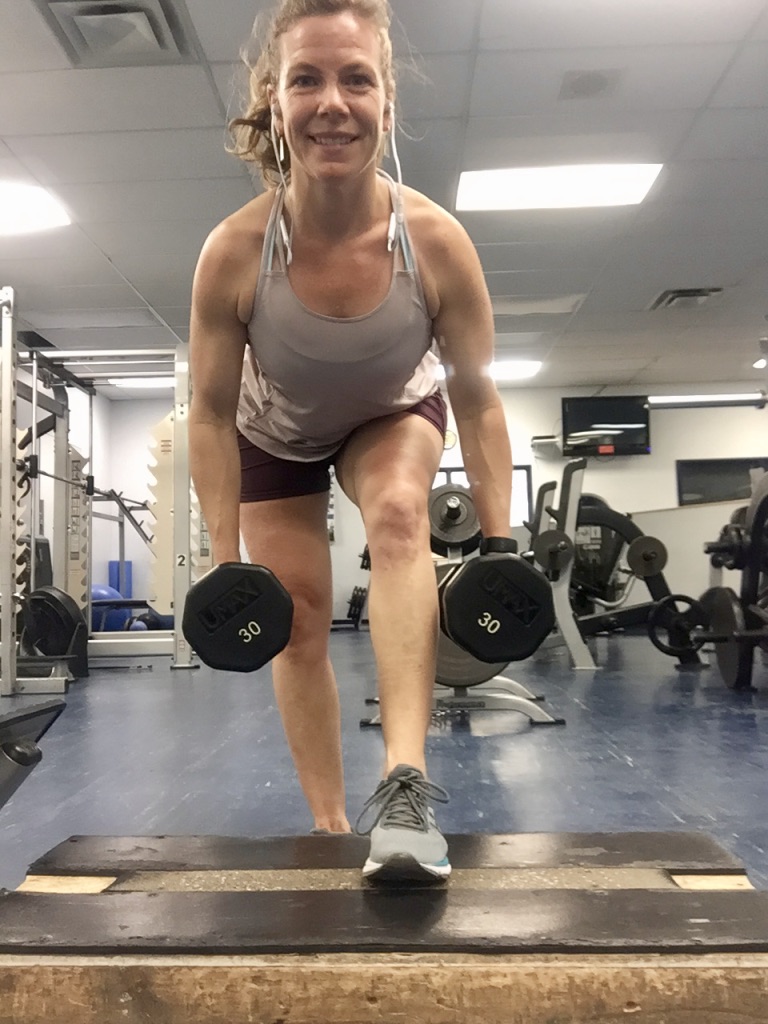
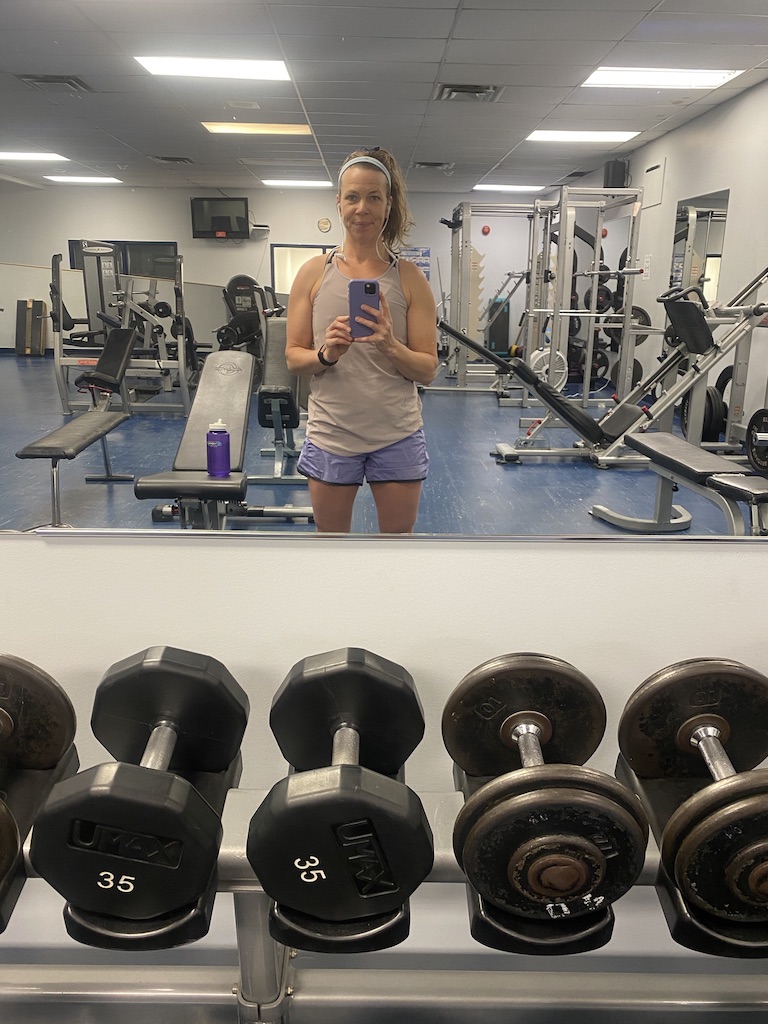
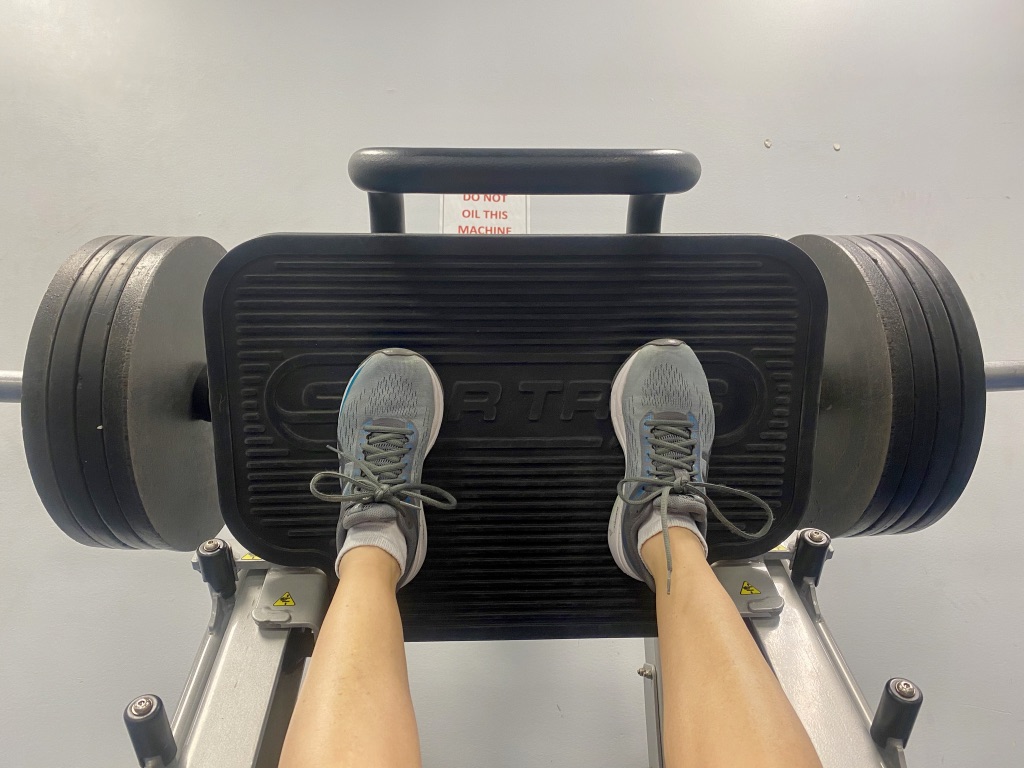
All of this was exciting, but more importantly than the size of my Lululemons was the disappearance of that ball and chain of shame I had been previously dragging around. Along with over 20 lbs of weight lost, I had also ditched the constant narrative that I wasn’t good enough and that my physical appearance wasn’t up to the societal standard of what a woman should look like. Believe me, it’s much harder to give into that nagging voice of negativity when you just put 360lbs on the leg press and you’re feeling like a total badass. This has been the true victory of my ‘bounce back’ and I am damn proud of myself for achieving it.
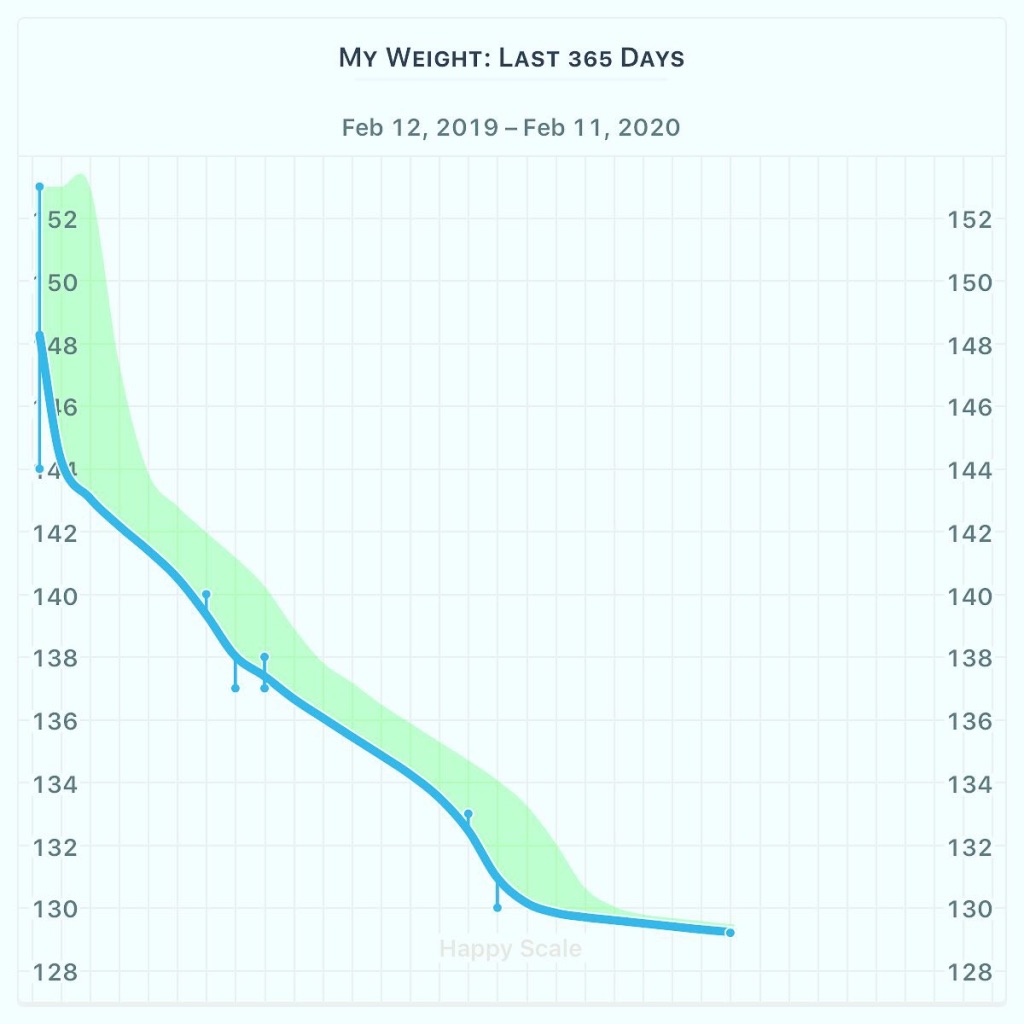
In reflecting upon and writing this journey down on this page, my goal is certainly not to martyr myself. Just like you, I am a mom, a wife, a full-time working parent who has endless ‘to-dos’, limited time, and never ending demands on my time. And I am tired, oh so, so tired.
But, I got an app, I envisioned a goal, I gritted my teeth and I worked. I made my workouts a priority and fiercely defended my time in the gym from the creep of other demands. There was no magic of my ‘bounce back’. It was hard, full of pitfalls and struggle. But bit by bit, with just a little consistency and a whole lot of determination, I reached a place of physical strength and self-worthiness and truthfully, it is a journey that is ongoing and likely will be for the rest of my life.

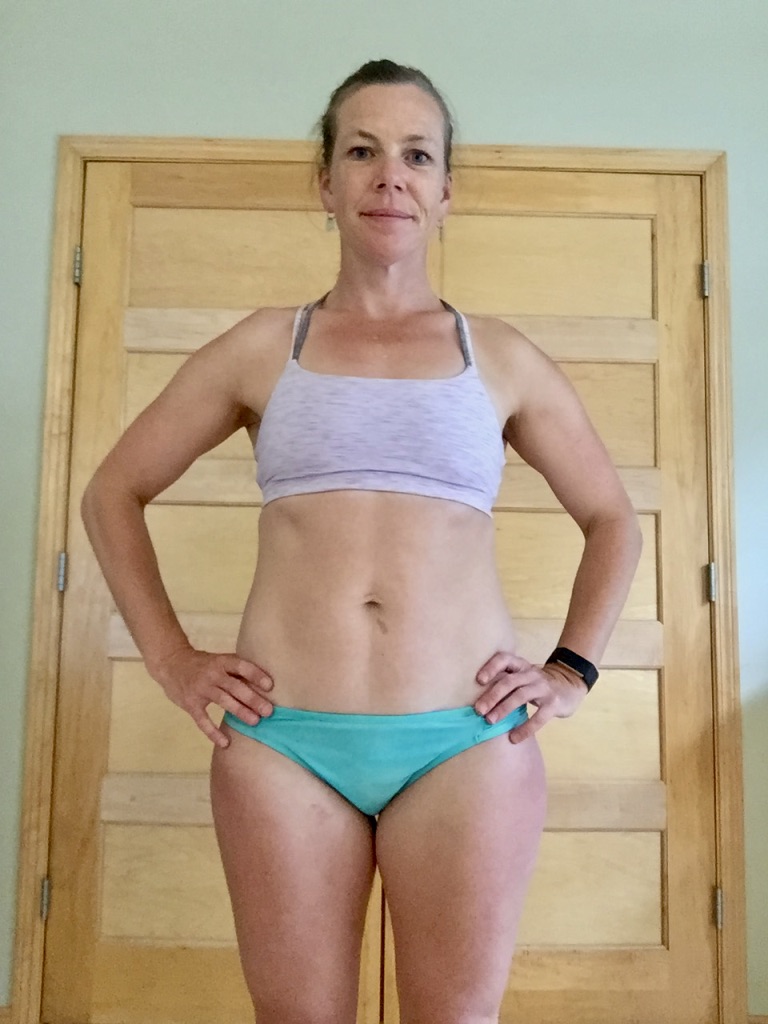
Recently, I had a heart-to-heart with a close friend and physician Mama about wellness and self-care. There is an incredible amount of guilt attached to prioritizing oneself and engaging in a pleasurable act, whether that be taking an afternoon for yourself while your kids are in daycare or getting in a killer legs workout. As women, we lay victim to the notion that we must be selfless and devote the entirety to ourselves to our partners, children, extended families, communities, workplaces, etc. (and the list goes on) or we are simply not a ‘good’ Mom/wife/sister/colleague/daughter, etc. Unfortunately, this widely held belief causes many of us to be constantly fighting against an anxious state of ‘not good enough’, regardless of how much we do at the expense of our own selves.
Well ladies, listen up. 2020 is upon us and THIS. IS. YOUR. YEAR.
Put on your own oxgen mask. Schedule in your self-care time and then defend it like it’s your job. Stand your ground and prioritize yourself. Protect that time fiercely and give zero f*cks about those who make you feel shamed for not spending that time with your kids, or at work, or doing laundry or any other item on that infinite to-do list.
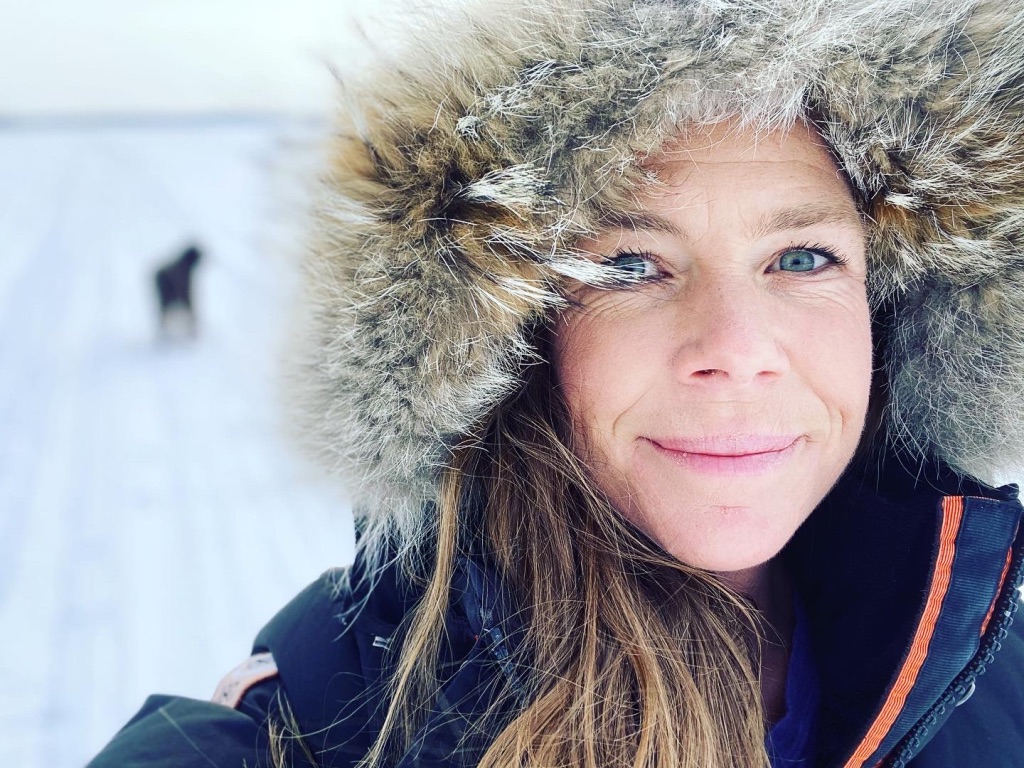
I used to carry so much guilt around spending time away from my kids to hit the gym, but here is the honest to God truth of what I have learnt over the past two years of defending my ‘me time’; throwing around weights and blasting ridiculous pop music for an hour makes me a better Mom, a better partner and a better doctor. It gives me more patience, more self-confidence and more strength to get over that next hurdle that lies in front of me. Most importantly, it empowers me and has changed my internal dialogue to one of more self-compassion and grace.
So to my dear friend Lianne, and all of the other Mamas that this may resonate with, YOU ARE WORTHY of being a priority. Put yourself on TOP of that to-do list. It may not be hitting the gym, but find something that fills your cup. Maybe it’s meditation, maybe it’s painting, maybe it’s walking your dog in the quiet of the evening. Whatever it is, make a plan, commit and get to work. I promise you that time you put invest in yourself will return to your family many-fold.
All the best for the New Year!

Pointing Pines
Her feet dip into the cool waters of Lake Joseph. Ankles crossed, her toes emerge at the surface, then drop below again creating miniature whirlpools in the sapphire water. Her cotton drawstring pants are rolled up, the cuffs tucked away from the gentle waves while her relaxed, linen top flutters lightly around her petite frame. She is perched at the side of the weathered dock, her torso canted toward the water’s edge. One arm wraps around her lap, the other supporting her chin pensively. Although her face is shaded by the shadow cast by her wide-brimmed sun hat in the late morning light, I can conjure up her profile in my mind perfectly. Wisps of her fine, red hair move in the breeze, peeking out from under her hat. Her pale blue eyes are closed, deep in quiet thought.
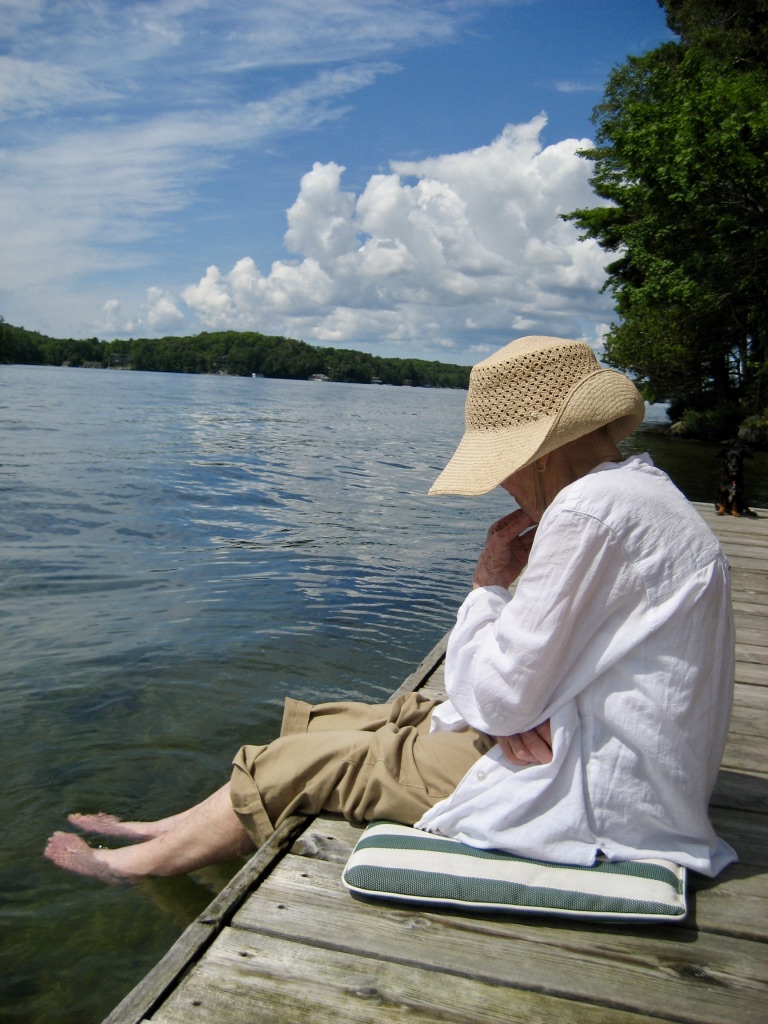
On that same dock, I am a child in my one-piece bathing suit, my back pressed against the warm brown siding of the boathouse, lake water dripping down my skinny arms. I am a teen in a sundress, feet propped up on a chair, cradling an open novel in my lap. I am a twenty-something in running shorts, my strong legs swirling in the water, sweat dripping down my spine.
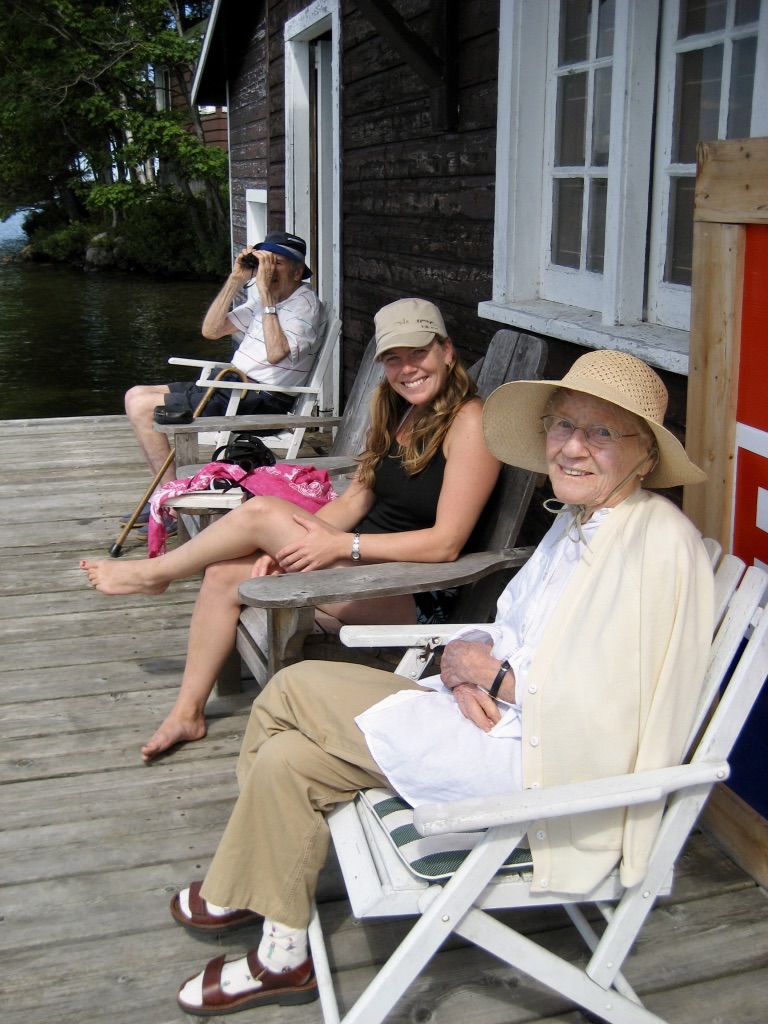
Regardless of my own age, either eight or twenty-eight, the image of my Nana is always the same. Her ninety-pound frame leaning towards the water as she silently sits on the front dock of our Muskoka cottage, gently lifting her feet in and out of the water, in and out, in and out.

My Nana was the strongest lady that I will surely ever know. Strong in will, strong in spirit and strong in body, I always said that if I ever aged half as gracefully as she did, I would be content. She was the family matriarch, the reason that my parents met, the reason that I grew up in Muskoka and the reason that I spent every privileged summer of my childhood at our cottage, the Pointing Pines on Lake Joseph.
Born in Hamilton, Ontario in March 1920, my Nana grew up in Steeltown where her father became the president of Hamilton’s steel manufacturing company, Stelco in the post WWII era. Looking to escape the city during the hot summer months, my Nana’s family began annual treks to Cottage Country as Muskoka’s tourism industry grew at the turn of the century. As a child, my Nana would take the train from Southern Ontario to Gravenhurst, then travel by steamship from Lake Muskoka, through the docks at Port Carling into Lake Rosseau and finally into Lake Joseph. There, my Nana would spend her summer days at the Pointing Pines happily playing on the shores of the then-pristine and quiet lake. Nana used to tell me stories of that time – buying fish from Indigenous people who came to the cottage’s dock, gliding across the late in the cedar rowboat and filling the ice box with large sawdust covered blocks.

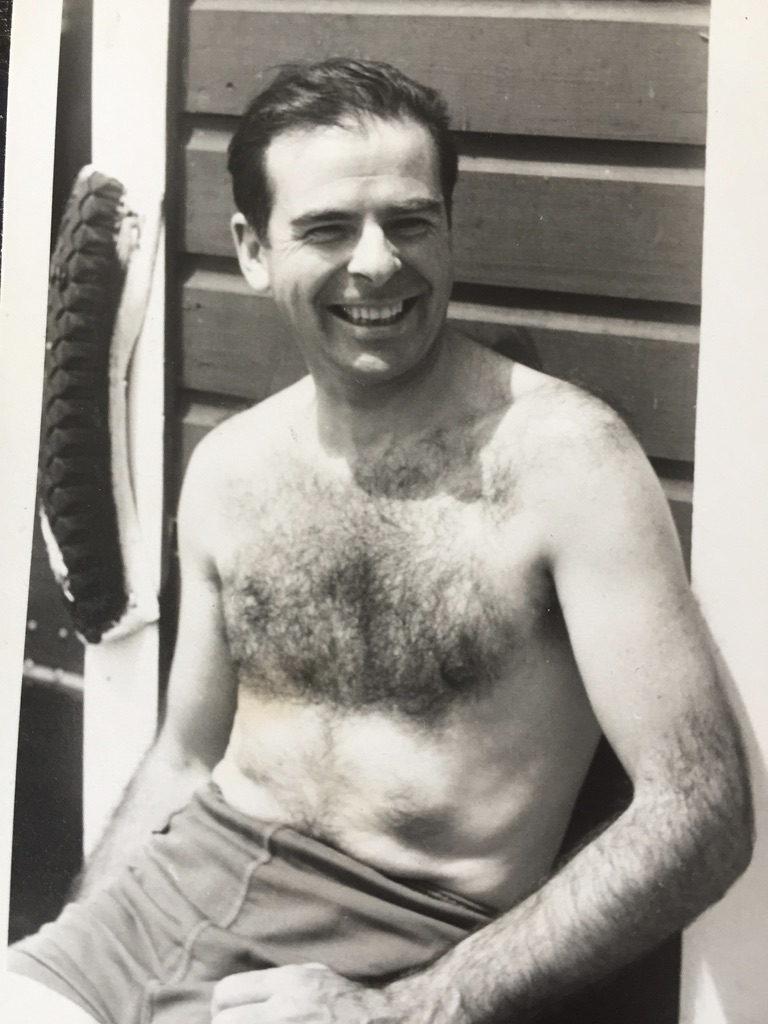
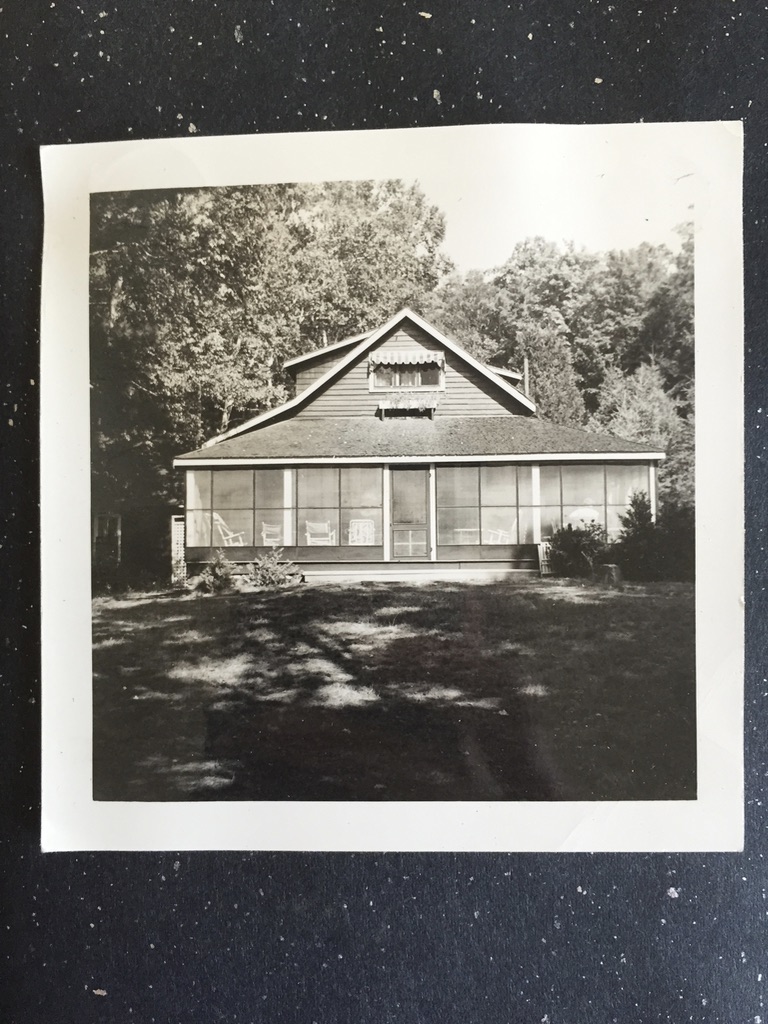
Summers at the cottage continued for my Nana as she married my Grandpa, Henry Sprague after WWII, then later as a Mom of three trouble-making boys – my Dad and my two uncles. Muskoka is where my parents met as my Mom waitressed at a nearby resort, Elgin House on Lake Joe. The story goes that my Dad would court my Mom by canoe in the moonlight. Soon, with a family of their own, my parents moved to Muskoka to raise their young children – my brother, sister and I.

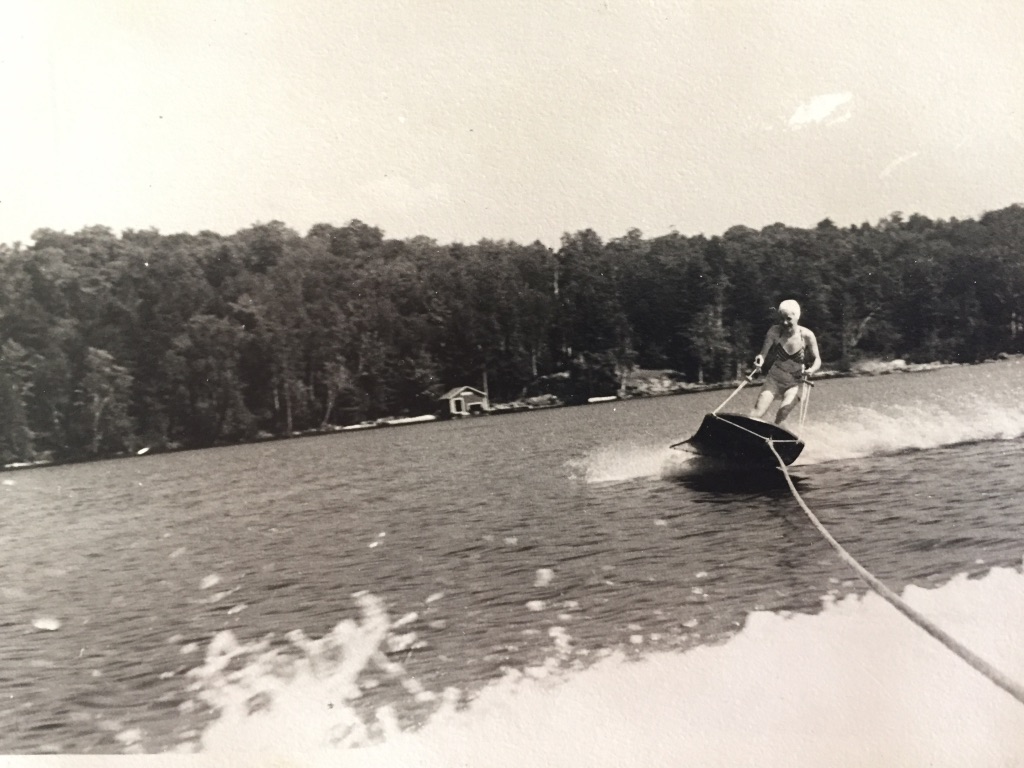

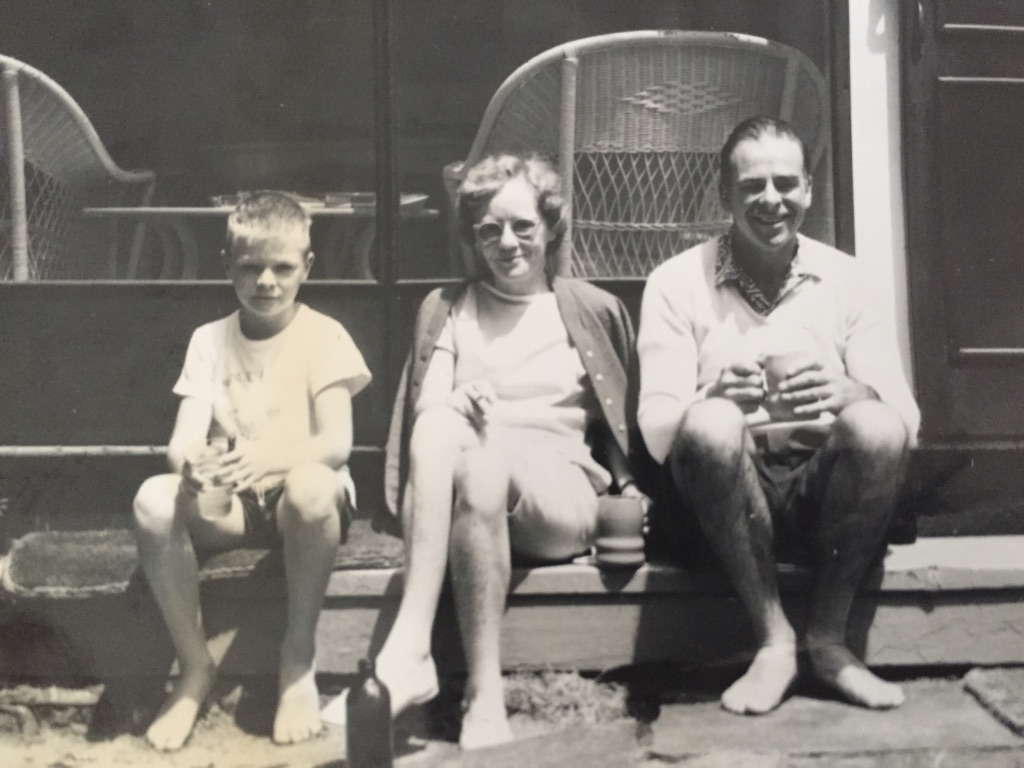
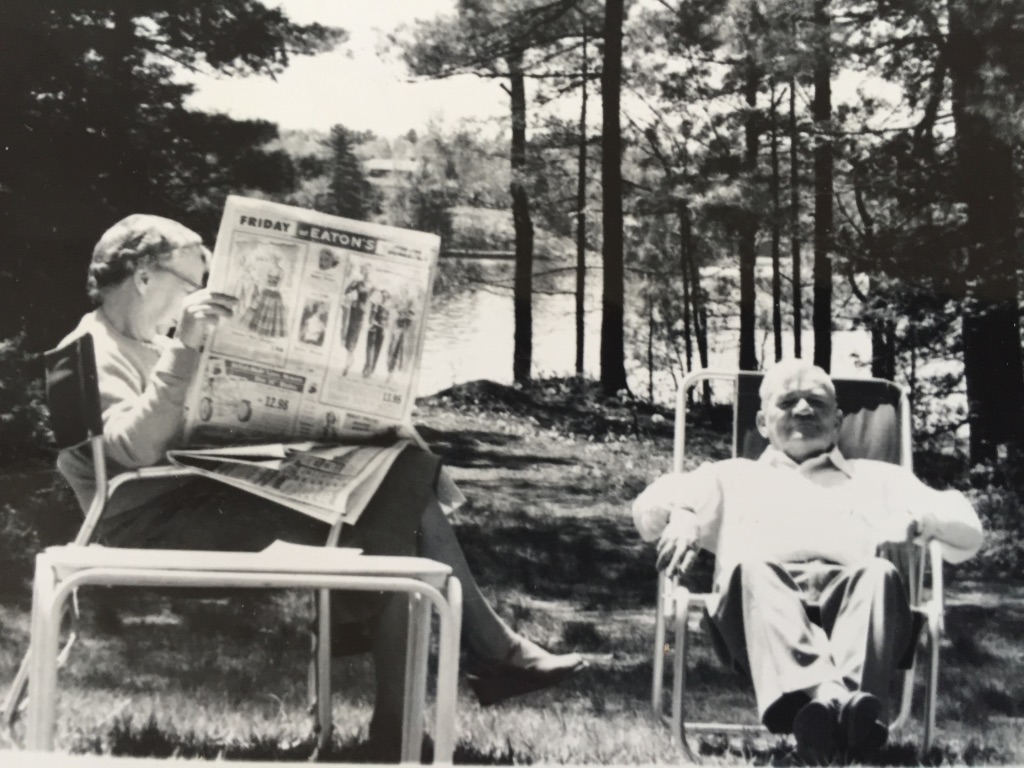

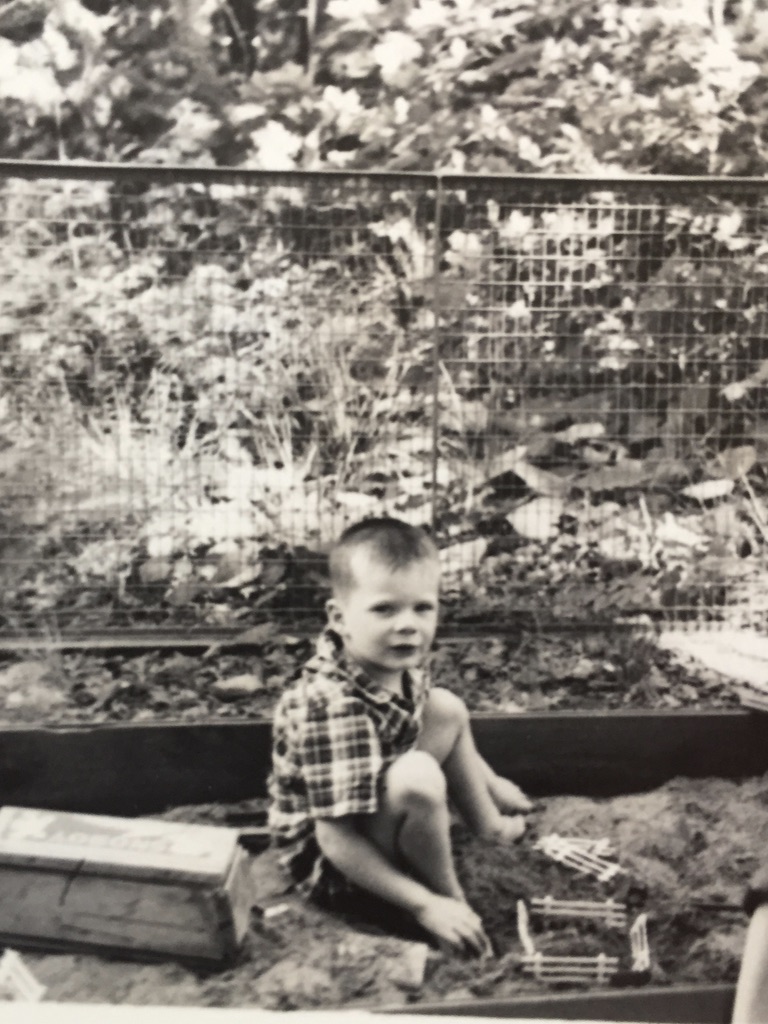
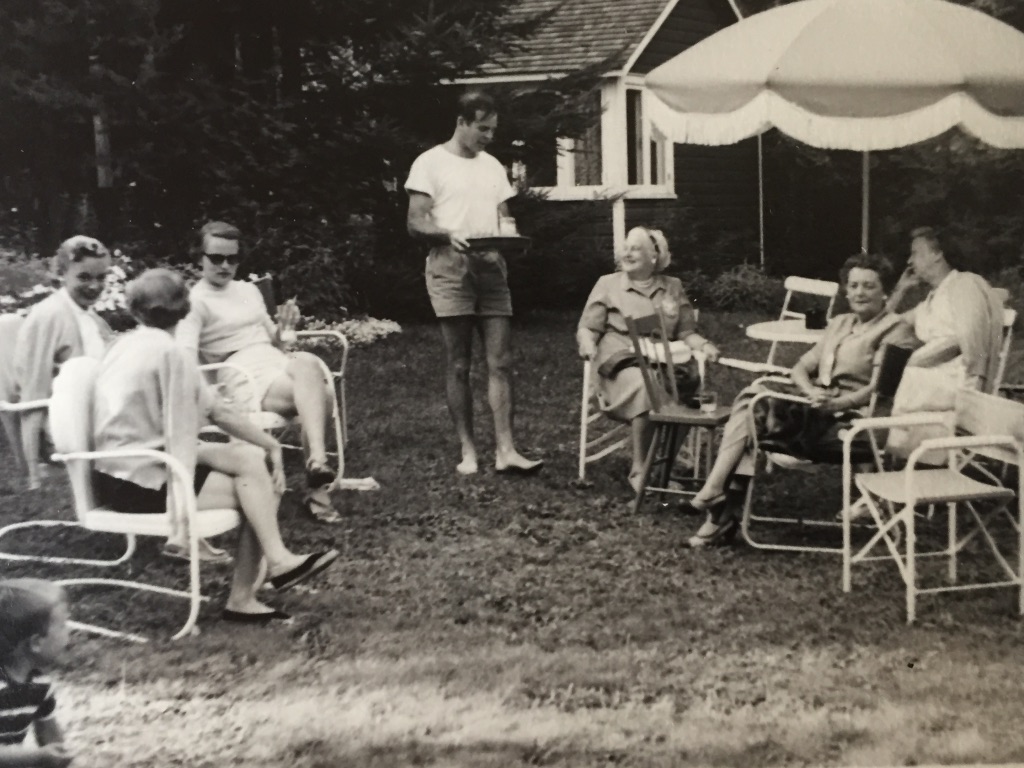
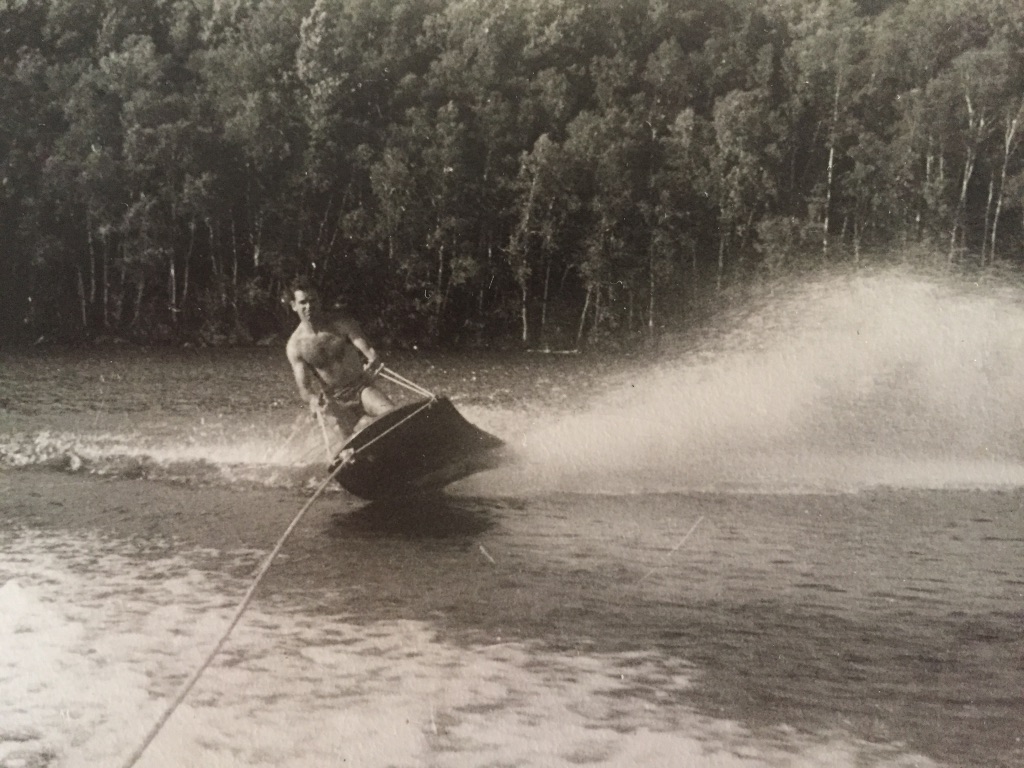
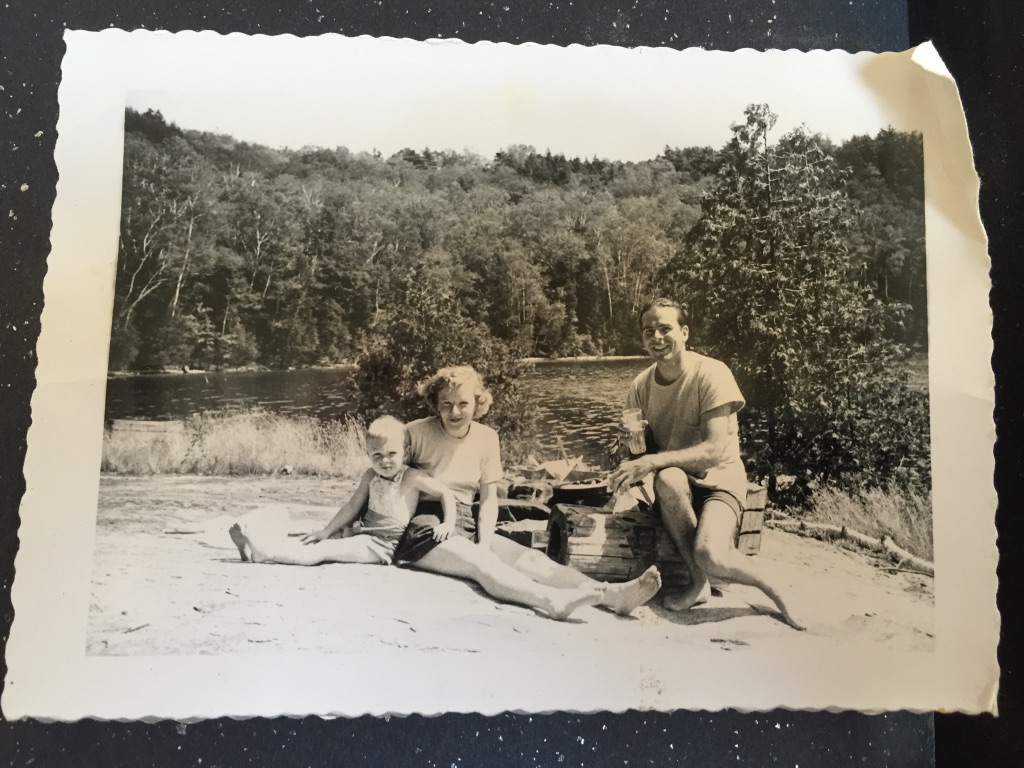
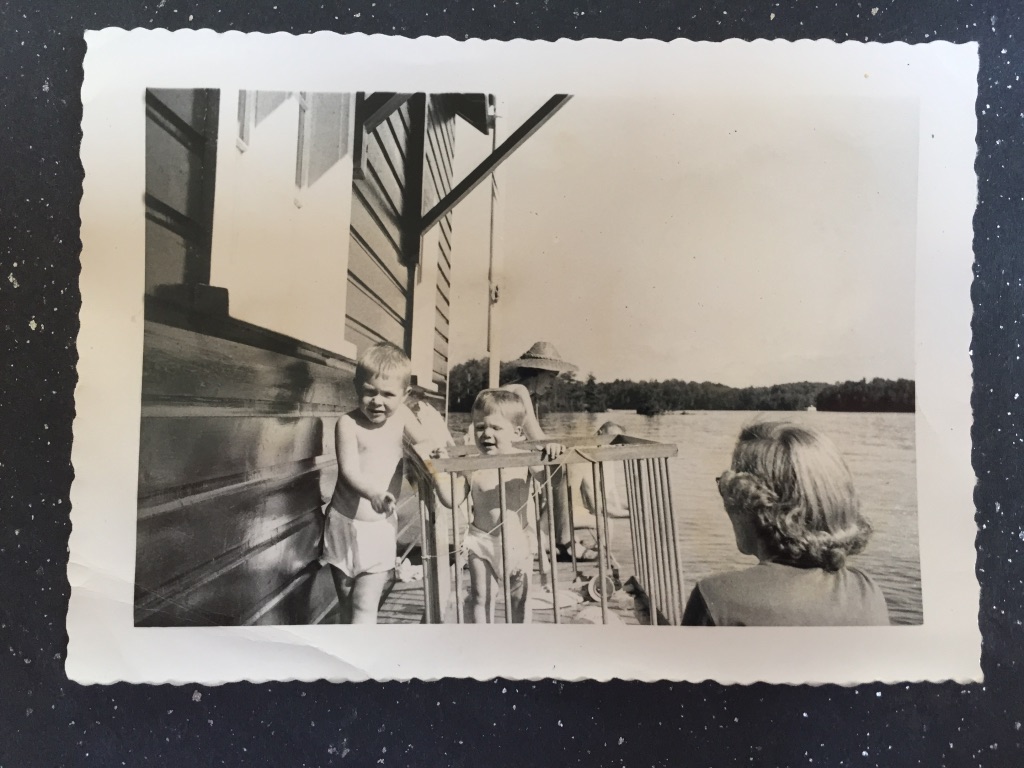
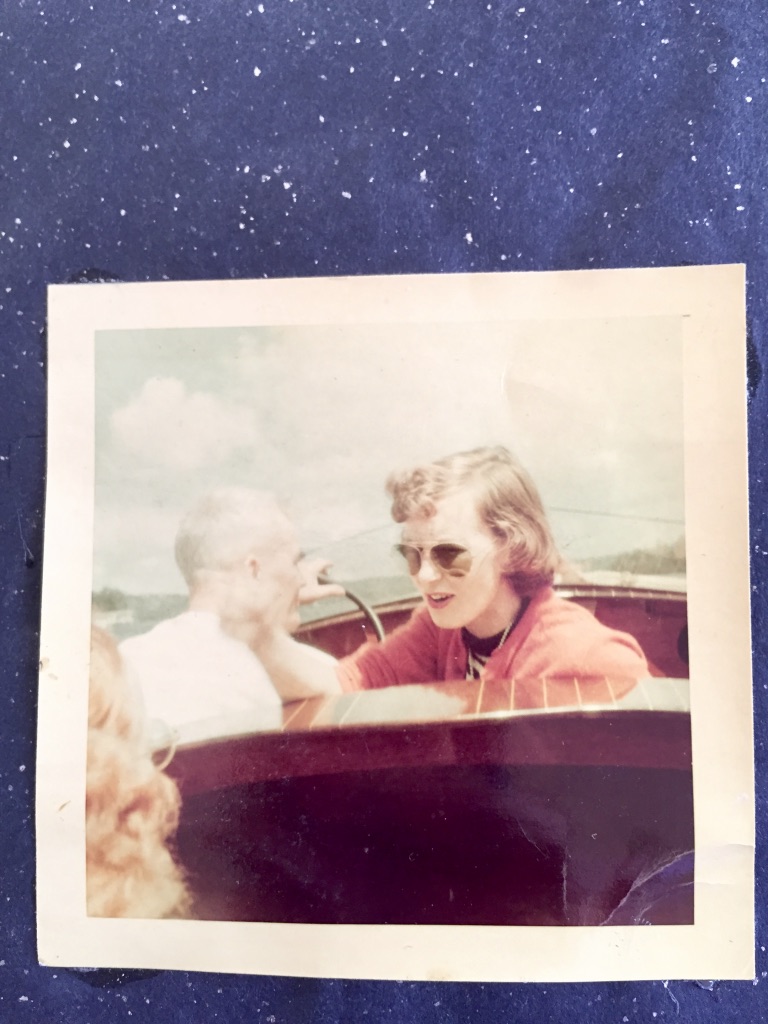
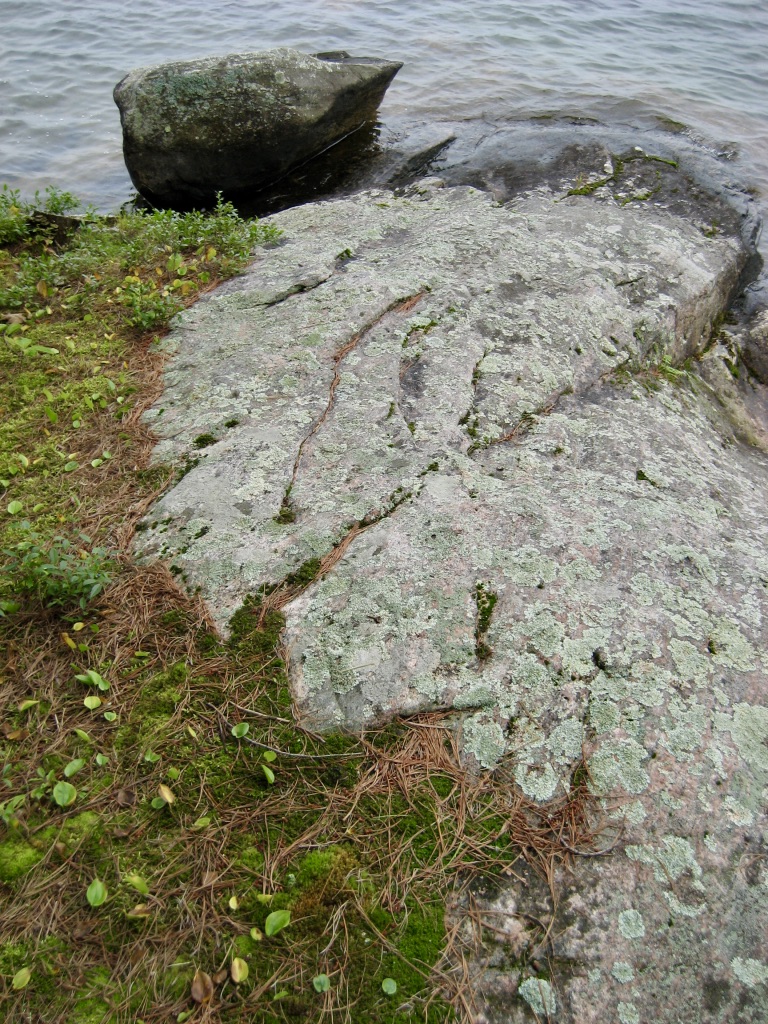
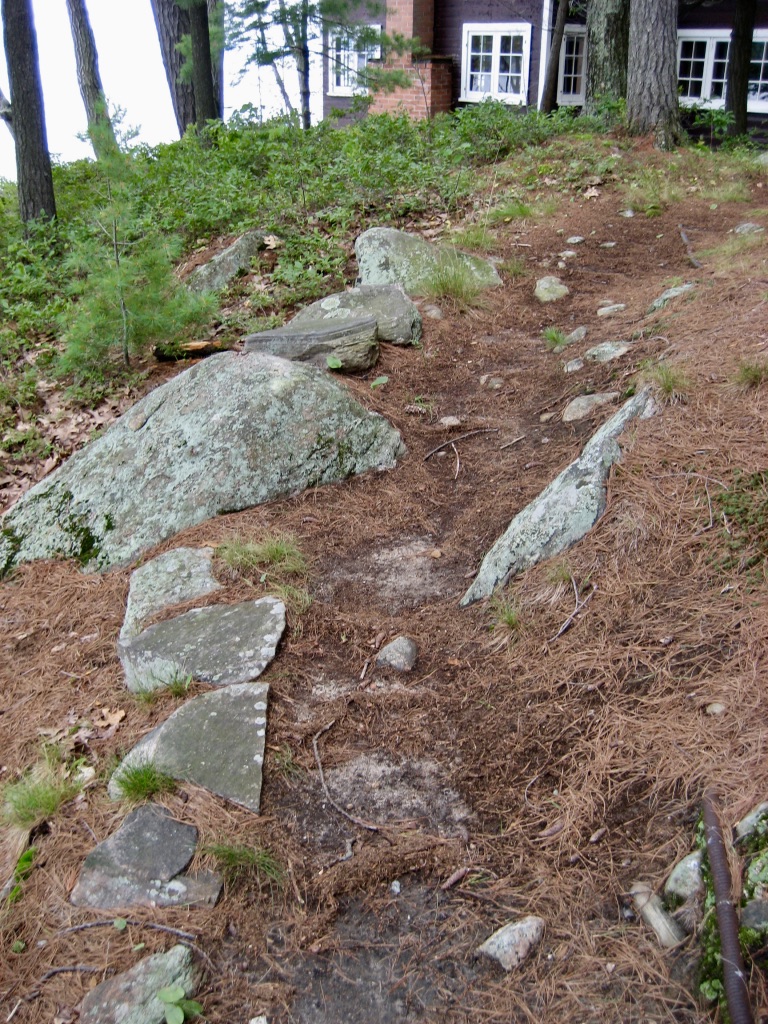
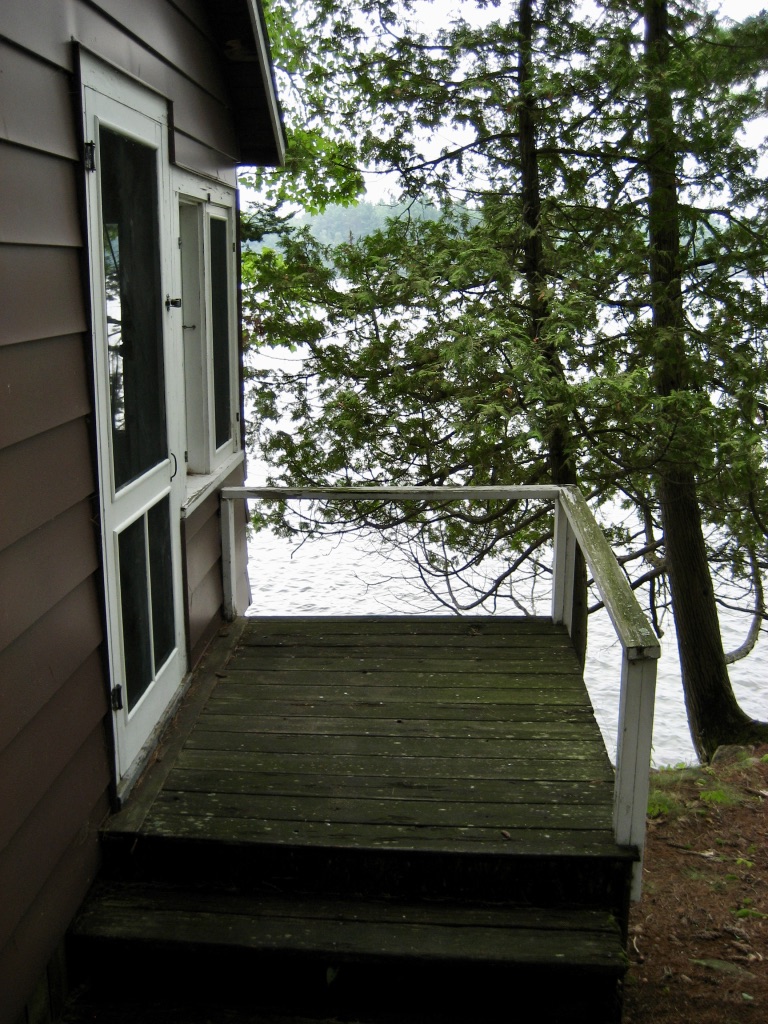
As kids, we simply had no concept of the good fortune of our childhood in Muskoka. Growing up in Bracebridge, we spent our entire summer holidays each year at the cottage, just 20 minutes from our house. With the final days of school behind us, we’d toss our shoes aside and would run barefoot for weeks along the flat stone paths throughout the expansive lake-side point which housed the main cottage and it’s sleeping cabins. The point was flanked by two shallow, sandy bays where we spent every waking minute in and out of the water, picnicking on the dock, waterskiing behind the green, 1980’s style motorboat, sipping Canada Dry ginger ale during the adults’ Happy Hour, gorging on barbecued flank steak during family dinners that often included a grand total of thirteen people or more, boat rides in the beautifully restored wooden Launch and ending each day skinny dipping with our cousins, the water slipping over our naked backs as the sun dropped slowly over the horizon of white pines. A true Muskoka cottage – rustic and full of charm. It was a place of joy for all of us, including my Nana. I have so many glorious memories of our truly carefree summer days on Lake Joseph, all of them intertwined with memories of my Nana. Although the Pointing Pines now rests in the hands of another family, the precious memories of our days spent with our extended family there will forever be ours.
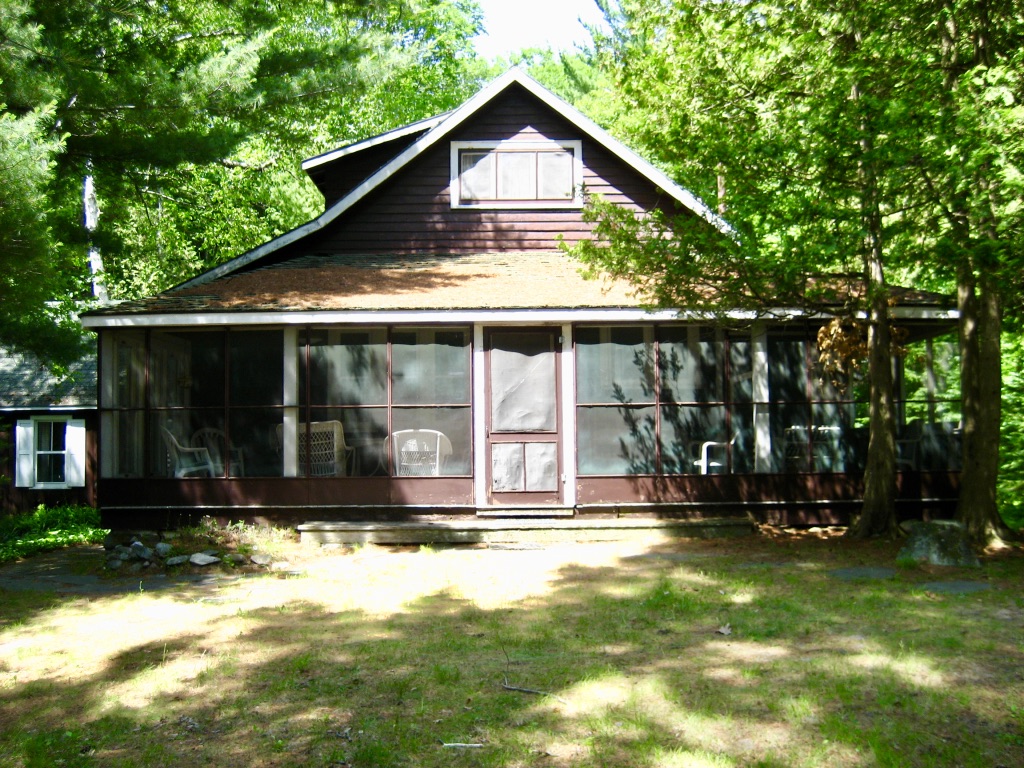

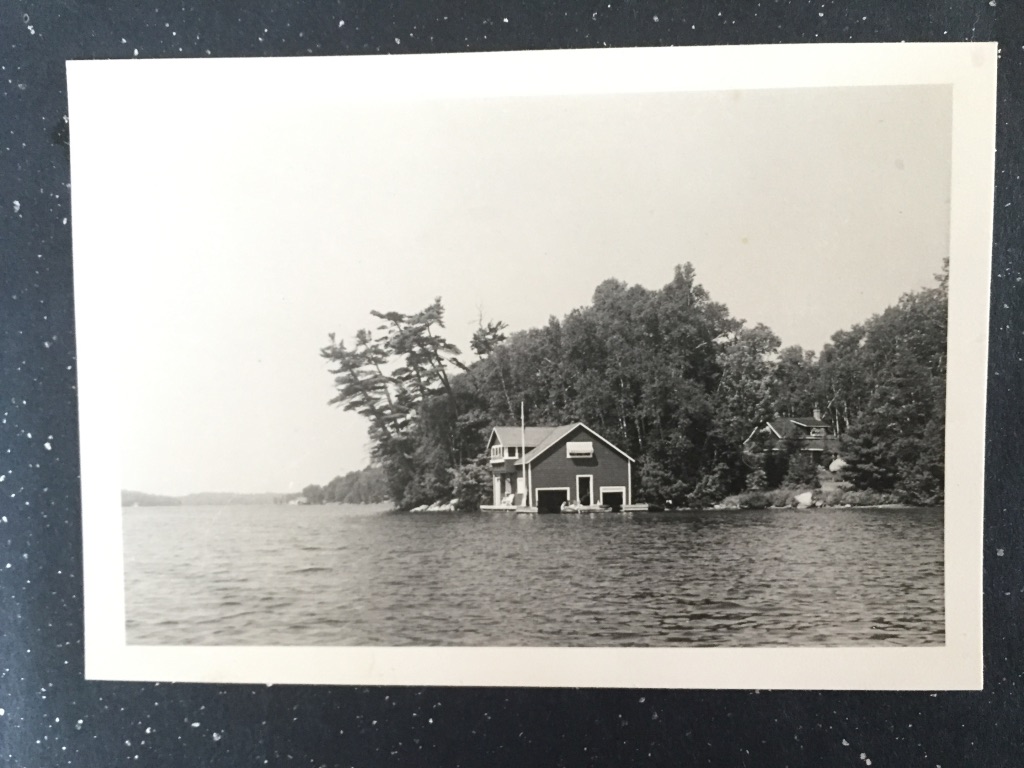
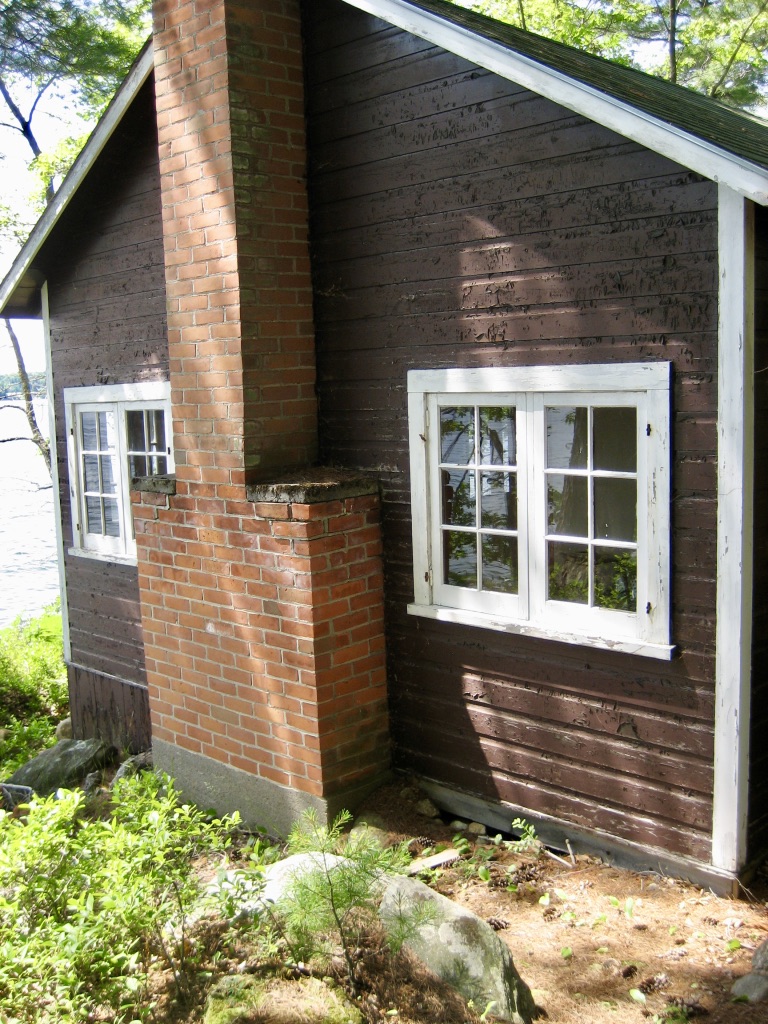
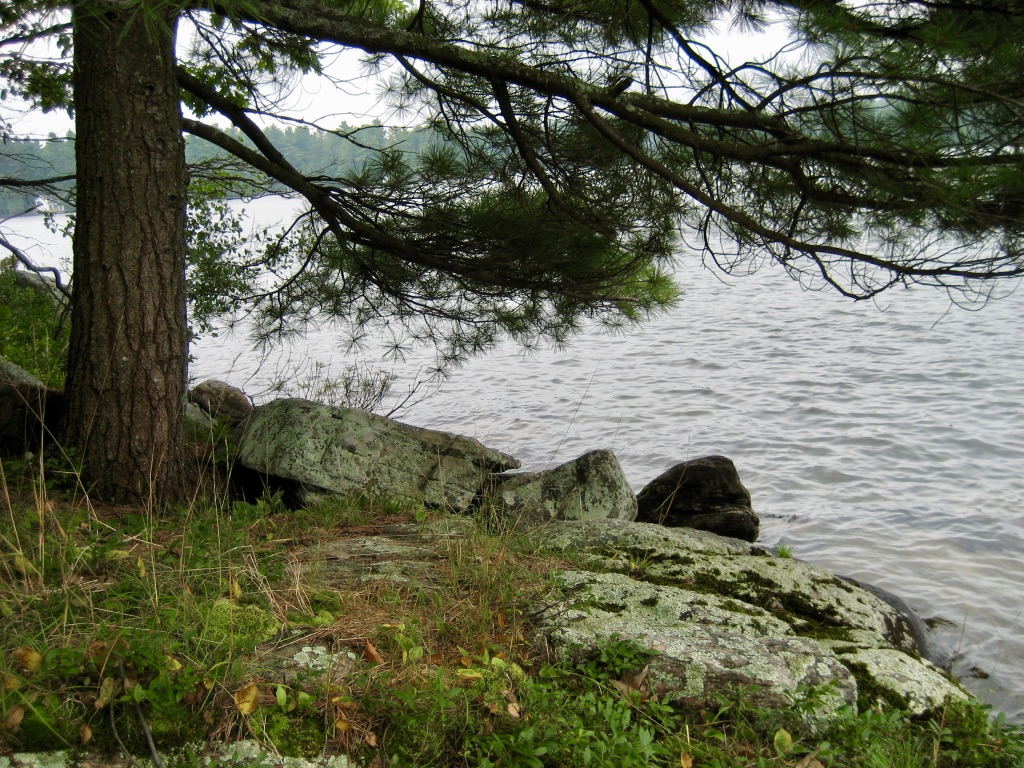
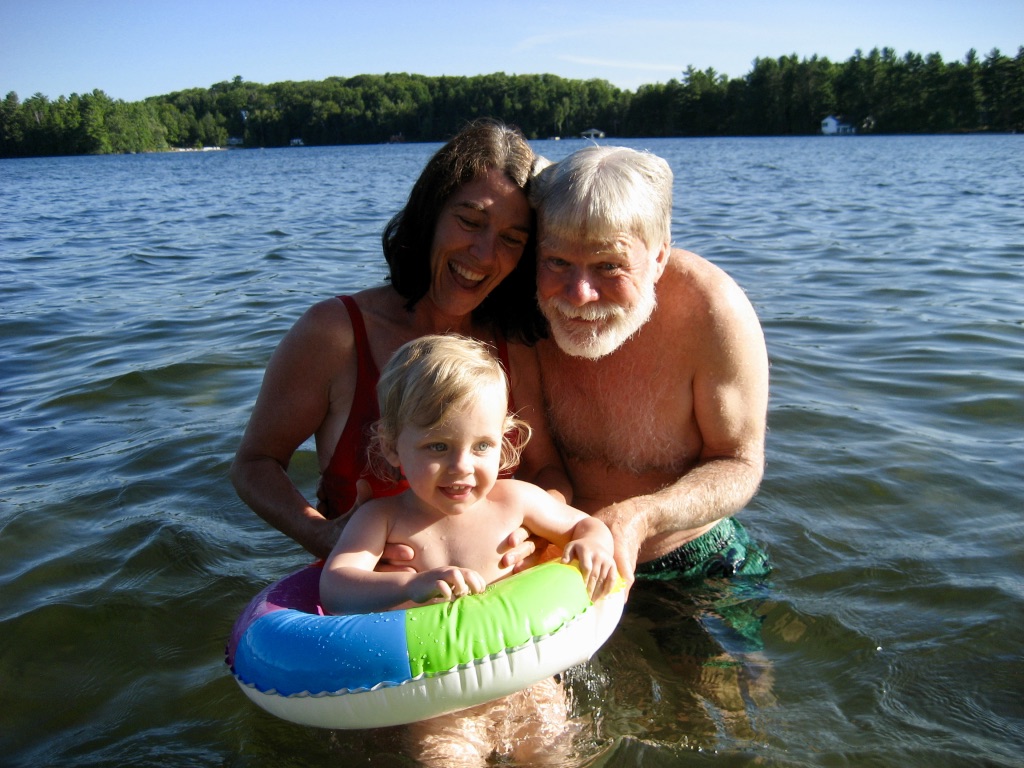



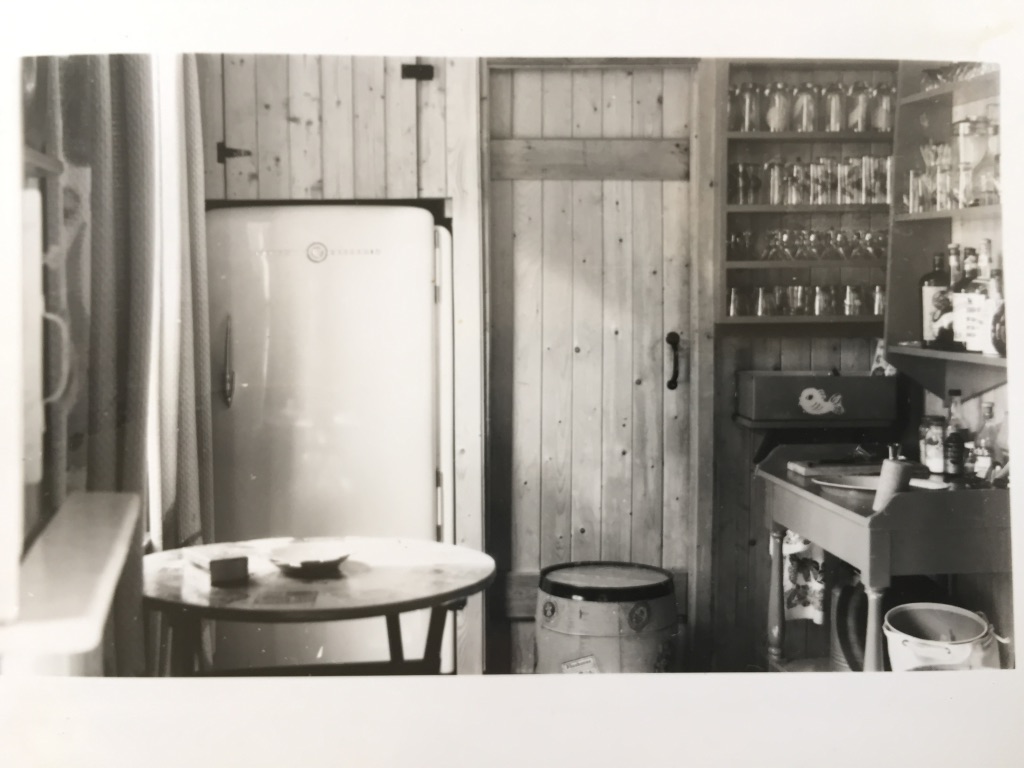
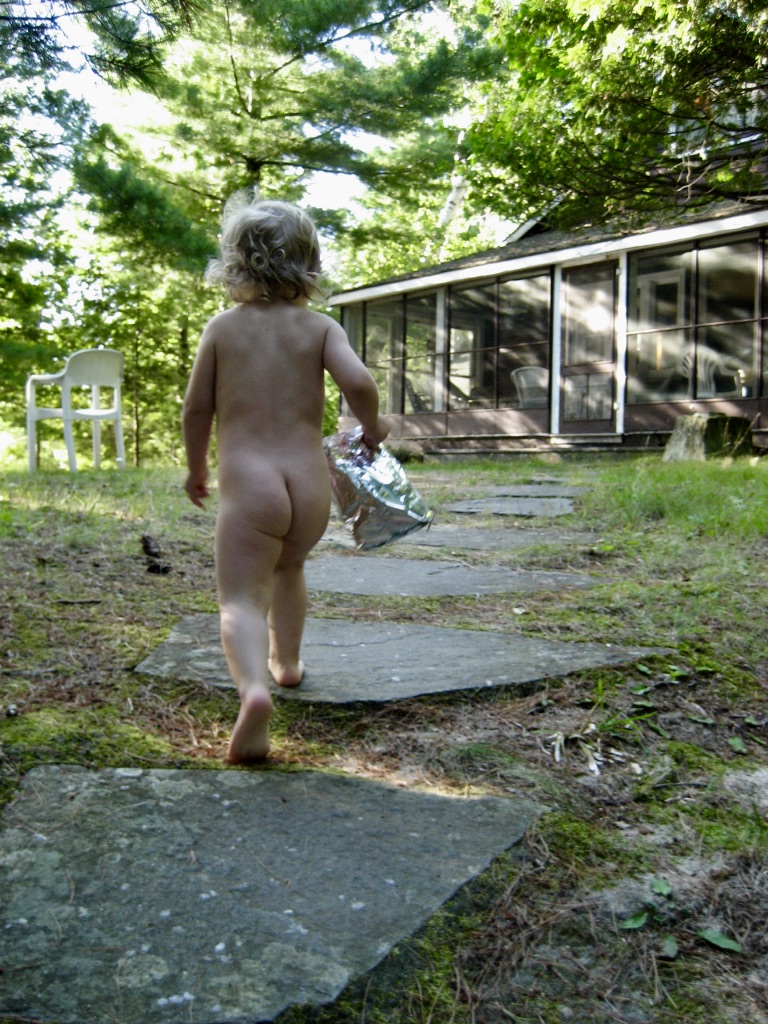
Nana’s final trip up to Muskoka came in September of 2012 when she was 92 years young. Blake and I were married that fall at a small resort called Sherwood Inn right across the lake from our family’s cottage. My Nana looked truly radiant that night. She revelled in the festivities, danced with my father-in-law and even stayed up past midnight, long after Blake had hit the hay. I hold that evening so close to my heart.


Well into her late 90s, my Nana had lived independently, playing bridge with friends, going out and about in Dundas to carry out her daily errands and visiting the Royal Botanical Gardens with her great-grandchildren. In medicine, we test an Elder’s mobility and balance using a tool called the ‘Get Up and Go’ test which essentially entails asking a patient to rise from a chair and walk three steps under a timer. Blake always laughs at the memory of one our last visits with Nana when she had heard the kettle boiling. At the age of 97, she had jumped up and had gotten to the kitchen so quickly that she had beaten Blake’s offer to help by a mile! On another occasion at the age of 98, while assisting Nana on an errand, her walker had started to roll down a slight decline away from her. Without skipping a beat, she had chased it down before neither Blake nor I could reach the escaping device.
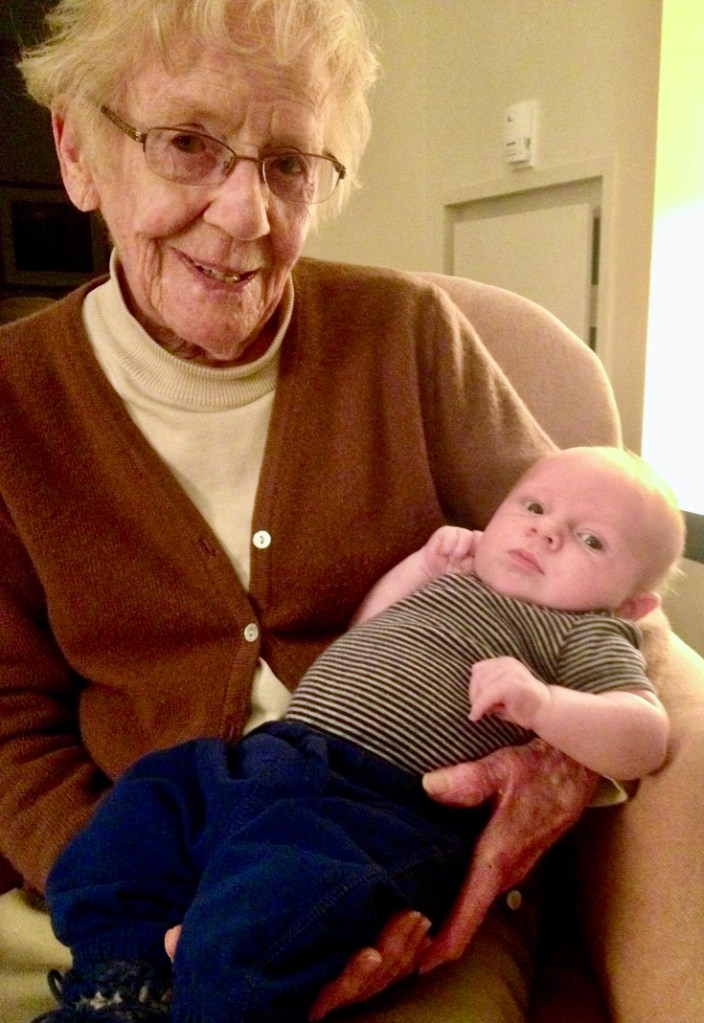
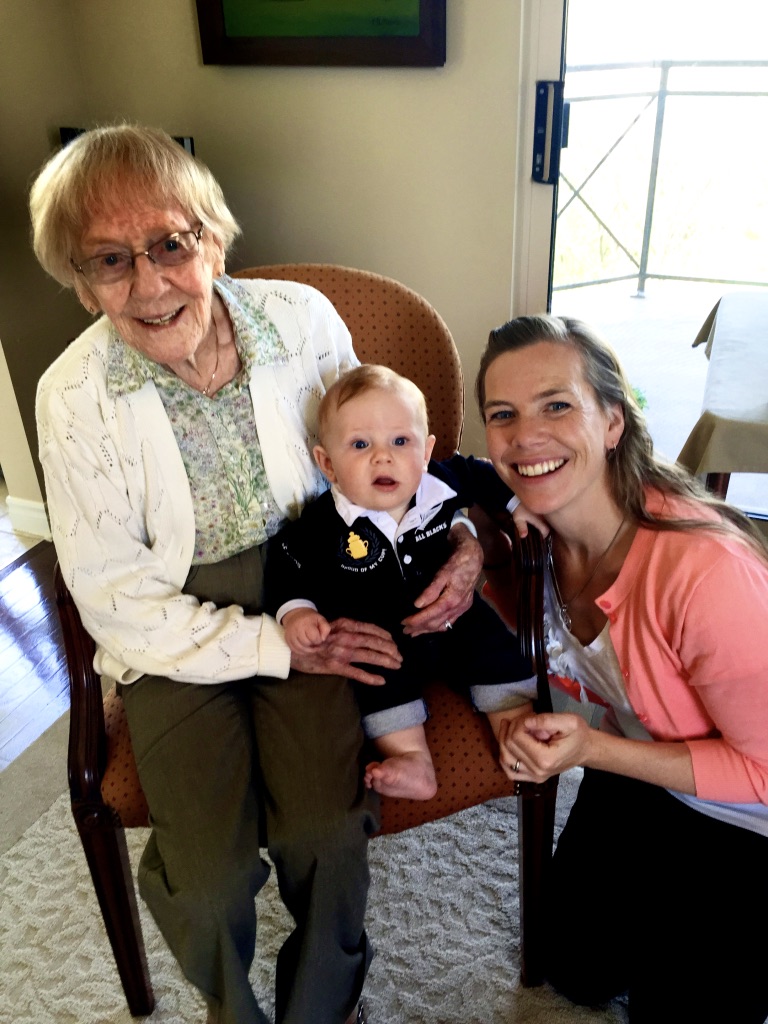
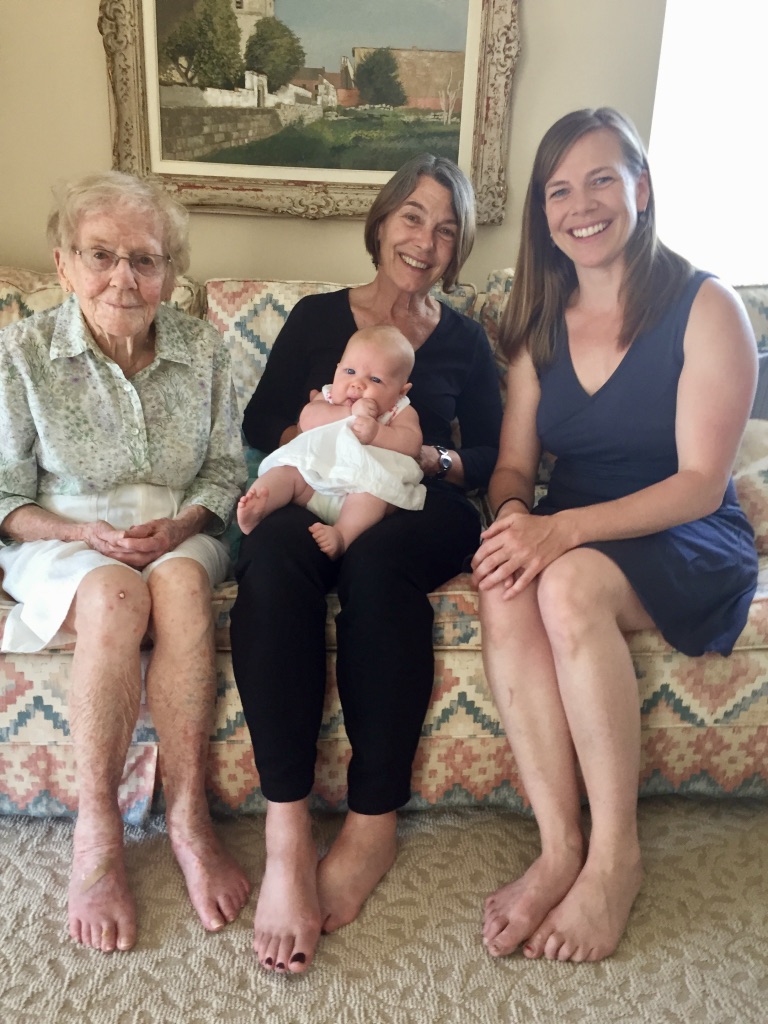

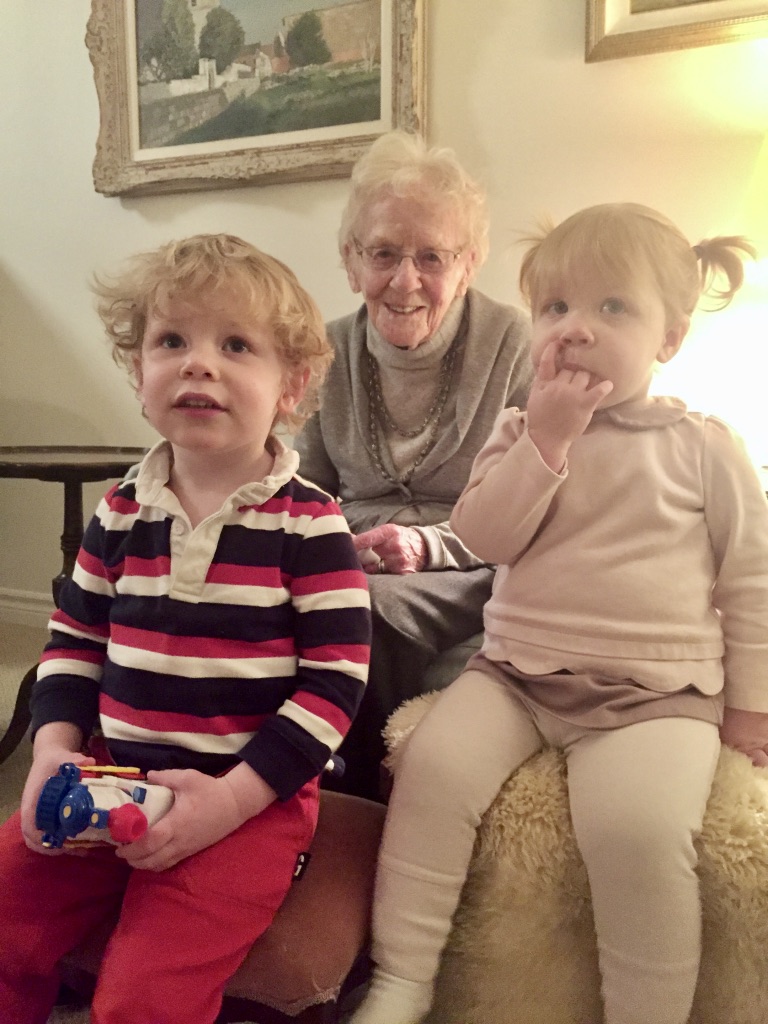
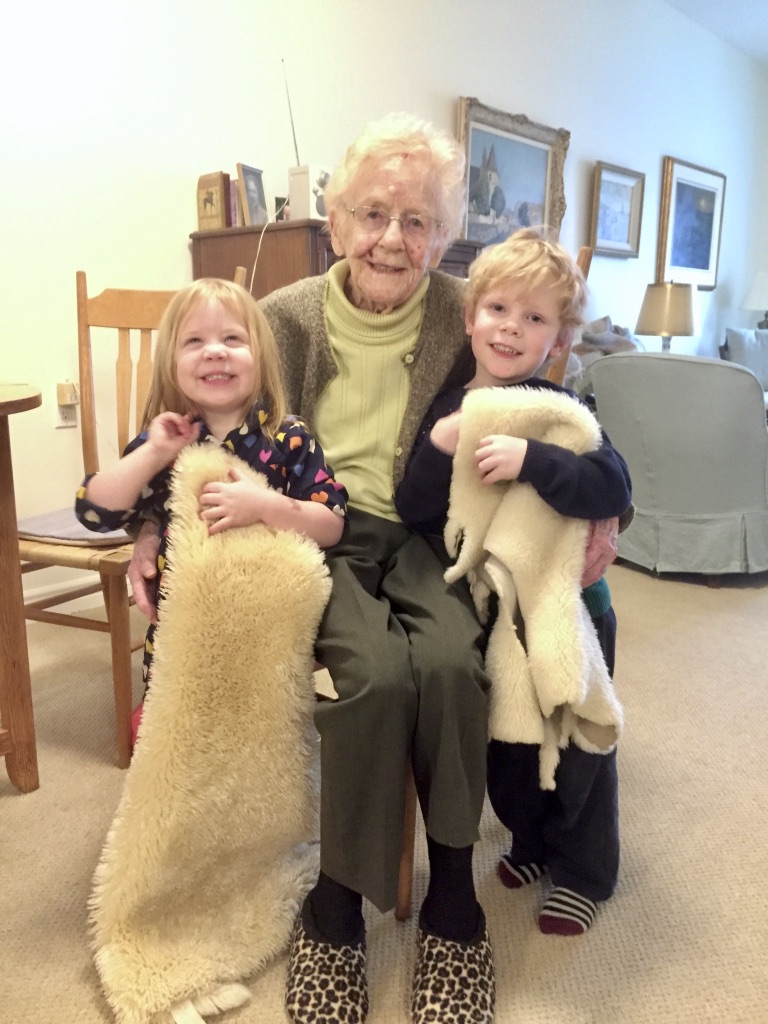
Nana’s physical strength and agility weren’t the only memorable aspects about my Nana. I will always admire Nana’s liberal perspective on many issues, her deep generosity, her pragmatic nature and her forward-thinking environmentalist ways. In her condo, she never had a garbage. Every single piece of waste was either composted, recycled or reused! She was a truly inspiring woman.
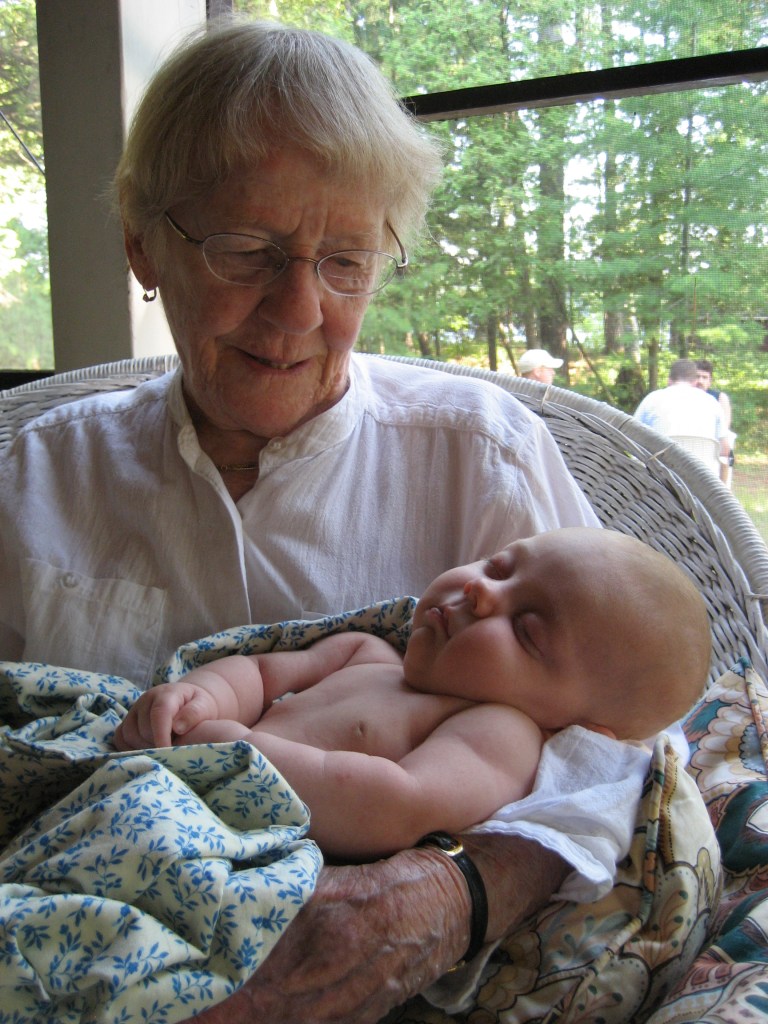

Last month, just a few months shy of 100 years old, my Nana was admitted to hospital and diagnosed with pneumonia after a fall at home. So consistent with her practical nature, she lamented the fact that she was ‘taking up a bed’ in hospital – a much needed acute care bed in an overly stressed health care system, she had complained to my sister who sat at her bedside. Declining medical treatment, my Nana instead requested a physician consult for medical assistance in dying (MAID). She had had enough of this world as her body finally began to fail her. ‘Come now’, my sister had urged. ‘I’m not a doctor, but I have a feeling this will be the end’. When I told Blake, he kissed me, then gently nudged me towards the exit of our local arena. ‘Go now’, he encouraged, the kids flailing on the ice during Can Skate behind him. My colleagues without hesitation stepped into the void I left behind at work as I raced to Thunder Bay, then onto Toronto and finally to Hamilton, anxious to say good-bye.
In medicine, as physicians, we are privileged to bear witness to so much pain and suffering, but also to joy as we see life come into existence and also see it let go. Observing the monitor flatline after removing life support in the ICU, calling the end of resuscitative efforts of the tiny neonate after only three hours of life, standing at the back of the palliative care room, where a family collectively grieves – I have witnessed death arrive many times in my professional life. Yet, it is never the same experience when it is your loved one, when it is you and it is your family at the bedside. Although, my Nana, as I will always remember her had long left prior to my arrival at St. Joseph’s Hospital in Hamilton, I am so fortunate to have been able to say good-bye and to have helped see my Nana pass. Those hours spent waiting and waiting as her body, resilient to the end, hung on long after my Nana had left us were incredibly crucial, in my perspective, for all of us – it gave us an opportunity to collectively shatter at the realization that she was truly leaving us, but also the chance to remember her, to laugh together and most importantly, be overcome with happiness and relief on her behalf that she was finally able to go.
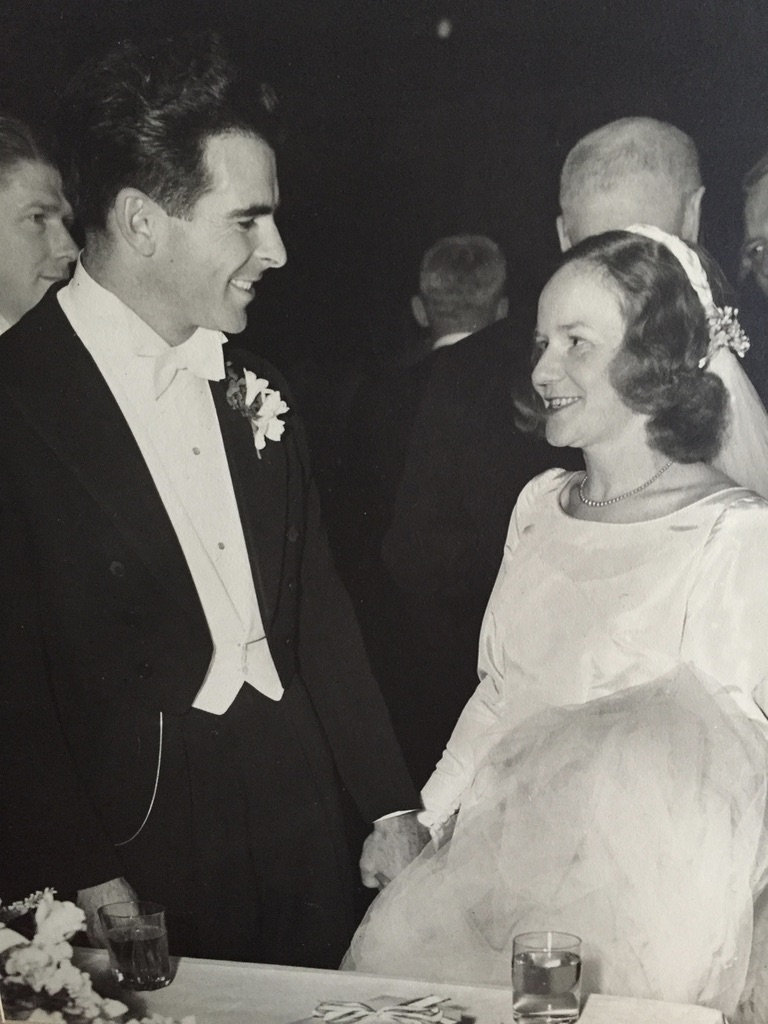
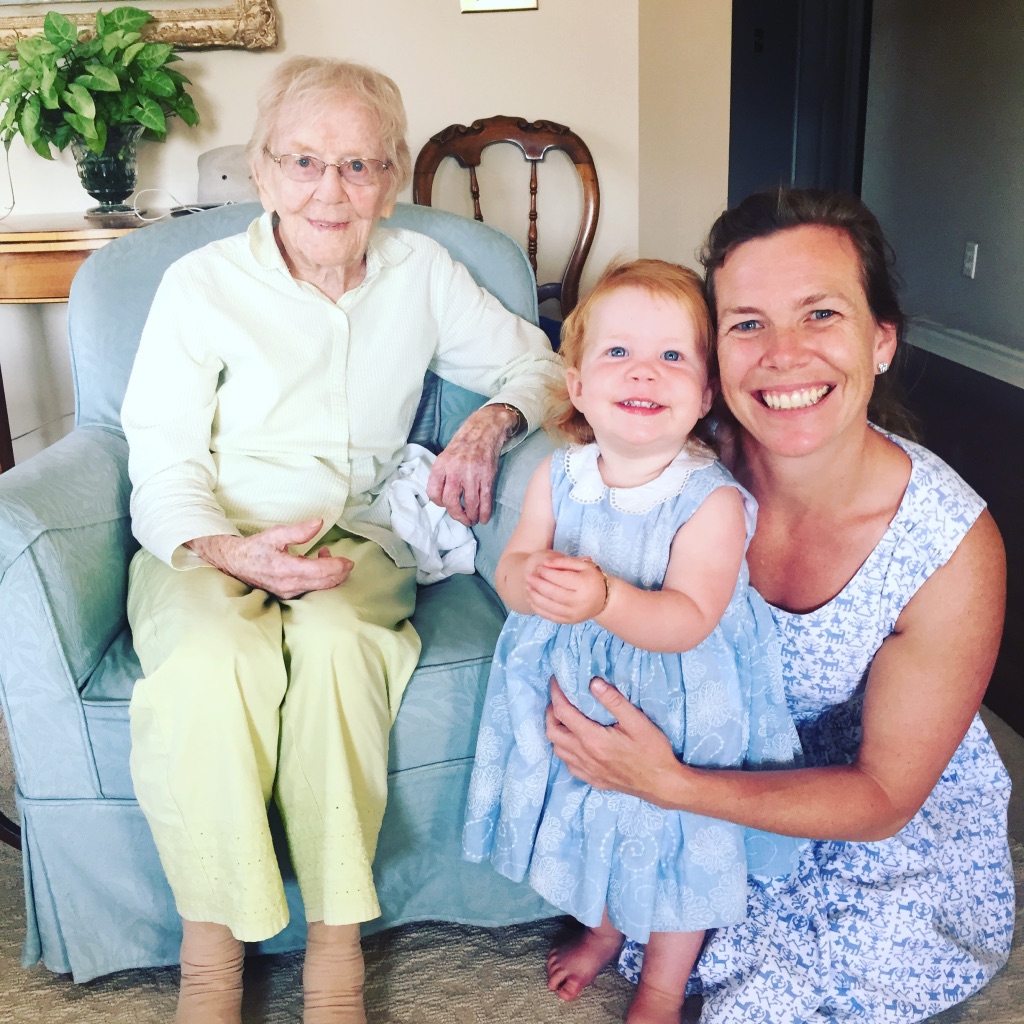
These days, when I stare into Alice’s pale blue eyes and stroke her red hair, I cannot help to fight tears. She is a living memory of my Nana. Born 97 years and one day apart, Alice Harriet is my Nana’s namesake. I can only hope that Alice will grow up with the tenacity, resilience, intelligence and strength that my Nana possessed. Nana, you will be so dearly missed.

A Family of Nerds
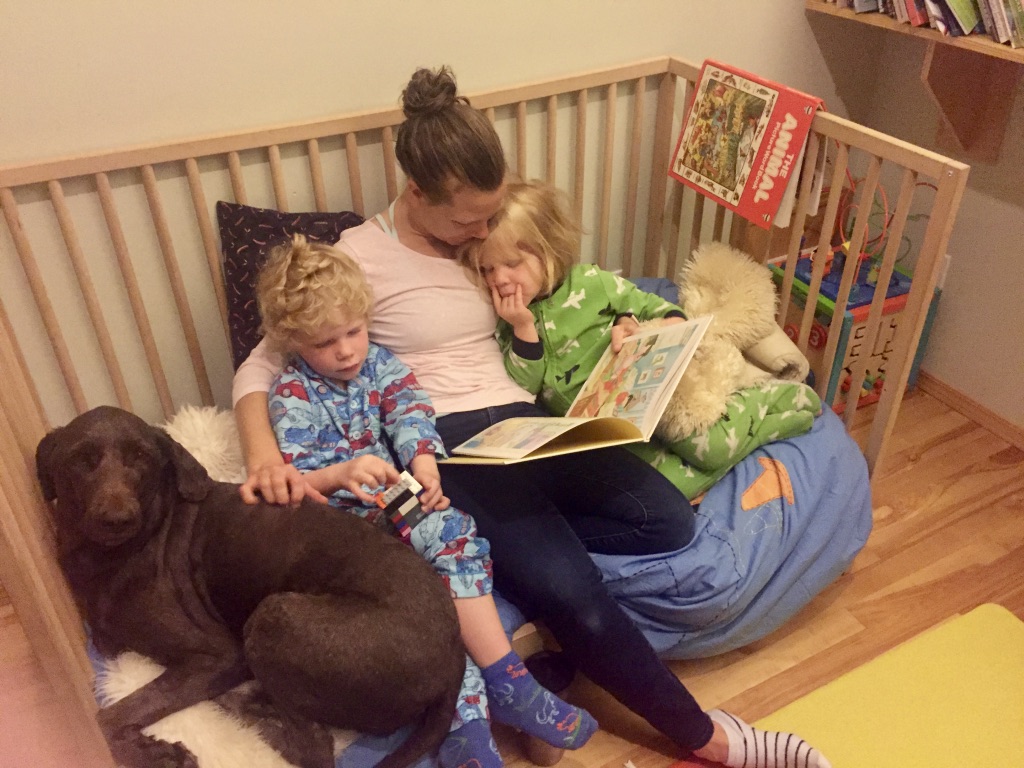
“Read it Mom, READ IT!” Alice and Henry screech, anxiously bouncing up and down on the couch, fleeces in-hand. The grey light of dawn sleepily seeps through the wall of windows framing the quiet lake, the still row of red pines, the tranquil beach strewn with the remnants of yesterday’s summer fun. I shuffle into the kitchen, fumbling for the coffeemaker as my housecoat trails on the floor. Blake slumbers on blissfully unaware.
Soon, I am gulping the freshly brewed coffee and am pulled to the present.
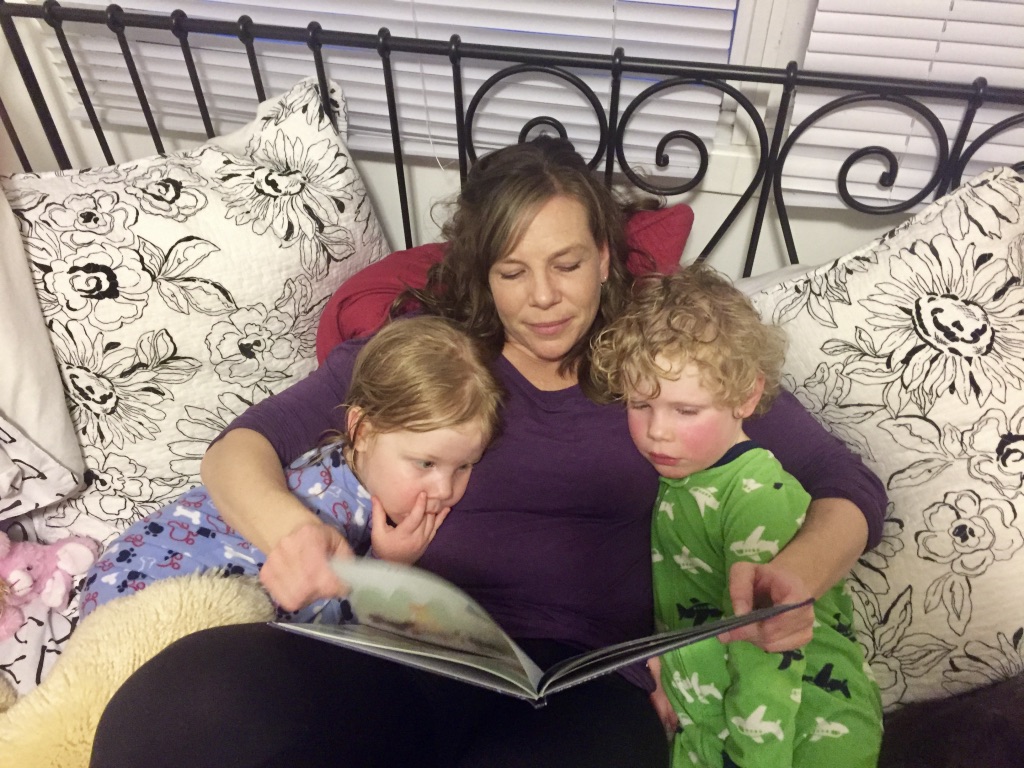
“MOMMMMMMMMM! We’re WAITING! PLEASE READ IT!” Henry and Alice persist. I collapse onto the couch and am immediately framed by two small bodies, snuggled in tight at each side. Ada jumps up beside us, curling into a ball as close as she possible can get to our mass of bodies. “Can I come in?” requests Henry, nudging my arm. I reach around them, my arms stretched across their shoulders holding open their requested book wide. Two chubby cheeks rest against my chest. My mug sits alone on the coffee table, steam rising. I begin to read.
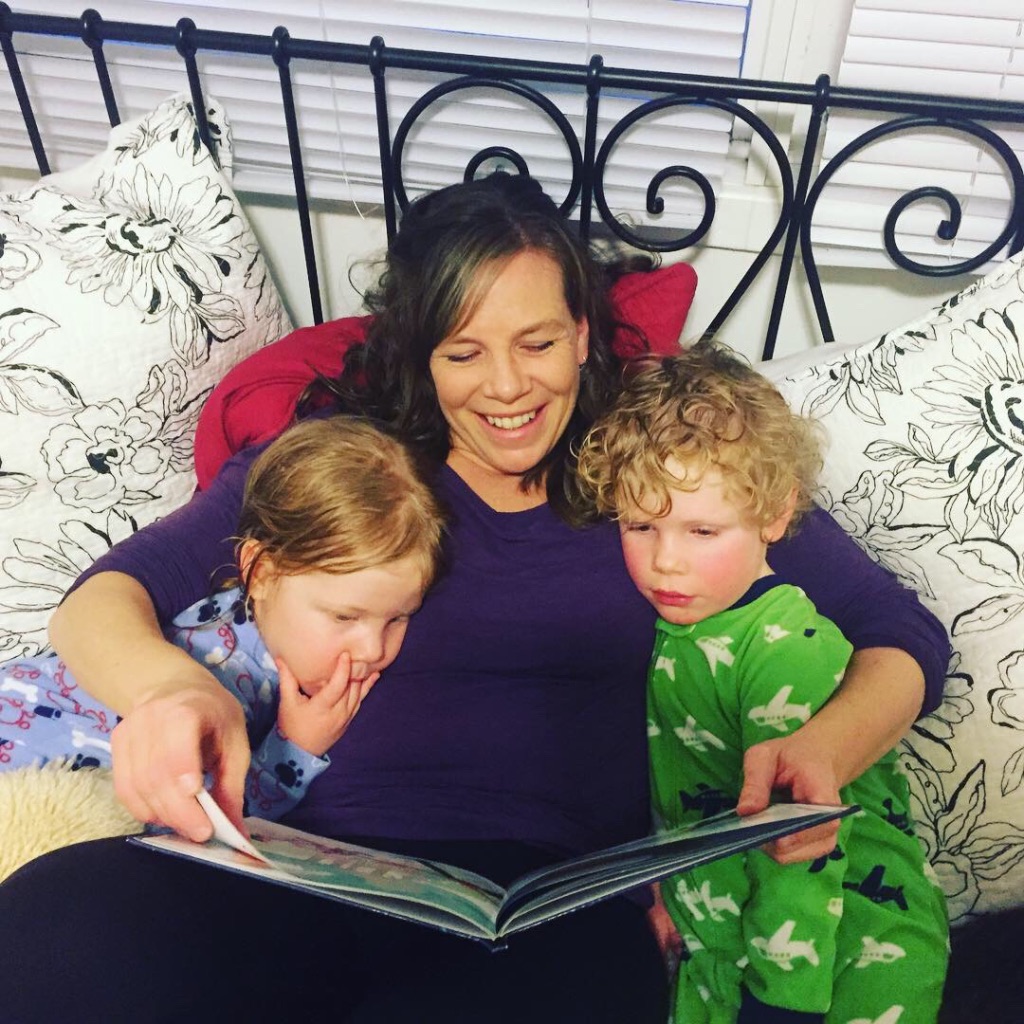
I admit, I am a nerd. The nerdiest of nerds. My passion for reading has always been a focal part of my life. I cannot actually recall a time throughout my childhood, adolescence and adulthood where I lost my love of reading. Encouraged by my equally bookworm-ish Mom, my childhood was full of reading opportunities: regular trips to the public library, snuggles reading bedtime stories in my parent’s bed, losing myself for hours poring through stacks of picture books before I could even comprehend the words on the page.
As I grew older, I began to devour chapter books with a voracious appetite. I recall quite clearly as child being put to bed, then listening carefully for the sound of my parents’ footsteps heading down the stairs before I would snap on my bedroom light, pull out a Roald Dahl novel from under my pillow, then consume chapter after chapter, well into the night. Cheekily, while I read, I would always keep a hand on my light switch, listening with one ear for any indication of my parents’ bedtime plans. Occasionally, I remember reading at my bedroom window keeping an eye intermittently on the light in my dad’s workshop, watching for the light to return to darkness, indicating his imminent return to the house. Looking back, I now realize that often I would be reading until almost 11pm each night!
By the time I was a teen, my part-time job wasn’t at Tim Horton’s, but at the local library. Rushing to reshelve the orphaned books, I would then hide between the stacks to read. In high school, while Blake was running amok, cutting classes and getting in all sorts of trouble, I was the nerdiest of nerds. I ran track, played clarinet in band, went to leadership conferences, ran our student government, participated in every sport possible and studied, studied, studied. Embarrassingly, I would even voluntarily go to the school library on snow days when the buses were cancelled.
Throughout my university days, I grew to love the serenity of campus libraries and was comforted by the solitude when studying the intricacies of organic chemistry bathed in the light bending through the grand stained glass windows of the centuries-old limestone buildings. Grinding through a highly academic science degree meant that my time was largely spent at the library rather than the clubs.
Fast forward to medical school, I met Blake while he completed a degree in Civil Engineering, an even more nerdy domain of study than medicine. He proposed, I agreed and life as we now know it began.
As a parent, one of the biggest joys is being able to share parts of yourself with your children. For me, my passion for reading has flowed easily into our day-to-day lives with Henry and Alice. Without trying or intentionally planning it, books soon became an integrated part of Henry and Alice’s existence apparent in the symmetry of our daily routine – always starting and ending with reading.
As babies, trips to the public library were a reprieve from the monotony of home. As toddlers, story time on Wednesday mornings became a sacred opportunity for our fellow-parent social group to exchange war stories of raising ‘threenagers’, while Henry climbed the shelves and Alice shredded picture book pages with a placid, innocent expression on her face.
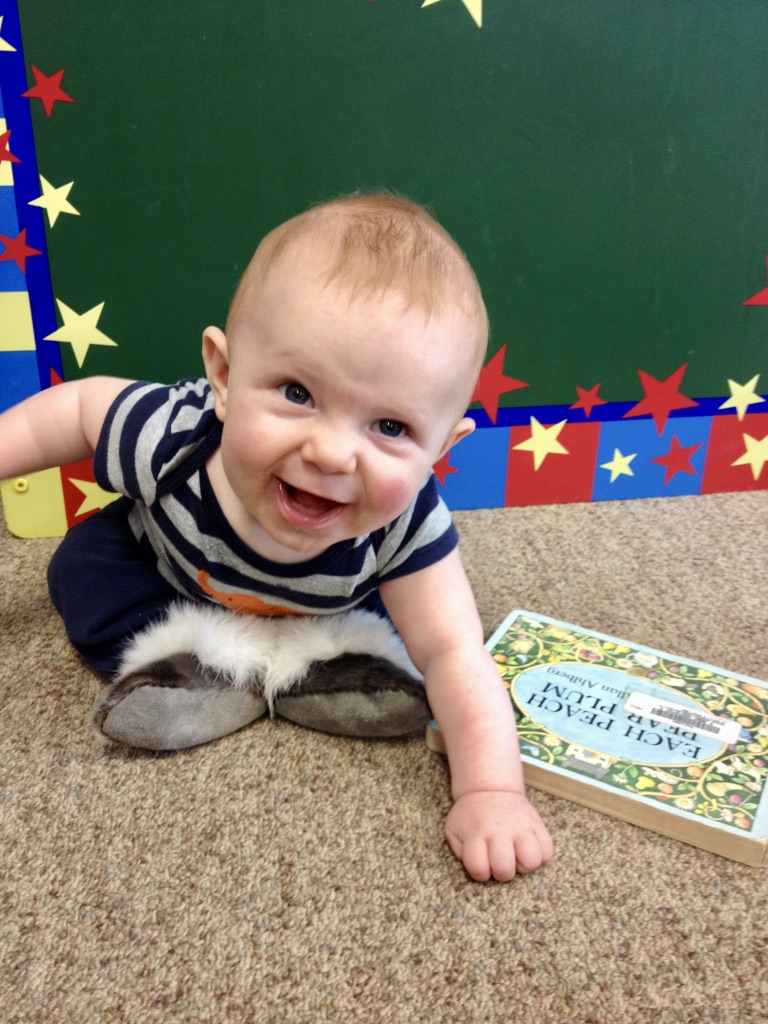
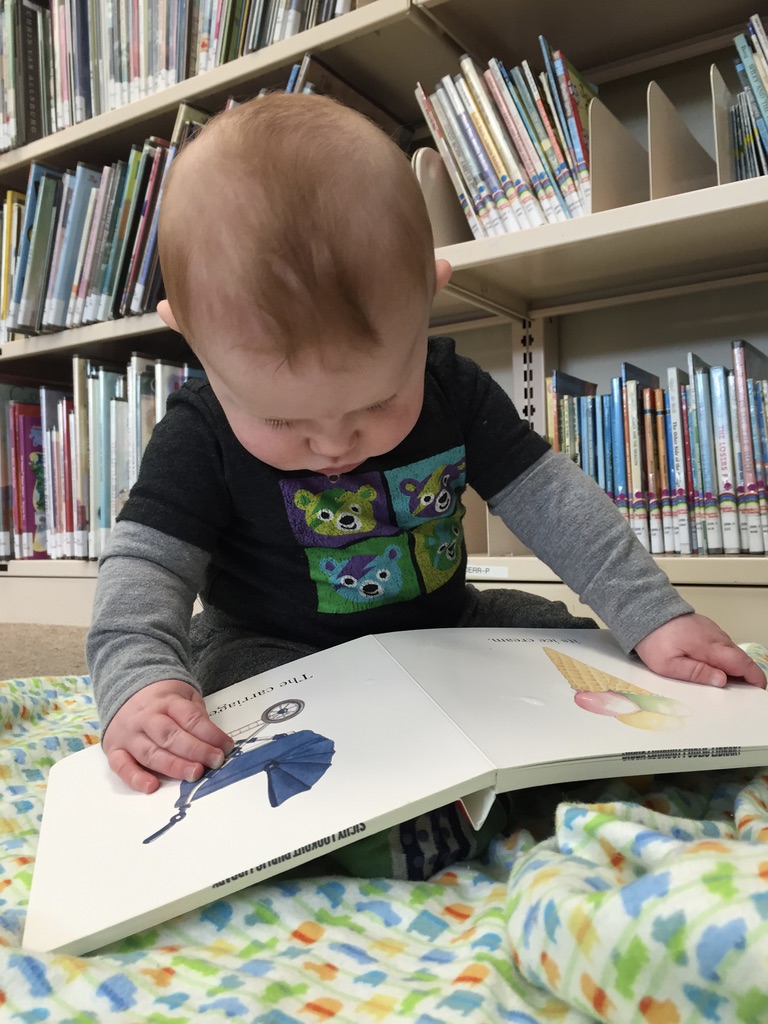
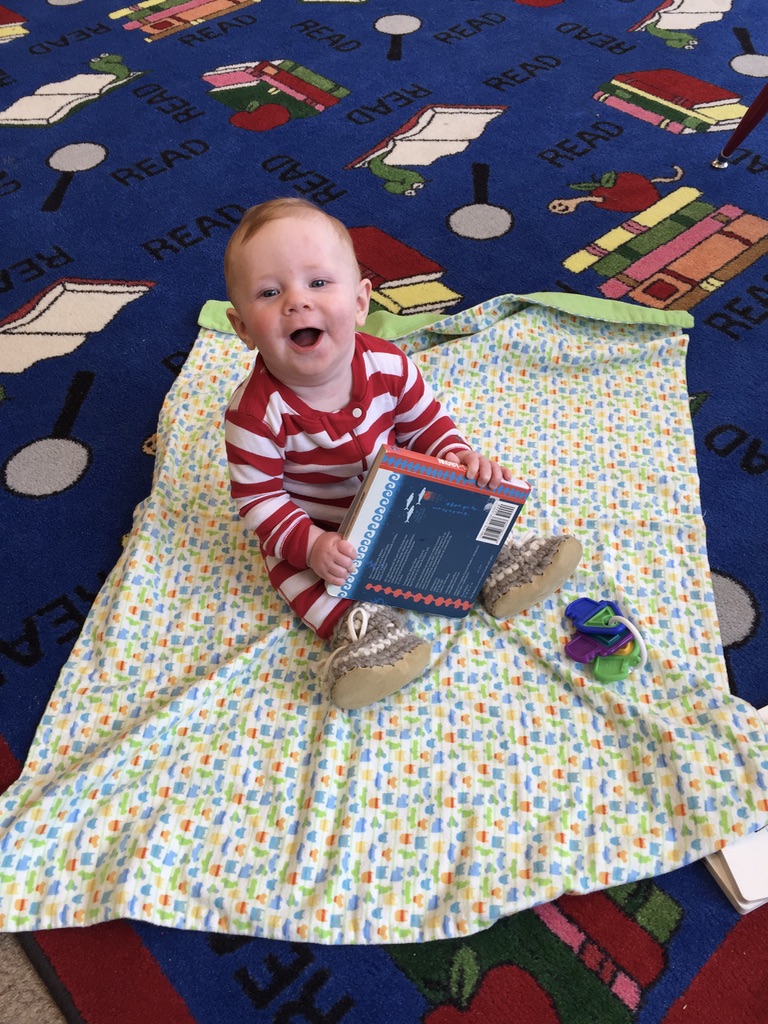

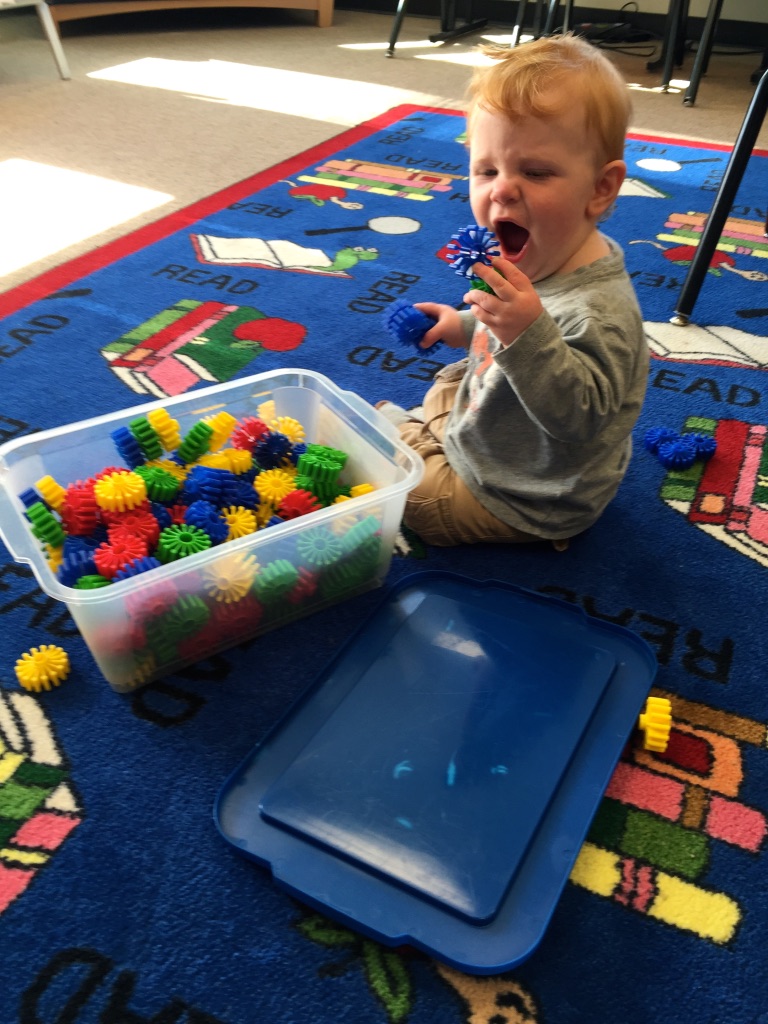
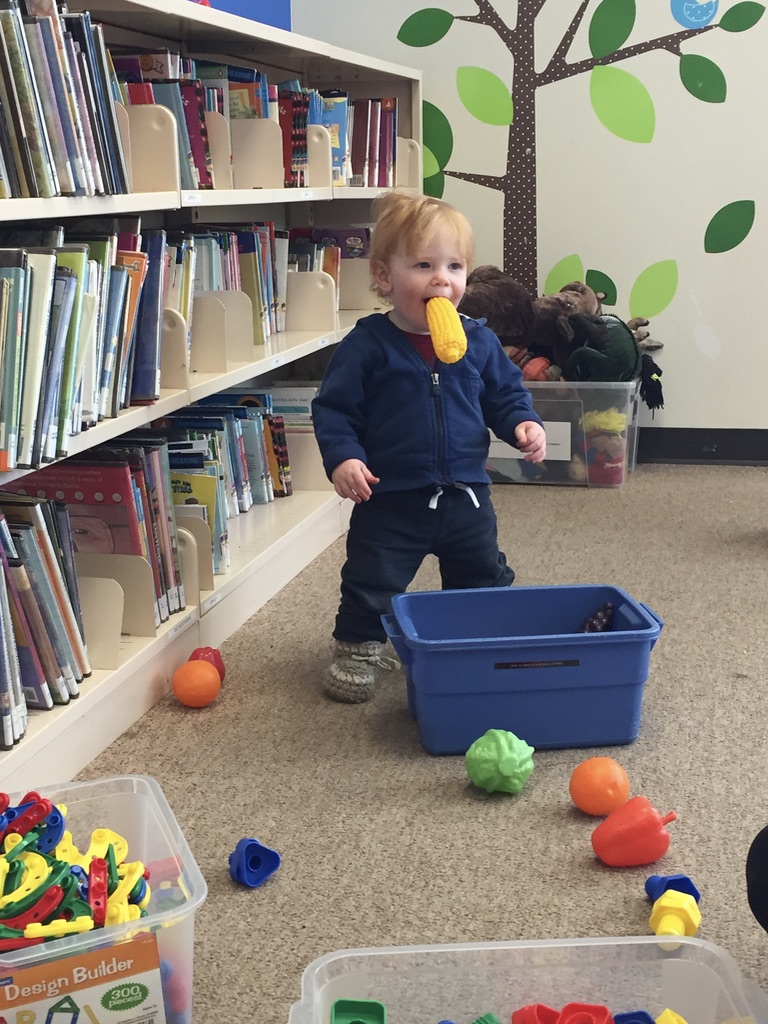
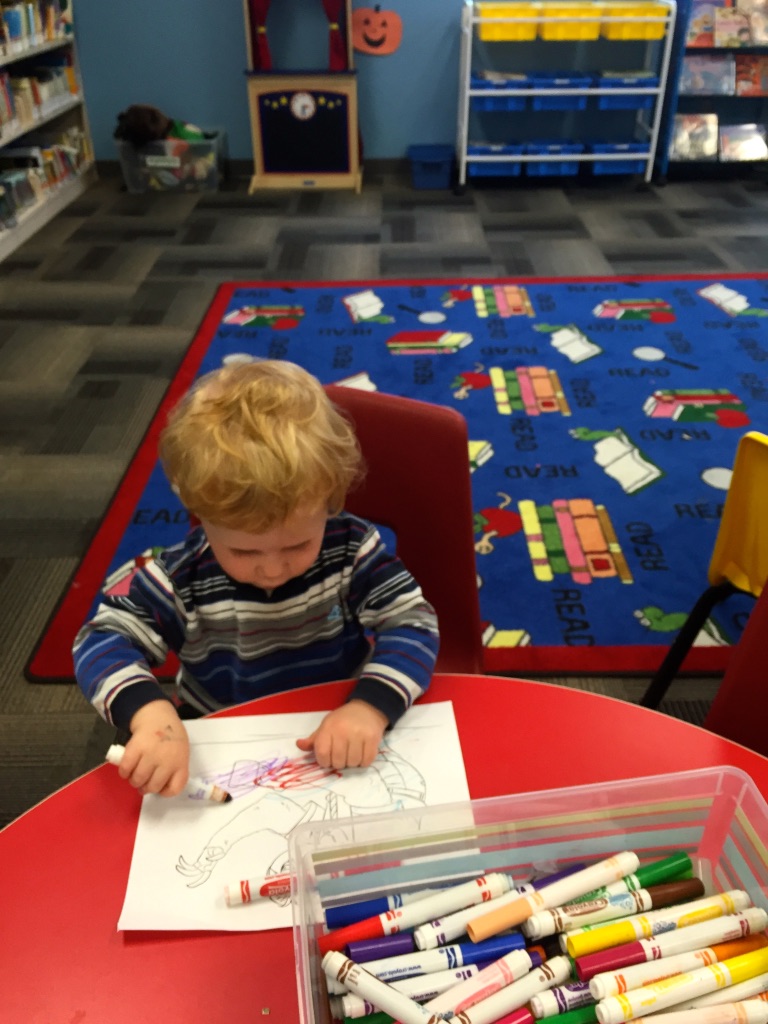

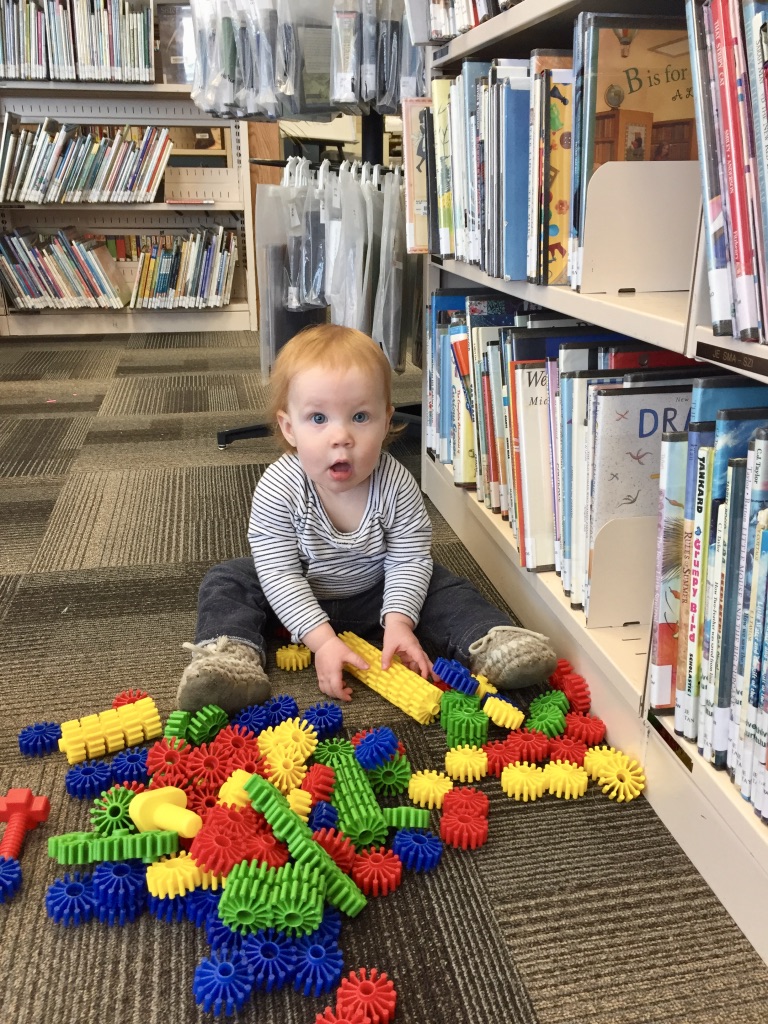
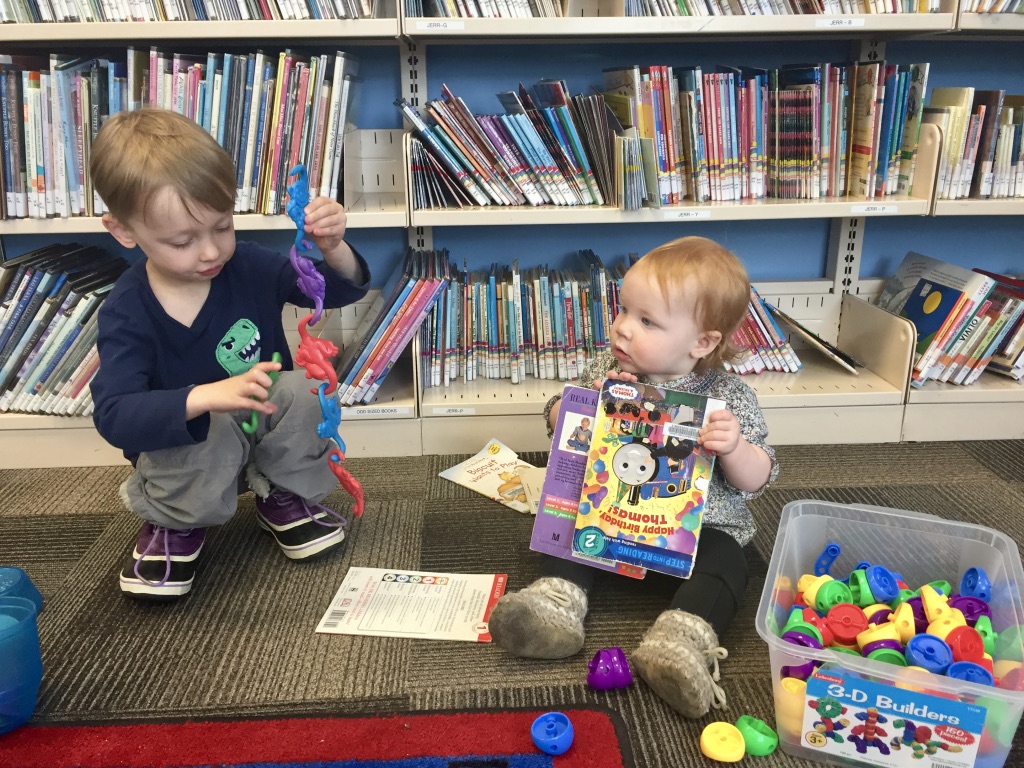
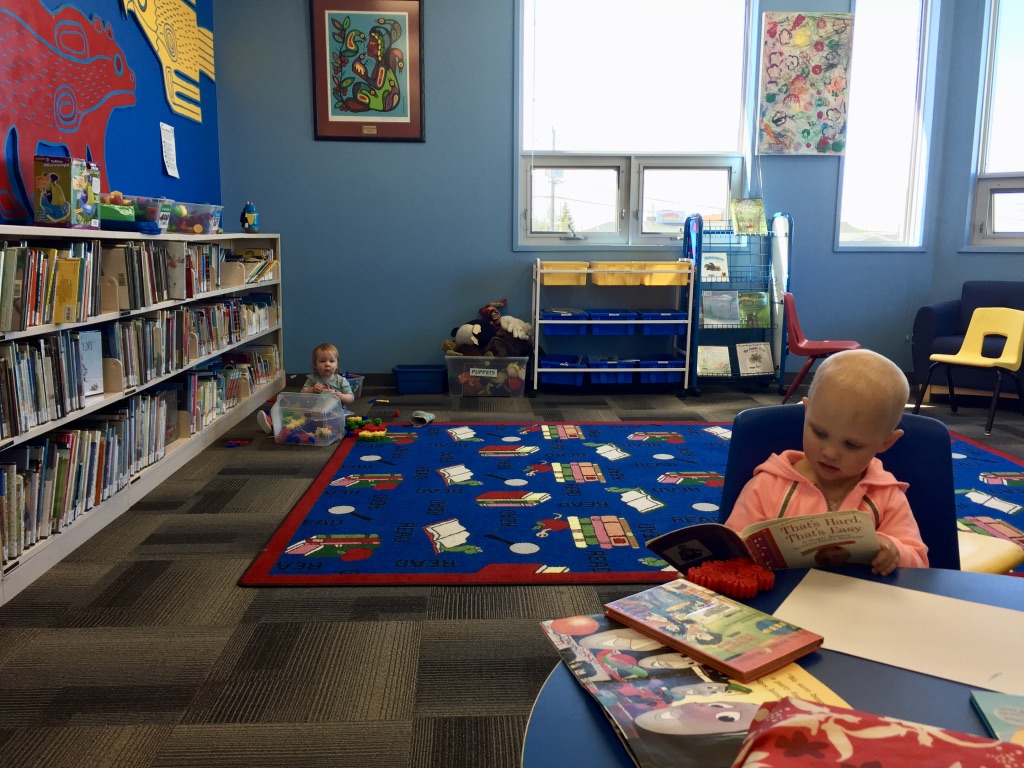
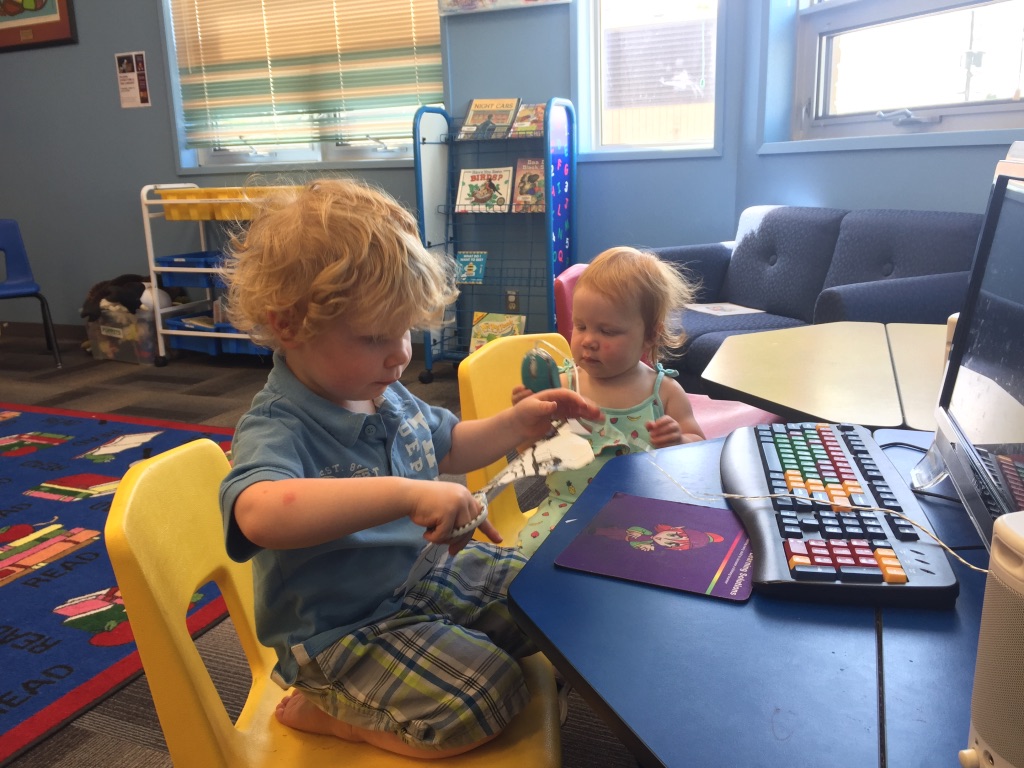
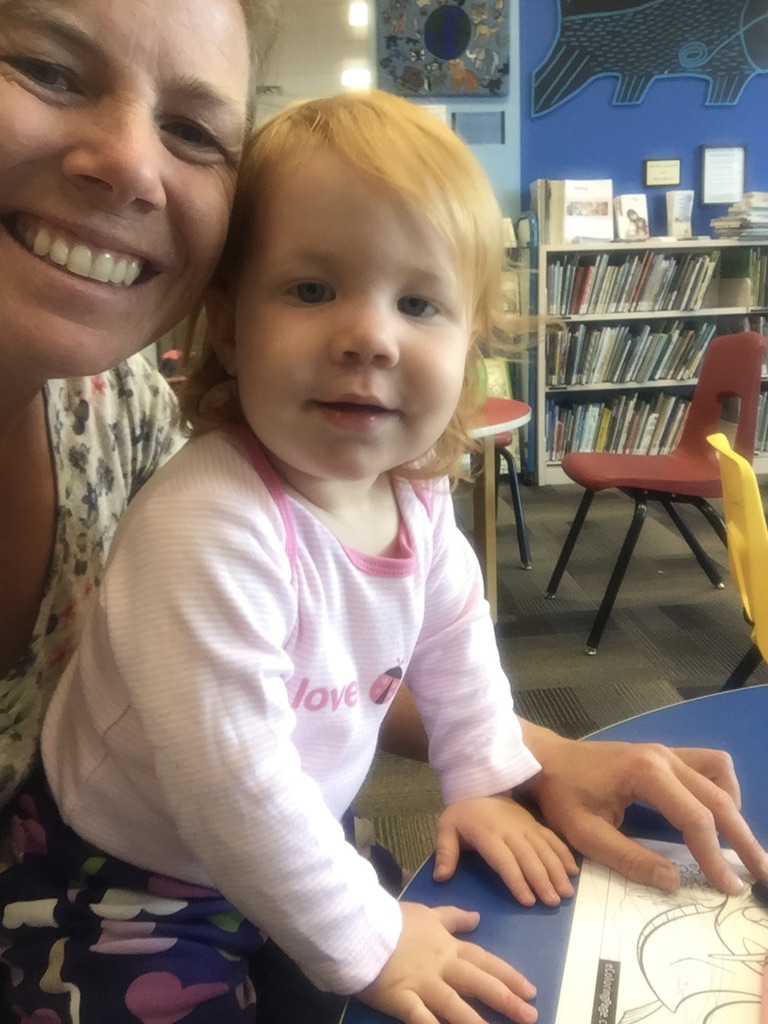
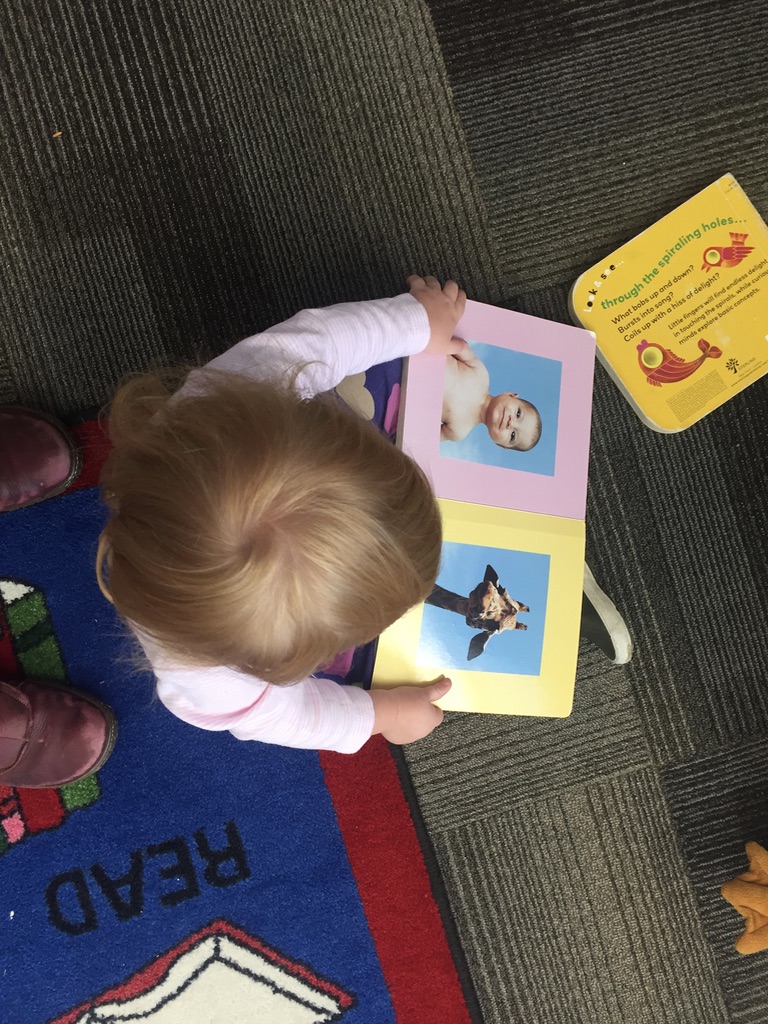
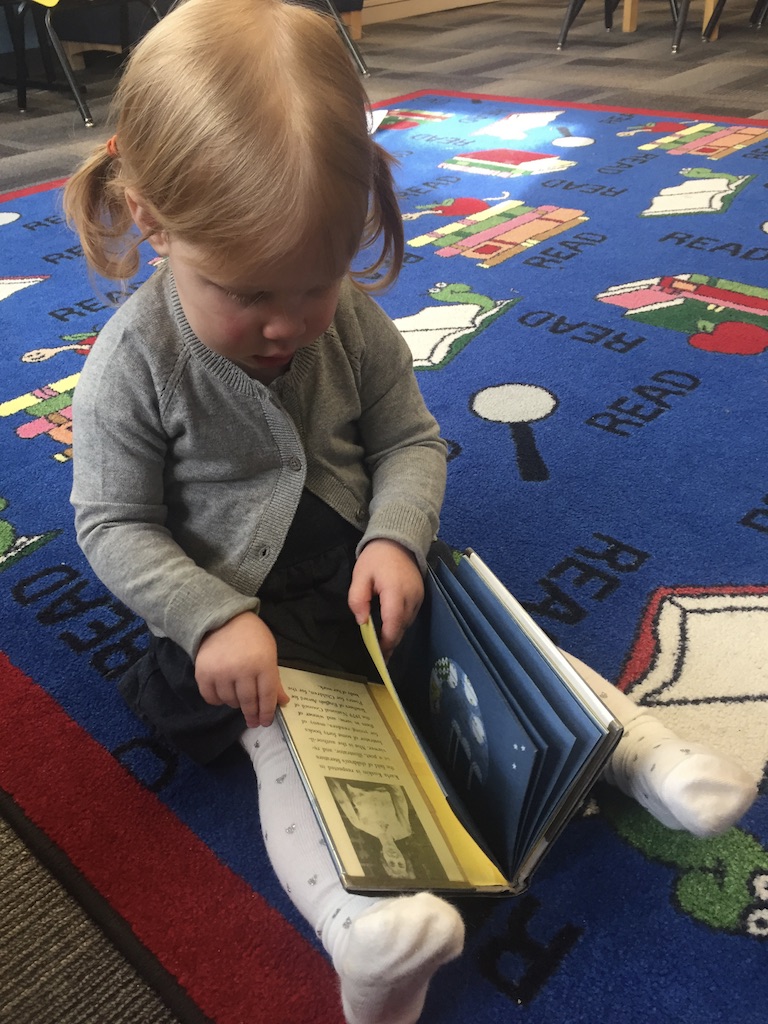
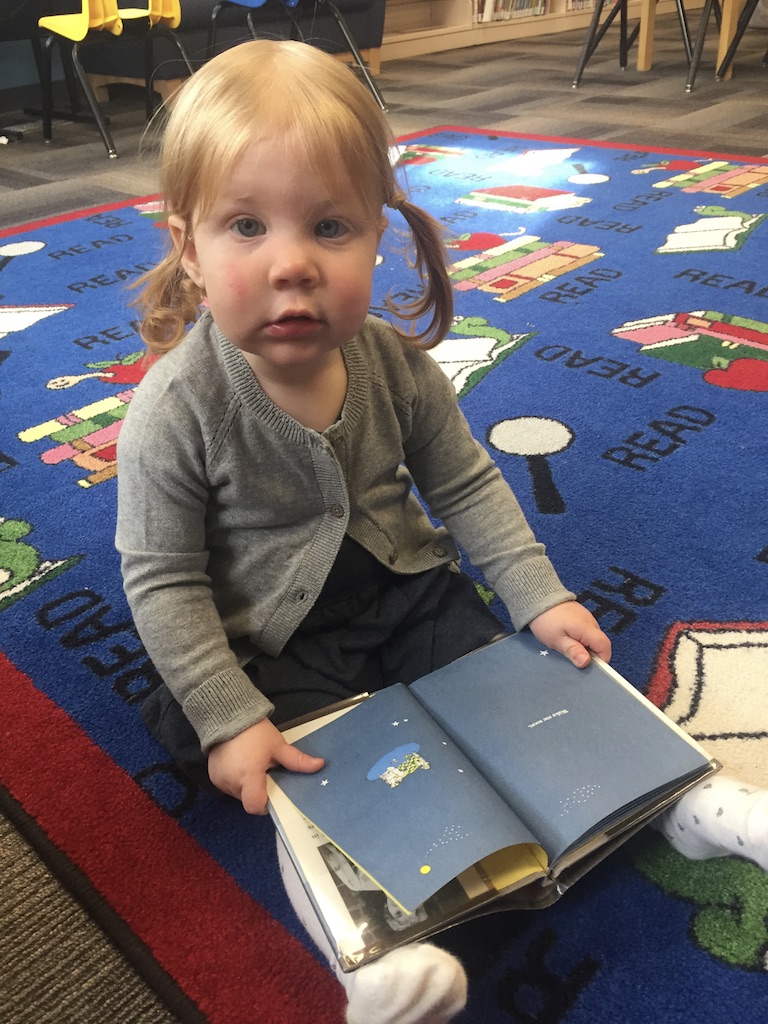
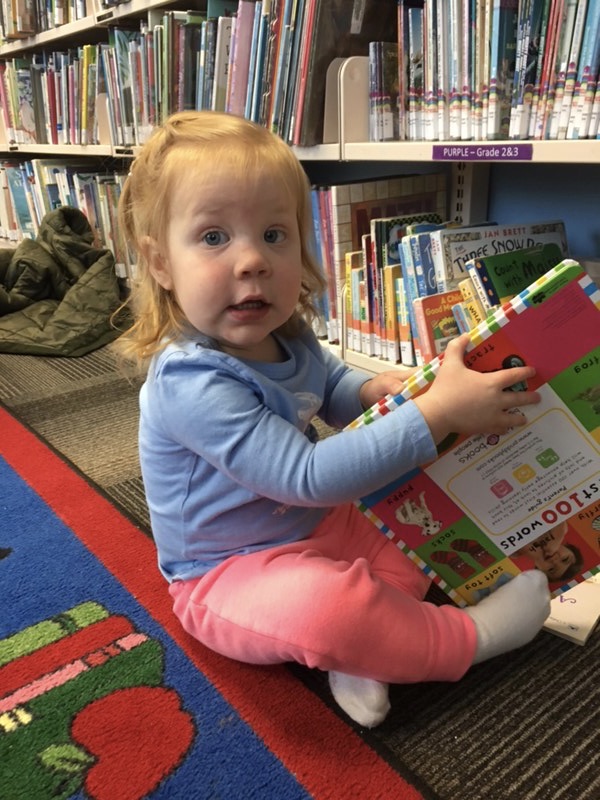

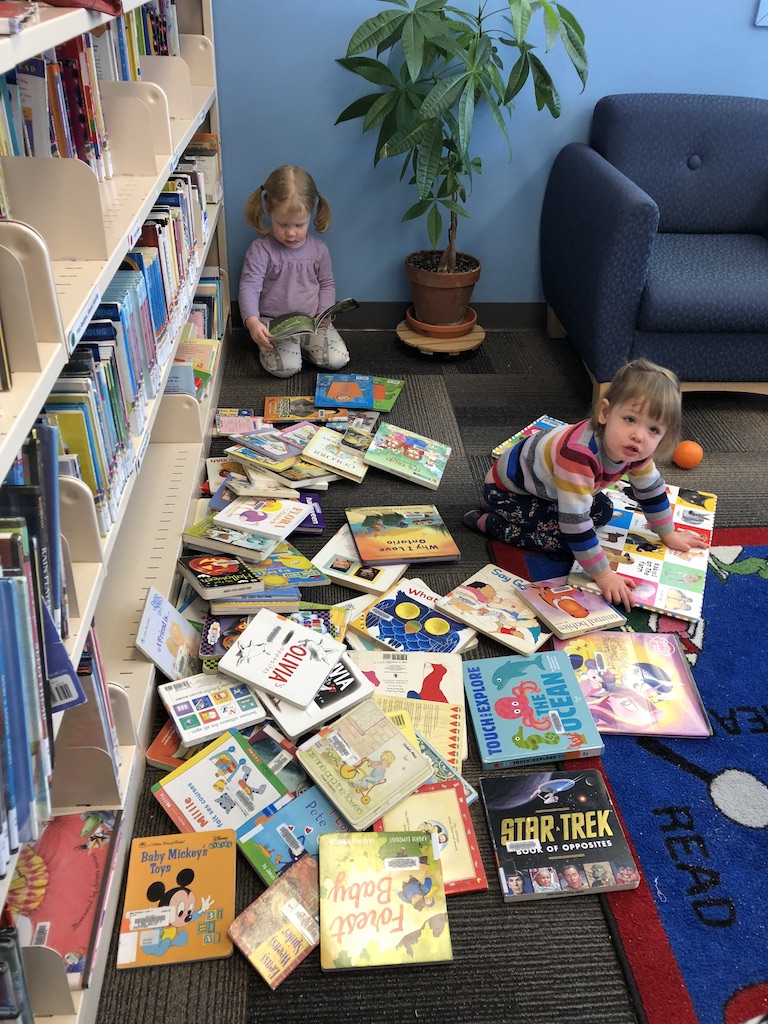
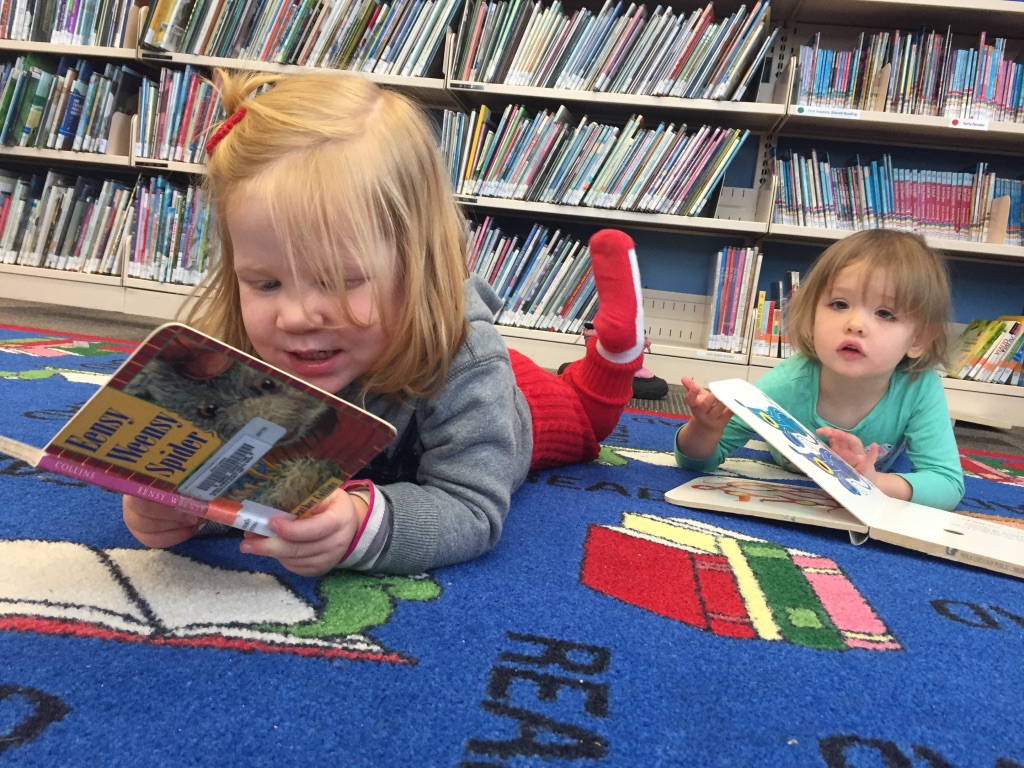

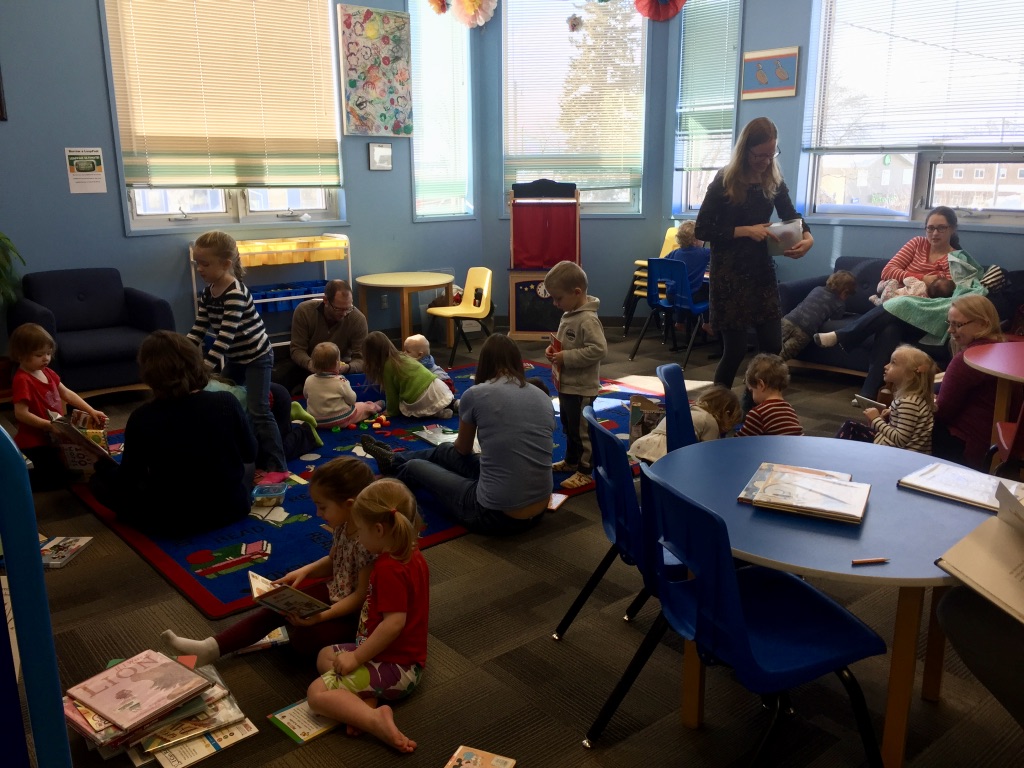

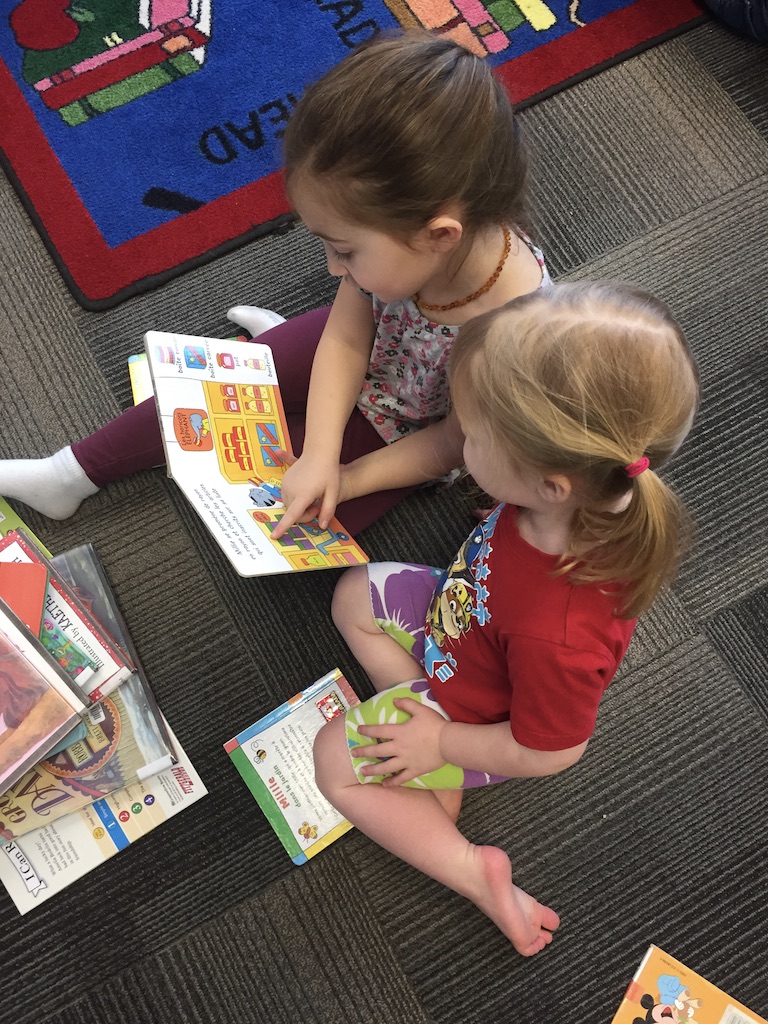


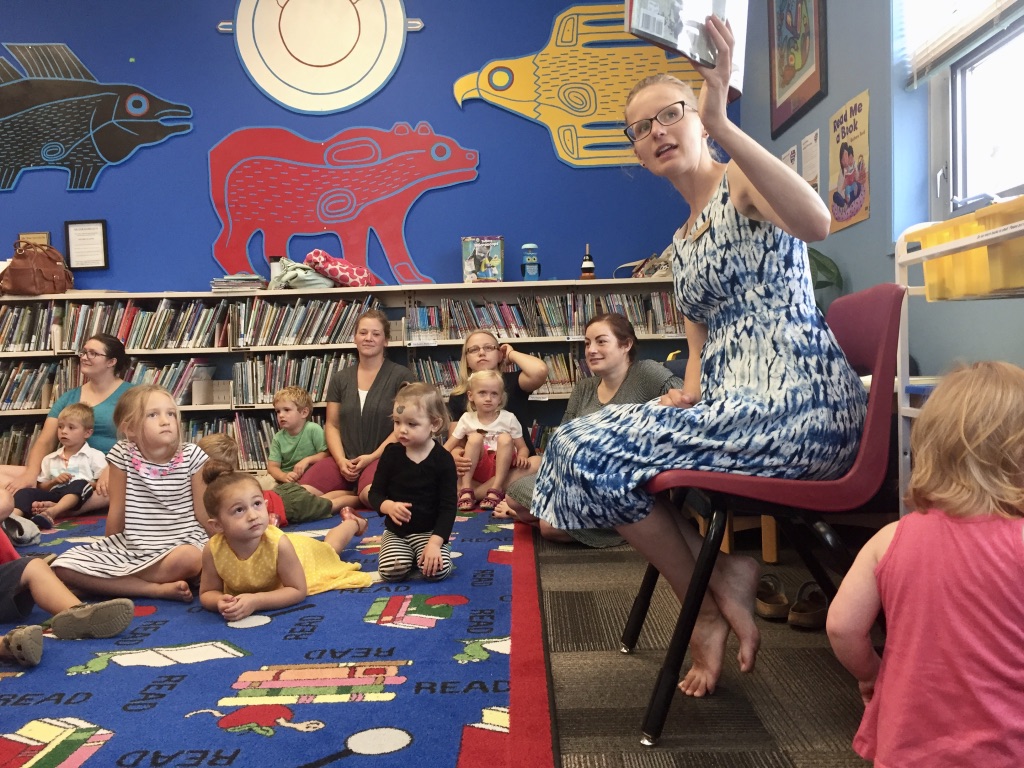
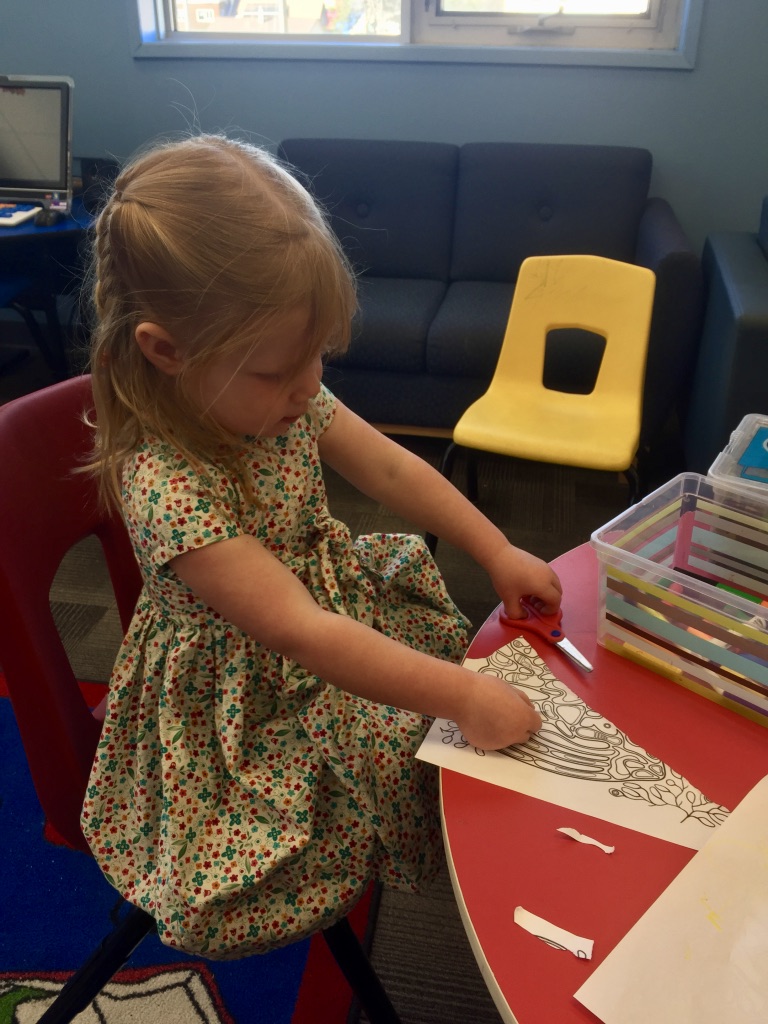
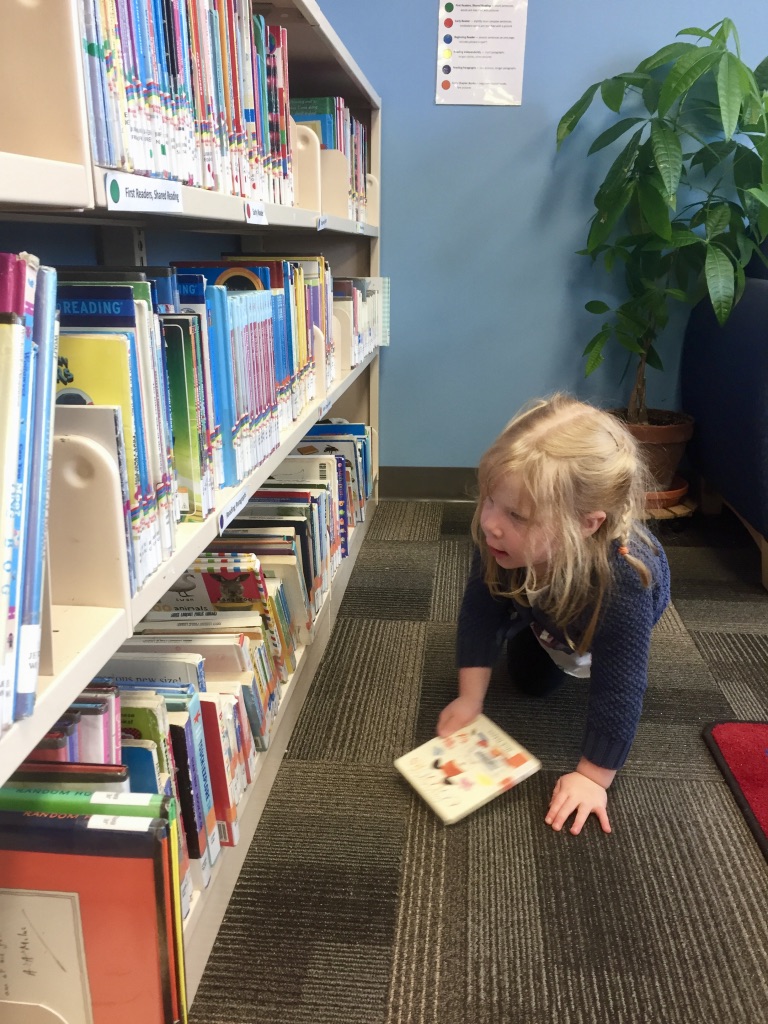
These days, it is rare for a week to go by without a trip to the library and at least 30 titles being checked-out and lugged home. Blake teases me regularly that I bring half the library home each time! In our house, there aren’t screens readily available, but books are scattered in every room. This has bred a love of reading for both of our kids. It isn’t a rare occurrence where Alice, at three years old, will wander to the couch and read to herself for half an hour.
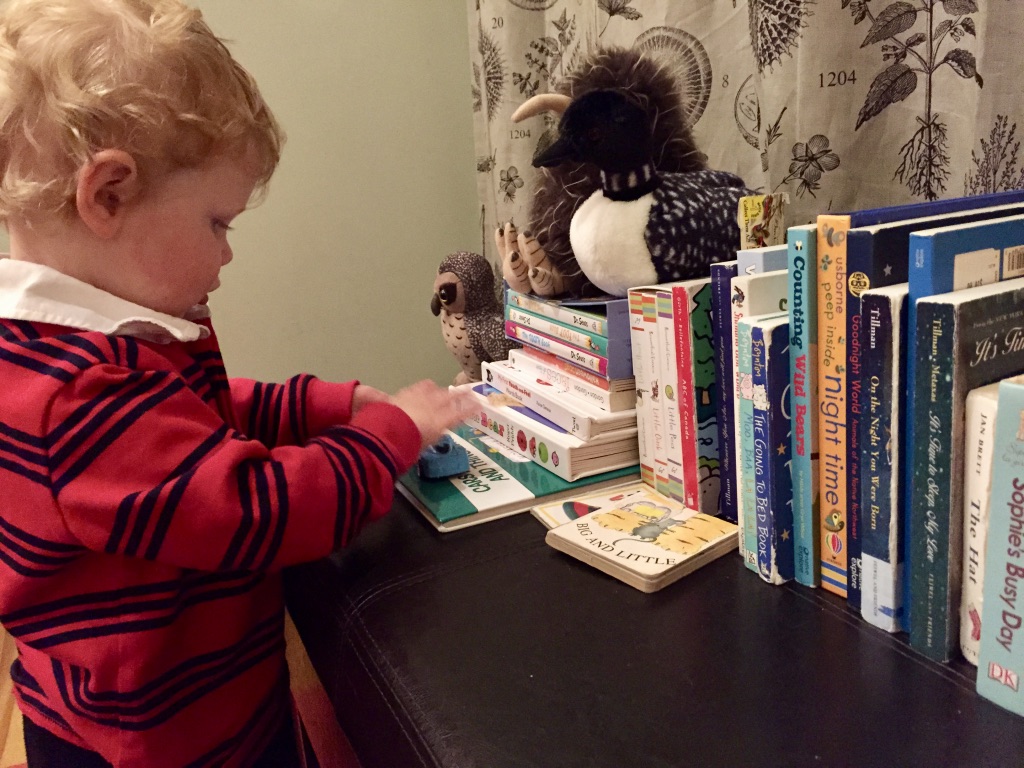


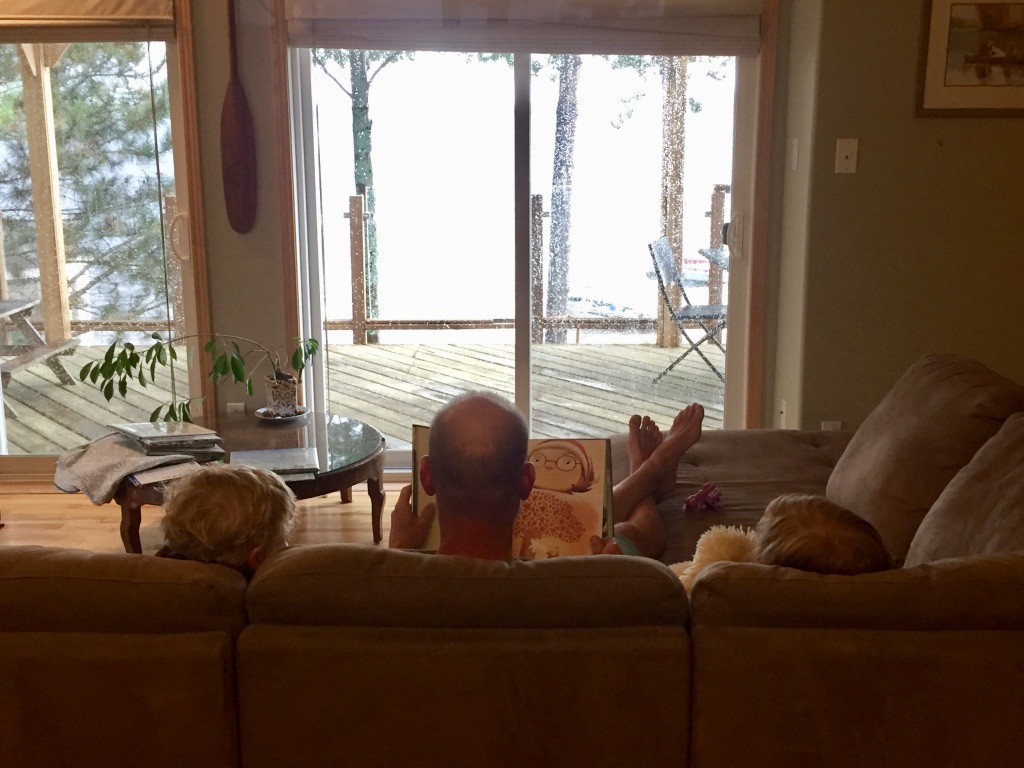
Throughout this past summer, on average, we would spend at least two hours a day of reading! Reading has been an integral way for our kids to self-regulate themselves. They often reach for a book when in need for some down-time. Of course, our kids are as energetic as the next three and four year-old, however what I have noticed over the years of reading, is that they are easily settled with a book. This summer, I also transitioned Henry to reading chapter books. At four and a half, I wasn’t sure how Henry would do without the visual stimulation of picture books. We started out with classic novels like ‘Pippy Longstocking’ and ‘The Little House in the Big Woods’ and shockingly, he would lie absolutely still while I read chapter after chapter. In our fast-paced, screen-obsessed culture, it was quite amazing to see his attention span grow and to watch him become enthralled with the story, using only his imagination to create the images within his mind. As the nerdy Mom that I am, I couldn’t have been more proud and excited to being this new chapter in our reading journey!
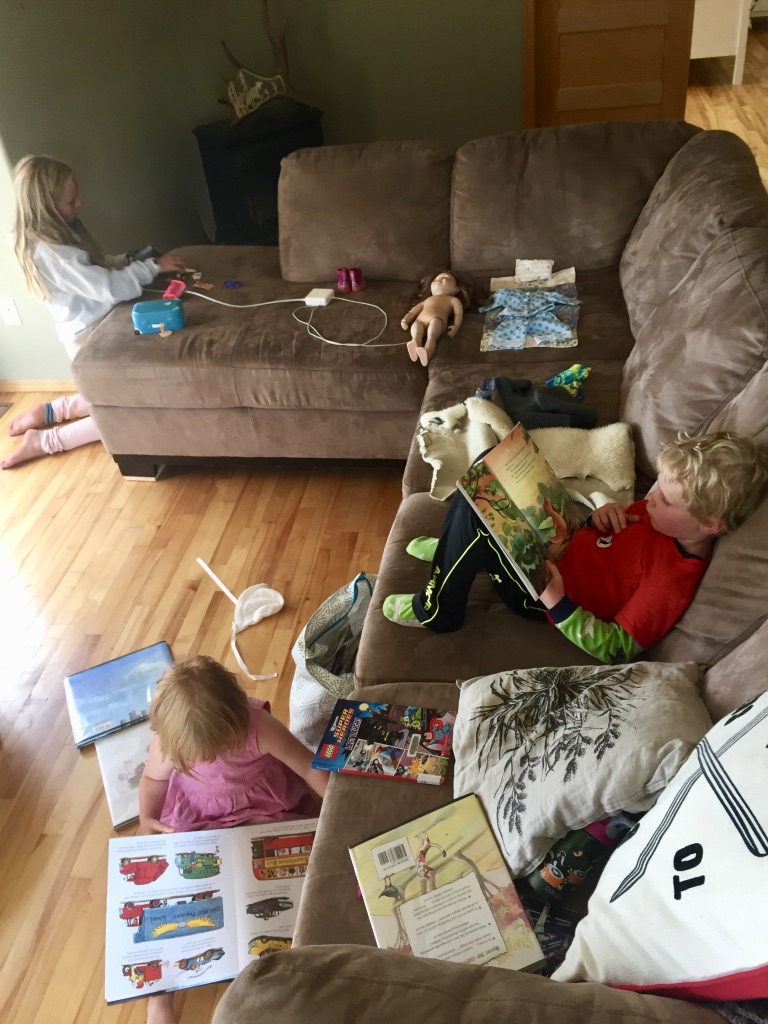

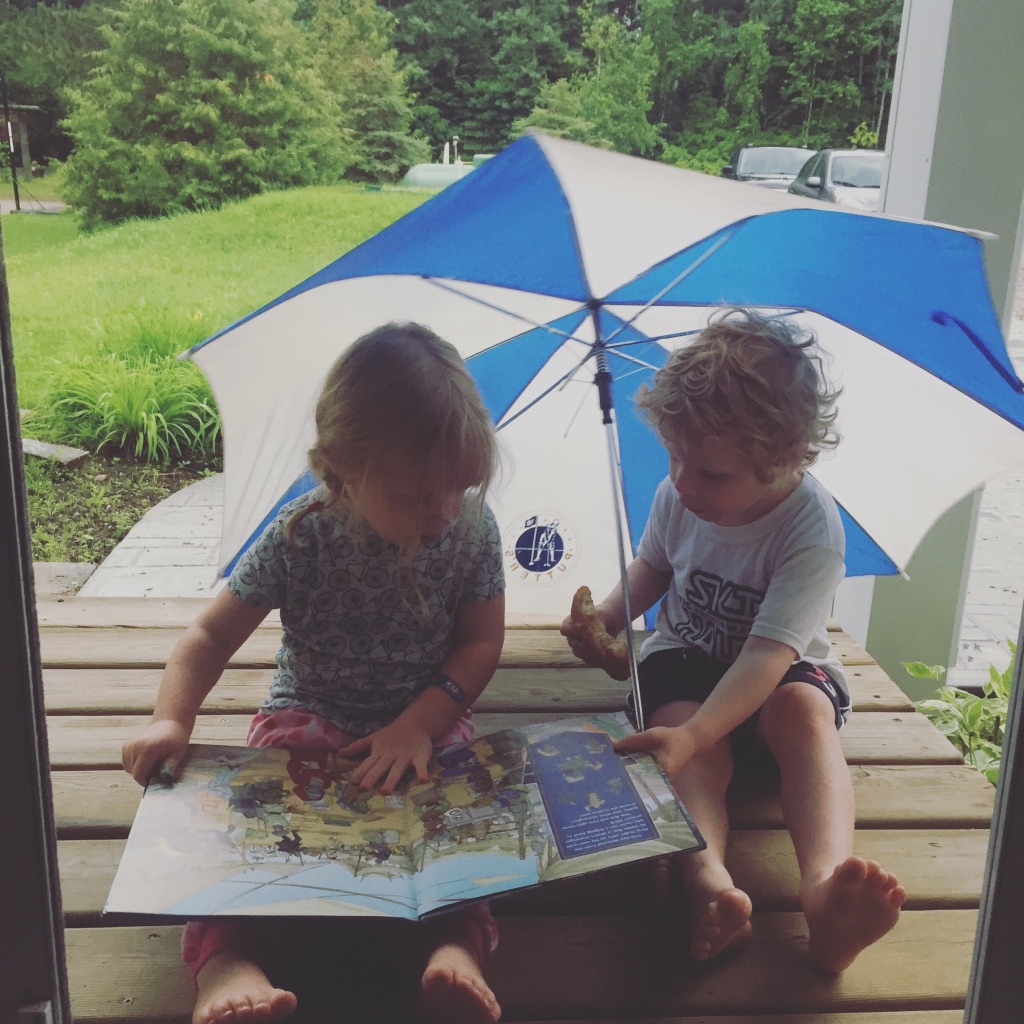
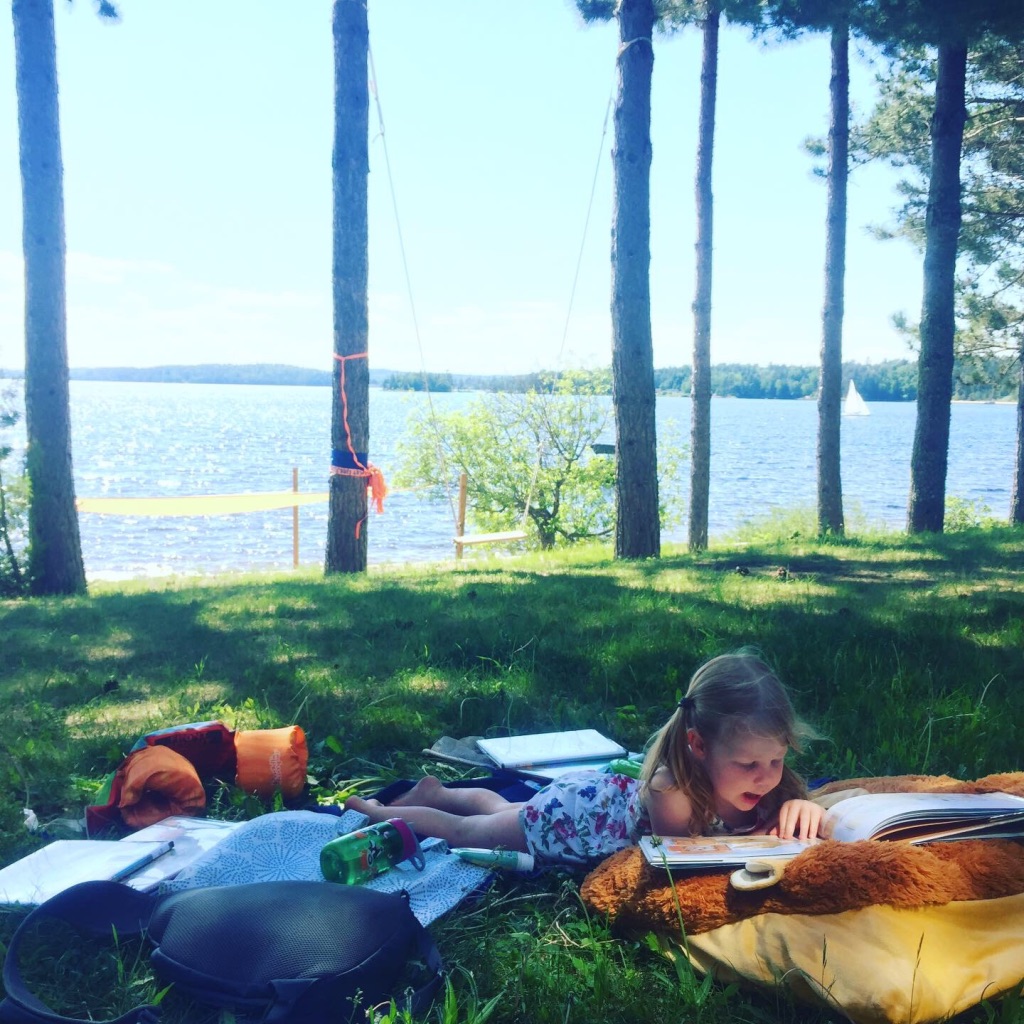

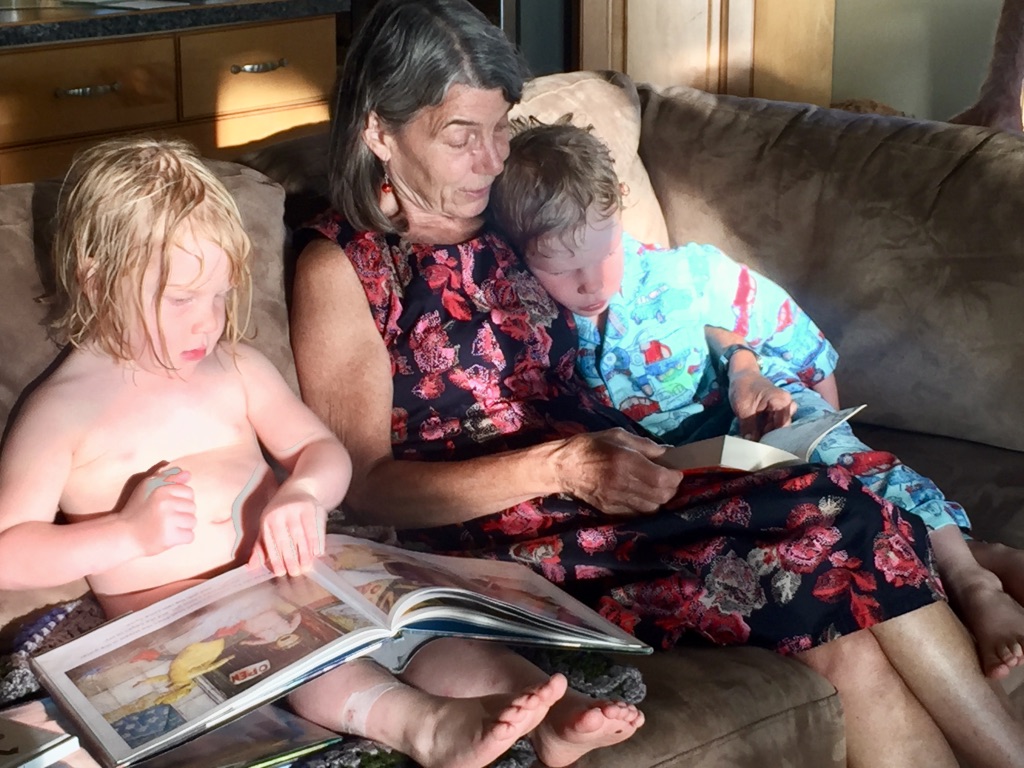
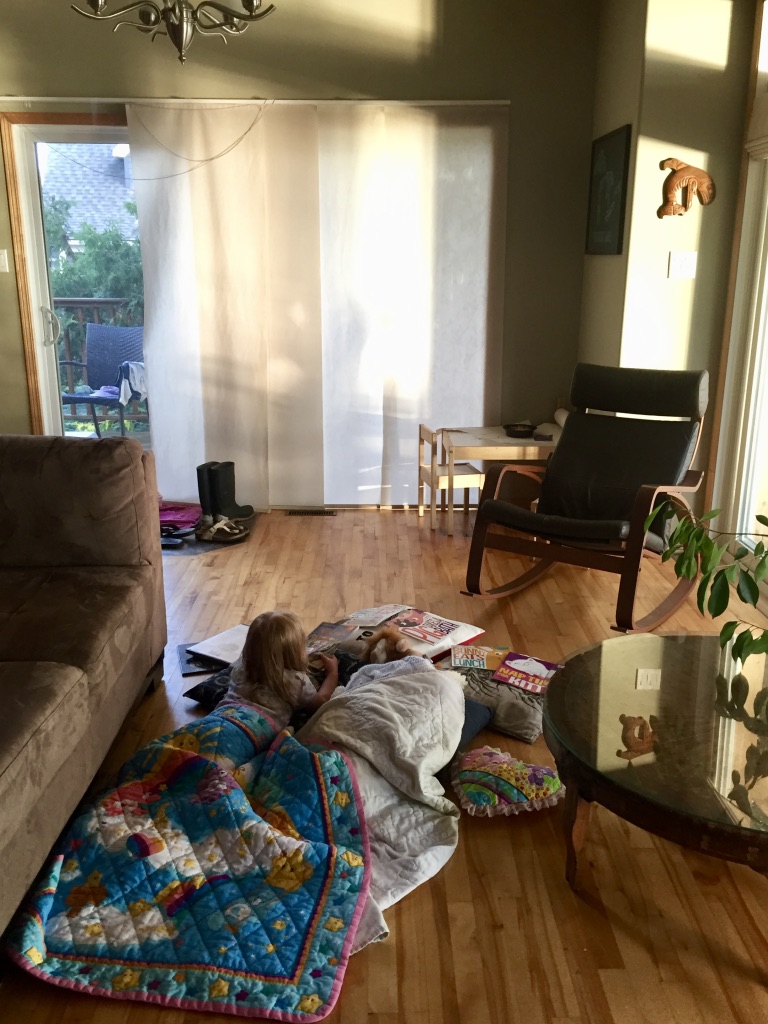
Of course, like any parent, we do let our kids have screen time. To be truthful, on road trips and cross-country flights, they watch Netflix until their brains liquify. At home, they do get the occasional show, but to be honest, because the iPad isn’t visible and we don’t have a TV, our kids tend to reach for their LEGOs, stuffies, books and other toys to initiate imaginary play. And although Blake teases us for being a family of nerds, I’ll take our nerdy status any day over trying to parent moody, brain-mushed, post-screen toddlers. As my Mom says, the thing that is the hardest in the short-term, is usually the best in the long-run.
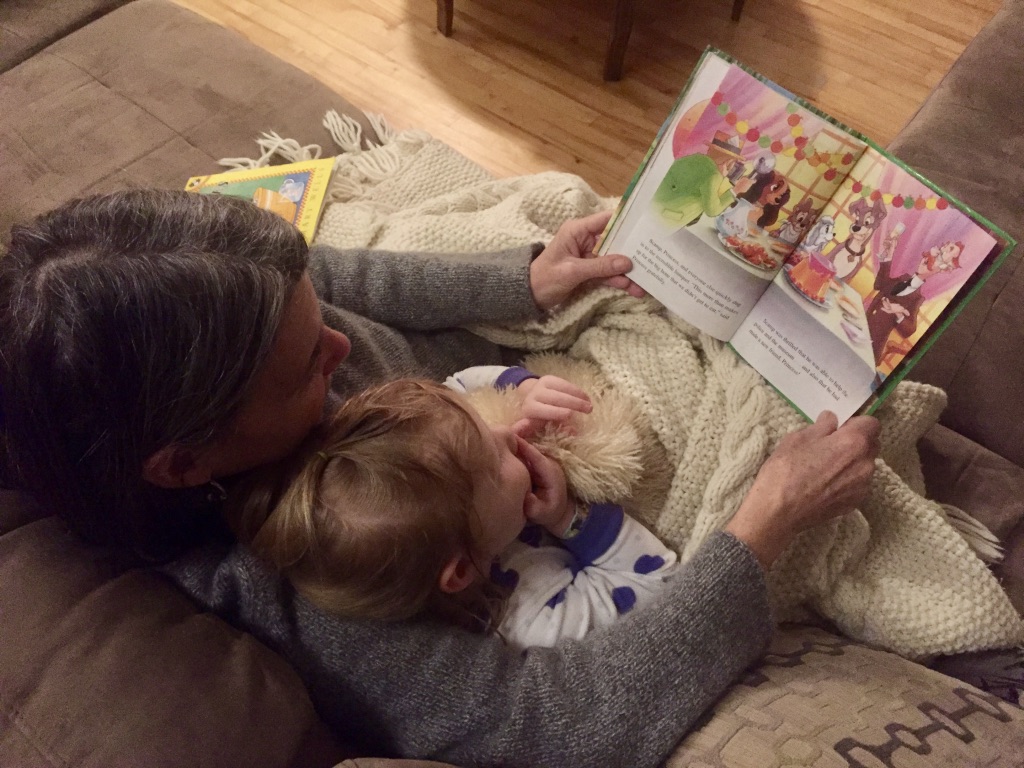
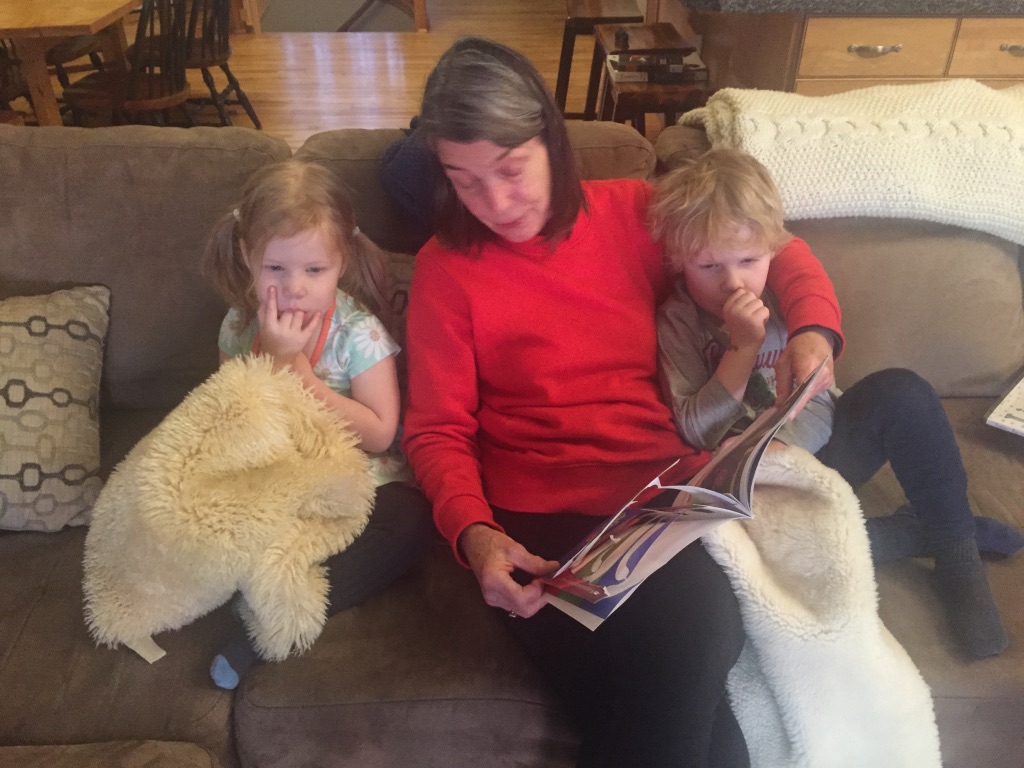


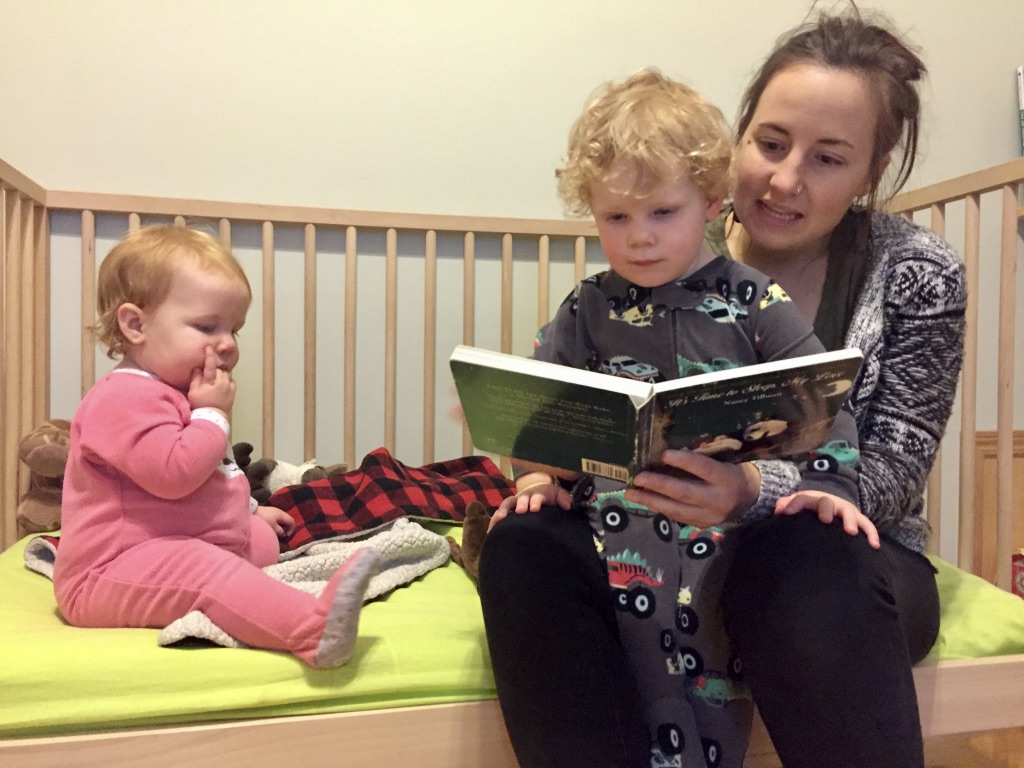

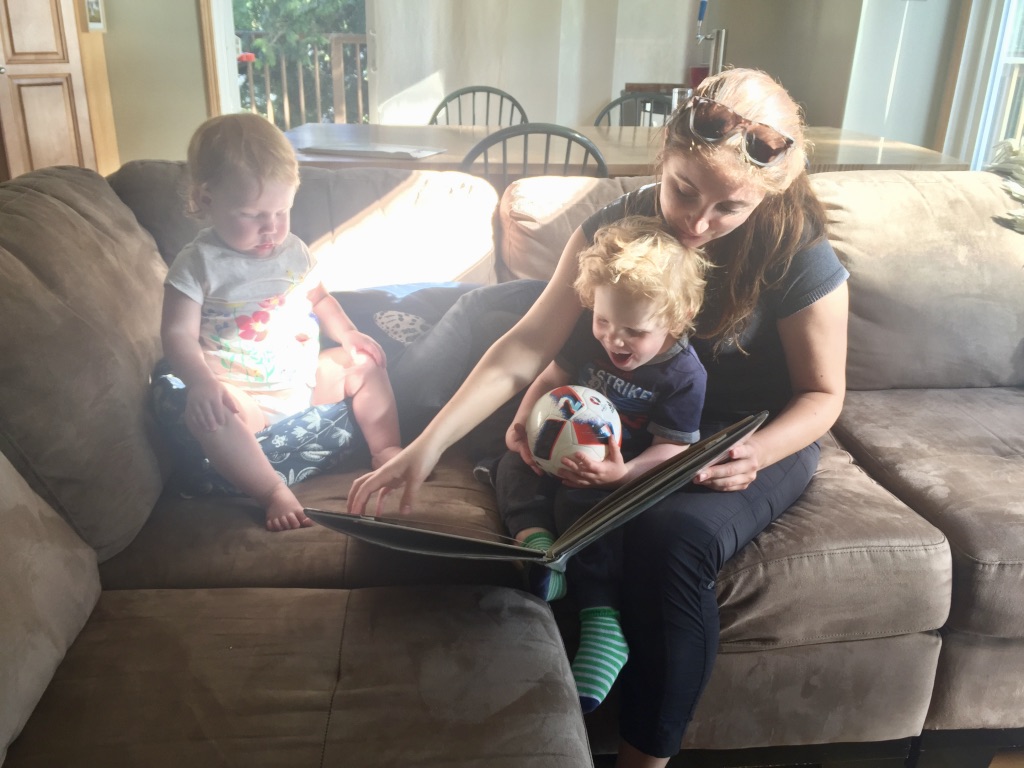
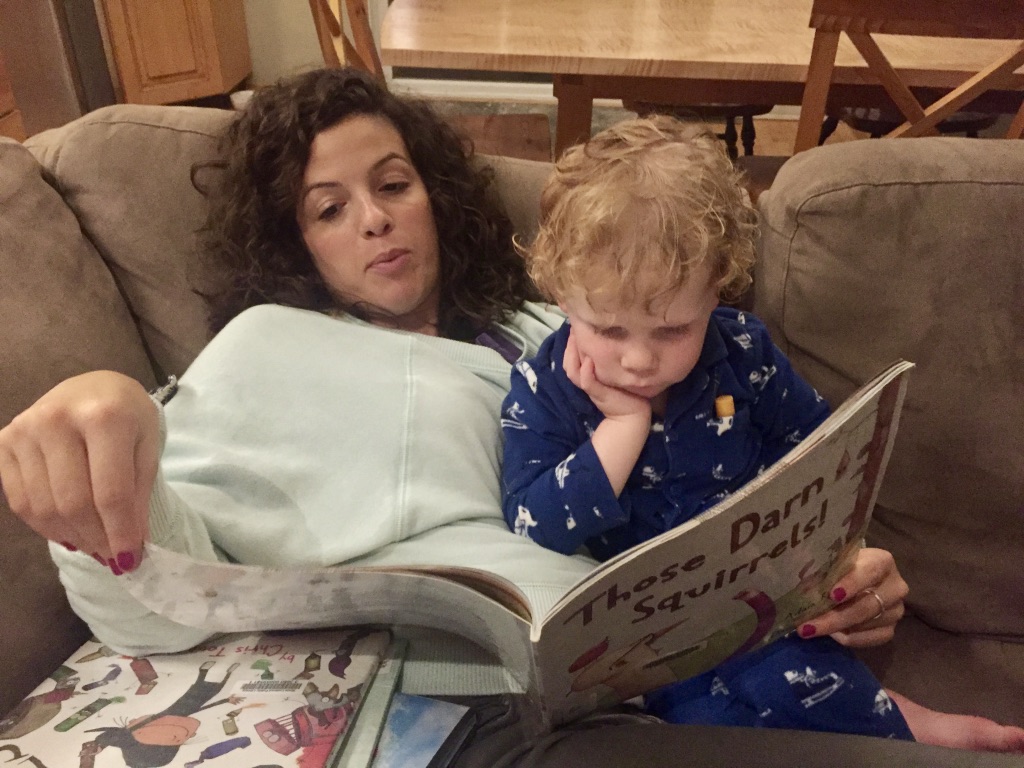

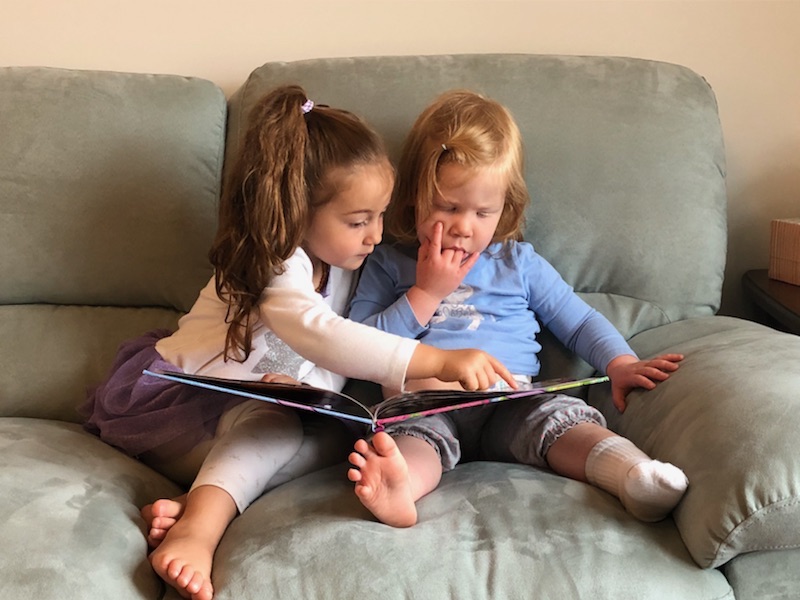

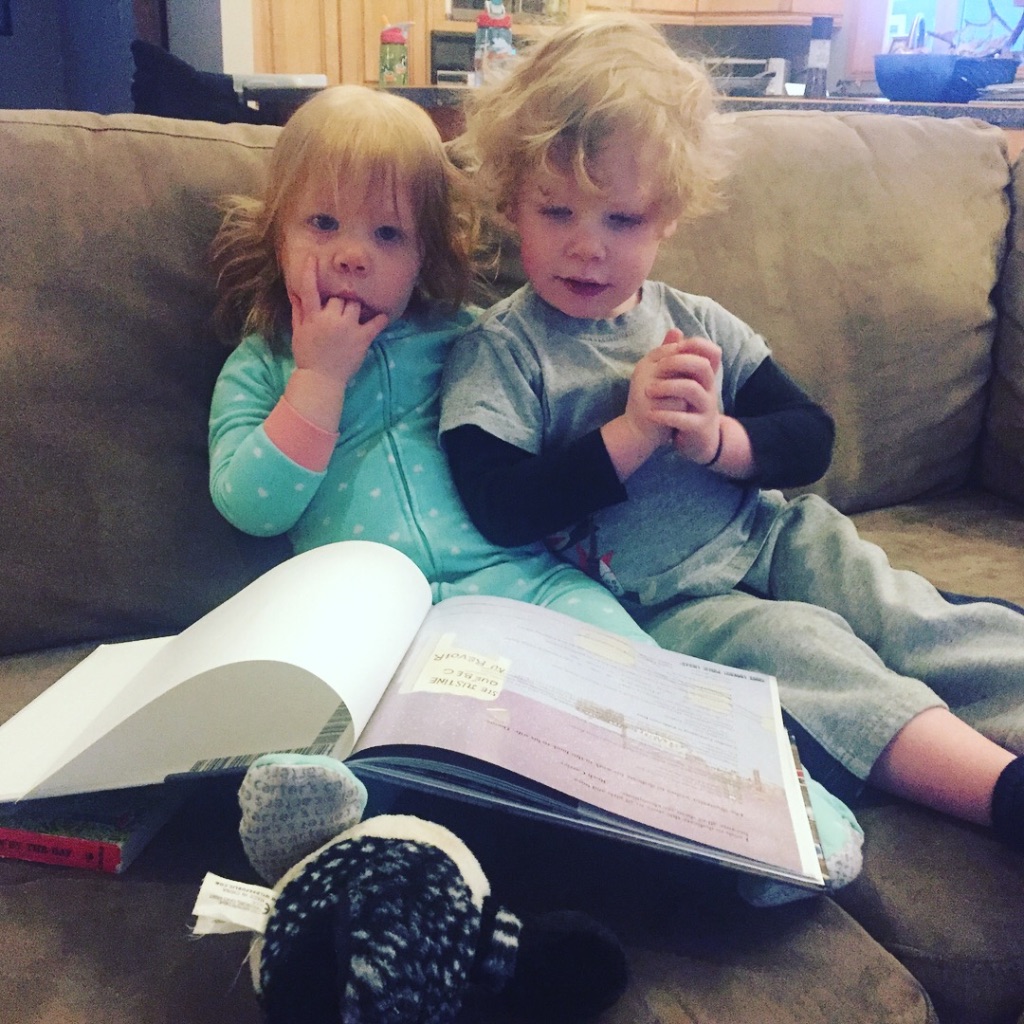
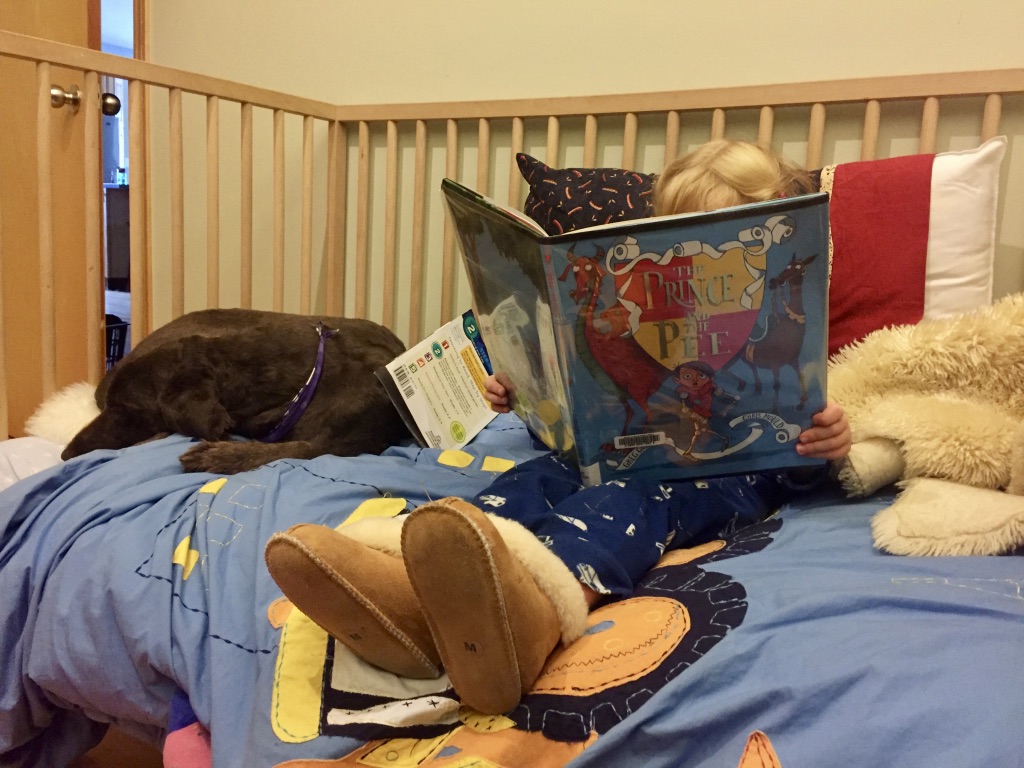
So, here are a few tips for creating nerdy, bookworm kids from a Super Nerd:
- Get to know your local library!
- Check out the kids section and start making trips to the library a part of your regular routine.
- One rule that I have at the library is that the kids can pick out as many books as they want (within reason), and I’ll never say ‘No’ to a title that they want to bring home. This gets them so excited to read books that they have personally selected.
- At home, make books accessible. Having them in strategic spots in their rooms and living spaces allows your kids to initiate reading on their own.
- If approached by your little one with requests to read, do your best to oblige (again, within reason). Of course, it would be easier for me to turn on Netflix, rather than read to the kids at 6am, but I have made a personal commitment to do my level best to never hinder any opportunity for reading.
- Most importantly, make it a part of our daily routine! Find a time as you wind down for the day to incorporate a story or two. Who doesn’t love quiet snuggles at the end of a long day. For me, these moments are the most treasured parts of my day.
Happy reading!
A Sailing (mis)Adventure
“Watch for the jibe!”, Blake’s yells through the wind. The 26-foot MacGregor heels over on its side, as I lurch forward, spreading my arms out to shelter Henry’s body under mine. I hurriedly press Henry flat against the deck without speaking. I know the potential danger that is coming.
I hear Blake cursing, the wind shaking the main, the screech of the traveller speeding towards us as the boom whips across the boat.
Then the impact.
Blood splatters the pristinely scrubbed, white deck and I instantly know that stitches will be required.
More cursing from Blake as he throws me the first available thing he can get his hands on to apply pressure to my head. The scent of dampness fills my nostrils as I press his bathing suit to my instantly aching head.
I struggle to gather myself. Henry screams, “Mom, you’re the worst Mom! You threw my waterbottle overboard!”. I hear Alice down below the decks yelling to the dog, “Ada!!!! We’re tipping!!!”. I try to call out to her to reasure her, but my voice is lost to the wind. Blood trickles down my face.
Blake scrambles to regain control of the massive boat as the white-capped waves smash against the hull. With more cursing, he leaps onto the deck and drops the jib in hurried, aggressive movements. I’m helpless to do anything but cling to Henry’s body and press my hand against my forehead. I close my eyes.
Then, I hear the motor splutter to life and the boat steadies itself. Blake throws open the hatch and orders me to get below and lie down. I silently oblige, pulling Henry and Alice close to my side. What disaster have we created?


Weeks ago, on a quiet evening after the kids had been tucked into bed, Blake had been onto me about purchasing a large sailboat for our family. “Think of all of the camping trips we could do on a boat like this!”, he had excitedly explained, motioning for me to view his laptop screen filled with photos of majestic sailboats. Having grown up windsurfing and sailing, wind sports continue to be a passion of Blake’s. I was skeptical, but interested. I had taught myself to sail as a kid on a laser during my summers in Muskoka, and in general, I was always on board with any plan that involved an outdoor adventure.
Finally, as a compromise, I agreed to give sailing with our family a trial run with a borrowed sailboat that belonged to a friend. If our one-night trip went well, I would consider funding Blake’s dream acquisition.
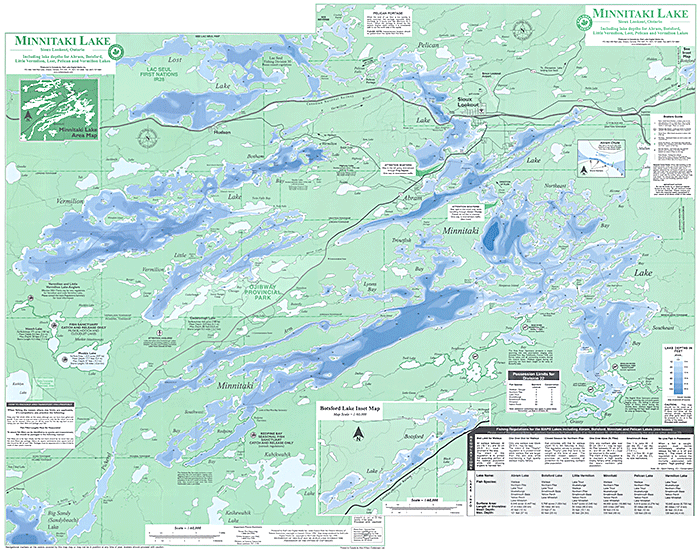
Our plan was to launch the boat and sail through Minataki Lake, an expansive 46,500-acre body of water near our home, that boasts over 250 miles of shoreline, fantastic fishing and innumerable islands. Our route would take us to the well-known Ruby Island – a gorgeous islet featuring wind-swept red pines and pristine sandy beaches. The island was also familiar to local families as a much coveted spot for camping. I spent the day before our departure gathering our camping gear and prepping snacks and meals to fuel our mini-adventure. ‘Here we go!’, I thought.

A well-known body of water among the fishermen who travel from the States in search of fishing thrills.
I should have known better. Well, maybe I truly did know better, but chose to ignore those nagging reservations about the success of our proposed 24-hour sailing enterprise. In my mind, I envisioned our family cruising lazily across Minataki’s blue waters with the breeze in our hair, creating lasting memories for all.

I think you can probably guess which direction things went despite my hopeful visions.
After all the gear had been secured below the MacGregor’s decks and the kids had been strapped into their car seats with Ada squeezed between them, we trailered the boat down the highway to Butterfly Lake to launch.

Our first hurdle was mounting the 30-foot mast. With the help of the iPad, the kids stayed in their seats as Blake and I struggled to lift and position the wavering mast. Many curses ensued, but we did it, our marriage barely coming out intact.
Now, sailing with Blake is a somewhat stressful affair at the best of times. In competitive sailing, orders are barked and crew members respond with lightening speed and agility. The problem is that I had zero formal sailing instruction under my belt AND I had two highly energetic, insane toddlers and a dog to keep an eye on.
From the get-go, I could see that there would be no laid-back meandering through the clear waters. The kids were full of beans as usual and spent their time scrambling onto the deck, scampering across to the bow, then back to the deck before slipping down into the cabin, all the while causing me much anxiety over their certain tumbles into the awaiting depths. On top of their continuous circuits of the sailboat, they hurled requests for snacks, water and bathroom breaks at a breakneck speed.
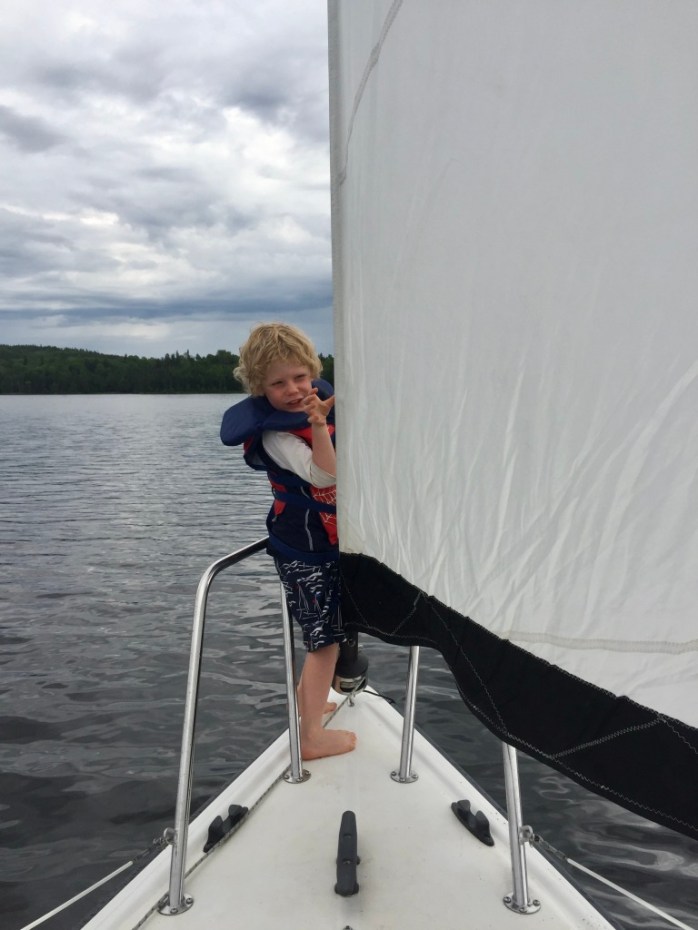
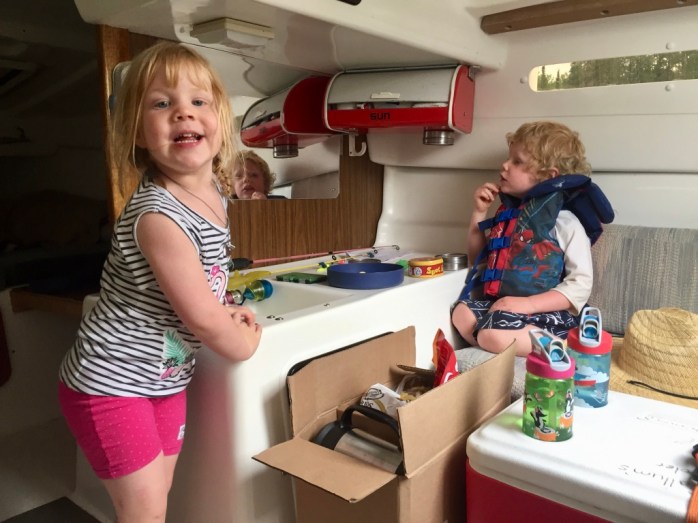
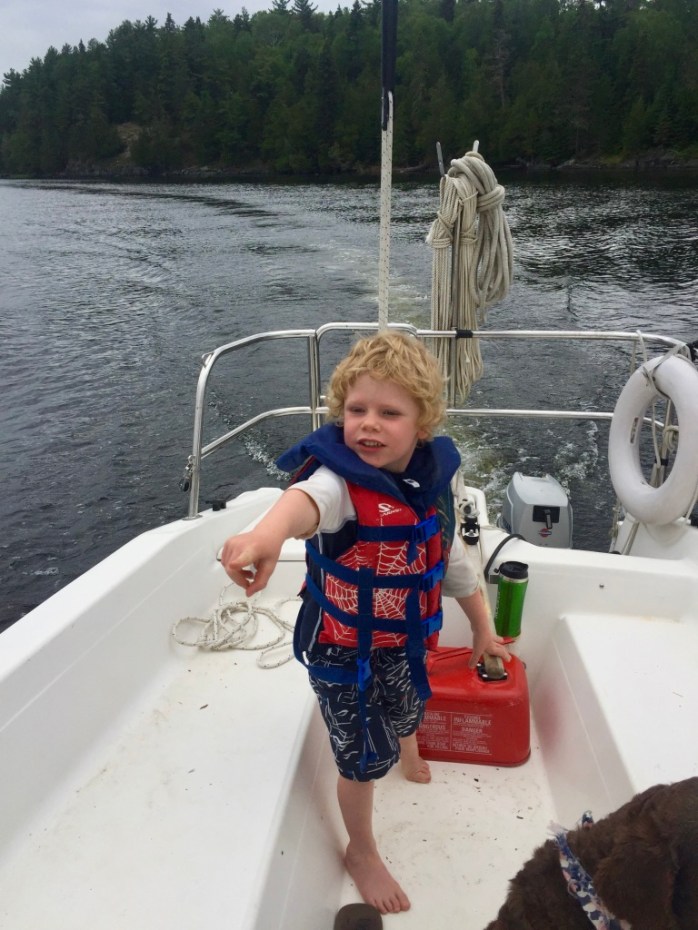
On top of these challenges, Henry and Alice were also desperate to cause me to instantly sprout a head of grey hair by removing their life jackets and hats at continuous five-minute intervals. All attempts to buckle them back into their buoyant straight-jackets were countered with screams of protest. It was like wrestling rabid monkeys. On repeat.


We finally got into a bit of a groove and for a split-second, I remember thinking, ‘Oh yes, I am enjoying myself!’, as Henry and I snuggled together on the bow. Of course, it was as if the weather gods felt my guard fall just slightly. In this moment, we were met with an instant surge of wind. The calm waters immediately opened up into an expanse of whitecaps. At the same time, the main sail filled with a strong gust and the boat heeled over onto its side, sending Henry’s water bottle flying into the waves.
Chaos followed; Henry crying over the aforementioned water bottle, Blake cursing and single-handedly trying to maneuver the 26-foot boat in a ‘man-overboard’ drill to rescue it and the boom/traveller incident leaving me bloodied and dazed.
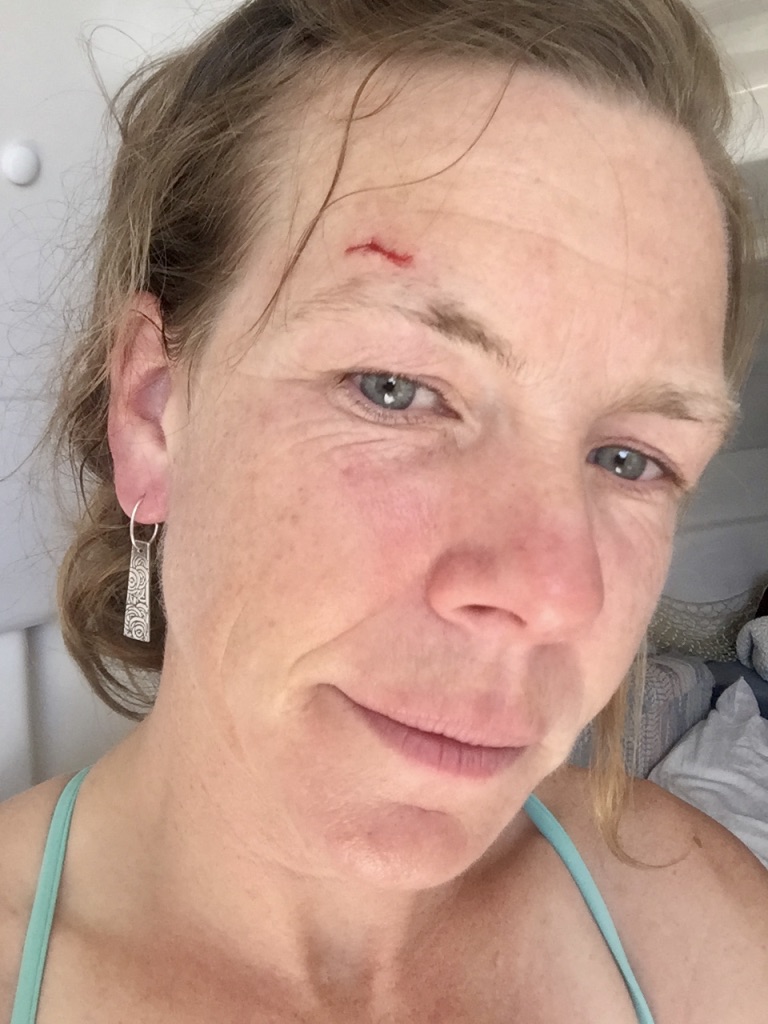
By the time we finally arrived to Ruby Island, I was anxious for break in our luck. But, alas, after a brief moment of sun, the wind and storms continued and we were pelted with torrential rain. When the clouds finally parted, we got the kids into bed, only to be literally eaten alive by thousands of mosquitos who eagerly penetrated the boats nooks and crannies while we ‘slept’ below decks. The hot, still air of the cabin pressed our hair to the backs of our sweaty necks as I counted down the hours until dawn, continuously swatting at the army of flies chewing Alice to bits.
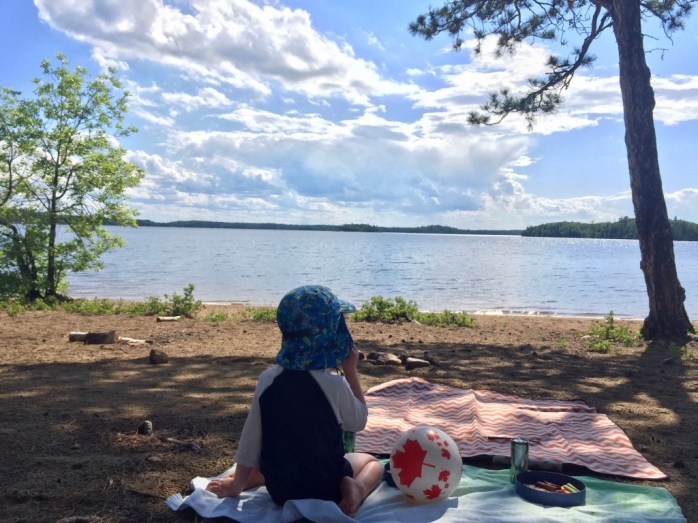
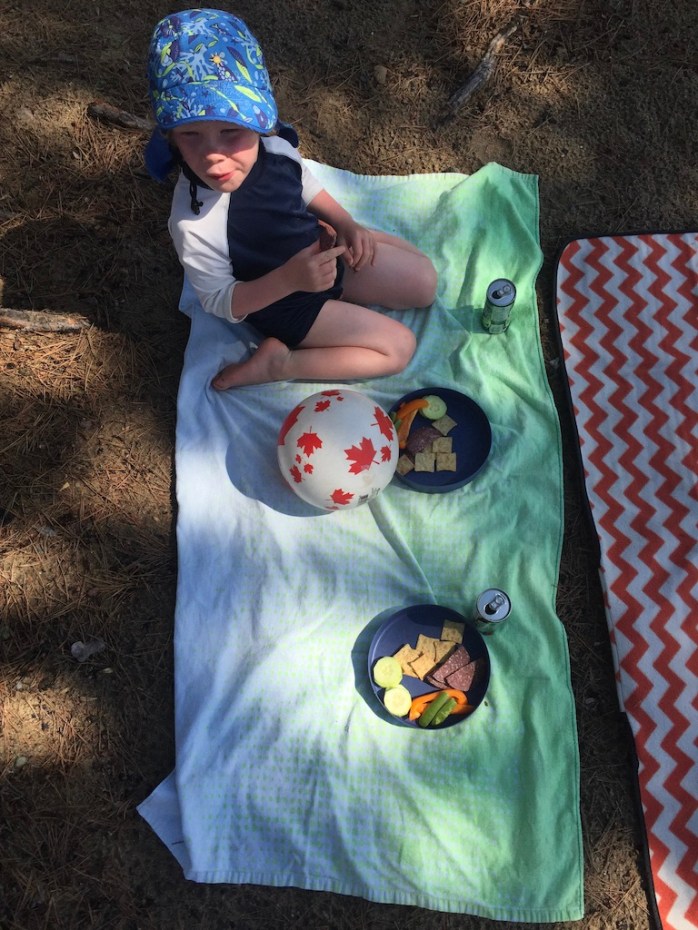
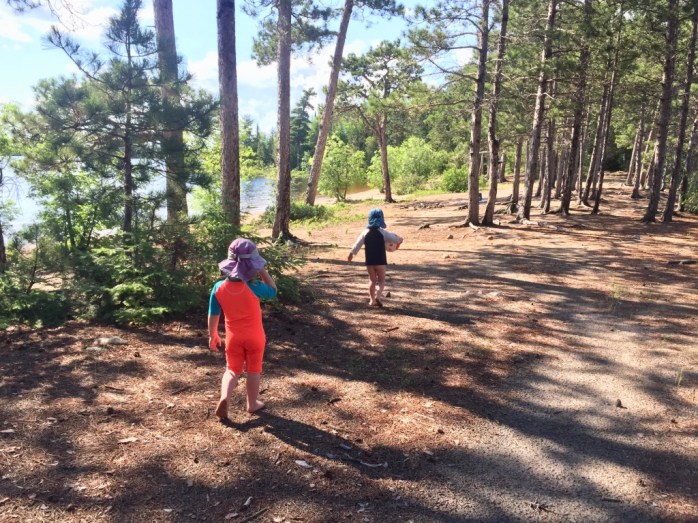

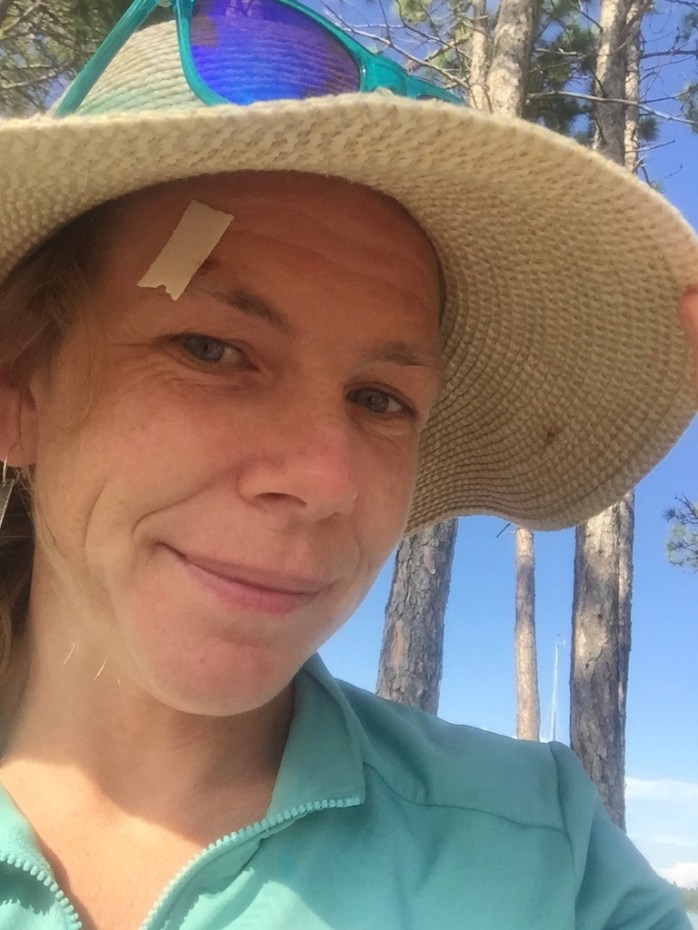
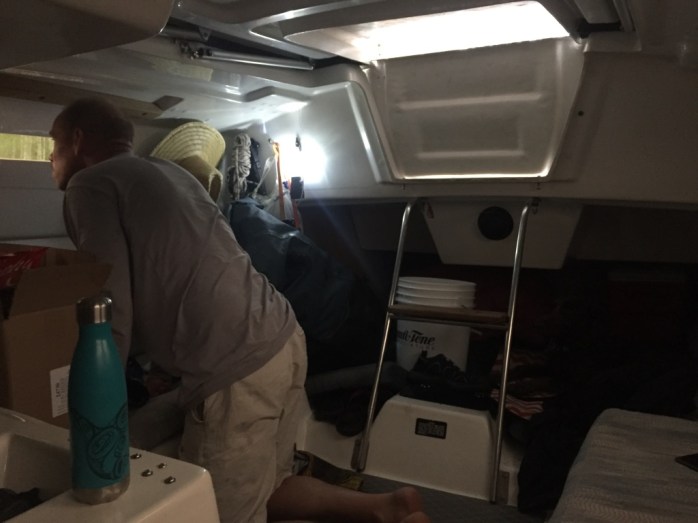

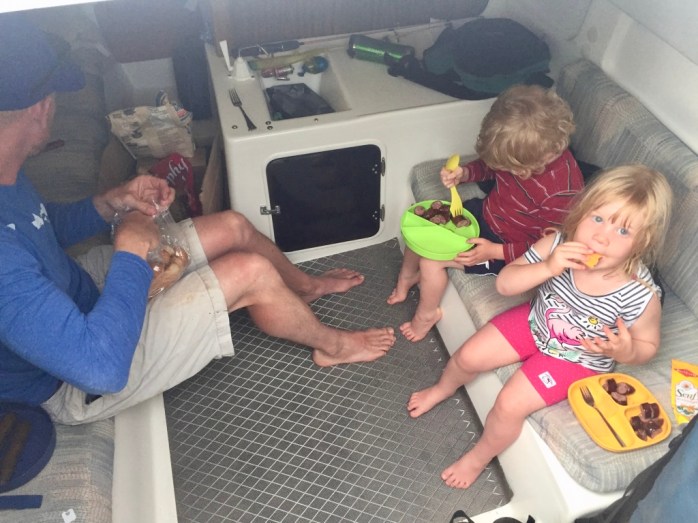
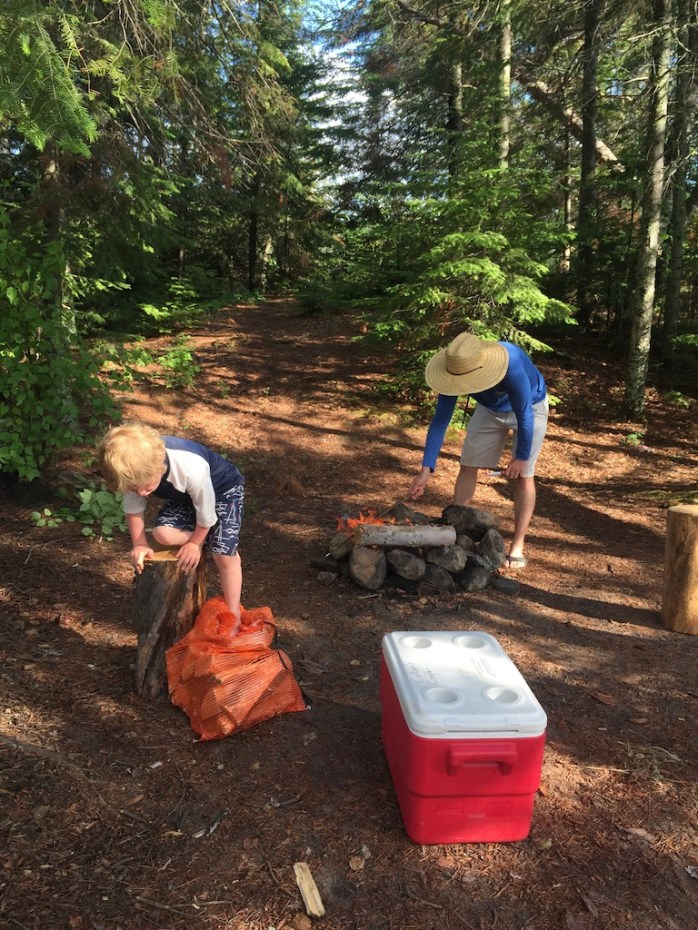
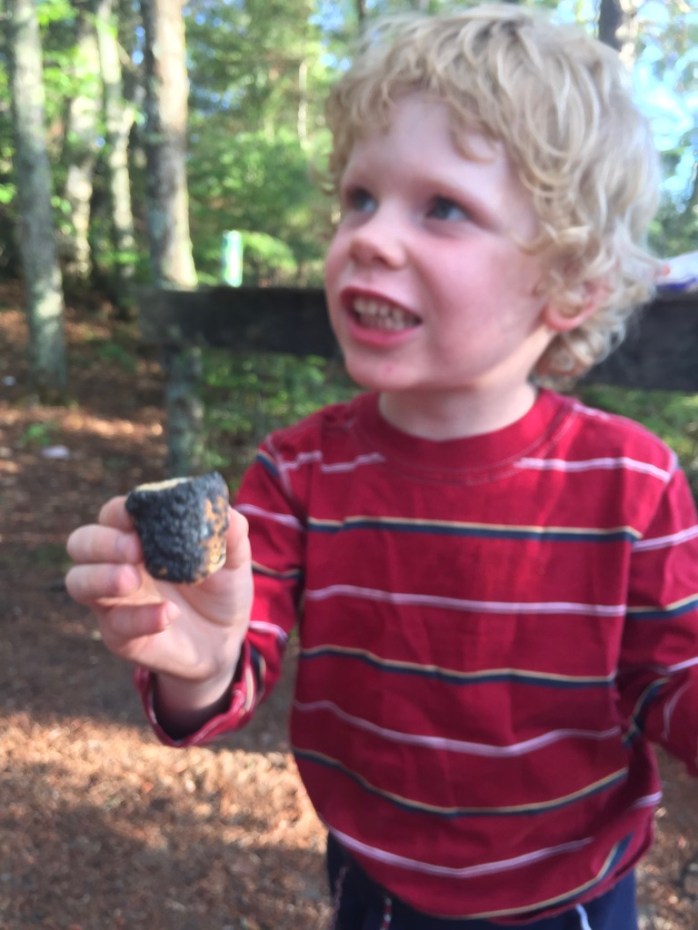
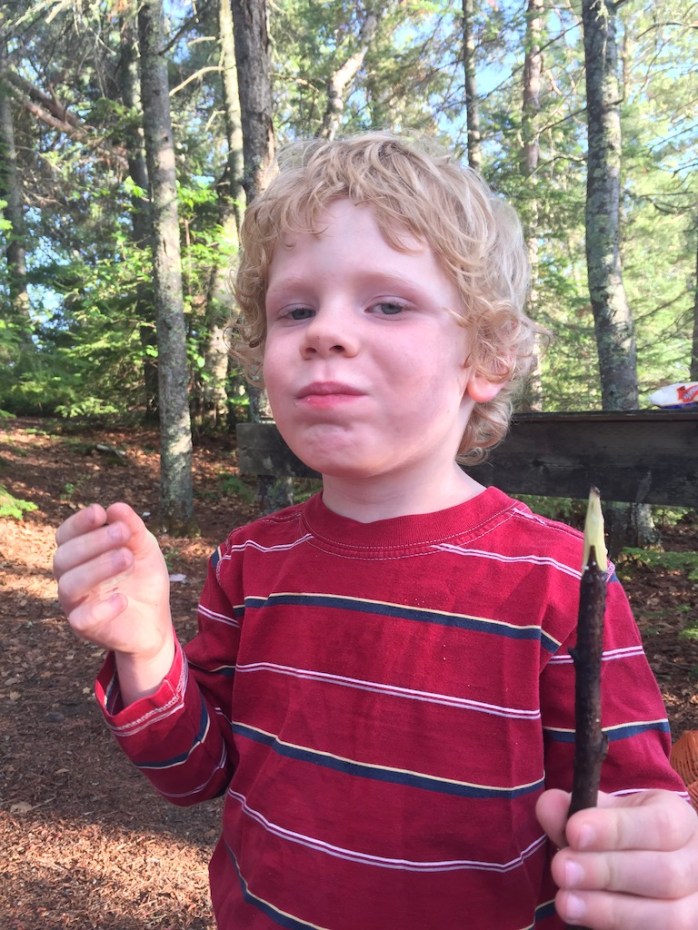

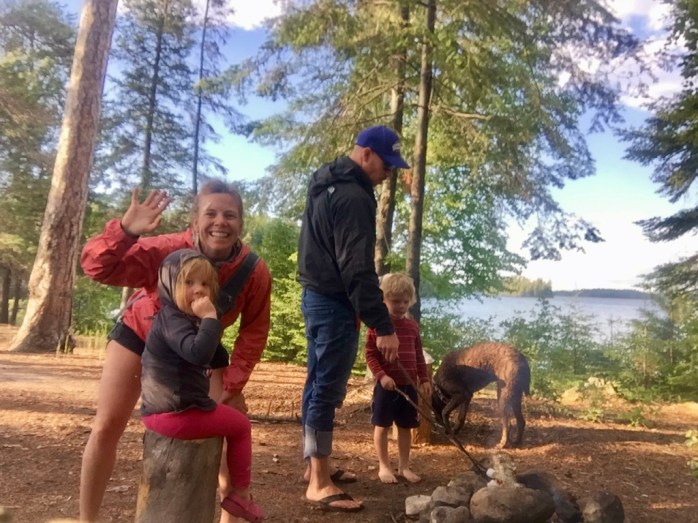
No disasters here! Just smiling faces and happy memories!
(HA!)

The moment 6am rolled around, through gritted teeth, I begged Blake to start the engine and get us out of there. There was no ounce of adventurous spirit left in my being. I just wanted to be home.

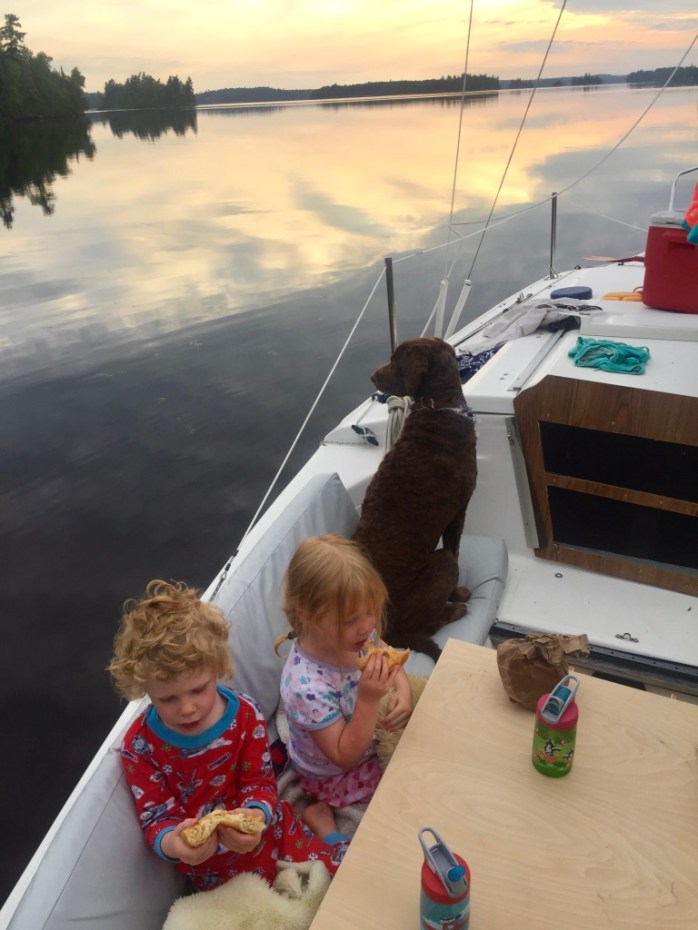
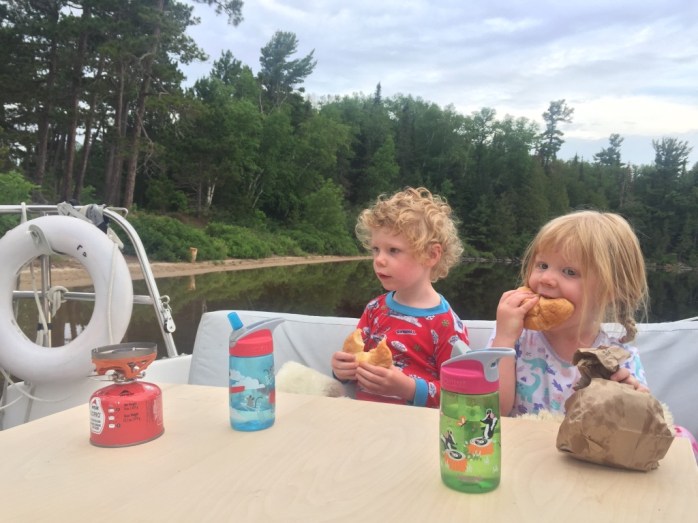
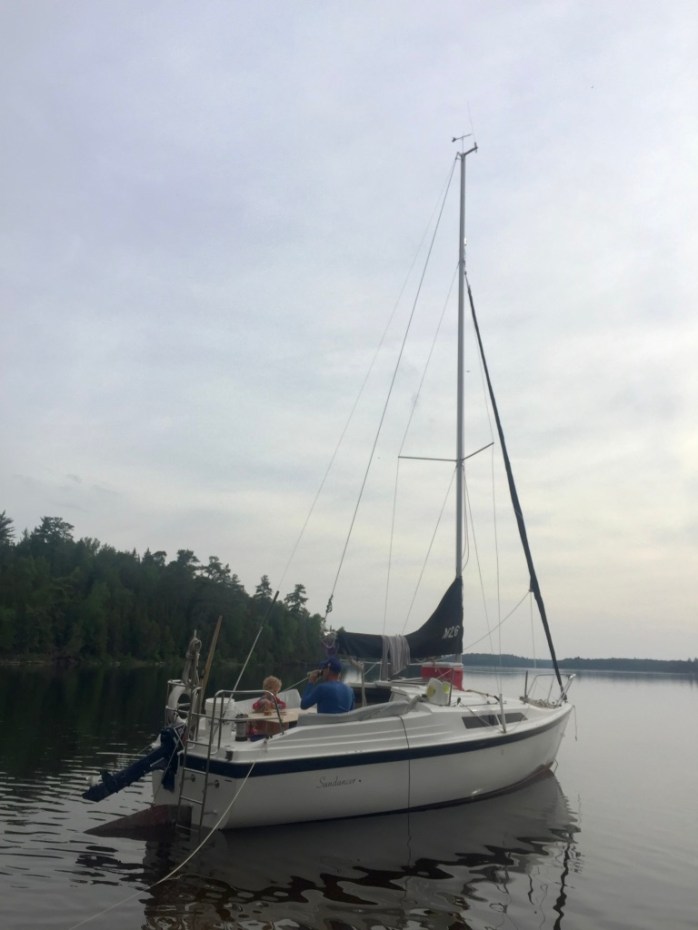
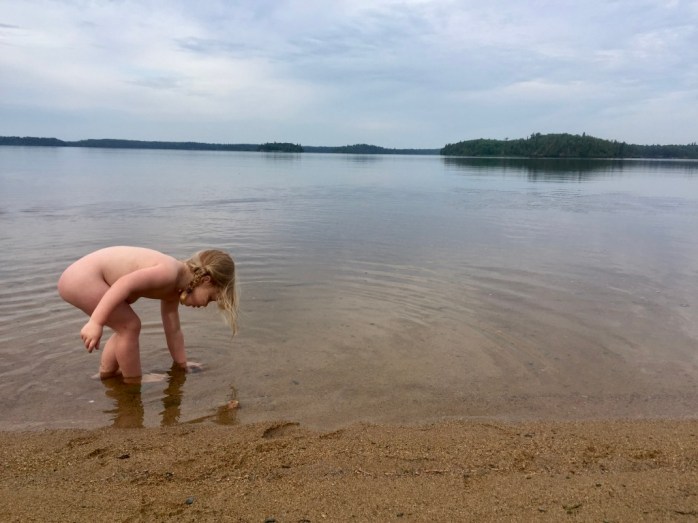


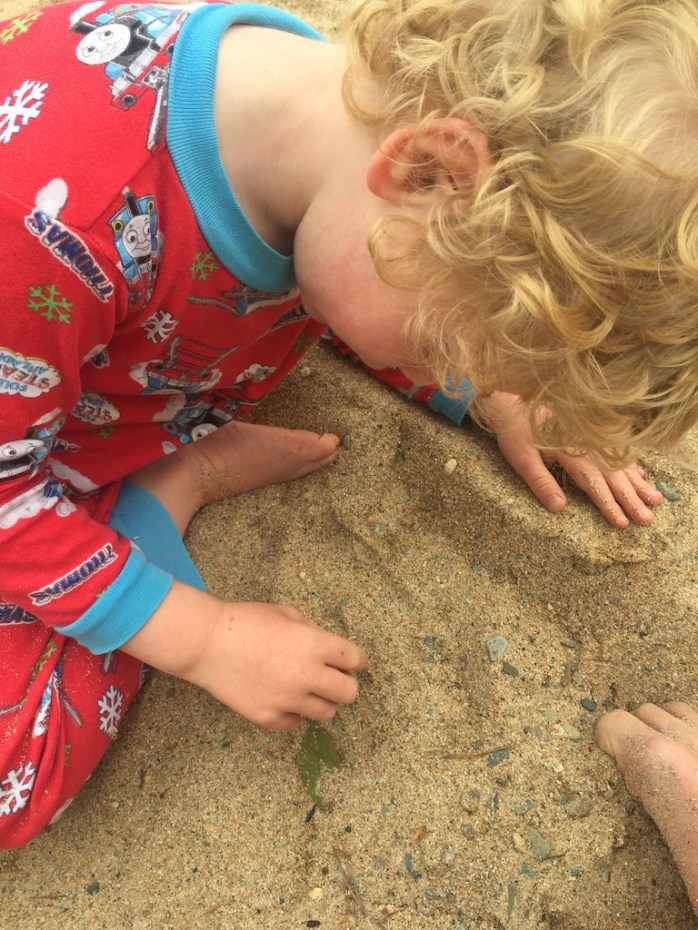
The most ironic thing, however, was that the kids were having the time of their lives! That morning, Alice had insisted on hanging out at the beach, playing happily with stones and sticks, while Henry spent hours building leaf shelters for his new-found best friend, a beetle he had named ‘Buggie’. When I asked Alice that morning what she loved best about our camping sailboat adventure so far, she didn’t miss a beat: “I love sleeping on the boat!”. I was incredulous. It had been by far one of the worst, bug-infested camping nights I had ever experienced and that is saying a lot after decades of backcountry camping and a season tree-planting in wilds of Northern Ontario.
Thankfully, Blake was on-board with my agenda and after breakfast we didn’t even attempt to raise the sails. Blake kickstarted the motor and we began our journey home. With defeated spirits, we also didn’t even attempt to limit the screen time as we set the kids up down below decks with the iPad to keep them unmoving and consequently, safe.


In the end, we thankfully made it home all in one piece, albeit exhausted and dotted with mosquito bites. Our 24-hour adventure was complete. As the kids slept the entire afternoon away in their comfortable beds, Blake and I then spent hours washing dishes, putting away the food and camping gear, cleaning the blood-splattered deck and wiping down the inside walls of cabin that bore witness to the mosquito carnage of the preceding night.
With the work done, we collapsed on the couch. I looked over to Blake. “Had it been worth it? Am I still being propositioned to purchase a MacGregor of our own?”, I wondered aloud. Sheepishly, Blake conceded that perhaps we had been a bit out of our league. Blake only needed to glance over at my newly self-glued forehead laceration to know that I wholeheartedly agreed!

Thank goodness I often have glue and steri-strips on-hand.
So here is to disastrous family camping adventures! I’m sure there will be many more stories to come. We seem to be slow learners in this department 🙂
Women In Wilderness: Take Three
When was the last time that you truly disconnected from all of the distractions around you? Do you remember what real silence sounds like? Can you recall a time when you didn’t respond to a single text message, email or social media notification as they poured into your consciousness, eroding your mental clarity?
In our current culture, our attention is continually being splintered into fractions. It is now the norm to be hunched over our screens, while perfunctorily conversing with our spouse, superficially attending to our kids and generally flowing through our day without being fully aware of the present at any given time.
At work, at home and in my personal life, there are very few moments of pure peace. Aside from my mornings at the gym, I am inundated with constant demands for my attention from the moment I open my eyes, to my last deep breath as I slide into slumber.
I strongly suspect that I am not alone.
In the ER, a nurse stands close by, waiting to request an order for pain meds, while I hastily jot down my assessment of a patient that I just finished seeing. The clerk catches my eye silently motioning me to the phone: “The radiologist wants to speak to you.” From my scrub top pocket, my phone piercingly announces an incoming text message from a colleague about a patient I had just admitted.
At home, the moment I gingerly step into the front entrance, Henry and Alice’s demands stream into my ears in a deluge while Ada pants and charges her way through the fray. Through the commotion, I push to decipher Blake’s commentary on current events of the world and his work woes. “Are you even listening?” he wonders. My to-do list scrolls through my mind and I mull over what I could possibly get onto the dinnertable in less than 30 minutes.
Some days it is all too much.
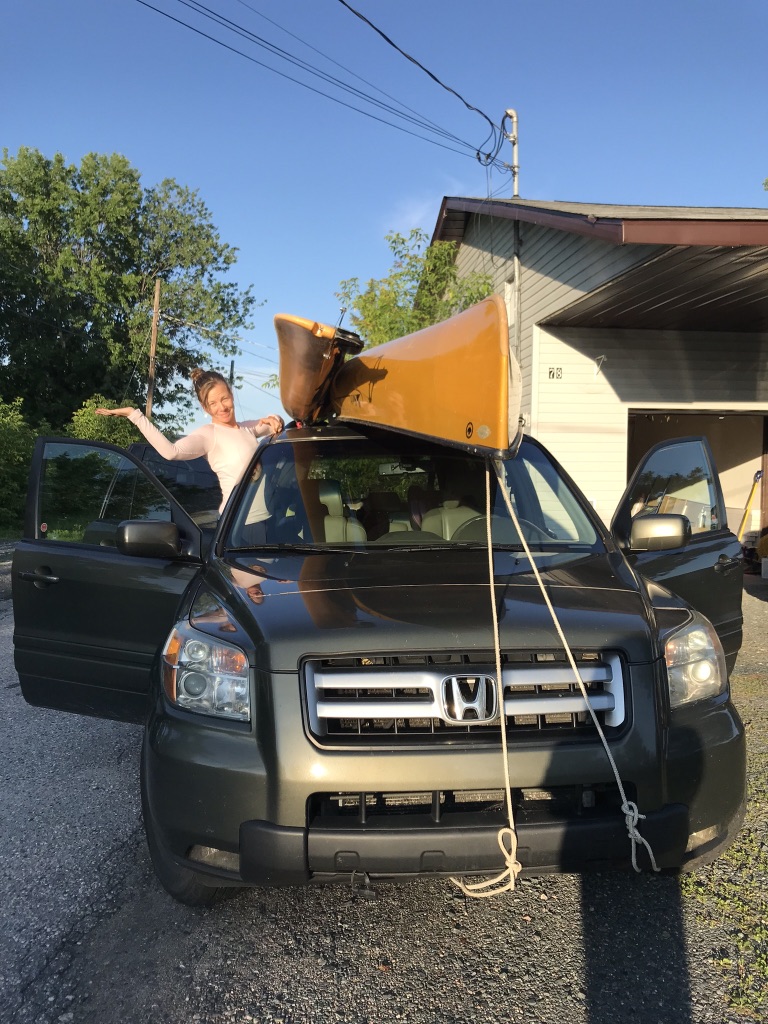
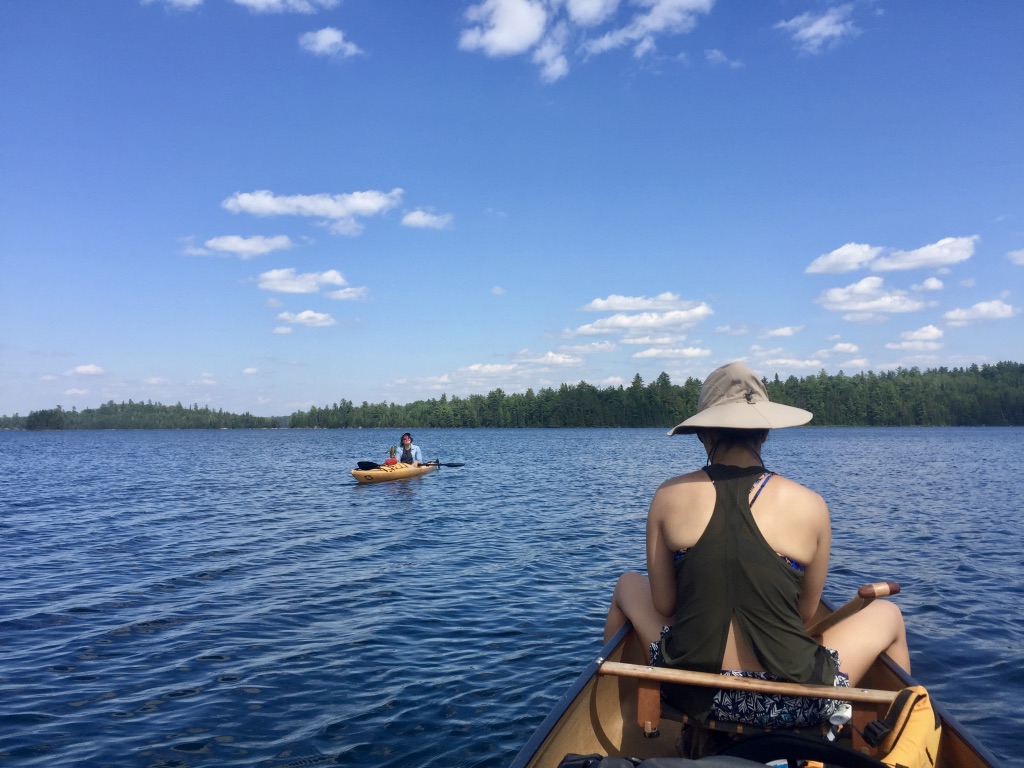
Three summers ago, however, three of my best friends and I headed out into the bush on an inaugural backcountry paddling adventure, propelled by my desperation to get away from it all: sleepless nights with a one and two year-old, a full-time workload and the constant struggle of finding myself in the chaos of doctoring and mommying. Little did I know how paramount those four days each summer would mean for my mental survival.
For three summers now, we have committed this time for ourselves and for each other, defending it against the creep of work demands (“Could you just please fill this uncovered ER shift Friday night?” asks the scheduler) and other commitments threatening to erode our once-a-year pilgrimage to the bush for a slice of silence.
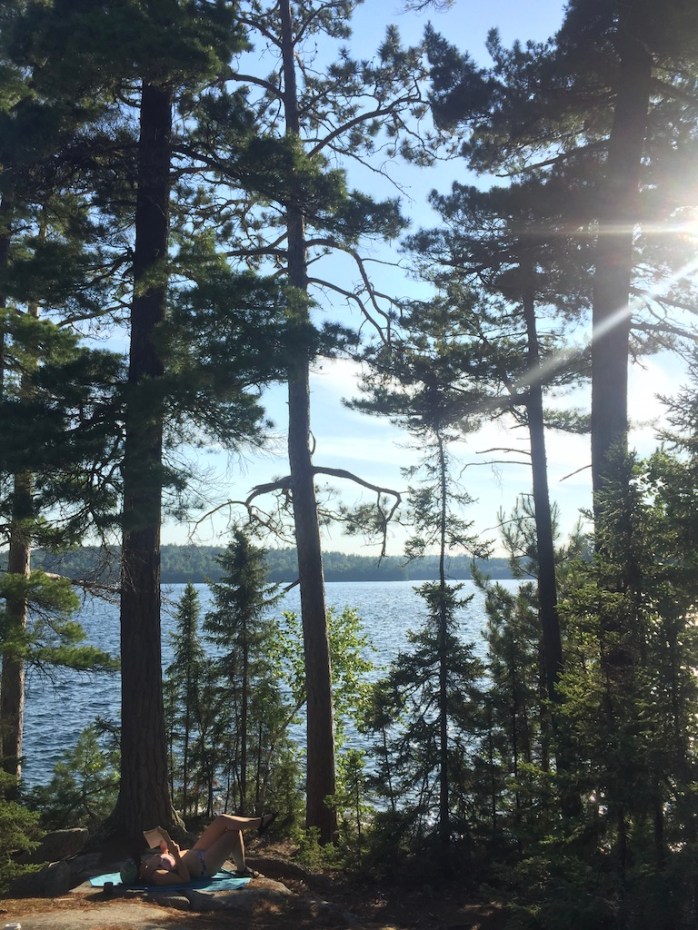
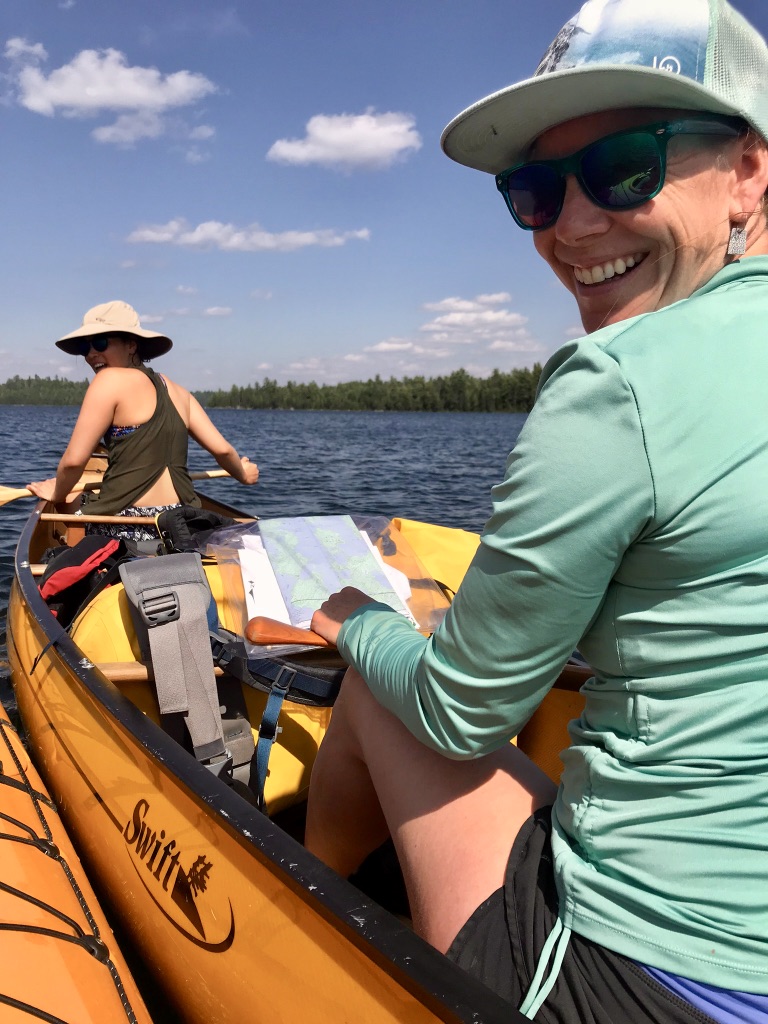
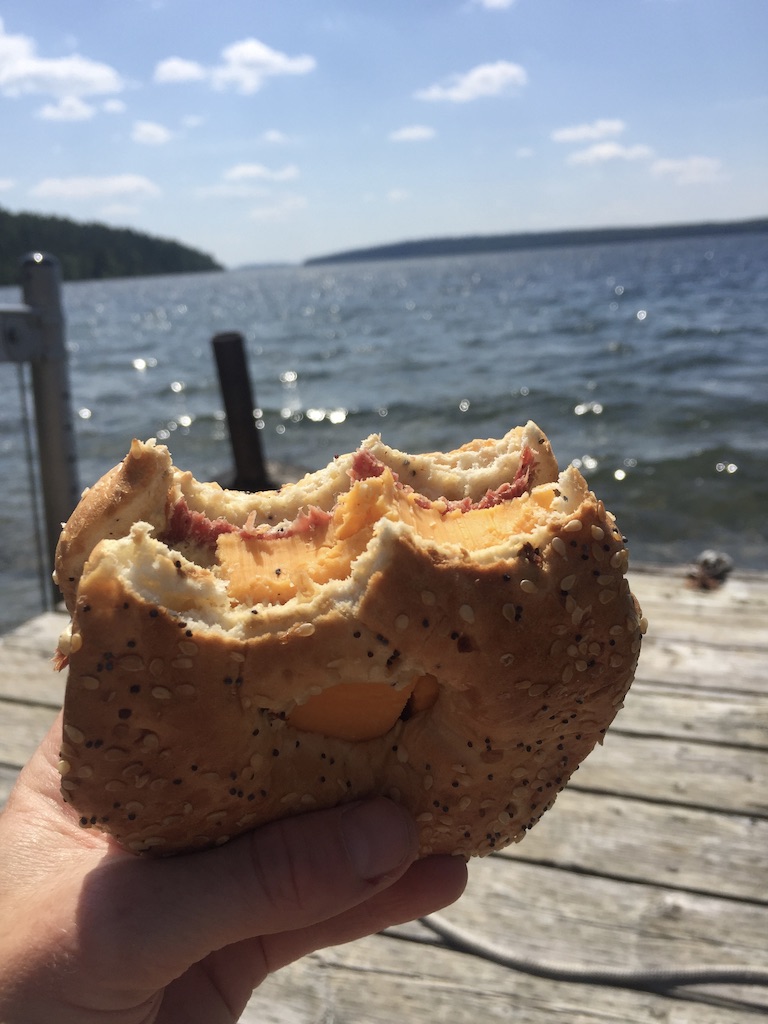
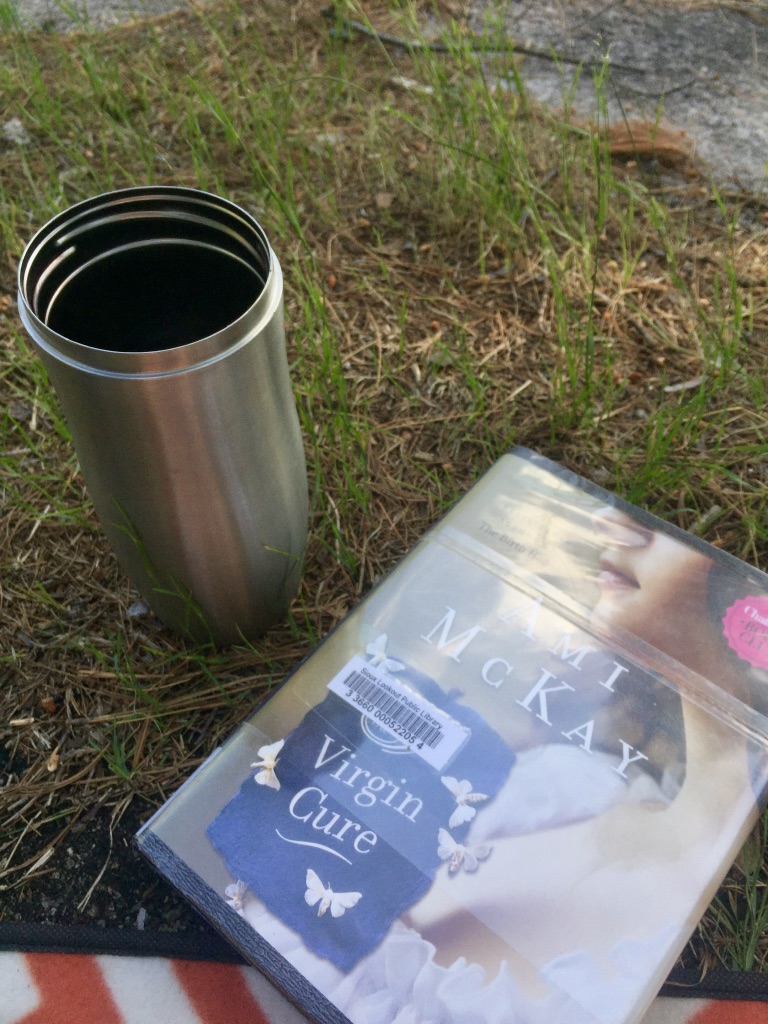
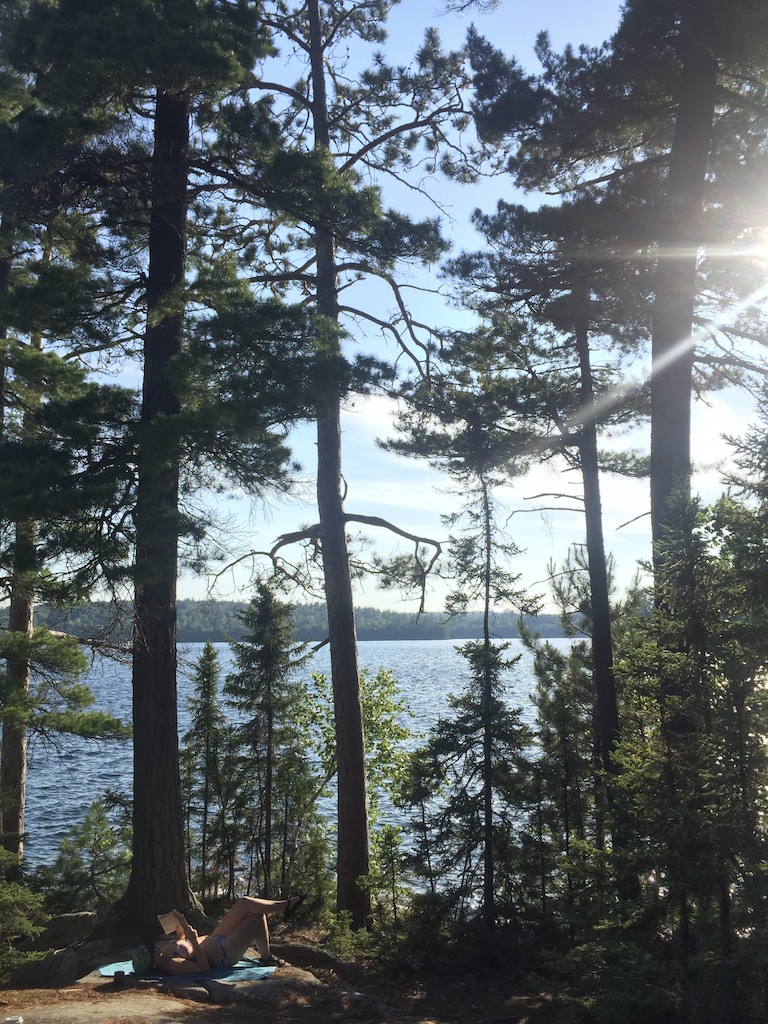
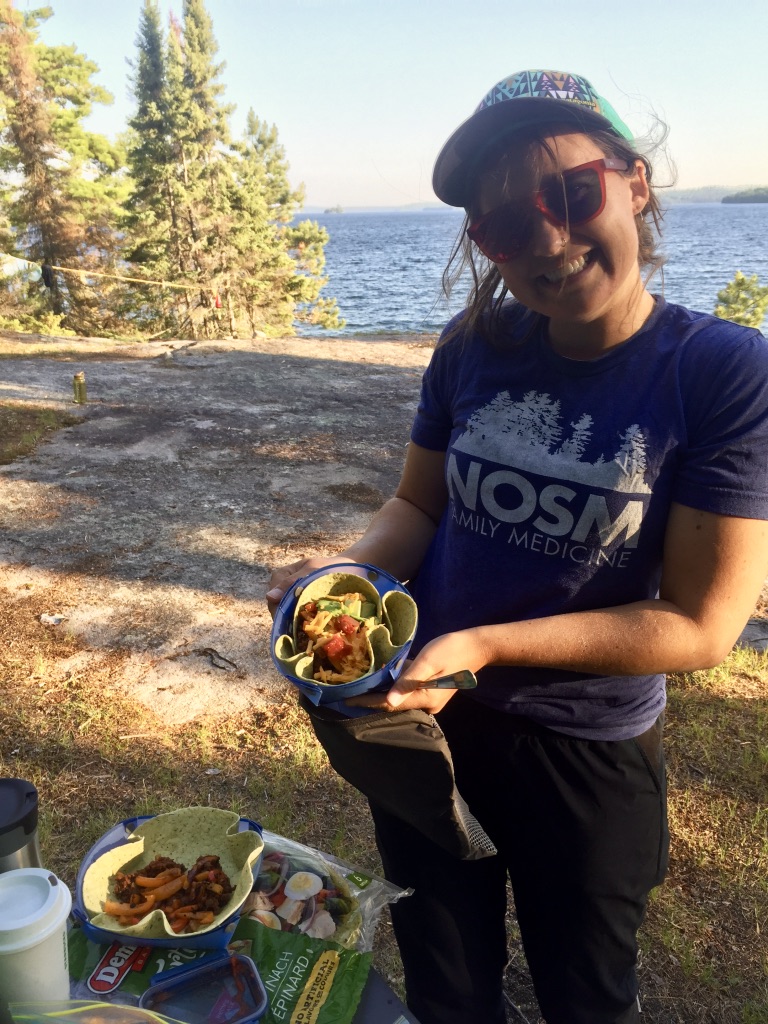
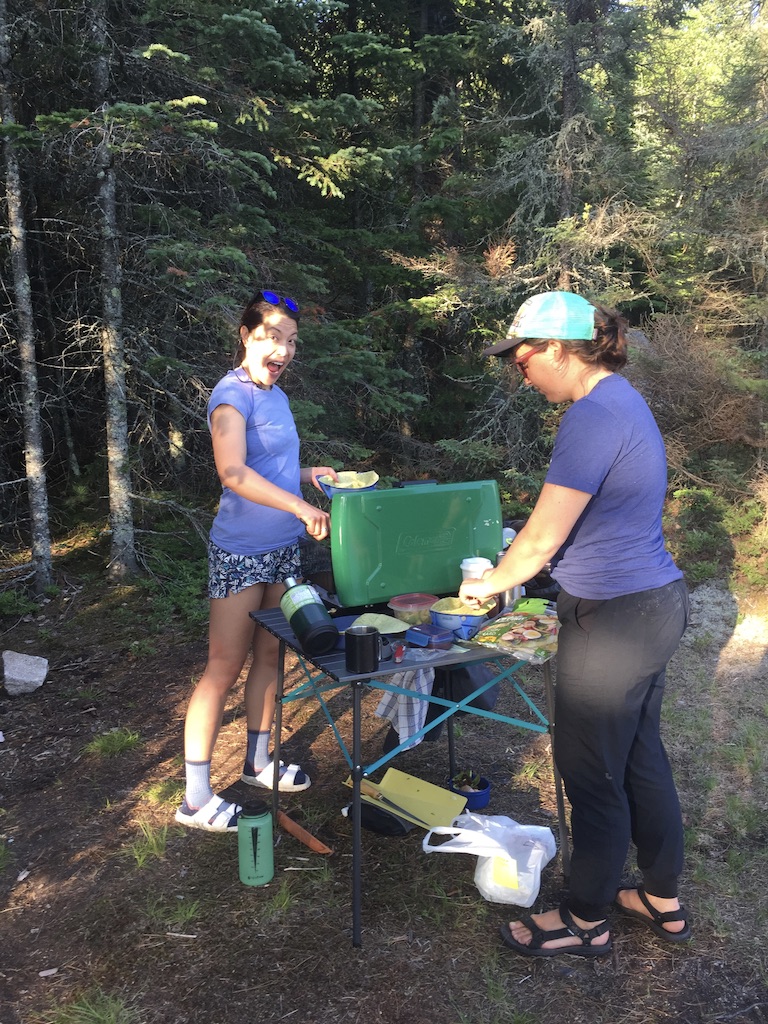
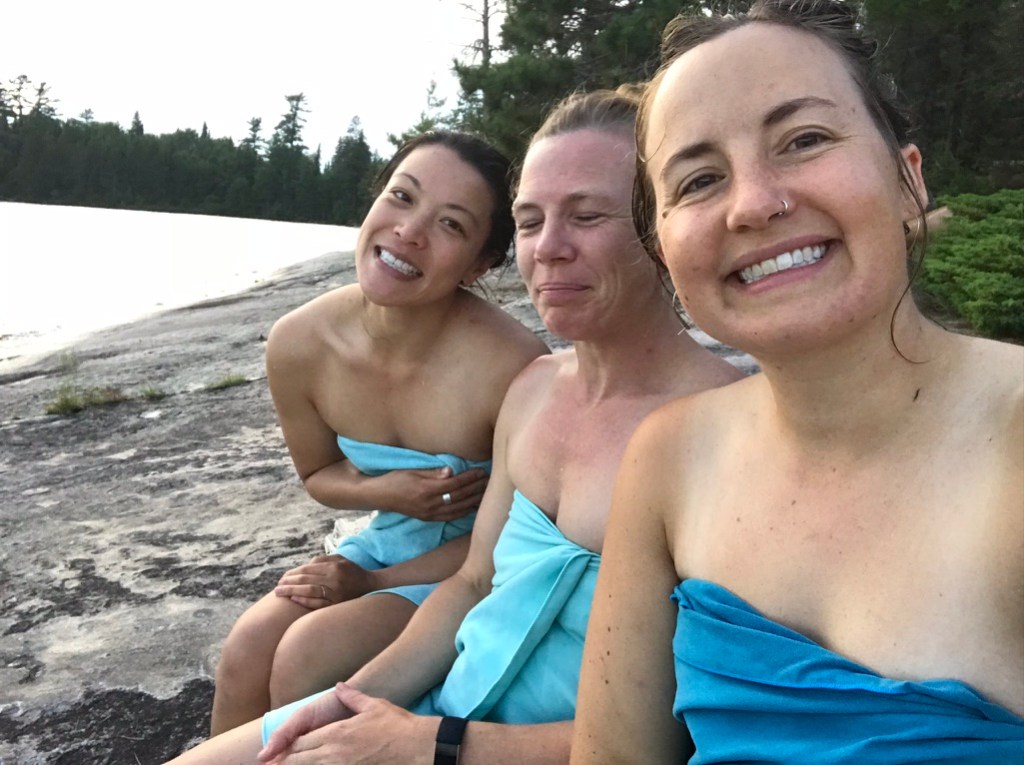
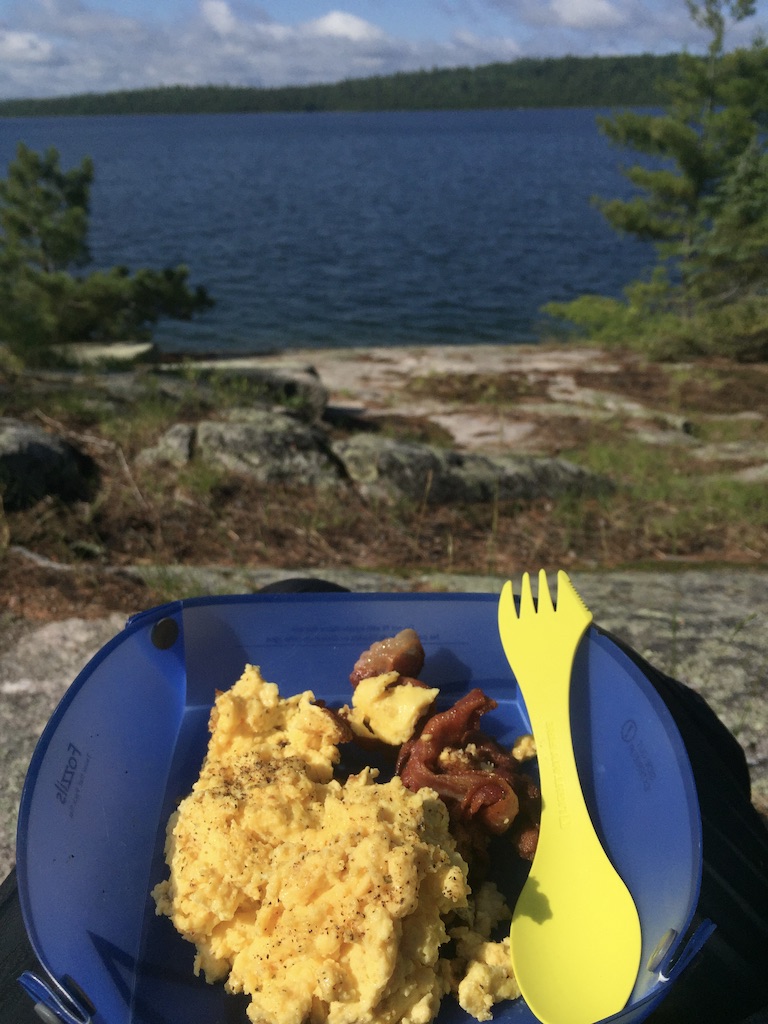
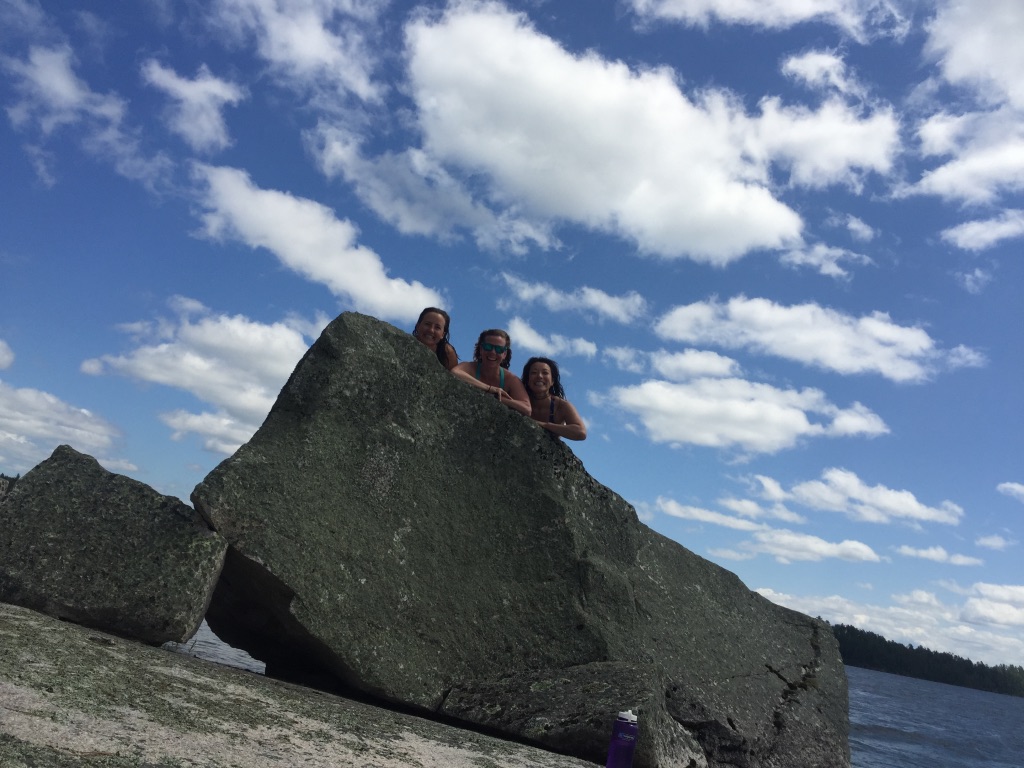
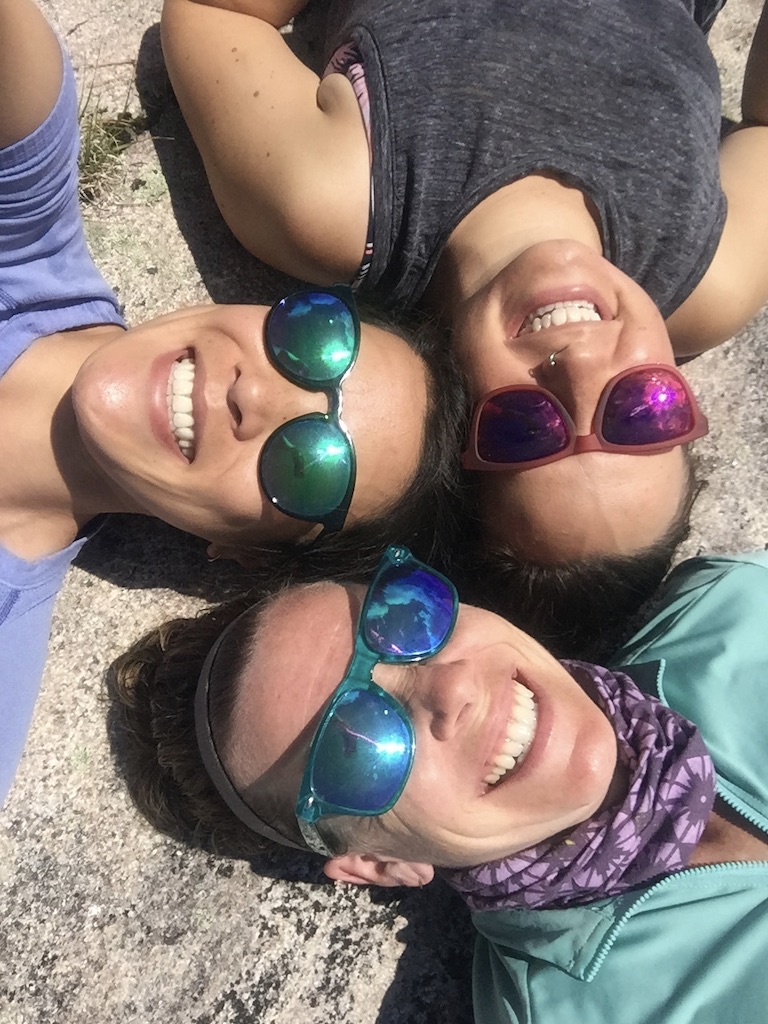
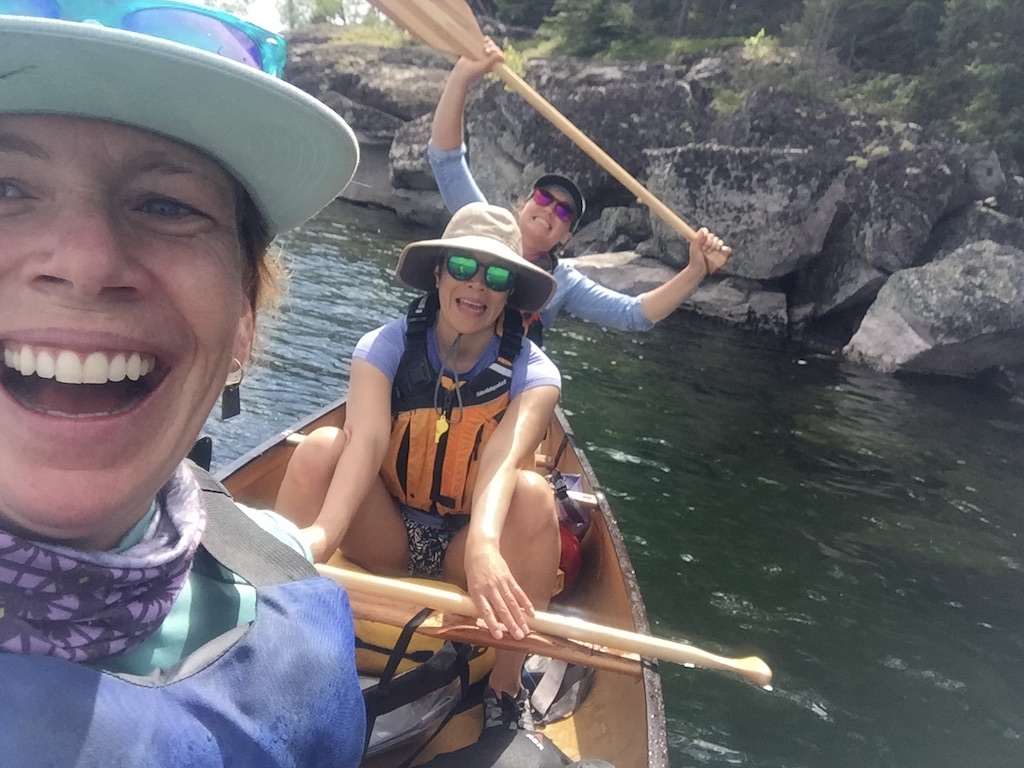
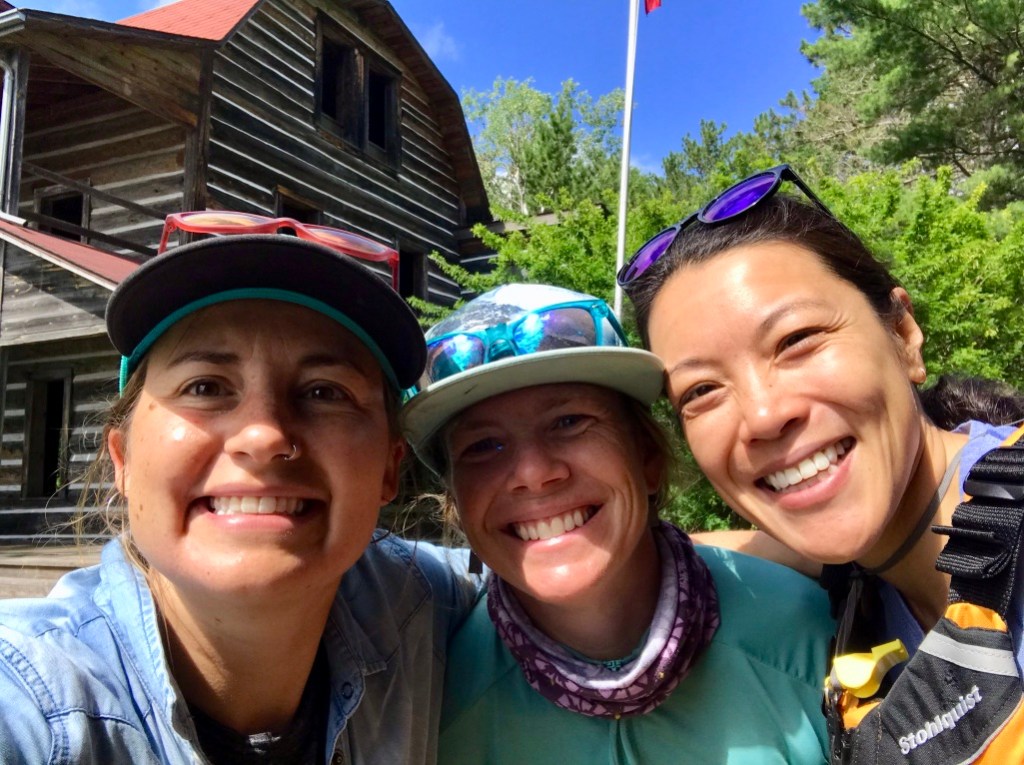
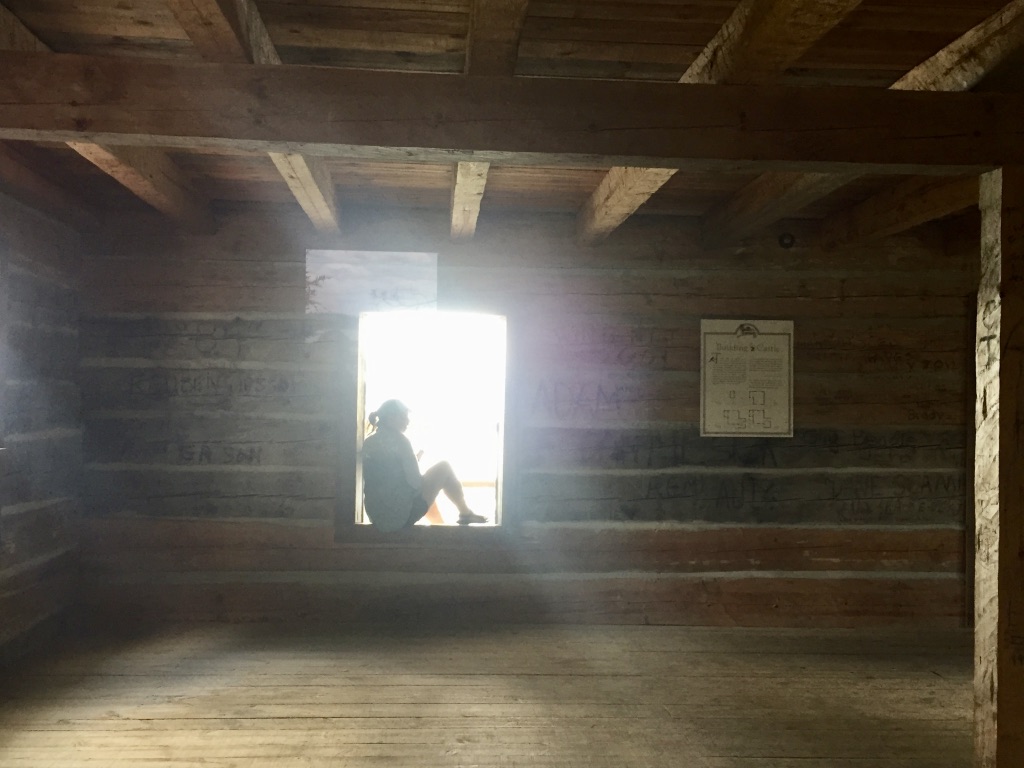
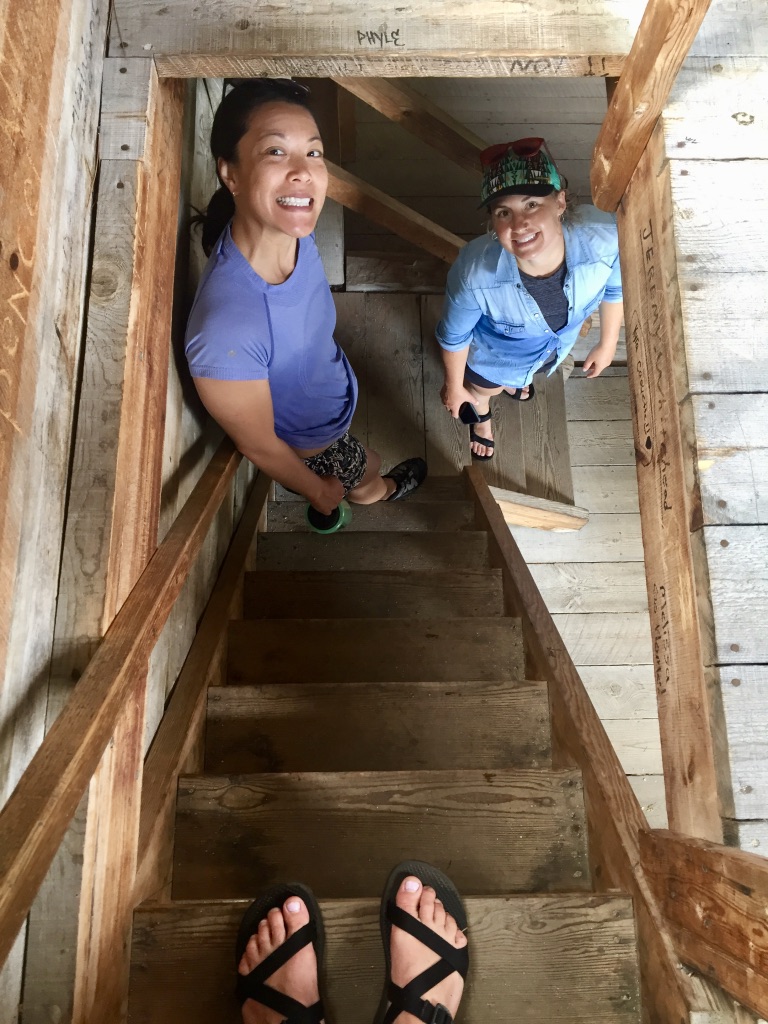
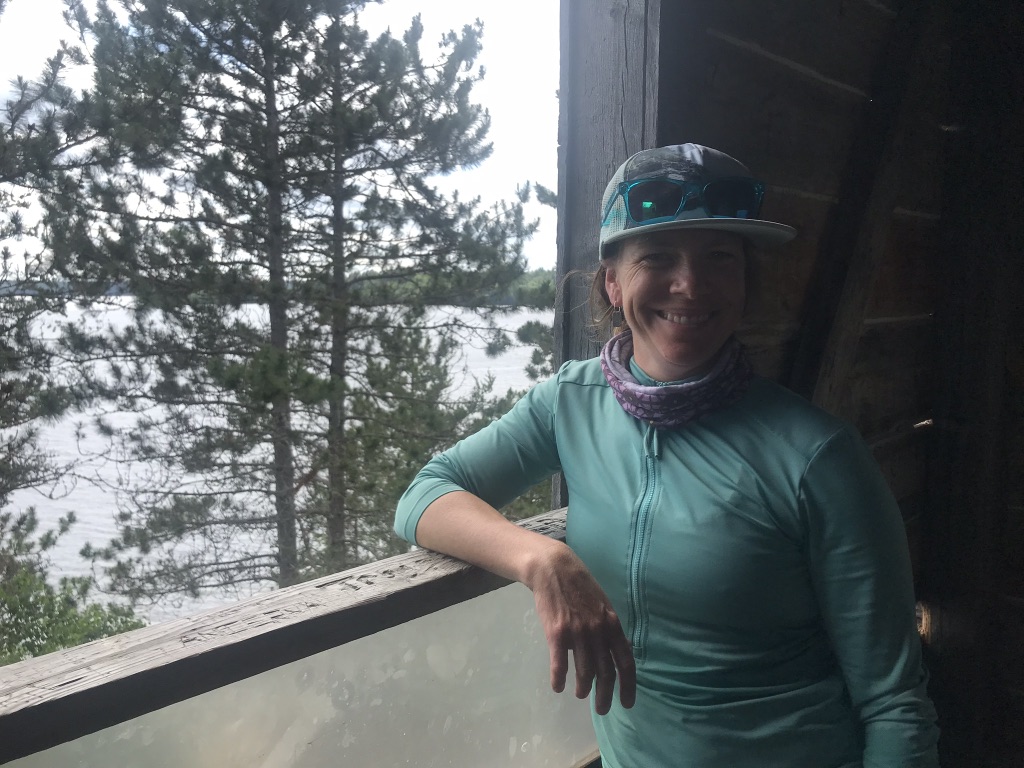
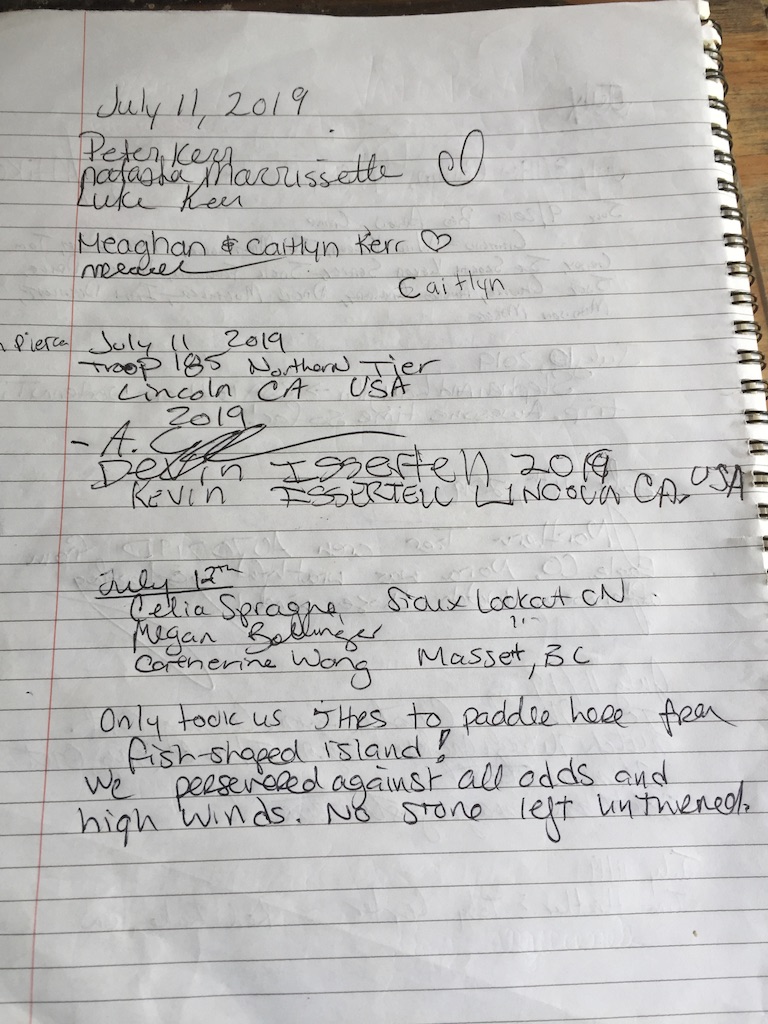
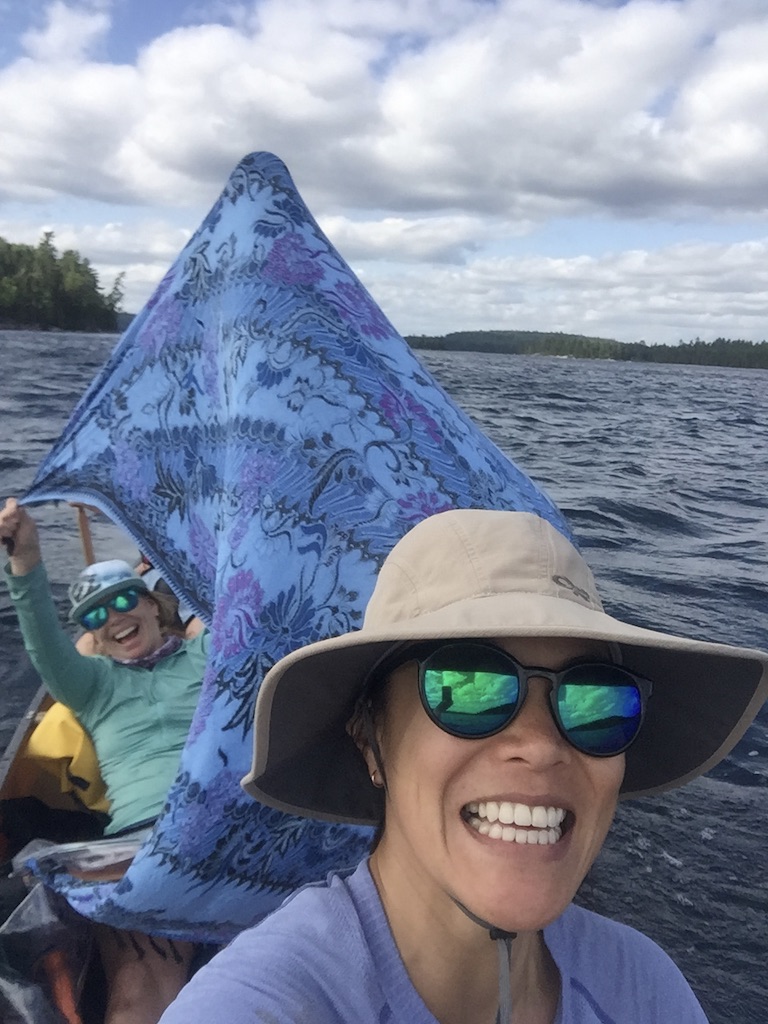
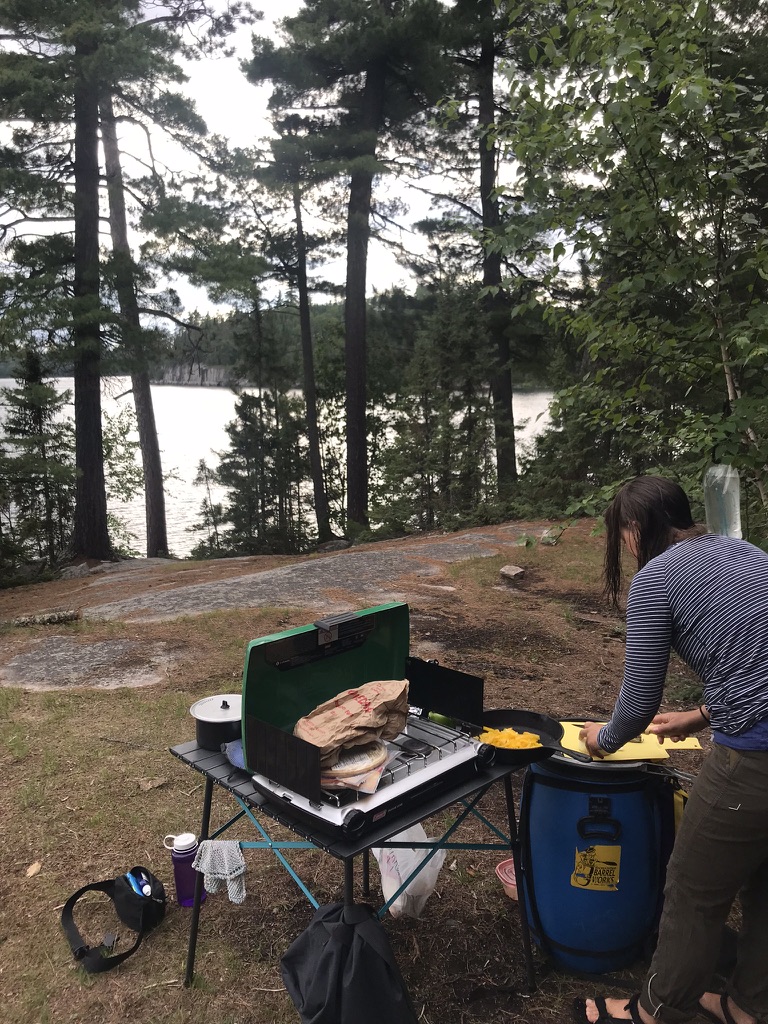
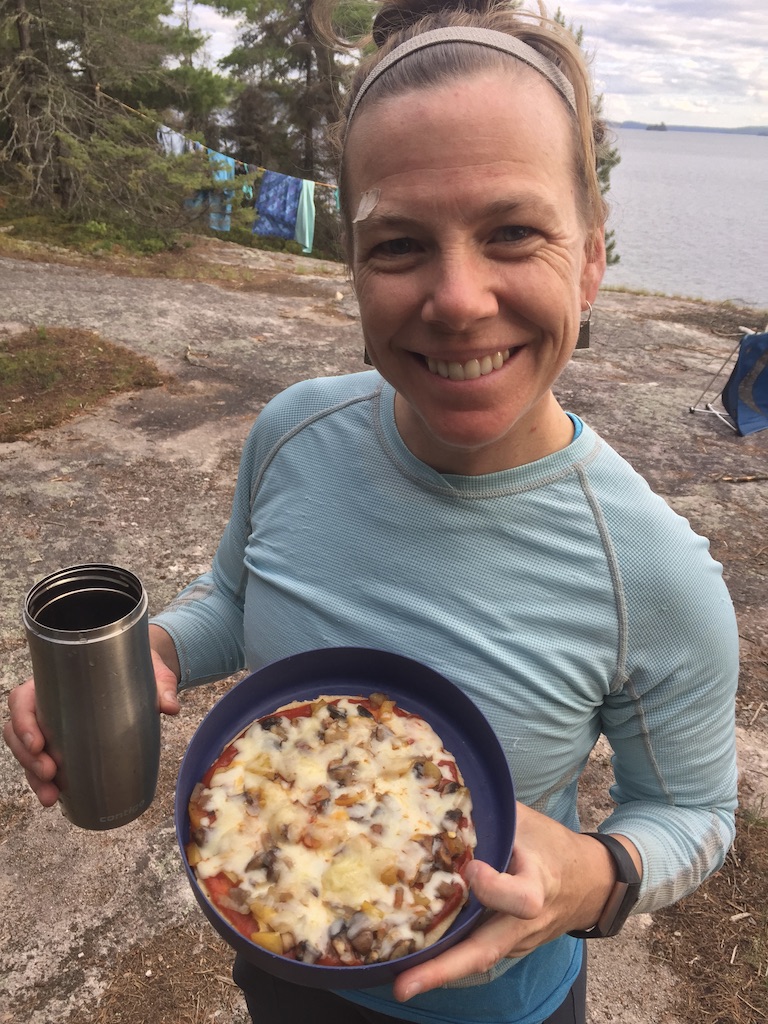
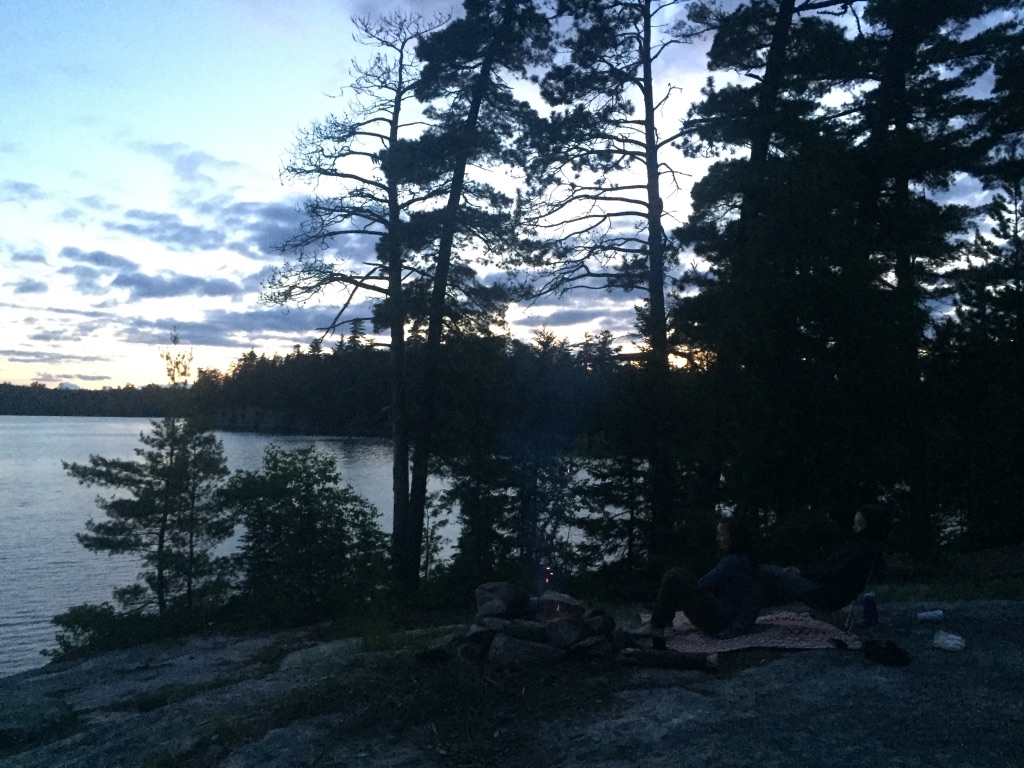
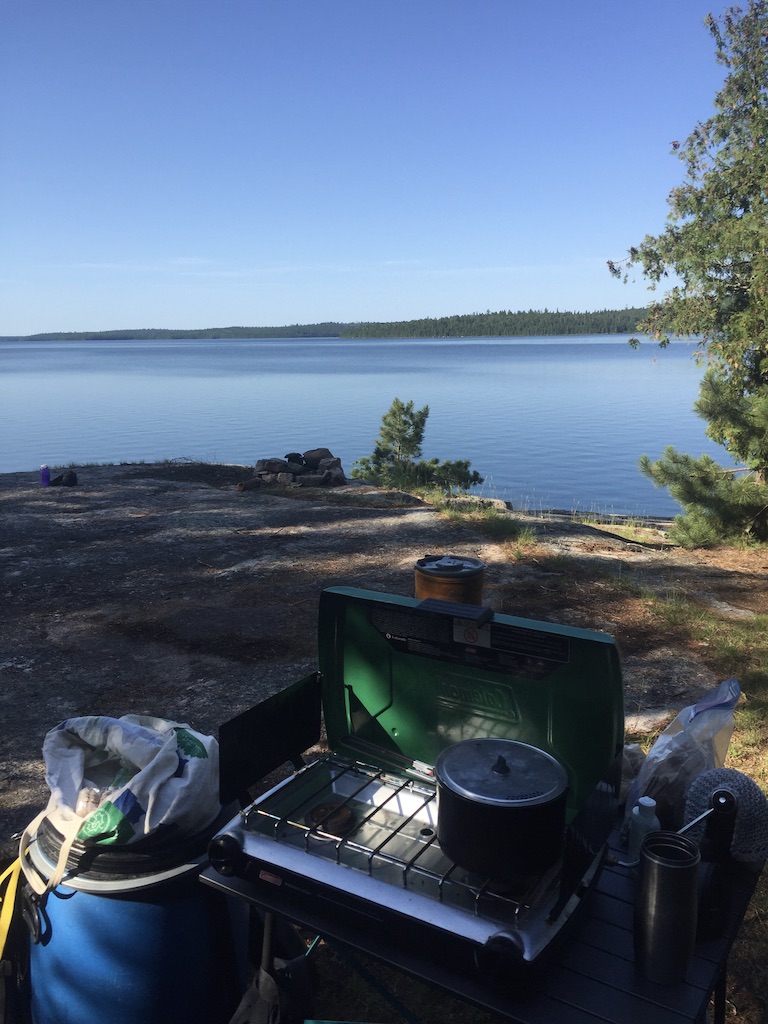
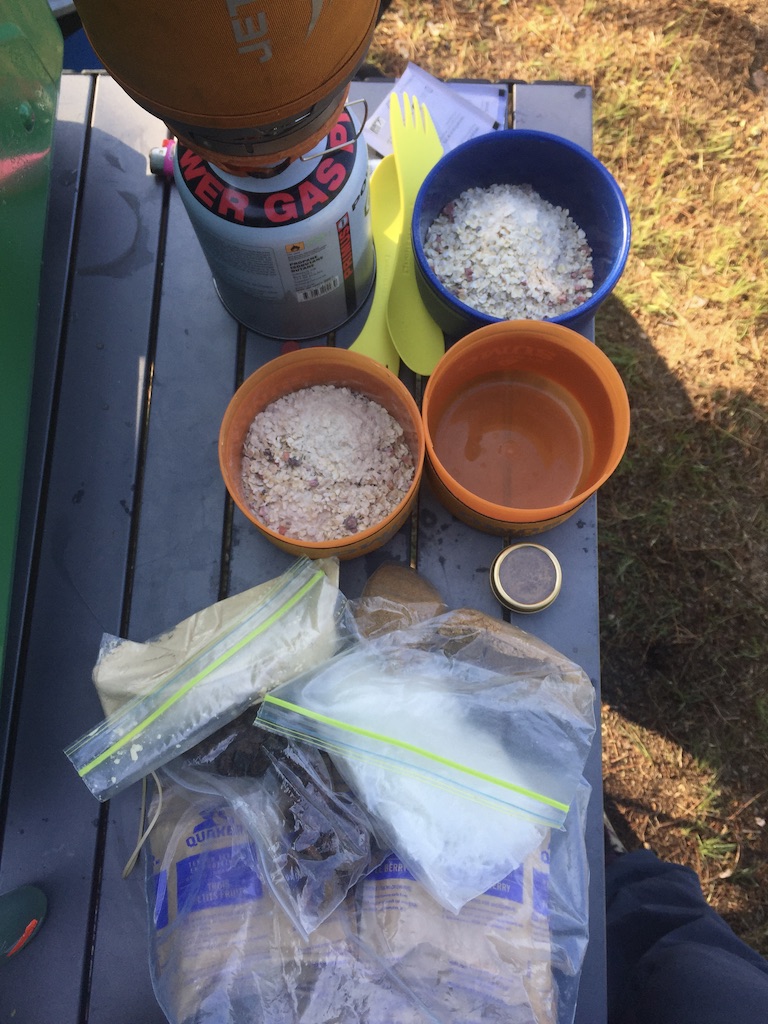
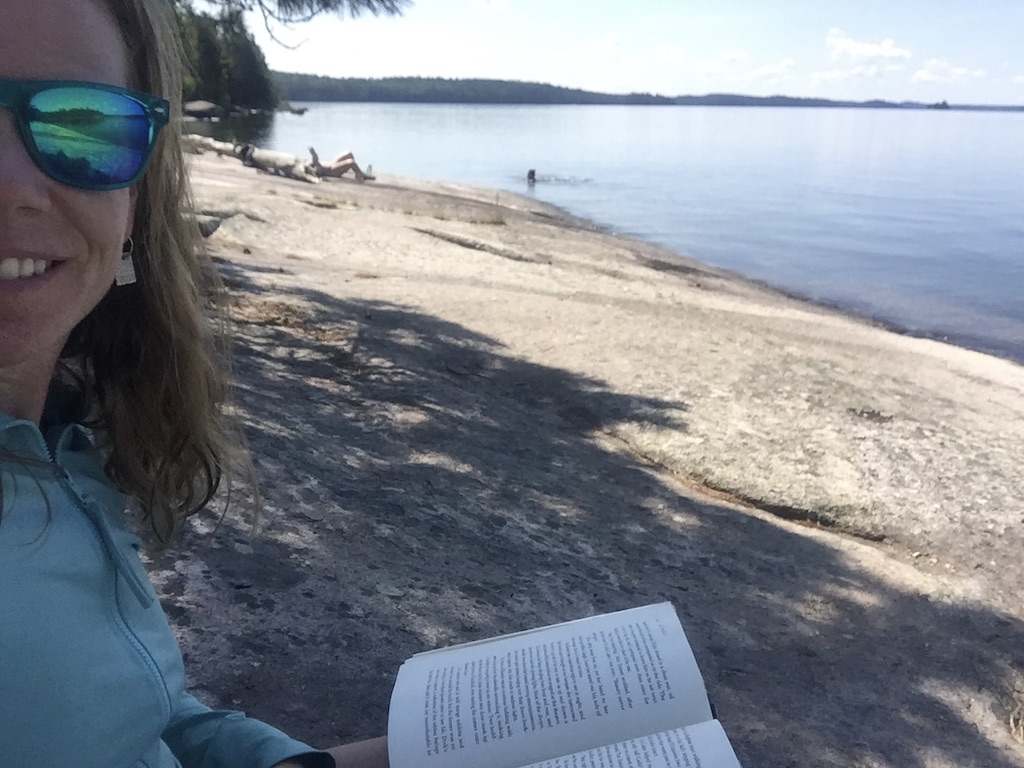
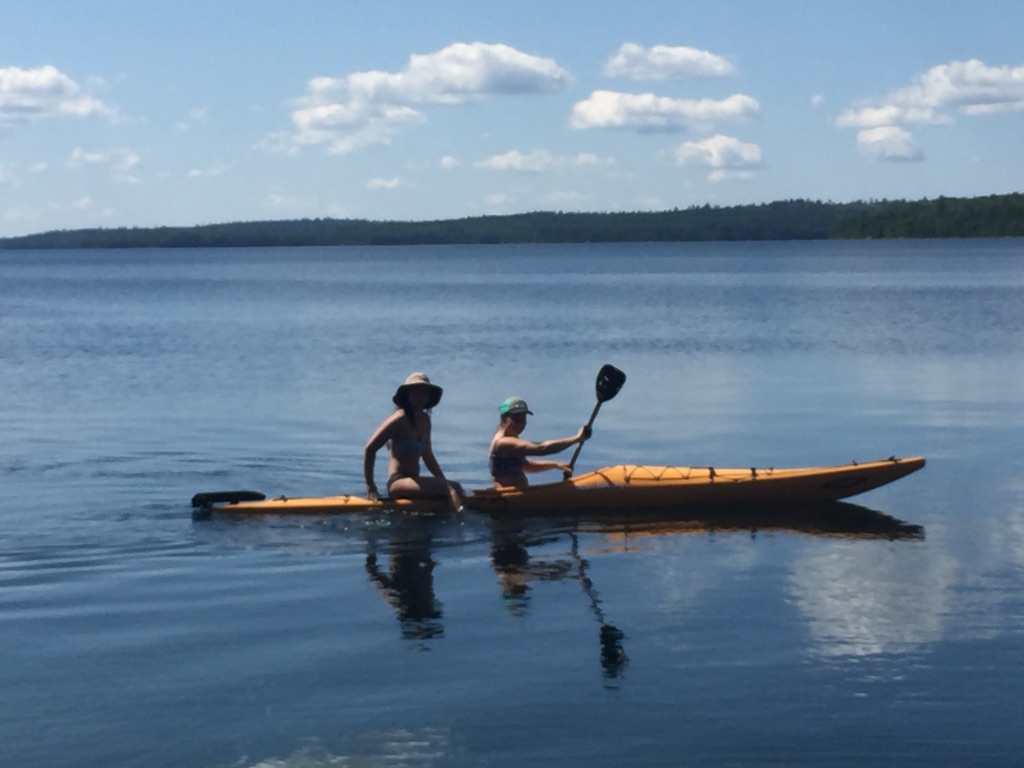
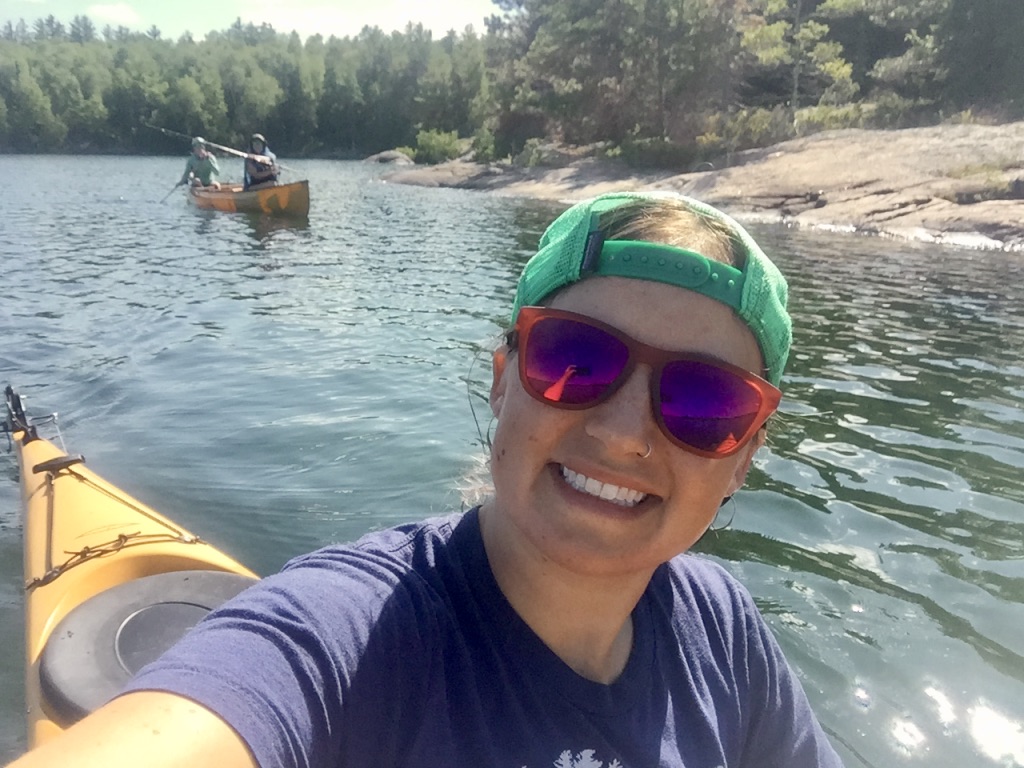
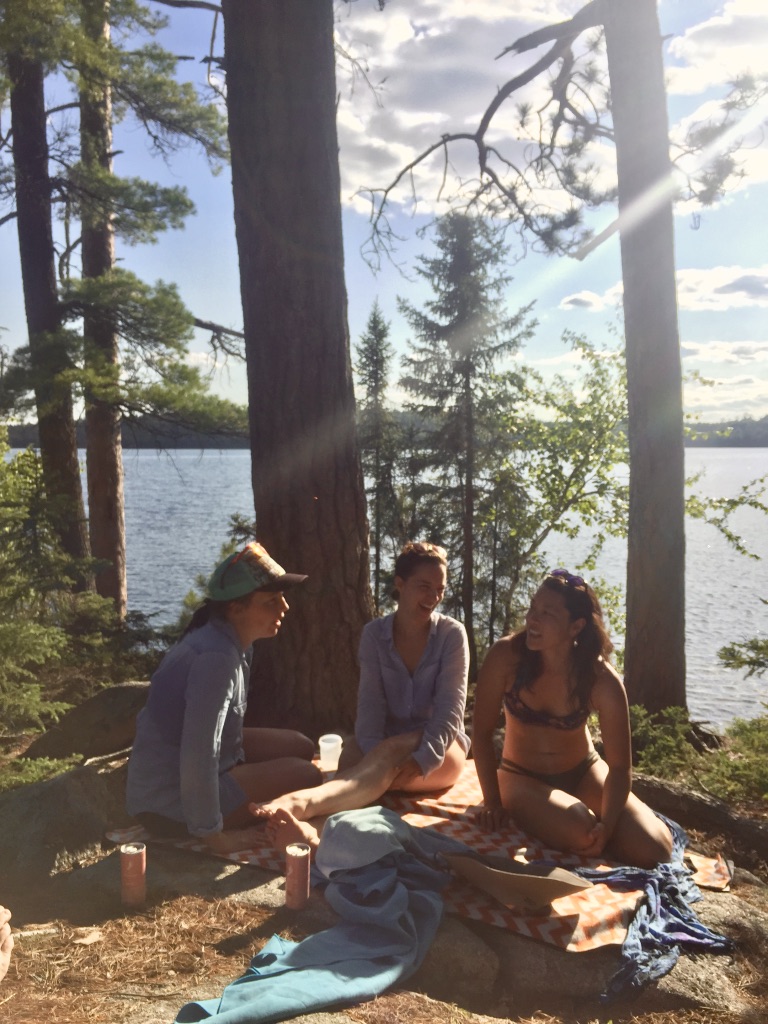
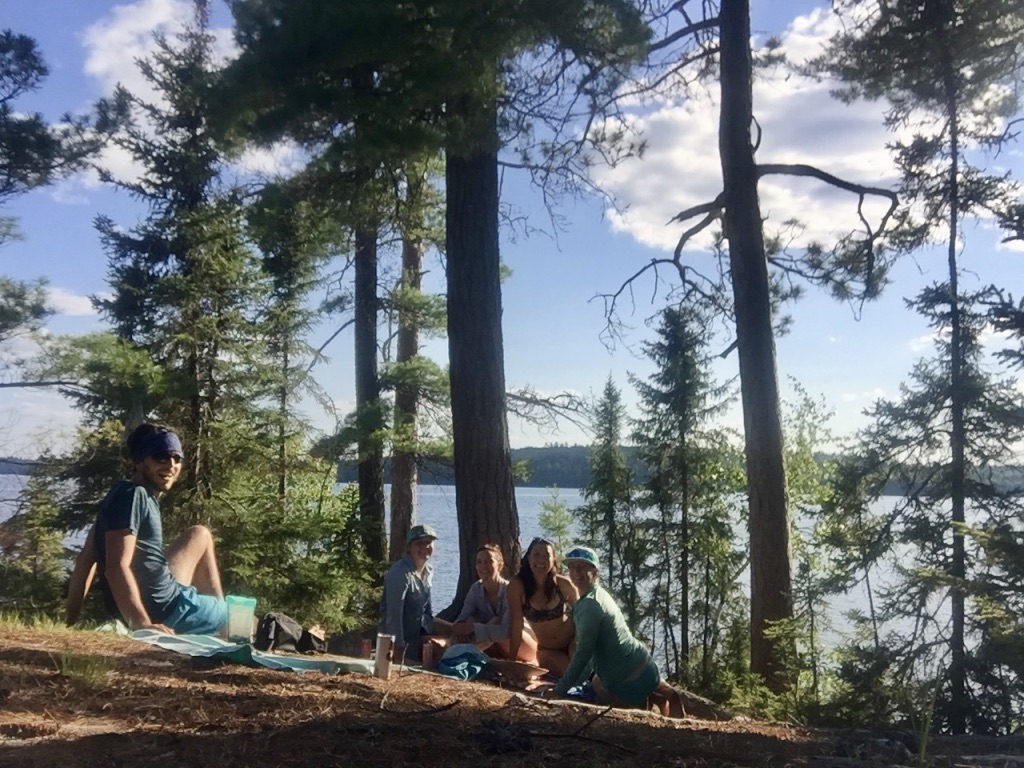
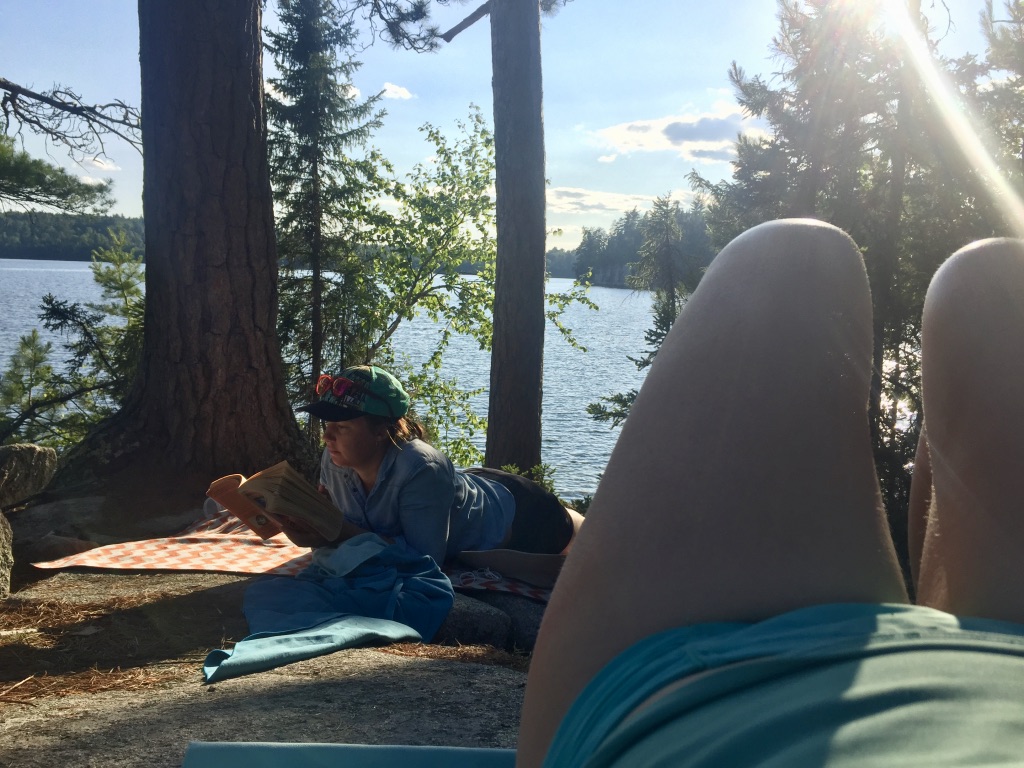
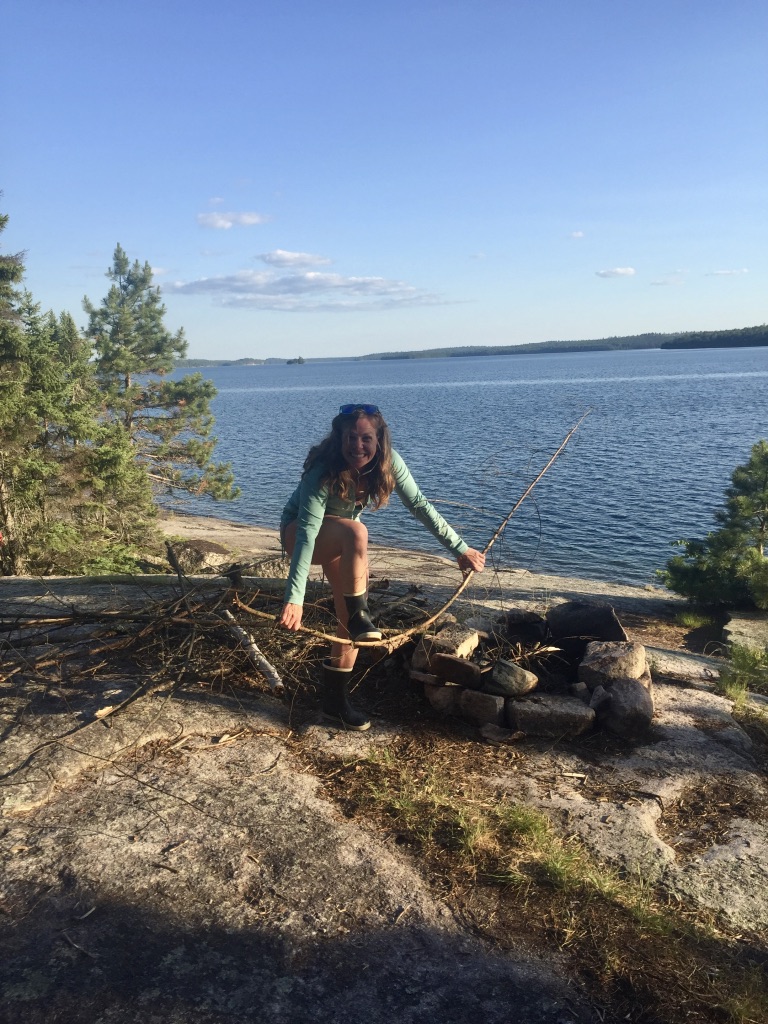
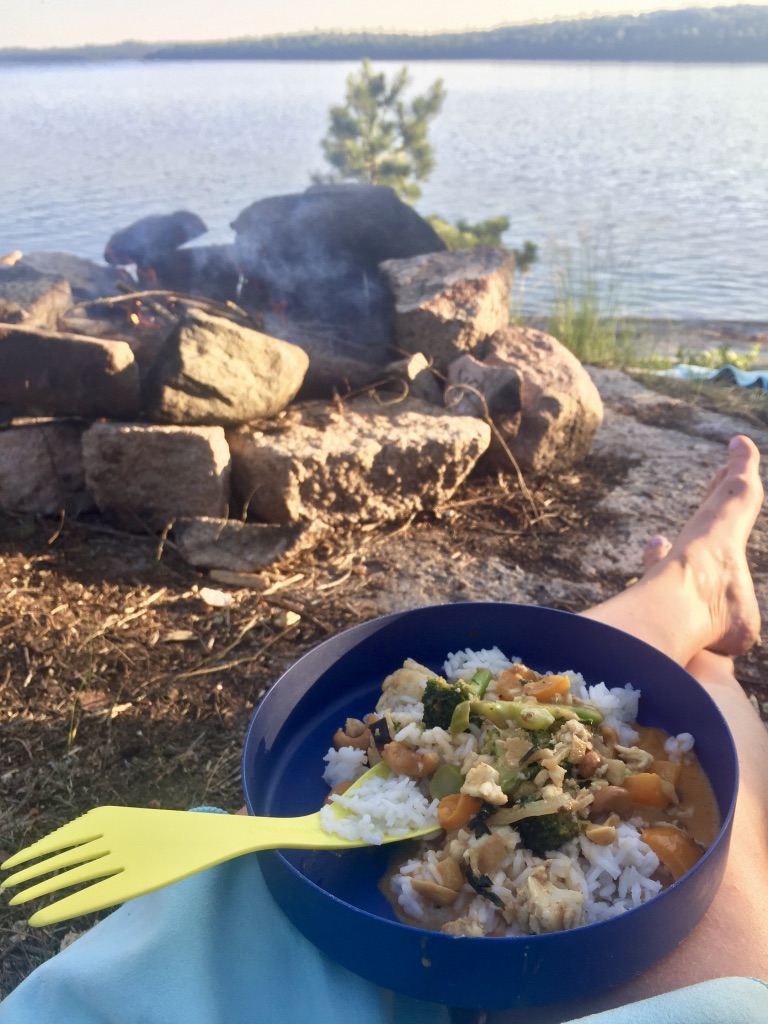
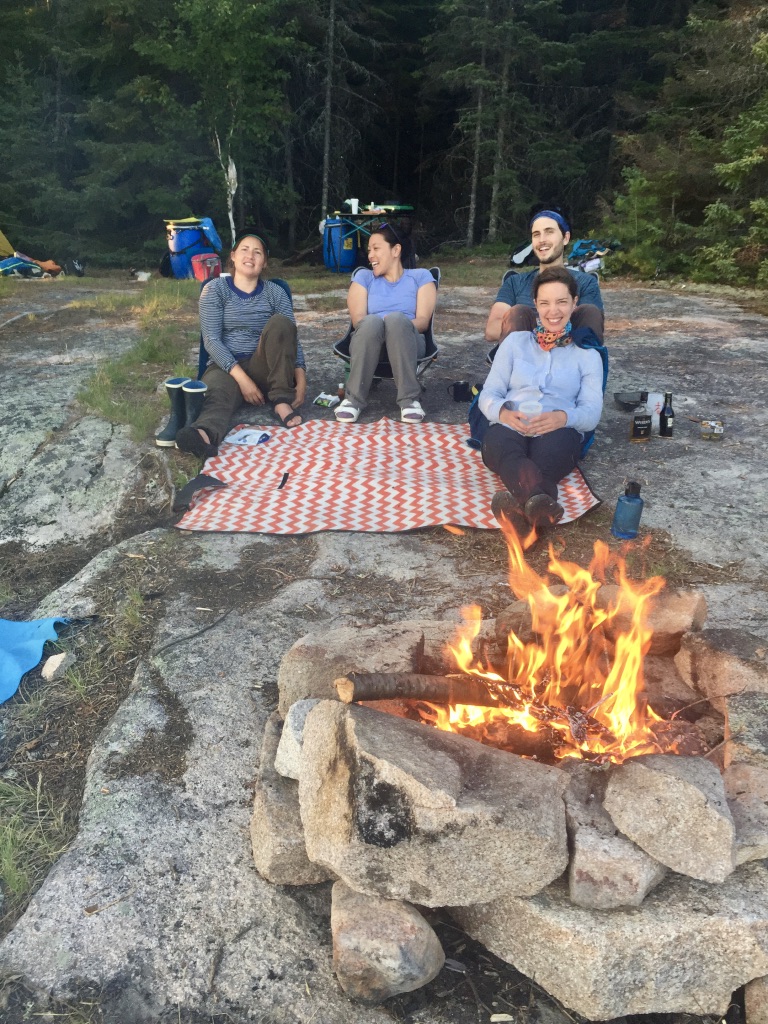
This year was no exception. For four blissful days, I existed in a selfish bubble. No cell phones. No kids. No partner. Just delicious meals, hours of losing myself in the pages of a novel, moments of meditation beneath the windswept white pines, conversations that brought us to tears, conversations that split our sides with laughter, and conversations that slid us into mellow quietness.
I am beyond blessed to have friends who are willing to venture into the wilderness with me and for a husband who is willing to keep the fort.
Day 1:

Day 2:





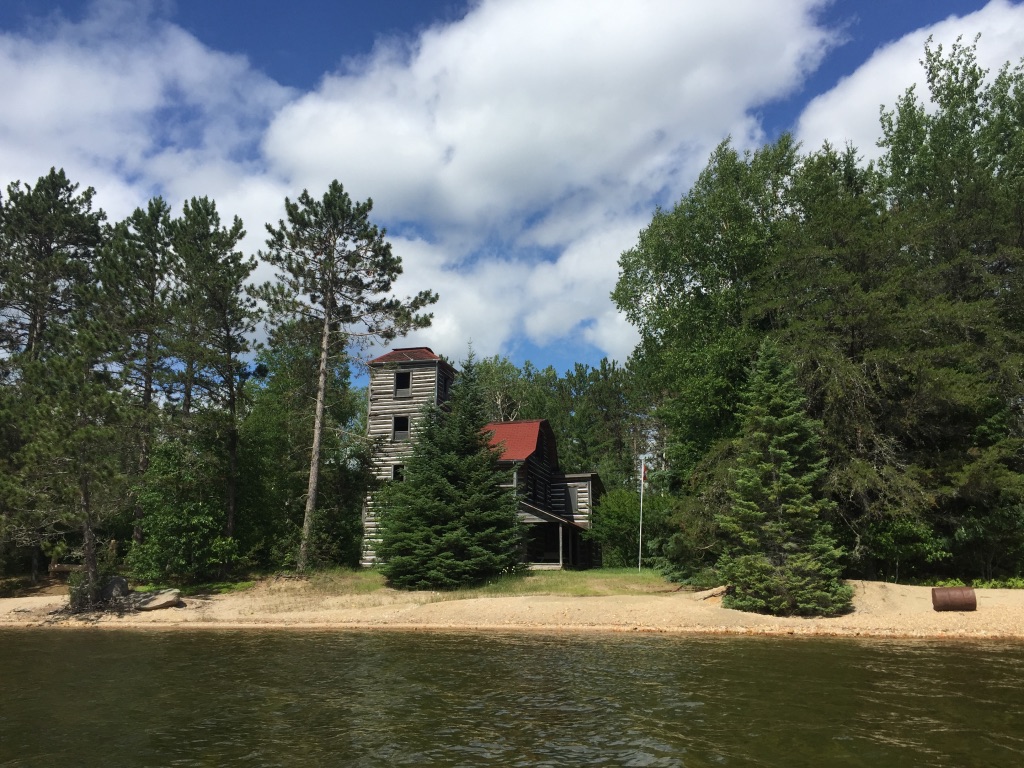
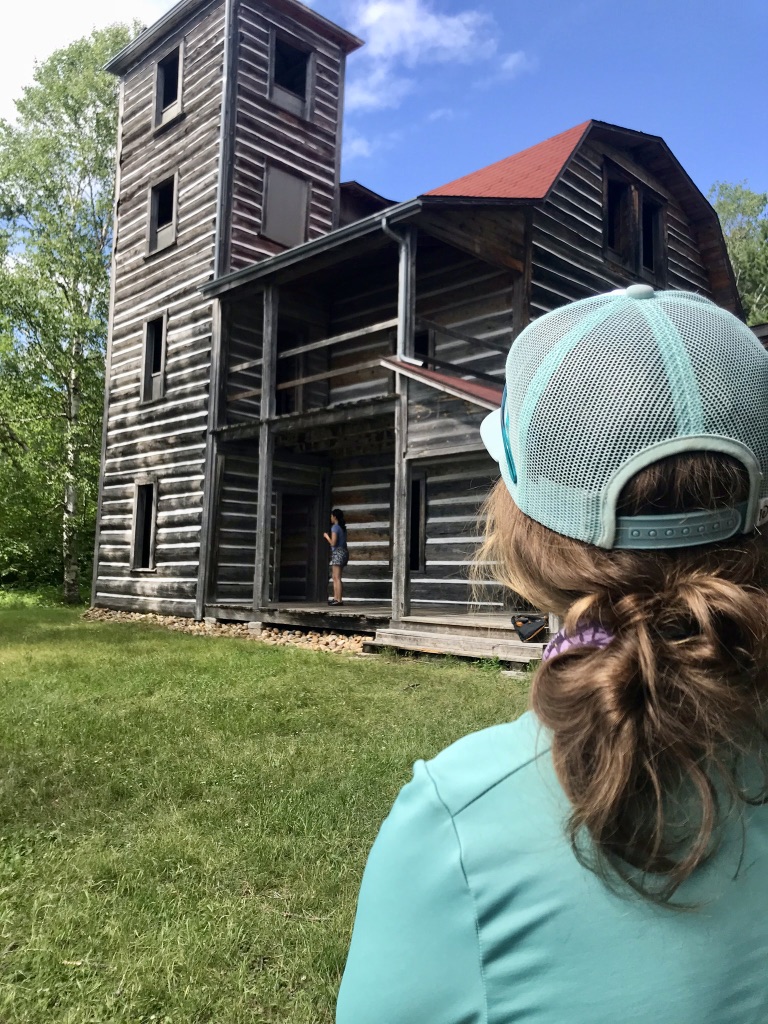
https://www.northernontario.travel/sunset-country/white-otter-castle-the-story-of-hope-and-unrealized-dreams
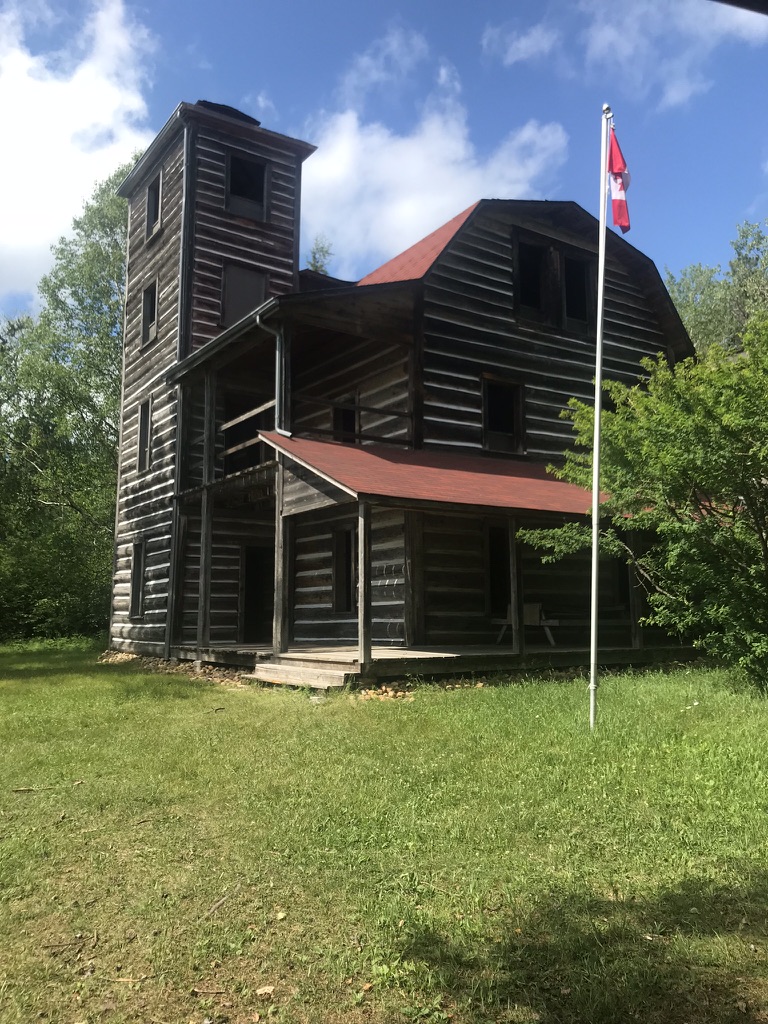
https://www.cbc.ca/news/canada/thunder-bay/ignace-atikokan-white-otter-castle-1.4174416








Day 3:
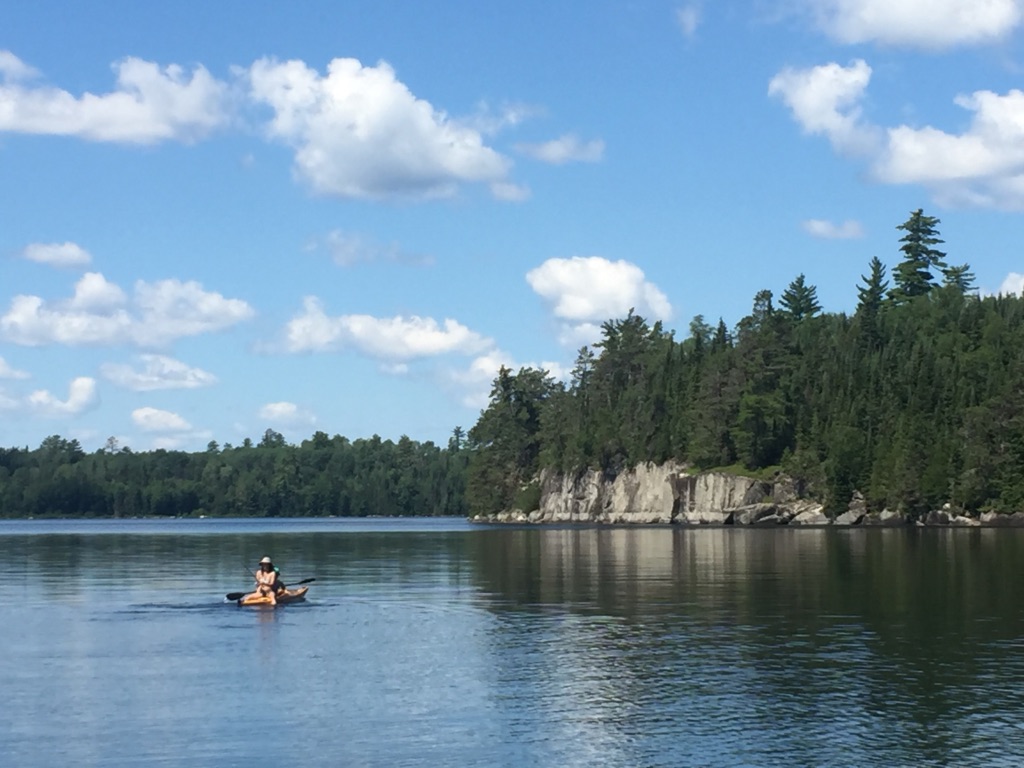

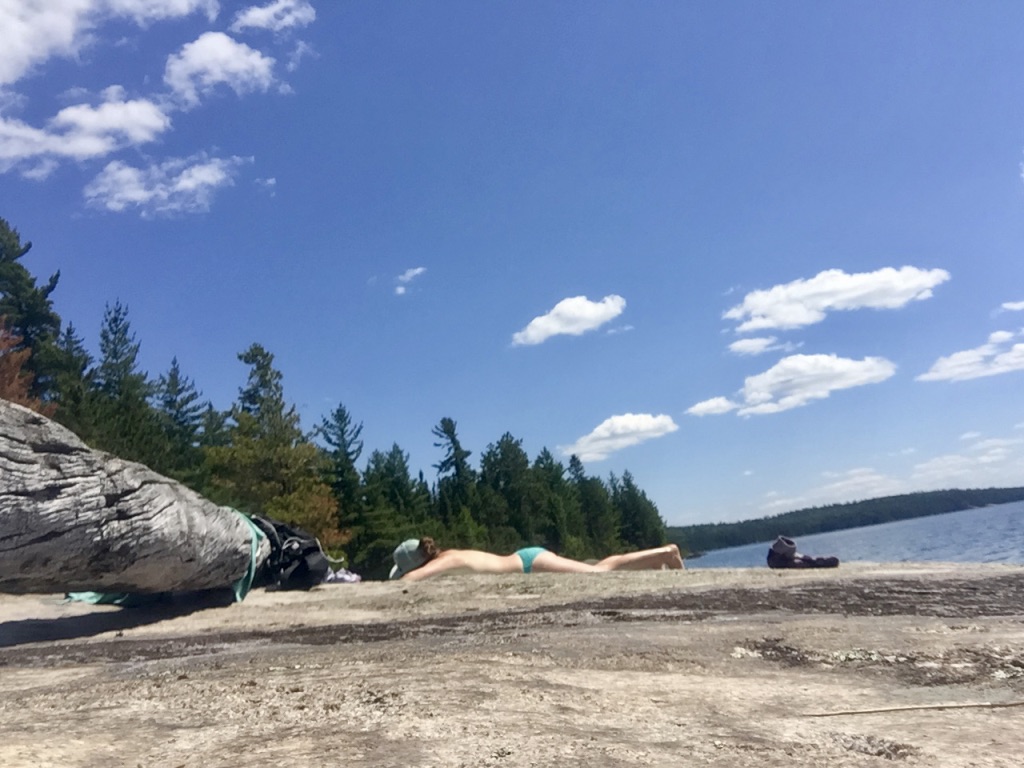
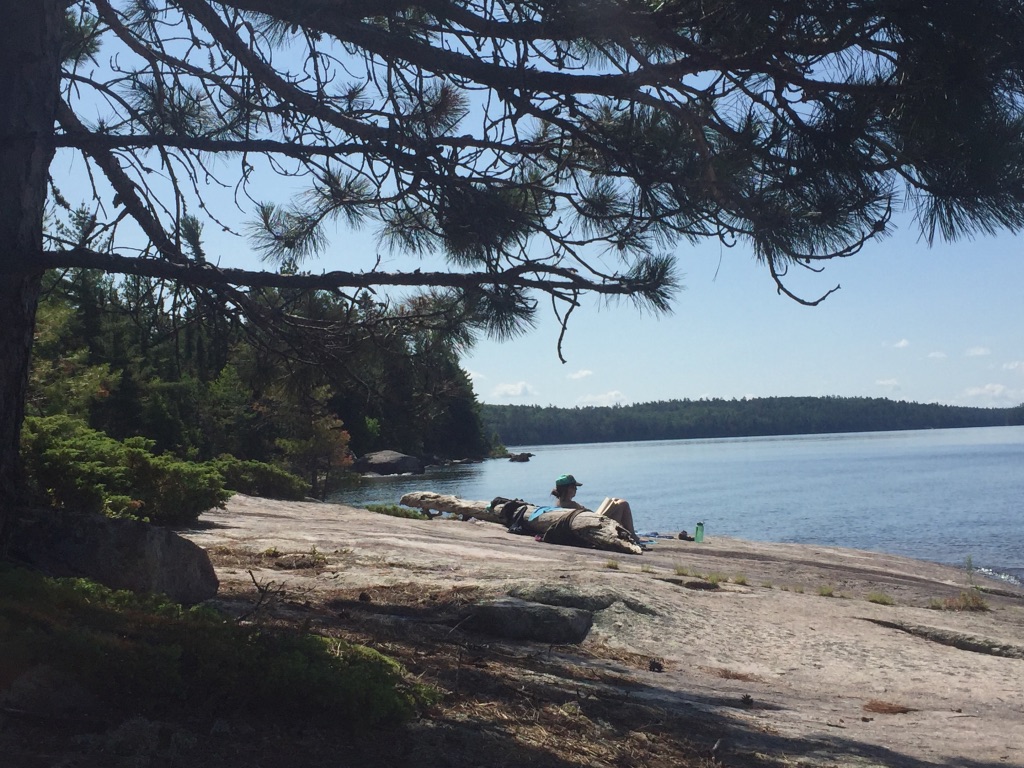
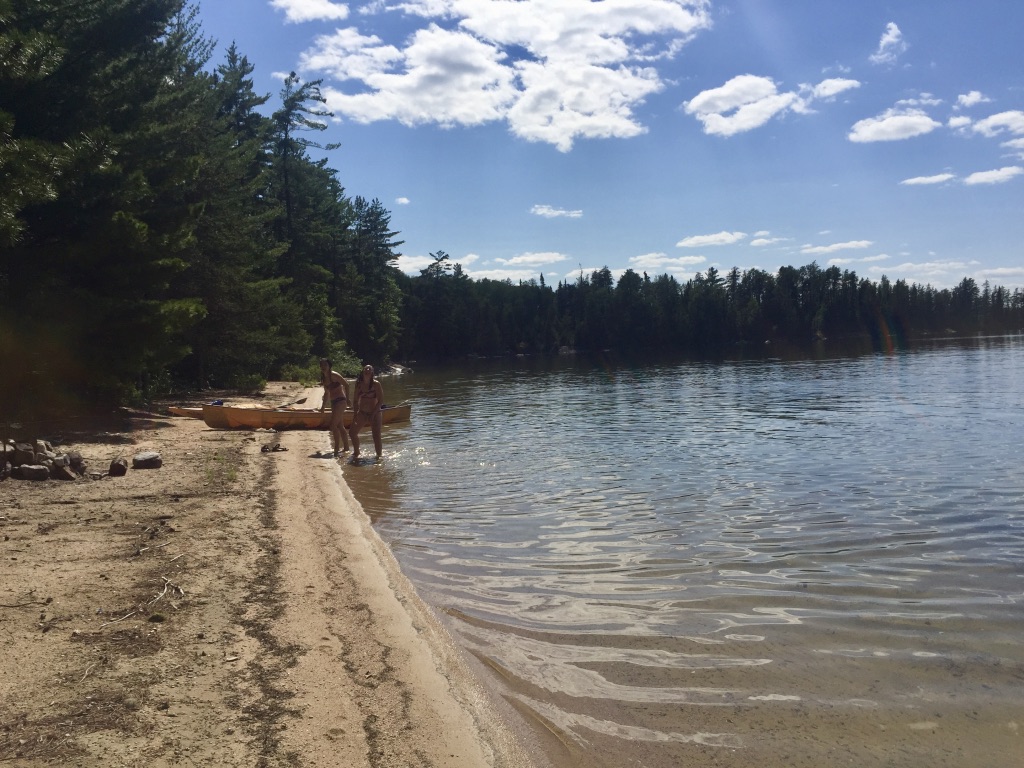



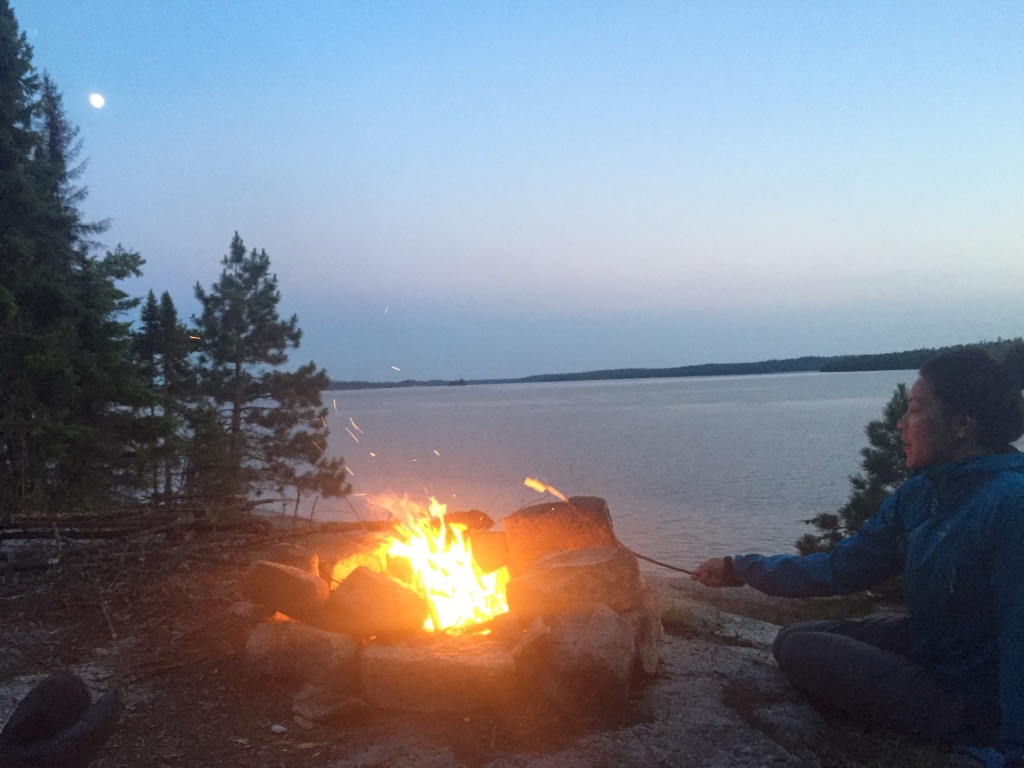
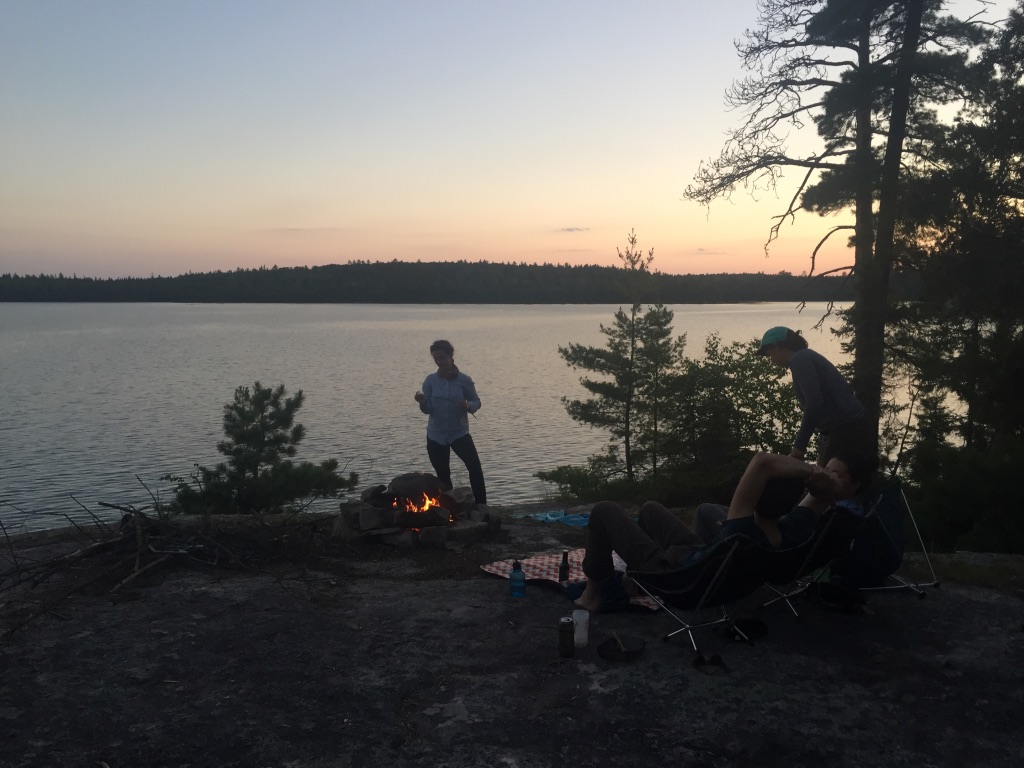
Day 4:
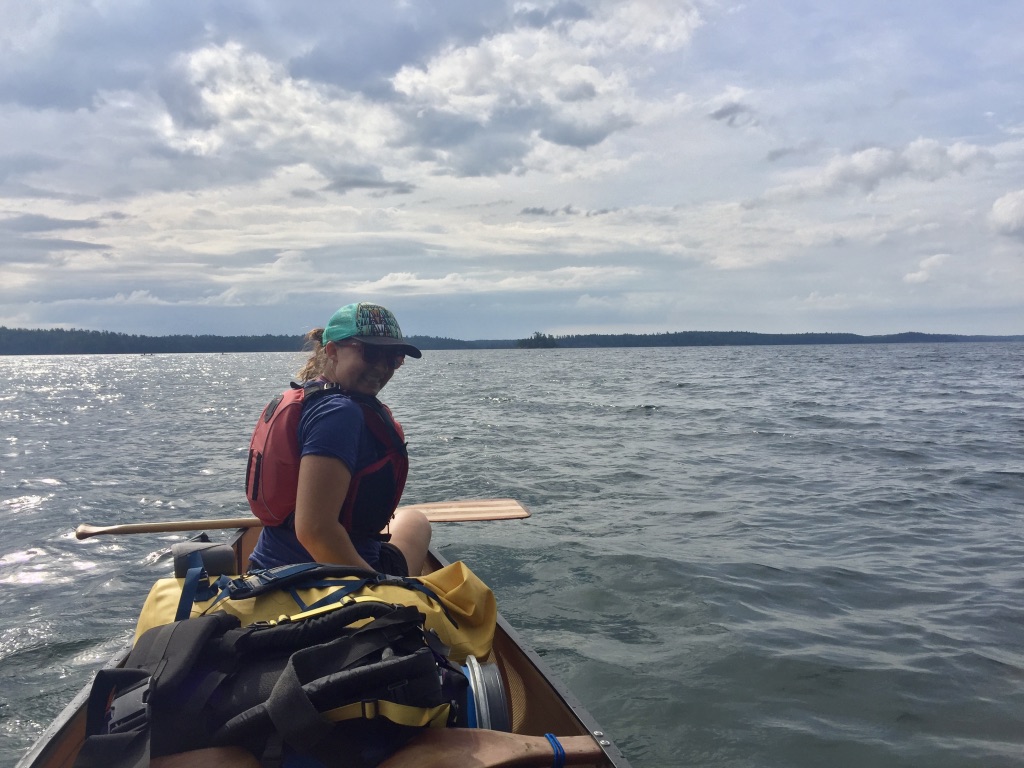



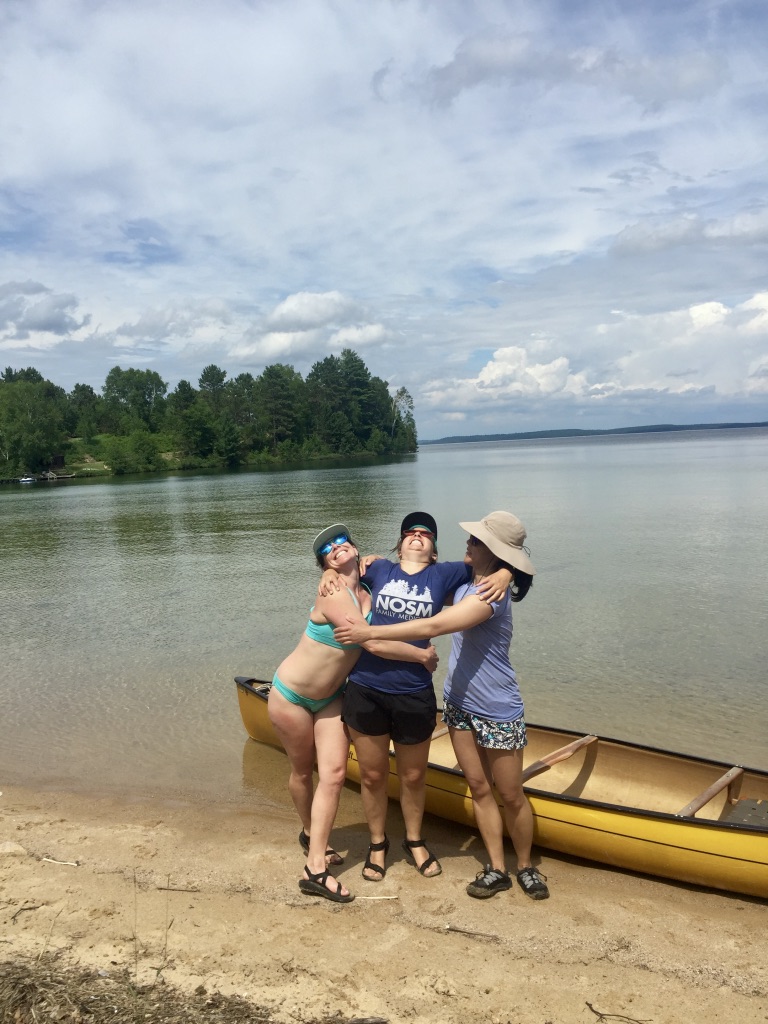

All joking aside, I cannot thank these two women enough for tolerating my bossiness, my idiosyncrasies and anxieties. Thank you for keeping our Women In Wilderness adventures alive! I appreciate your friendship more than you’ll ever know.


Can’t wait for next year!
Be the change.
About a year ago when Henry was 3 and a half years old, we were in the thick of trying to night train him without a whole lot of success. With multiple night awakenings with soaked bedsheets, jammies and disrupted sleep for both Henry and I, we resorted back to night-time diapers.
One evening, I was putting Henry to bed in our usual routine; bathtime, jammies, two books in bed, song and story. A pattern repeated hundreds of times over. A treasured part of my day, snuggled next to my son, curled up in his toddler bed recapturing the highlights of the busy hours that had preceded our quiet bonne nuit. On this particular evening, I could sense something that wasn’t right. He was solemn with something hanging heavy on his heart. I asked him if he was feeling sad to which he nodded his blonde curly head, explaining that his night-time diaper was going to kill whales in the ocean. Unbeknownst to me, Blake and Henry had been watching bits of the BBC’s Blue Planet series which had prompted a discussion between them about plastic and the health of the Earth’s oceans.
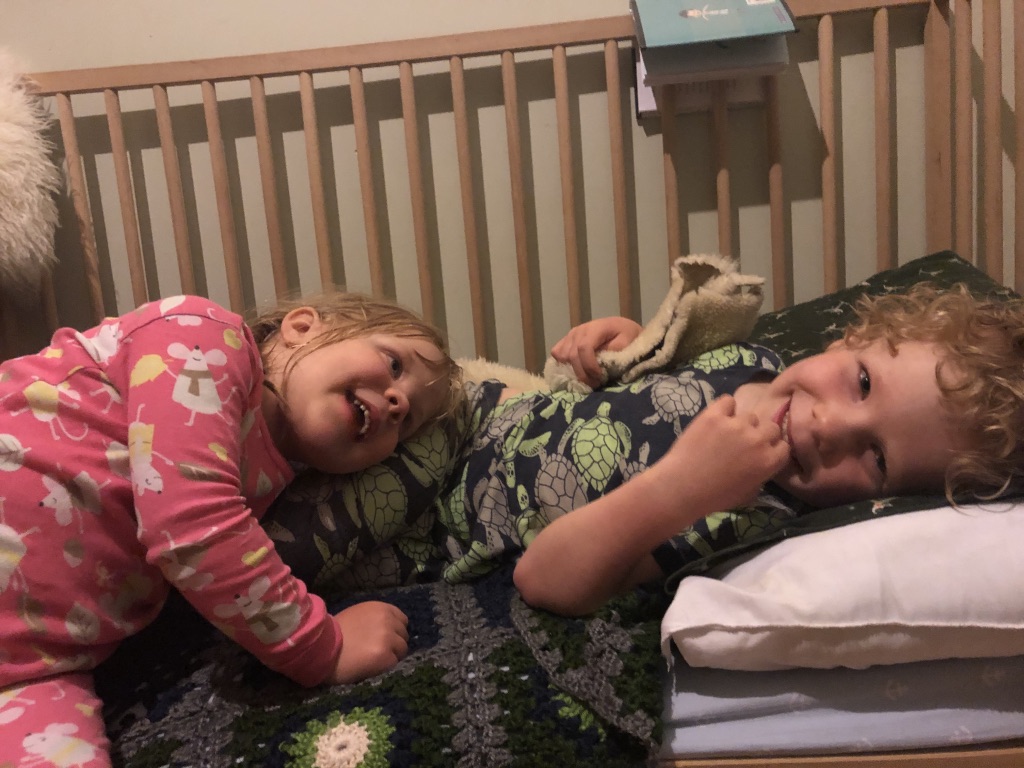

In this moment, my heart broke for Henry. I can recall experiencing similar sentiments as a child, even from a young age; I had felt hopeless and utterly devastated at humanity’s treatment of our planet. Having been raised in a socially and environmentally-conscious household, I had been well aware of the negative effects of our species on the natural environment. As a kid, I would often embark on self-motivated, after-school ‘garbage picking’ adventures; walking the length of our rural neighbourhood road picking up trash and bottles from the ditches. Later, as and adult, I continued my environmental advocacy within the Queen’s University environmental group, but as life got busier and busier with medical school, residency, full-time work and kids, I found myself slipping into bad habits. Grabbing a to-go coffee without my reusable mug, using the car when I could have biked, shopping mindlessly at the grocery store without paying much attention to packaging and continuing to eat meat in our diet.
Henry’s heart-crushing sadness over the use of disposable diapers was a reminder that made me realize how much we had a lot to do as a family to improve our environmental stewardship.
Astonishingly, three year-old Henry wasn’t the only one who has been impacted by the BBC’s Blue Planet series. One article cited a whopping 88% of people who watched the series have now changed their daily behaviours to be more environmentally conscious as a result!

Over the past year, with inspiration and help from like-minded families and with much motivation and support from Blake, our family has made a number of impactful changes. We are certainly not perfect, but I’d like to share with you the changes that we have made to our day-to-day lives. There is nothing complicated about it, it just requires a bit of thought and commitment.
If you’re a parent like me reading this, looking into the eyes of your littles one and knowing that their future health is in jeopardy might be all the motivation that you need.
1. Go meatless!

Ok, I’m not asking you to totally ditch the bacon, but it is well known that the impact from livestock production heavy drives climate change and is extremely inefficient in the land surface area and water requirements compared to plant-based agriculture.
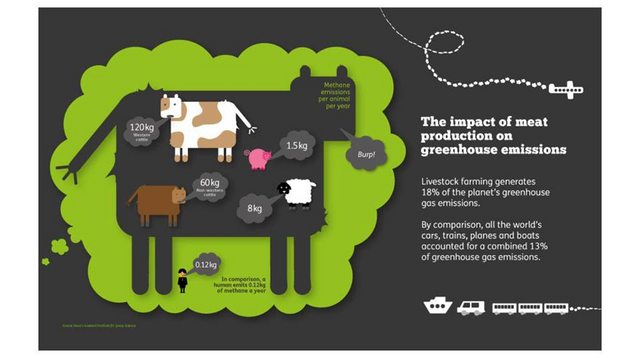
Eating less meat is simply the most efficacious way to make a major impact. If you’re going to make one change in your family’s lifestyle, reducing your meat consumption is the most bang for your buck.
For us, inspired by my vegan brother, John, we have simply increased our plant-based meals to the majority of our weekly menu and splurge on meat only once or twice a month. With the kids, we are a bit more lenient, but Blake, someone who two years ago existed entirely on animal protein now doesn’t even eat meat on special occasions!
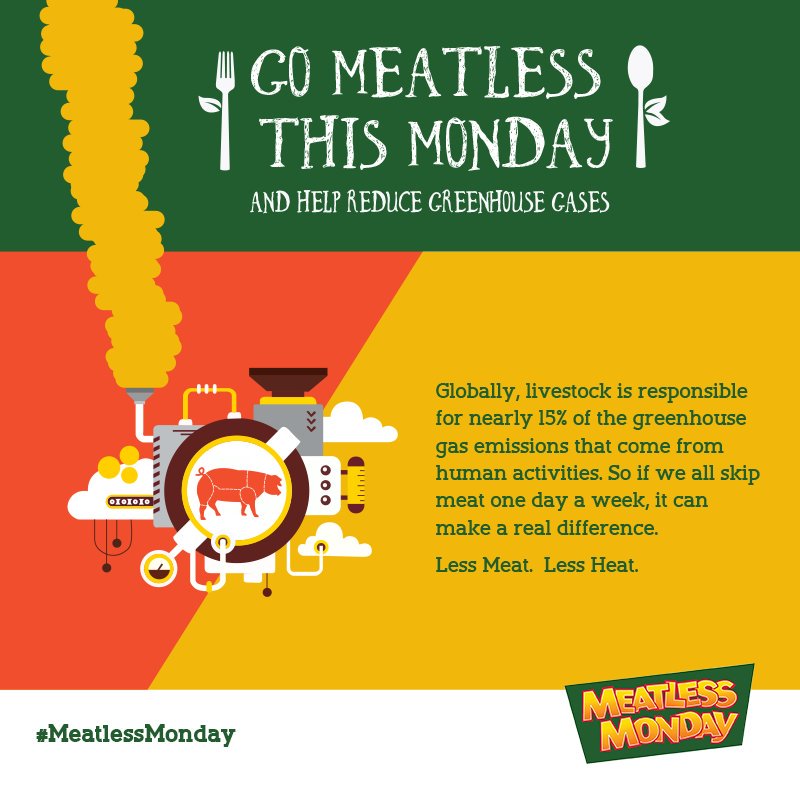
There are infinite blogs, Insta feeds and cookbooks out there that can be the source of inspo for pant-based, family-friendly meals. Start small. Try Meatless Mondays and grow your veggie recipe repertoire from there.
2. REFUSE all single-use plastics!
The vast, vast majority of single-use plastics ever created STILL EXIST somewhere – floating in the ocean, buried in a landfill, ingested by a wild creature… Plastic can take hundreds of years to breakdown.
Let that sink in for a minute.
That plastic fork and take-out container that you used for five minutes to eat your salad at lunch will literally be on Earth for another 200+years. If that doesn’t make you stop and think, I’m not sure what will.
Blake said something to me recently that has hugely changed our use of plastic in our household. He shared with me that he thinks of any piece of single-use plastic that passes through his hands is his forever. I now often think of this as I debate whether I really need that takeout coffee if I have forgotten my reusable mug or if I can find a different treat at the grocery store that isn’t entirely wrapped in plastic. If I’m not ok with having that plastic as ‘mine’ for the rest of my life and beyond, I just don’t buy it.
So, make a commitment. Think of Blake and really ask yourself. Is this single-use plastic SO needed that I am ok with having it as mine forever?

3. BYOB!

Bring your own beer! Just kidding – bring your own bags! Refuse plastic bags and make a promise to yourself to always have your own bags when shopping. This is such a simple, simple change to make.
First, acquire a bunch of reusable bags. Get them at your local thrift store, pull them out from under the kitchen sink or borrow a few from a friend. Now, tonight before bed, put at least 3-4 in your car, one if your purse and one in your workbag. Next, simply refuse to touch a plastic bag again.
The next time you have to carry out all of your groceries in your arms, you’ll never, ever forget again!
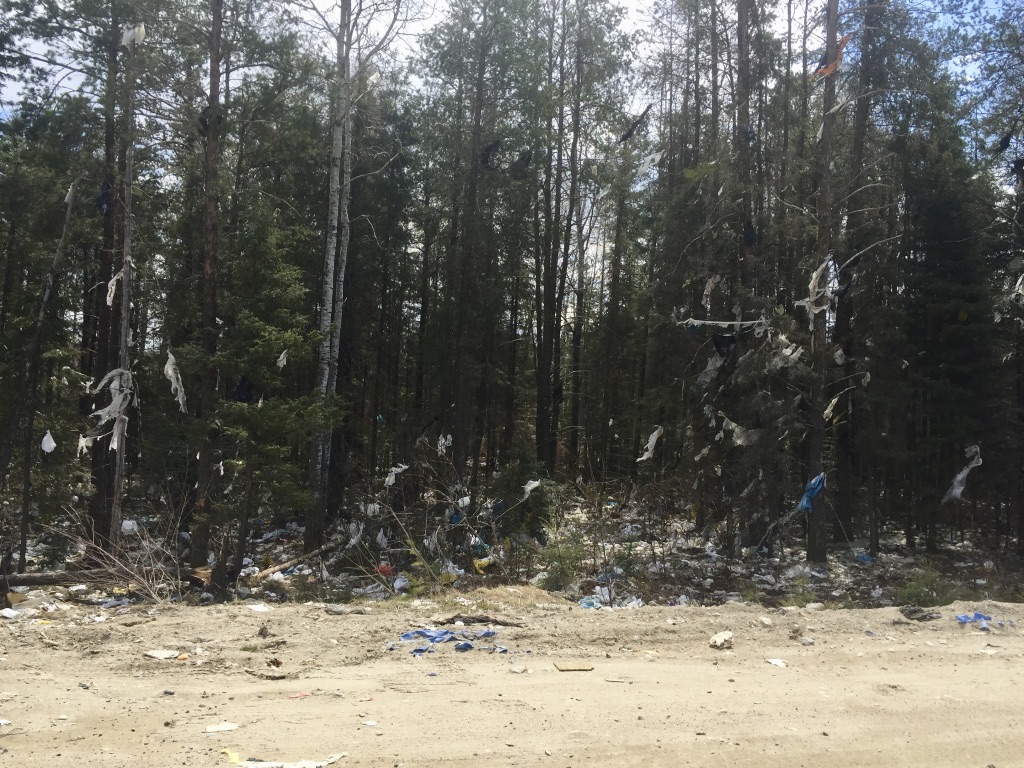
4. REFUSE produce bags at the grocery store!
Along the same lines as above, one of my pet peeves is seeing people at the grocery store putting their produce into single-use, plastic bags. Think about it – your broccoli made it all the way from California without it being quarantined in a plastic shield, so why are you paranoid about it being contaminated on the simple journey from your cart to your fridge?! The worst is seeing people putting veggies and fruits like bananas or oranges in a plastic bag. They already have a natural protective outer layer!!
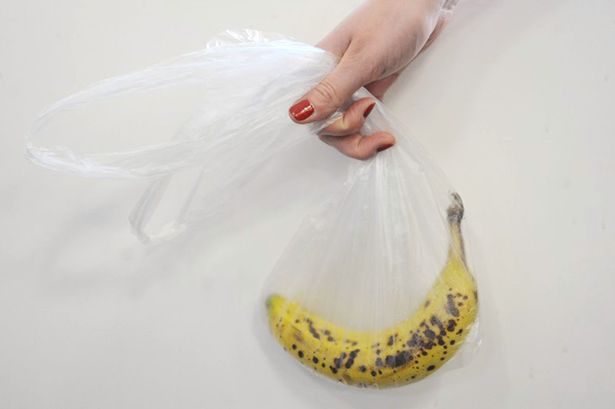
Ok, sorry, rant over.
Again, same principle as the points above. Those produce bags that you used for 10 minutes to transport your apples to your fridge crisper will end up floating in the world’s oceans for decades and decades after you have long forgotten about them.
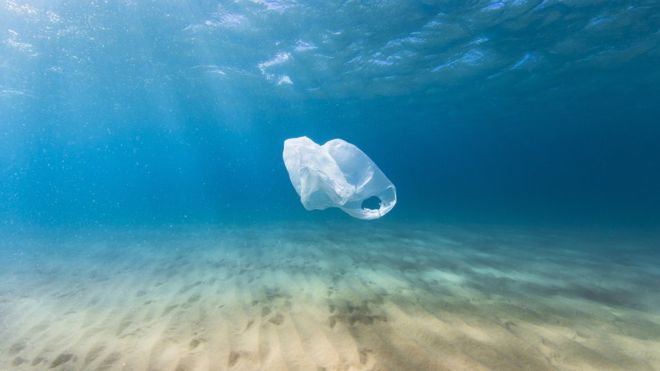
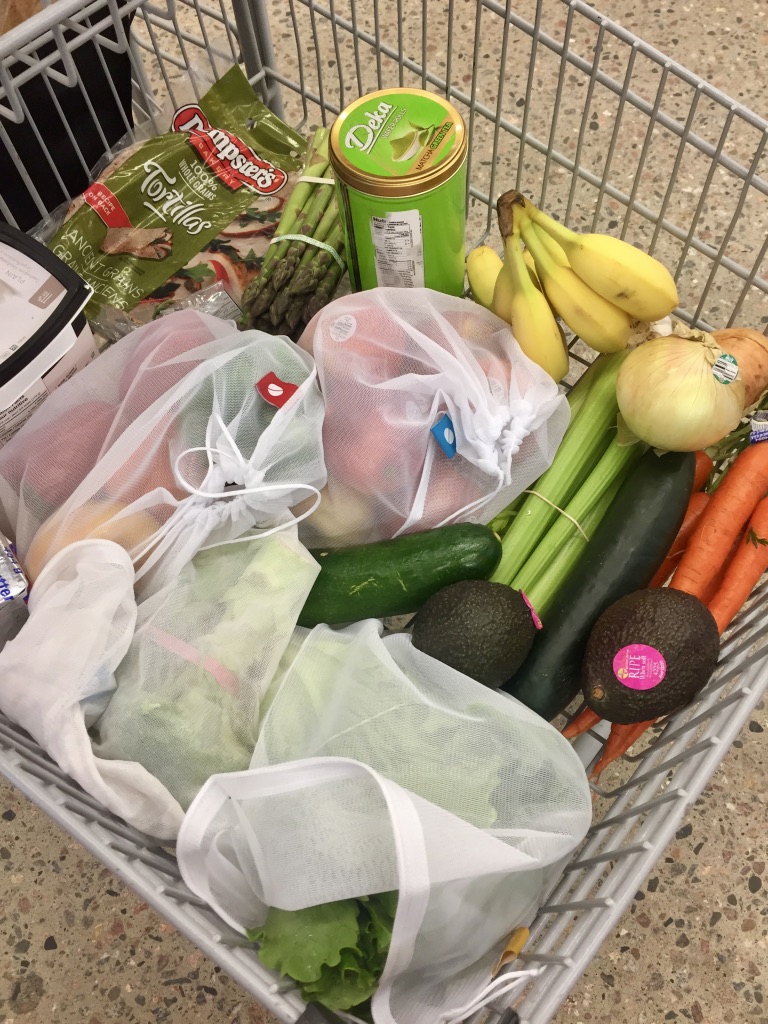
Easy fix. Go on Amazon, purchase reusable produce bags or better yet, if you’re handy, sew some of your own. Then, pack 4-5 of them in your reusable shopping bags that are already in your car. Commit to never using a plastic produce bag again. If you forget, carry out those peppers in your arms, my friend! In a true pinch, grab a paper bag from the mushroom section. Not ideal, but better than plastic.
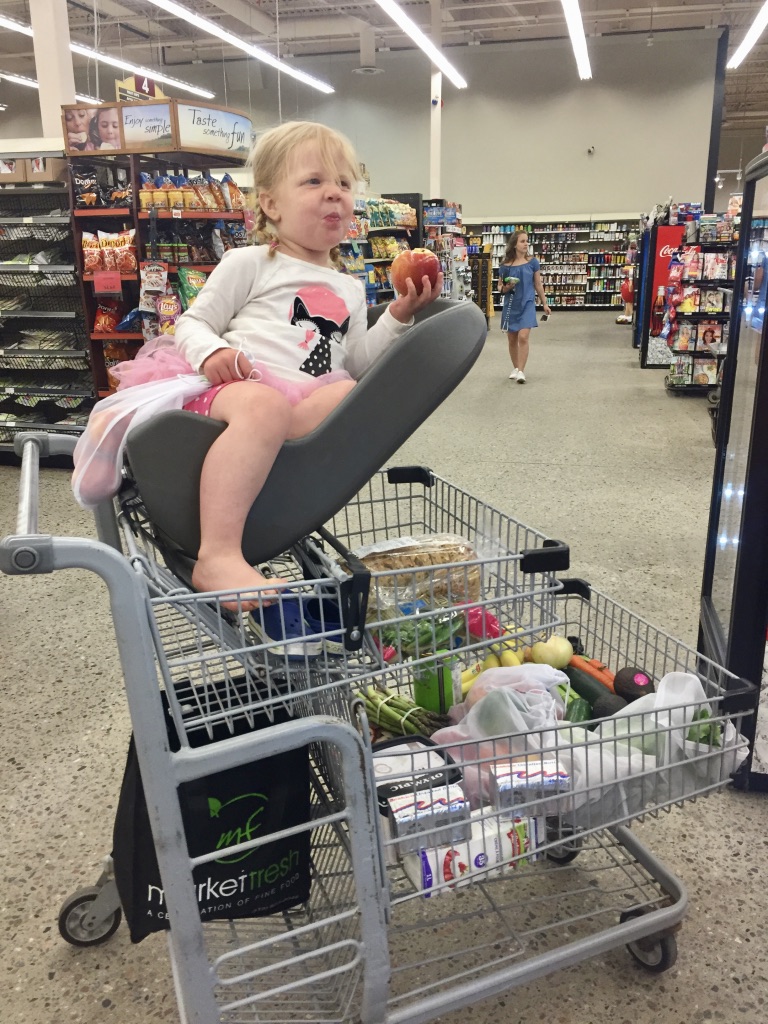
This is what our cart generally looks like these days.
Just a quick note while we are on the subject of grocery shopping. We live in a town of 5000 in rural, isolated Northwestern Ontario. Our options for grocery shopping are limited to Giant Tiger and our local store. We used to shop at Giant Tiger due to cheaper prices, but this is what the produce section looks like at GT:
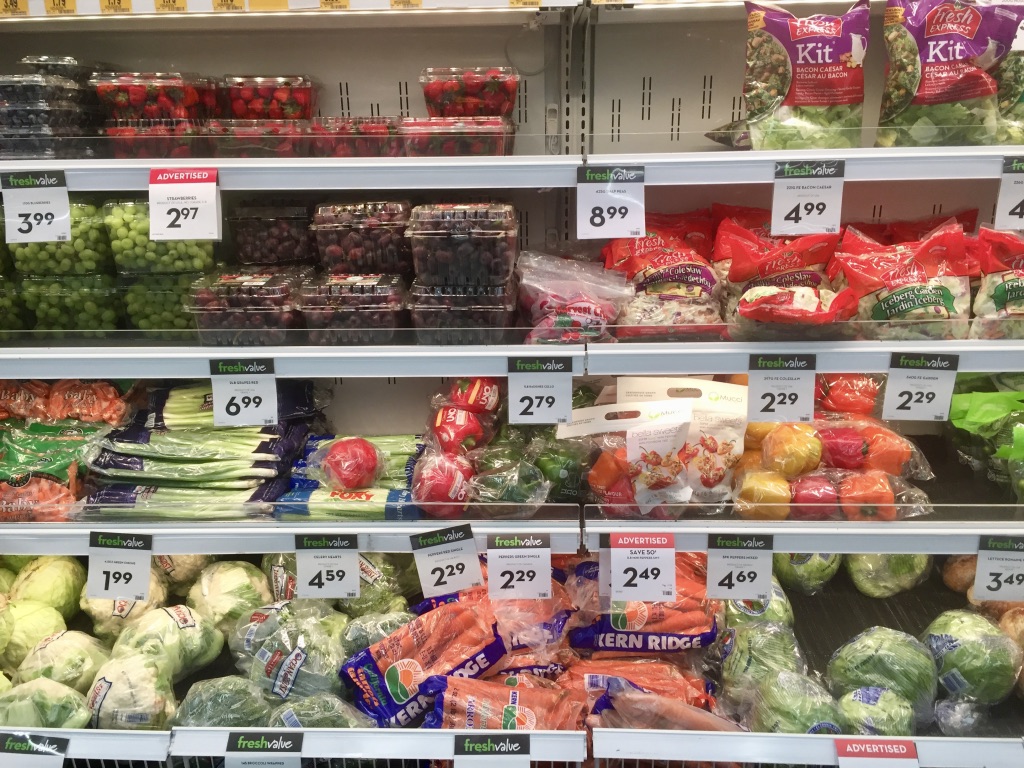
And this is what the produce section looks like at our local store.

So, if you have options, it might be worthwhile comparing retailers and shopping at locations that offer you choices to reduce your waste. If you don’t have options, speak up! Request a meeting with the managers or owners of your local store to share your ideas.
Recently, after watching this CBC Marketplace documentary, I approached our local grocery store about trying to increase options for shoppers to buy in bulk, bring their own containers and buy produce that was plastic-free. I ended up meeting with the store owner along with a colleague of mine for a very interesting (and hopefully fruitful) conversation.
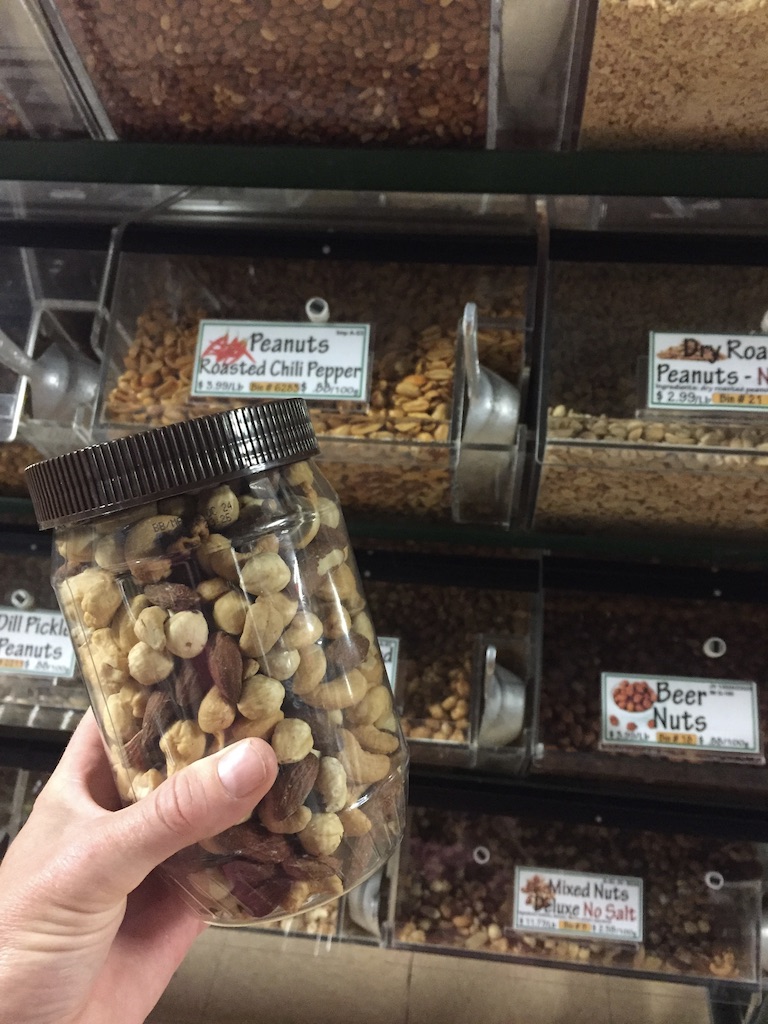
4. Buy in bulk!
Whenever possible, look for products that you can buy in bulk and bring your own containers. The bulkfood store is a super fun place to shop – aside from the staples, you never know what you’ll leave the store with 🙂
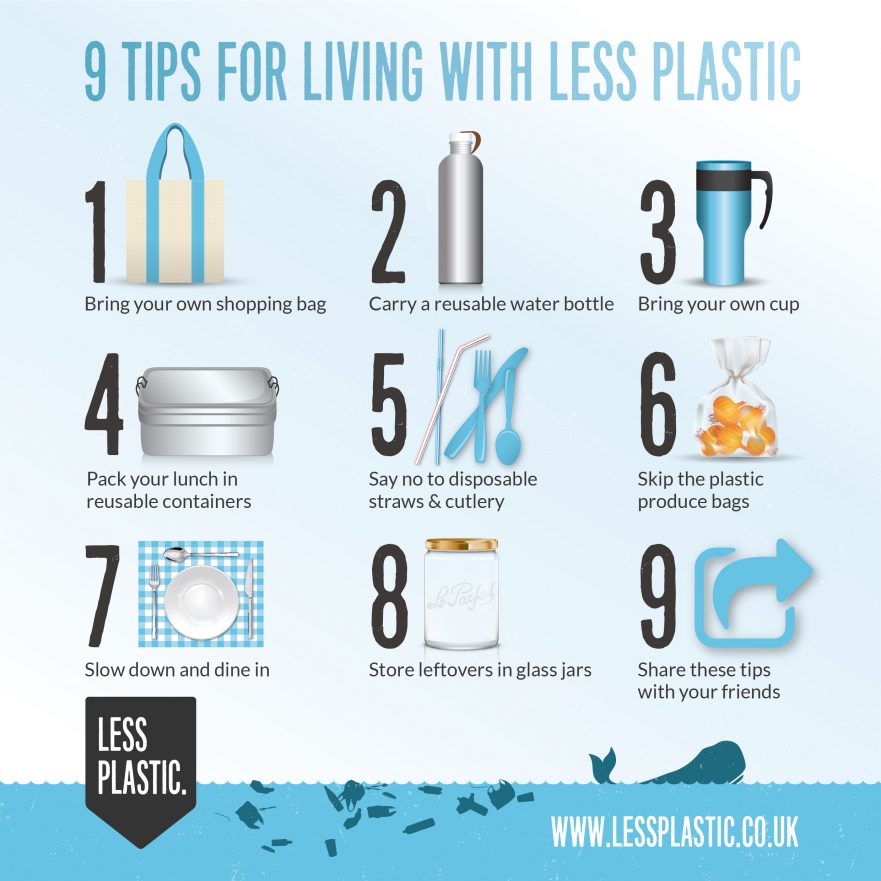
5. REFUSE all single-use plastic cutlery, straws, to-go cups and take-away containers.

You may have heard of ‘zero waste kits’, but no need to get fancy. Get yourself a water bottle, a coffee/tea mug, reusable cutlery and dedicate those items to your work bag, purse or backpack. Never leave the house without them. If you forget, no coffee for you and you’ll be so grumpy for the rest of the day that you’ll never forget again!
At restaurants, when we order drinks, we simply request ‘no straws please’. If we have leftovers that we’d like to bring home, we ask what the restaurant’s takeaway containers are made of. If plastic or styrofoam, we just ask for a large piece of tinfoil! If we were more organized, we would bring our own Tupperware container, but the tinfoil always does the job in a pinch.
6. Go plastic-free in your bathroom!

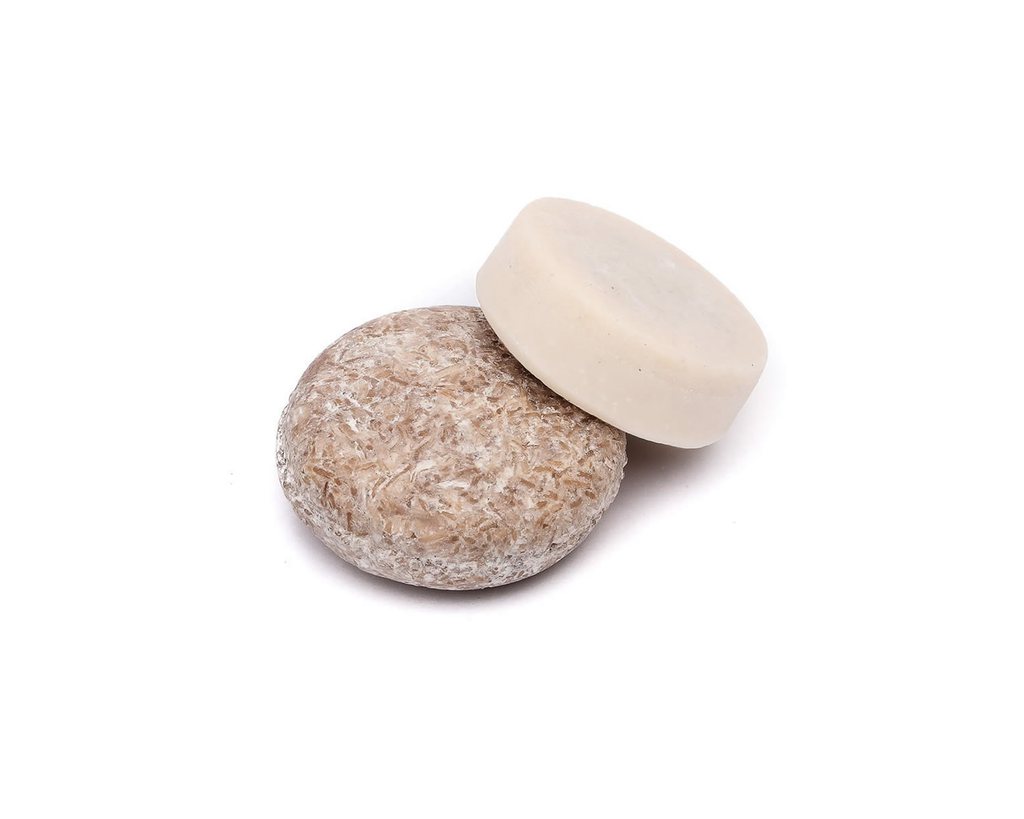
I promise that you don’t have to be a hipster or a patchouli-smelling Ani Difranco enthusiast (although there is nothing wrong with that either) to clean up your bathroom waste. There are so many accessible options out there these days to replace self-care items that are either packaged in plastic or are made of plastic (i.e. try bamboo toothbrushes, shampoo/conditioner bars, silk dental floss, etc.). I won’t re-invent the wheel here. Check out this article on how to revolutionize your bathroom. If your local drug store doesn’t inspire you with options, look online at retailers like Well.ca. Just be mindful, however, of the carbon footprint of ordering online. Do an order with your neighbour or just stock up at once.
I personally really love these shampoo/conditioner bars. They are pricey, but are so luxurious that I look forward to using them every time!
7 . Go plastic-free in your kitchen!
Again, we are certainly not perfect, but there are such easy ways to ditch the singe-use plastics in your kitchen. Use up that last roll of plastic wrap, then never buy it again. We use washable beeswax wrap (i.e. Abeego) or just use a Tupperware container for leftovers.

For Ziploc bags, we simply wash them and re-use them, or use silicone bags that can be put in the dishwasher.
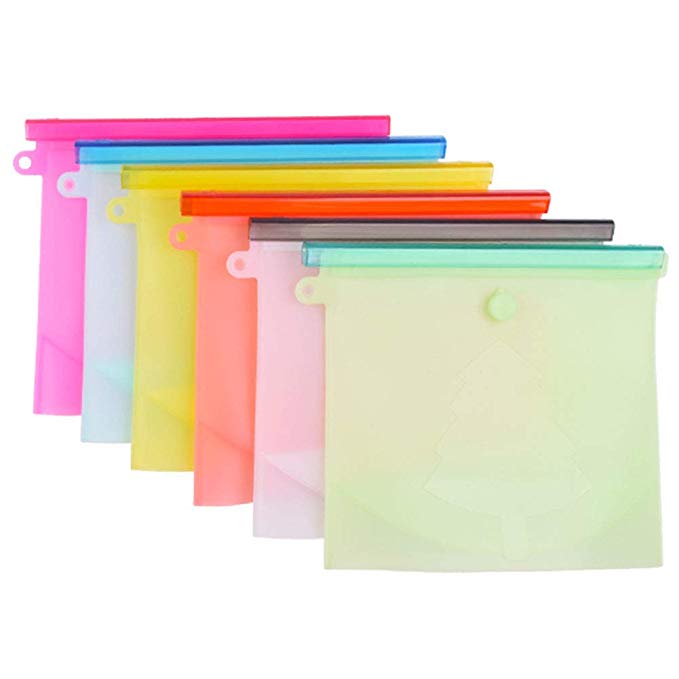
For Henry’s lunches, we bought four of these little baggies at the start of the school year, wash them in the dishwasher and use them every day for all sorts of snacks in his lunchbox.

7. Skip the fast fashion!

I’m not going to lie, I used to be the first one to fill my online cart up with clothes that I didn’t need from the Gap just because I saw an online banner for a 50% off sale. I also used to addictively browse the Joe Fresh aisles when I really should’ve been sticking to my grocery list at the Superstore.
I get it. As a society, we are addicted to ‘Fast Fashion’ – cheaply made, low-cost, trendy clothes that are worn for a season (at best), then get turfed to the landfill to be replaced by the next hot item.

I definitely recommend watching this episode of the CBC’s The Passionate Eye. It will hopefully be the beginning of changing the way you look at buying clothes for you and your family.
In our home, the kids’ clothes are almost exclusively hand-me-downs. Any new items they have in their wardrobes are gifts from family.
For myself, I try to buy clothing items sparingly and only if they are well-made and are timeless in design. My girlfriends and I often organize clothing swaps (which are also great excuses for a night of drinking wine and visiting) to prevent pieces that still have lots of life in them but are perhaps no longer fitting or no longer loved, from going to the garbage. This minimizes wardrobe items that end up directly in the landfill.
8. Go easy on the kid toys!
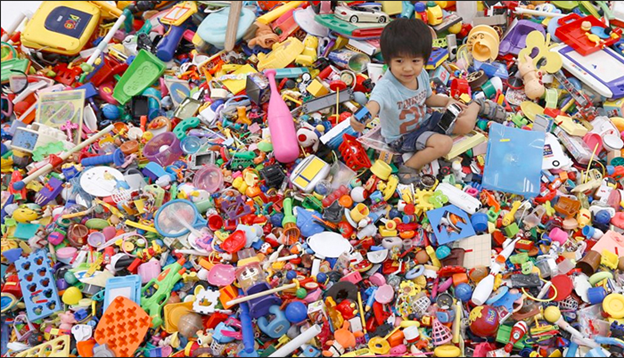
I am a minimalist and cannot stand clutter around the house. I annoy Blake endlessly by constantly purging unneeded items, but I also fiercely protect our space by preventing excessive stuff for entering our home in the first place.

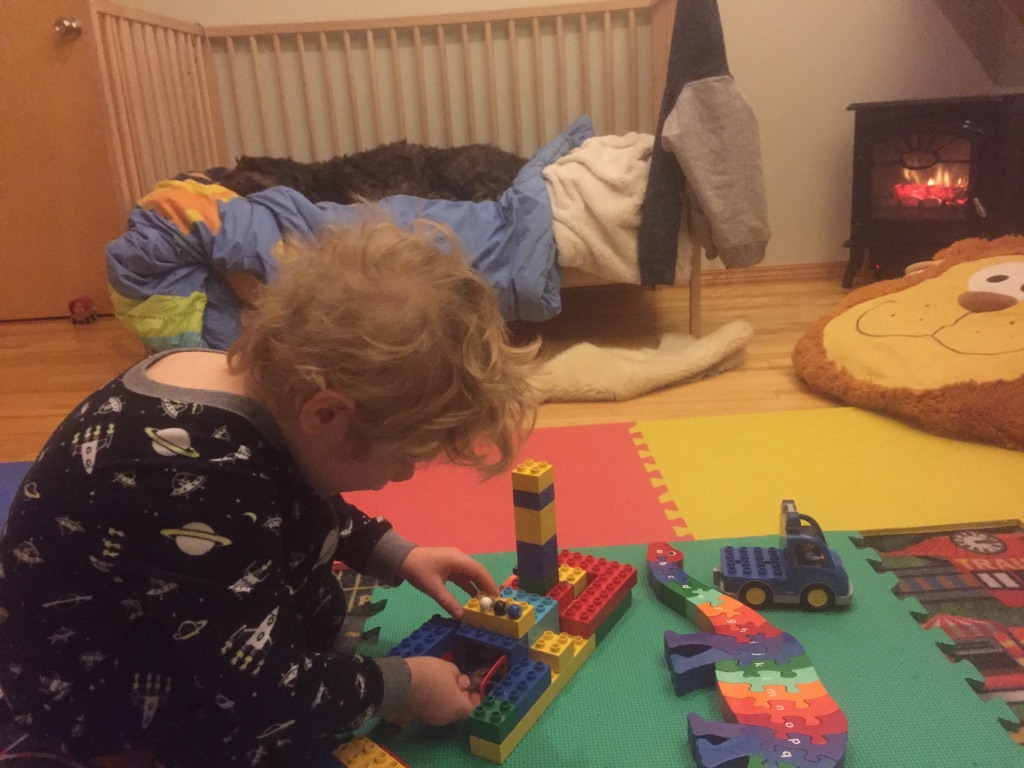
Henry and Blake often go on trips to the dump to find items to upcycle.
The ‘fireplace’ in the background was picked out by Henry at the dump. Blake fixed it up and voila! Instant ambiance.
Call me a stick-in-the-mud, but this goes for kids items too. It is partly a self-serving strategy, but I can count on one hand the number of times that I have bought the kids brand-new toys. Our kids know it will be almost always be a hard ‘No’ when they ask for toys at the grocery store or wherever else we may be. It’s not that I’m trying to deprive my kids, but they simply do not need rooms full of plastic junk and toys that are played with for ten minutes, then cast aside. Ask yourself, is that plastic toy that you gave your kid to try to get him to stop whining for five minutes worth a lifetime or more in the landfill?
For our kids, we focus on weekly trips to the library to ensure we have new books to entertain them on wintery evenings on the couch, we trade toys between neighbours with similar-aged kids and if there is something that the kids are particularly obsessed with, we try to find it used; we ask our friends, look on Kijiji, post a request on Facebook or browse the second-hand stores. If we can’t come up with their wish-listed items in these ways, we simply just don’t buy it.

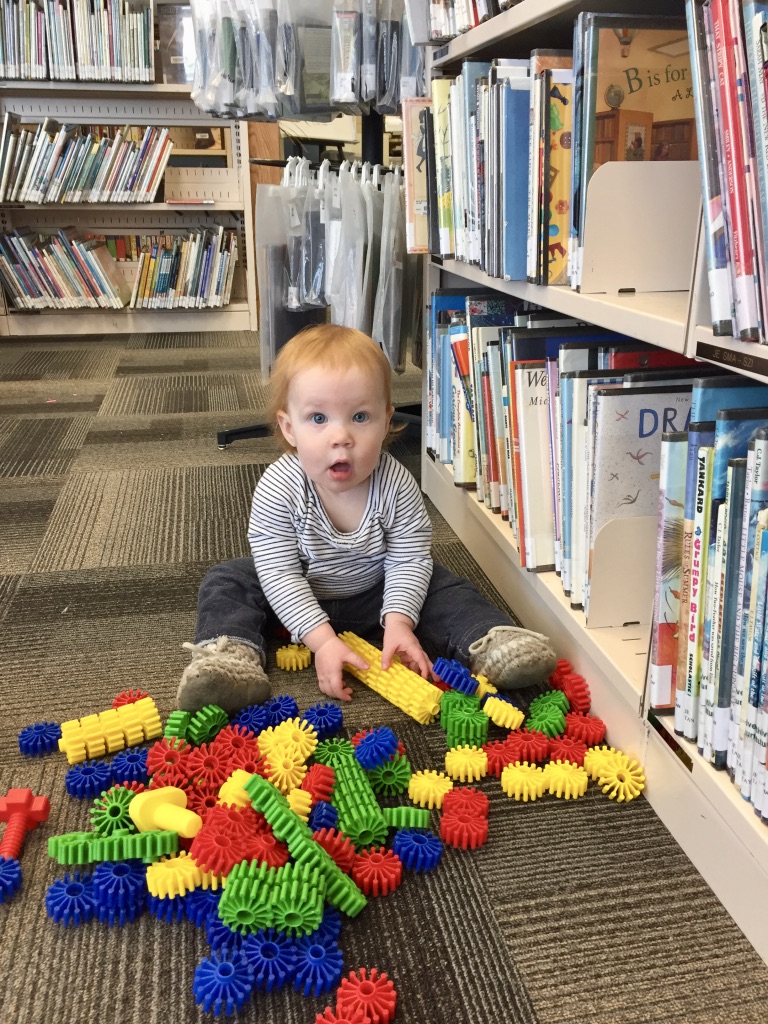
There are definite exceptions, but this is generally the rule. It might sound extreme, but their lives are full to the brim with happiness achieved by other non-material means and I am not stumbling over and cleaning up kid-clutter day-in and day-out. Parenting win!
9. Don’t rely on your plastics being recycled!
Often when I chat with others about use of plastics in our day-to-day lives, the topic of recycling often comes up as a reason to not worry about our consumption of single-use plastics.

The truth is, the vast majority of plastics that you wash, carefully sort and leave out in your blue bin actually end up in the landfill. You don’t have to do too much in-depth research to realize that less than 10% of plastics get recycled into another product, leaving 90% to float in the world’s oceans, fill up our landfills or be being dumped in poorer, developing countries in South East Asia.

Even more sobering is that it developed countries like Canada and the US previously sold their plastics to China for manufacturing, however about a year ago, China abruptly stopped importing ‘recyclable’ plastics.
All of a sudden, millions and millions of tonnes of plastics had nowhere to go. Think about that for a minute. Now, plastic ‘recyclables’ are baled up, shipped to landfills and overseas to countries like Malaysia.
I encourage you to take ten minutes while you drink your coffee this morning to watch this clip from the CBC News that helps recapture the events over the past few years. I promise it will make you think again about ever relying on your blue bin as a way to ‘save the planet’.
So, if you’re feeling consoled by your recycling efforts, think again. Recycling truly provides false reassurance to the consumer. Remember the three Rs that you gamely memorized in grade three? Reduce, Reuse and Recycle? I challenge you to change the mantra and teach your kids to REFUSE, Reduce and Reuse instead. Recycling is, unfortunately a non-solution to our society’s laziness.
10. Start the conversation in your home, at your work and in your community!
If you’ve made it this far, MANY THANKS for reading. I realize that this topic is not lighthearted or joyful. It’s not glamorous or flashy and will actually make you feel like Henry – saddened and lost but there is hope.
The best way to create change, is BE the change.
Cliche, I know, but start with small, manageable steps just within your day-to-day life with your family. Talk to you kids about why being an environmental steward is important. It helps them understand their place in the world, their need to think critically and to act selflessly.
Start organizing events within your friend groups, church groups, Mommy/Daddy playgroups, etc. to do toy or clothing exchanges. Talk to your local stores if you’re not pleased with the options for plastic-free shopping. Use social media to share your concerns, ideas and successes with your friends, family and colleagues.
I would also be so happy to hear from you if you have any tips to share or any comments on how we can further improve our waste-reduction and climate change action! Again, thanks for reading 🙂
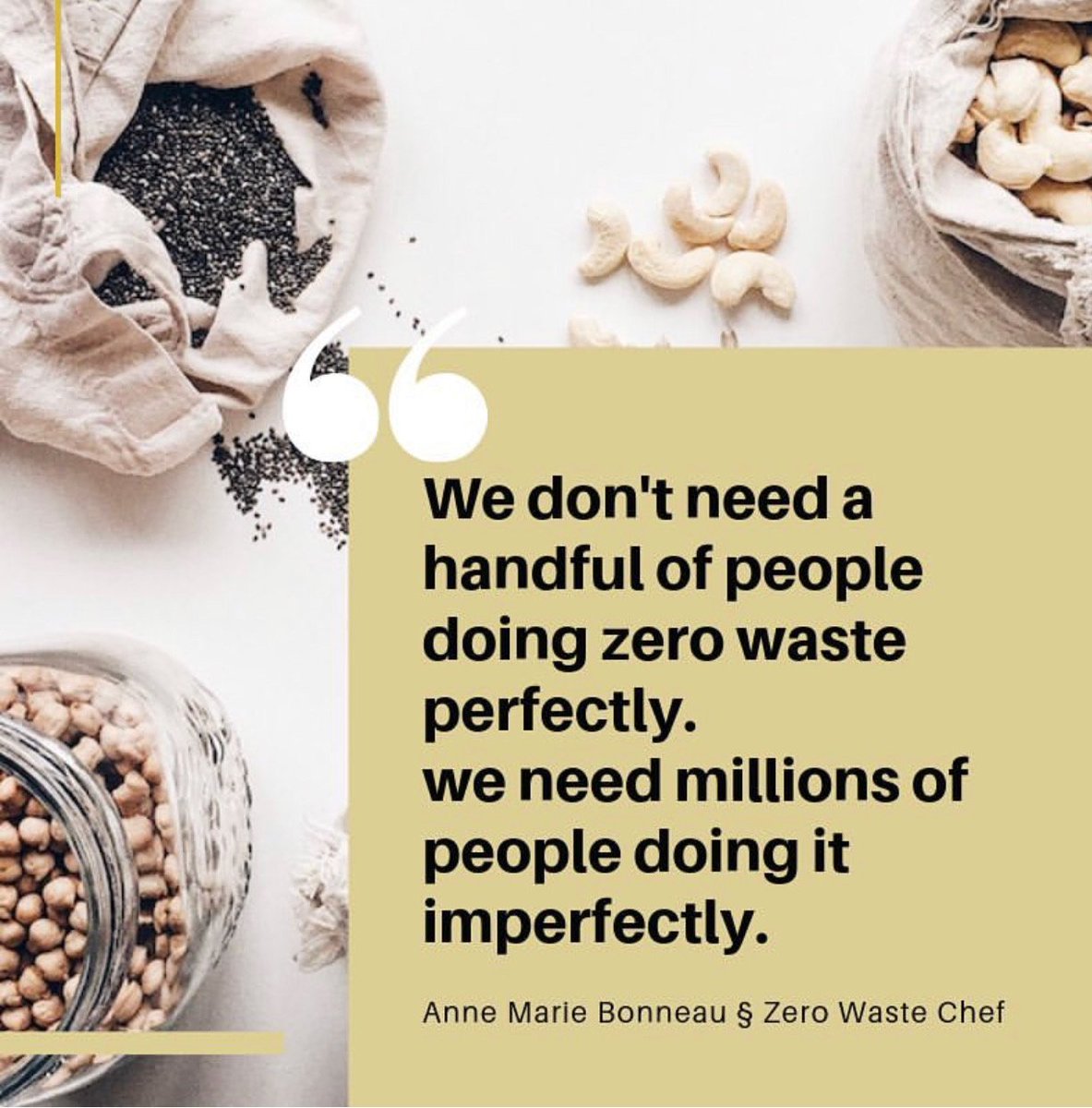
Working Mom Guilt
With a quick sunscreen-scented kiss planted onto each ruddy cheek, I peer into Henry’s blue eyes. “Mom loves you, ok? I love you big, big, big.” A silent nod. “I love you big even when Mom is away, ok?” Another flurry of kisses and then I’m striding through the airport entrance. Whoosh, slide the glass doors as the wheels of my suitcase clatter over the concrete floor. My heart leaps with excitement at the rush of adrenaline that floods my body. I am alone! I practically run up to the Bearskin Airlines counter where the woman regards me blankly. “Bags on the scale,” she spits out dryly. Undeterred, I smile brightly and oblige with enthusiasm. ‘Girl, you can’t bring this Mama down,’ I think to myself. I have been anticipating this moment for nearly six months. I’m embarking on a solo trip to Toronto to attend a Canadian Women in Medicine (CWIM) conference; a reunion of over a thousand physician Moms to focus on our wellness. A getaway for five whole days to indulge in sessions on parenting, sex and mindfulness. I had even enrolled myself to attend a creative writing workshop – something that was certainly out of my comfort zone. I was giddy with anticipation.


Hours later, I flop backwards onto the pristine sheets of the expansive king-sized bed in my lake-view hotel room in downtown Toronto. I grin to myself. If my respite from every day life had ended that very minute, I would have been ecstatic anyway. I had gone to the bathroom solo numerous times, I had drank my coffee without it being up-ended onto my lap, I had endured an entire day of travel without sweat drenching through my entire outfit and I had even chatted with my seat-mate on the plane for two whole hours uninterrupted. Discussing issues of social inequities in the North, the colonial history of Zambia and laughing through common stories of tree planting horrors in bug-infested Northern Ontario, not once did a little person demand a snack, have to be assisted to pee or hurl eardrum-shattering screams over possession of the iPad.
Casting my travel clothes aside, I wrapped myself the soft hotel robe, flipped on the TV while speed dialling room service. Soon, I was satiated with steak, wine and molton chocolate. I felt overcome with joy.
To kid-less folks, this might seem quite ridiculous. But Mamas – I know you feel me. How quickly we forget how delicious these simplicities of life feel.



With Blake at home with kids, I was set to sink into my five days of indulgence and selfishness, and did I ever capitalize on my time alone. I spent mornings sweating it out during unhurried workouts, eating out at interesting restaurants (like a hipster vegan Mexican restaurant, because that exists in the city!), going to the ballet with my Mom, catching up with old friends and spending quiet moments just alone.
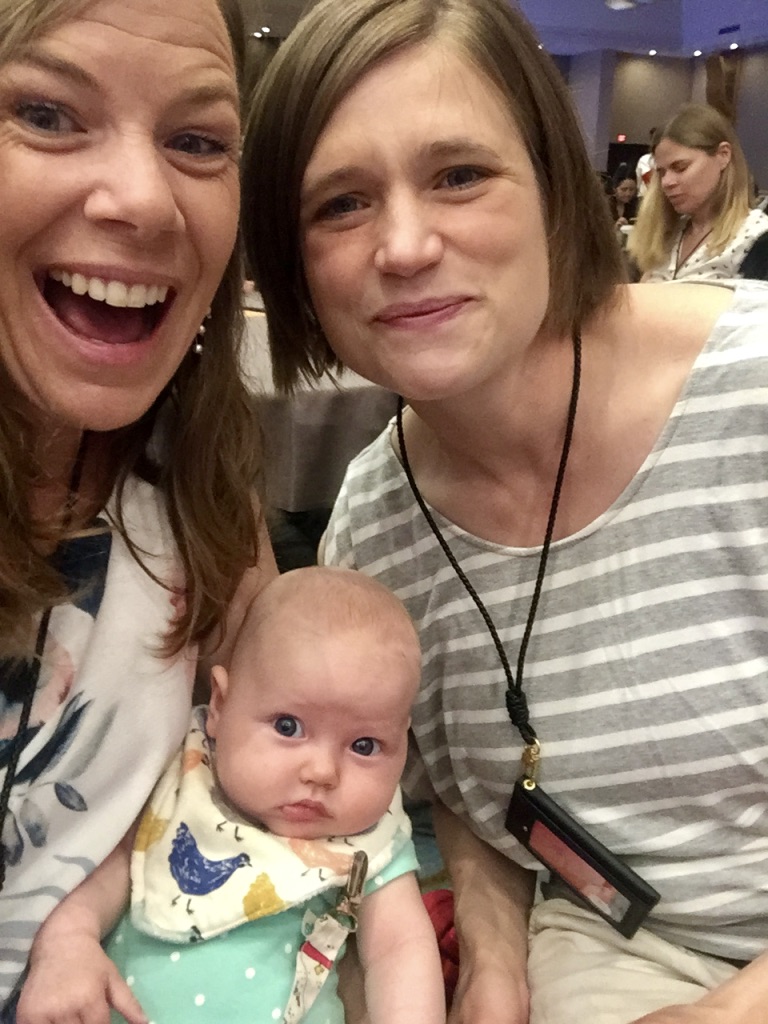
Discovered Peloton cycling at the hotel gym. Man, it was SO HARD!

During the conference, my days were spent in the camaraderie of a thousand physician moms from across Canada. Surrounded by like-minded, brilliant woman, we discussed our struggles as parents, as partners, as physicians and as women in the medical community. We laughed through shared experiences of trying to maintain sexual relationships with our partners (when all we ever want is ten naps), passed along parenting strategies and life hacks and off-loaded our mutual guilt of being away too much, bribing our children to eat their meals and of our not so stellar parenting moments.
It was a collective catharsis. With hugs, reassuring words and affirming mantras, this incredible community of women lifted each other up in a way that could never be possible through any other medium nor through any other relationship. Despite huge variations in medical specialty, life experience, age, culture, language and ethnicity, we were all pulled tightly together by this shared commonality of being physician moms.

What struck me the most during my conversations with fellow doctor Moms in the ensuing days was that each and every one of these women were gifted in unfathomable ways. Published novelists, accomplished athletes, dedicated academics and researchers, talented artists… there was inconceivable diversity among us. Yet in almost every interaction, words of self-doubt and fatigue punctuated inevitable conversations about our collective feelings of Working Mom Guilt.
Although I obviously cannot speak on behalf of every physician Mama, many of us are primary bread-winners, driven by a feeling of social responsibility who devote countless hours to our patients in ORs, clinics, and hospitals across the country in our collective desire to serve our communities and succeed in high-stress careers that seemingly pit us against our own selves and our roles as Mothers.
“How do you balance it all?” asks the stranger in the airport when realizing my MD and Mama status. I wondered if the same question is ever asked of my male colleagues, but these are musings for another blogpost!
Ah, the golden question. How to find balance. This nebulous concept that we are all trying to grasp while fumbling through sleepless nights at the hospital, tearful goodbyes as we rush out the door for work unable to explain why we can’t stay to play Lego, superficial, hasty interrupted conversations with our partners, all the while, desperately attempting to carve out a tiny slice of the day for ourselves.
Over the nearly five years of being a work-outside-the-home parent, I have truly believed that my absence at home was inevitably causing my children some irreparable harm. This idea has been carried heavily on my shoulders has been the daily source of incredibly stress-inducing Mom Guilt.
At the CWIM conference, however, my ideas around Working Mom Guilt were dispelled. During a session entitled the ‘Good Mom Myth’, Canadian author, therapist and parenting expert Alyson Schafer spoke about the concept of belief systems. She described how our belief systems are subjective, founded on our feelings, yet we treat them as truisms and fact.

For example, many of us work-outside-the-home Mamas hold fast to the belief system that we are constantly being measured, holding our actions against a hypothetical, vertical ruler of ‘success’. Comparing ourselves to other Moms and clambering day-in and day-out up this fictional ‘Mom scale’ of success. Yet, regularly we fall short of our perceived success and in rush those near-constant feelings of shame and guilt.
But what if we took that same ruler, that ‘measure’ of success and simply changed the orientation to the horizontal, challenged Schafer. With the ruler in the horizontal plane, we change our perspective when thinking about our ‘success’ as Moms, reframing it instead as a journey towards mastery. Throwing out our inner narrative of constant comparisons in determining our success and failure (i.e. ‘Look at Lianne, she spends way more time at home with her kids than me. Wow, Andrea’s house is always so spotless. How does she do that?’). Would it be possible instead to exist along our own individual continuum and our own personal journey through Motherhood, letting go of useless comparisons that drive our drowning sense of Mom Guilt.
With that framework in mind, Schafer also said something that literally shattered my long-held assumption that my ‘failings’ as a Mom were causing irreversible damage to my children. For all the time spent at work away from them, for every hour devoted to the gym instead of to home, for every instance that Alice calls me ‘Dad’, I truly, truly felt that my kids were destined for brokenness and for years for future therapy. Where did this belief system come from? On what basis of truth did those feeling arise? Could these ideas possibly be simply untrue?
Mind. Blown.
Why can I not reframe my belief system to think that perhaps because my children are raised in a household where their Mom shows resilience, empathy, sacrifice and compassion every single day helping others, my kids will grow to be thoughtful, kind and benevolent humans. Could it instead be true that because their Mom demonstrates hard work, persistence and financial independence in a traditionally male-dominated and science-based career, Henry and Alice will grow to never question of their ability to achieve their life goals? Could it be that because their primary caregiver is their Dad, they will grow to defy social constructs of gender in their every day lives? Is it possible that because their Mom prioritizes her time at the gym, my children will also grow to respect their bodies and prioritize their physical and mental health?
So, for all of you work-outside-the-home Mams, drop that Mom guilt. Let it go. It doesn’t serve you nor your children.
You many not make it to every school field trip, you may not be the parent who brings the cute, Santa-shaped home-baked Christmas cookies to the class party or you may not be there for every good night kiss and every bleary-eyed good morning hug, but you ARE giving your children a gift much bigger and more lasting than any home-sewn halloween costume.
You are enough. You’ve got this.
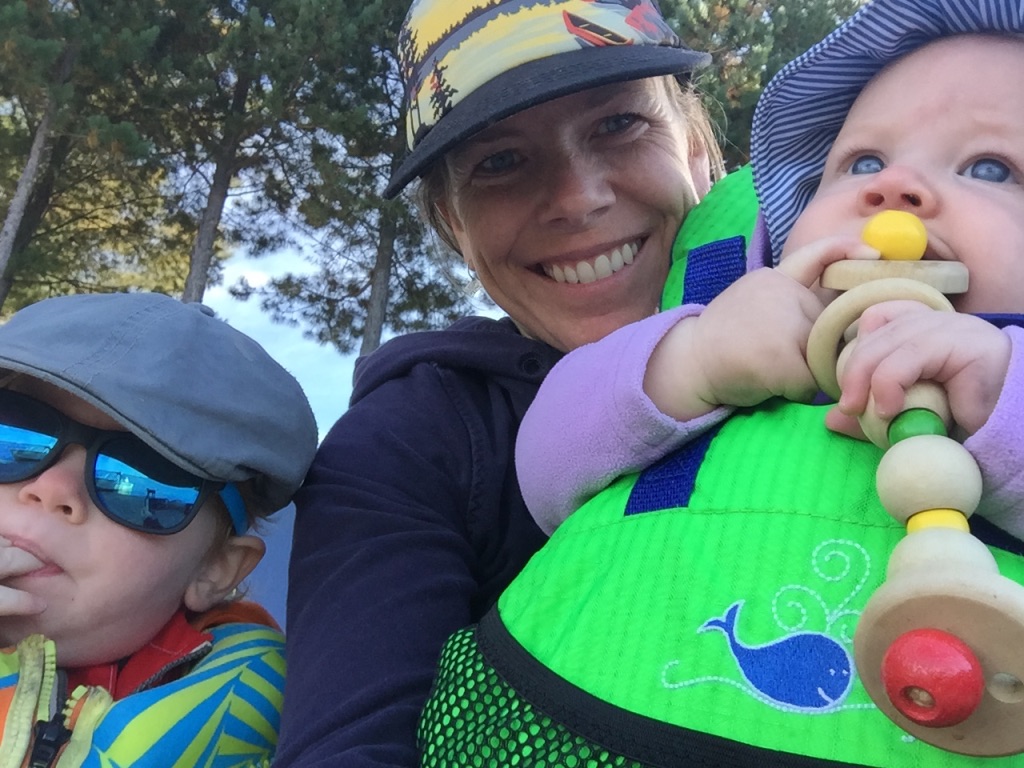
Beauty is Everywhere
This morning, on a walk down to the local pool, I had one of those ‘Aha’ moments. As Alice’s chubby arms gripped my neck, she chitchatted my ear off while riding along on my back. There was nothing unusual about the day, the weather, or anything really, but as Alice continued to narrate her sightings, I caught a sentence that really grabbed my attention.
“Look Mom!”, Alice exclaimed. “So many stairs (pointing to a tall building’s rickety fire escape). It’s a CASTLE! And look at the car (pointing to a dirty SUV in the parking lot)! So BEAUTIFUL!”
I stopped walking and burst out laughing. Oh, to see the world from a toddler’s perspective!
Alice’s joyful ability to see beauty in the every day is quite literally the holy grail of mindfulness and the key to happiness – something that I have been struggling with for so long. So why IS it so difficult to get out of our heads and to truly recognize the simply mind-blowing awesomeness that surrounds us when toddlers like Alice come by it so easily?
I recently listened to Jen Sincero’s “You are a Badass: How to Stop Doubting your Greatness and Start Living an Awesome Life” audiobook. I’m not one for self-help books, but it came recommended so I thought that I would give it a try. Despite being off work, surrounded by my kids and husband and being on vacation, I was still having trouble turning my brain off and bringing my anxiety levels down. I hoped maybe this read could help me seek perspective. Basically, the ‘Coles Notes’ version of the feisty, tongue-in-cheek life advice was to get a grip and just realize that your life is already awesome.
Ok, truth time. Almost on the daily over the past month, Blake and I have had this recurrent, ongoing exchange:
Blake: “Celia, relax! Just relax!”
Me: “I AM RELAXED!” (While furiously tidying up toys, gathering strewn laundry and simultaneously trying to brush the kids’ teeth).
Blake: “Ok, you’re seriously not relaxed. Chill out!”
Me: ” YOU’RE MAKING ME MORE UN-RELAXED BY TELLING ME TO RELAX! I. AM. RELAXED!!!”
And on it goes until Blake pushes a generous pour of red wine into my hands and forces me to stop moving for an instant.
Much to my chagrin, I have to admit, Blake is right. I have a hard time relaxing. I come by it honestly (sorry, Mom) and feel like the world is spinning out of orbit if the laundry is in a pile, unfolded, or if I haven’t swept the floors in more than 2 hours. I know theoretically that the dishes in the sink won’t be the impetus for World War III, but I literally cannot sit down unless those oatmeal-covered breakfast bowls are rinsed and tidily placed in the dishwasher. Blake often jokes that I have a disorder and a true inability to chill out. Fine, I’ll be the first to concede that he is probably right, but seriously, how can anybody live with all of this mess everywhere (insert head-exploding emoji)!!!
In my opinion, there are definite benefits of my ‘disorder’:
- I get shit done.
- My house is clean.
- All is in order (for about five milliseconds).
Buuuuuuuuuuut, let’s get real. I also acknowledge the serious downside to my insanity:
- I spend way too much energy and time on trying to maintain order amongst inevitable, constant chaos.
- It stresses others around me (Blake).
- I am so focused on making everything perfect, that I miss seeing the beauty and joy in the every day.
- It doesn’t make me happy.
So, here are my lofty challenges to myself after much reflection during my time off.
Let it go. Slow down – well, actually, sit my @$$ down once in awhile for starters. Put. Down. The. Broom. Understand that order can never be achieved with a husband, a dog and a three and four year-old in the house. Stop trying to ‘get a break’ from my life, but try to build a life that I don’t need to escape from. Recognize the awesomeness that surrounds me. Find beauty in the ordinary.
I’ll let you know how it goes 🙂
Anyway, here is to a fabulous three weeks spent as a family in Nelson, BC. Kelowna, we’re coming atcha next for some more spring skiing!

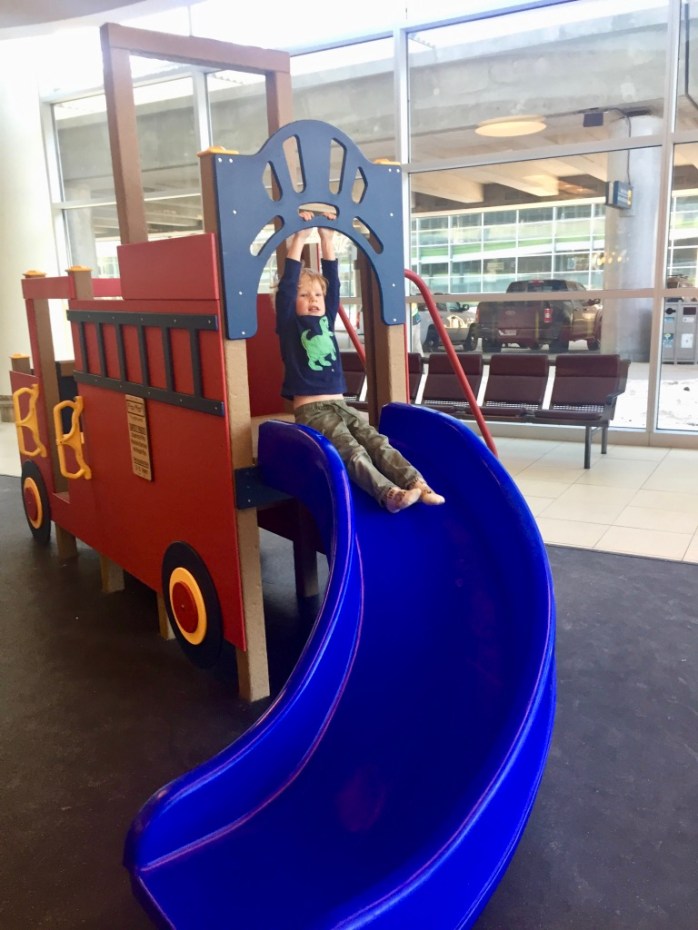
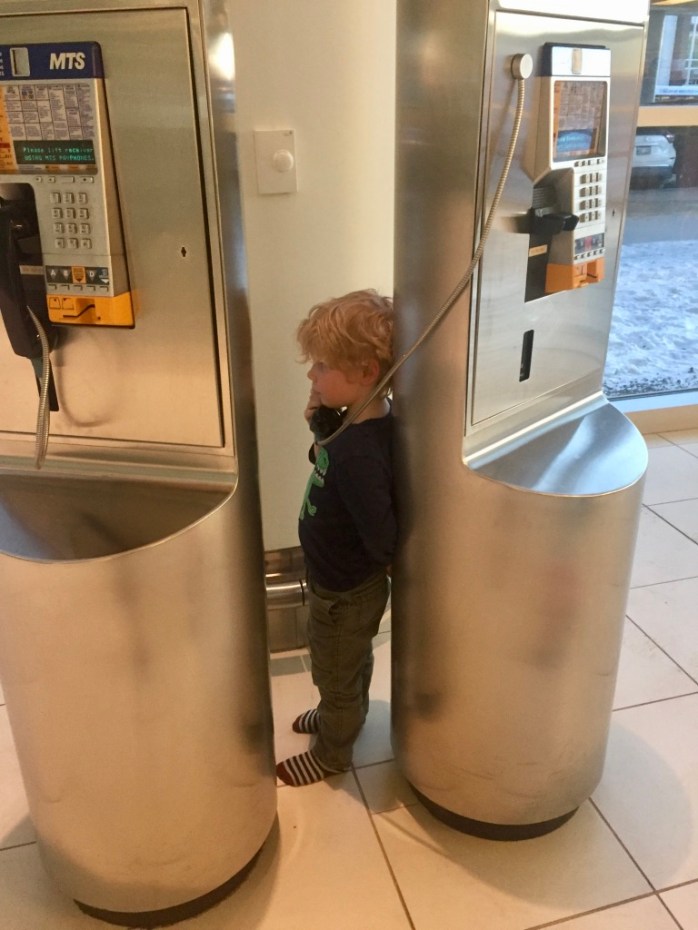

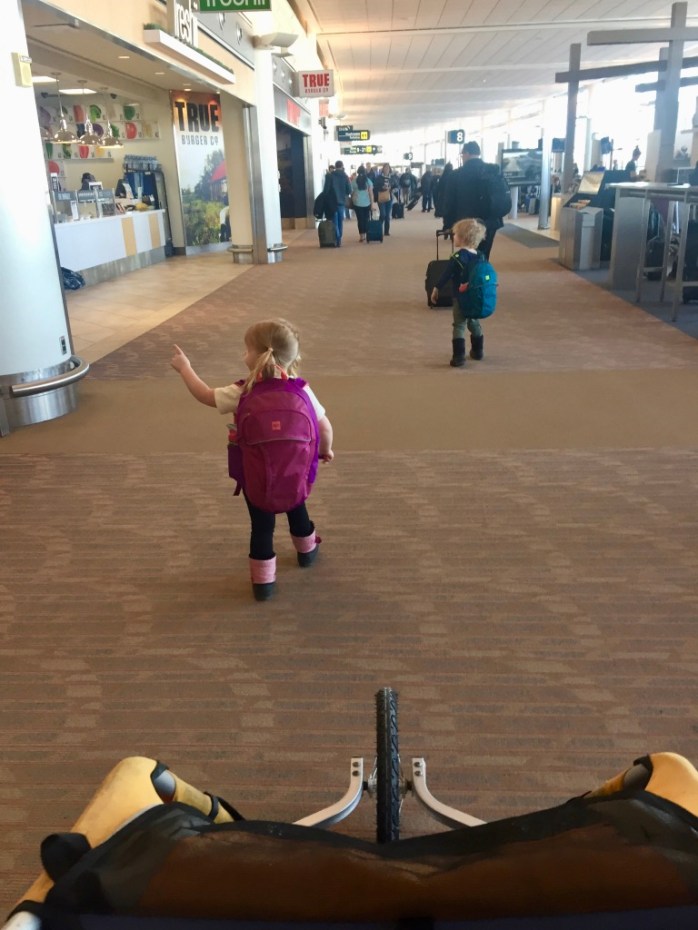
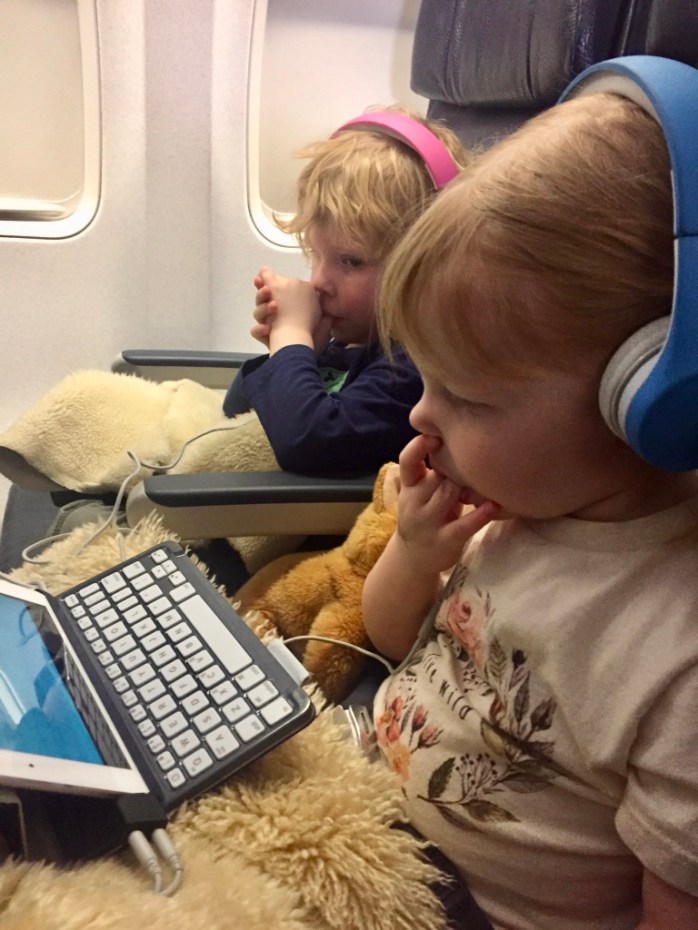



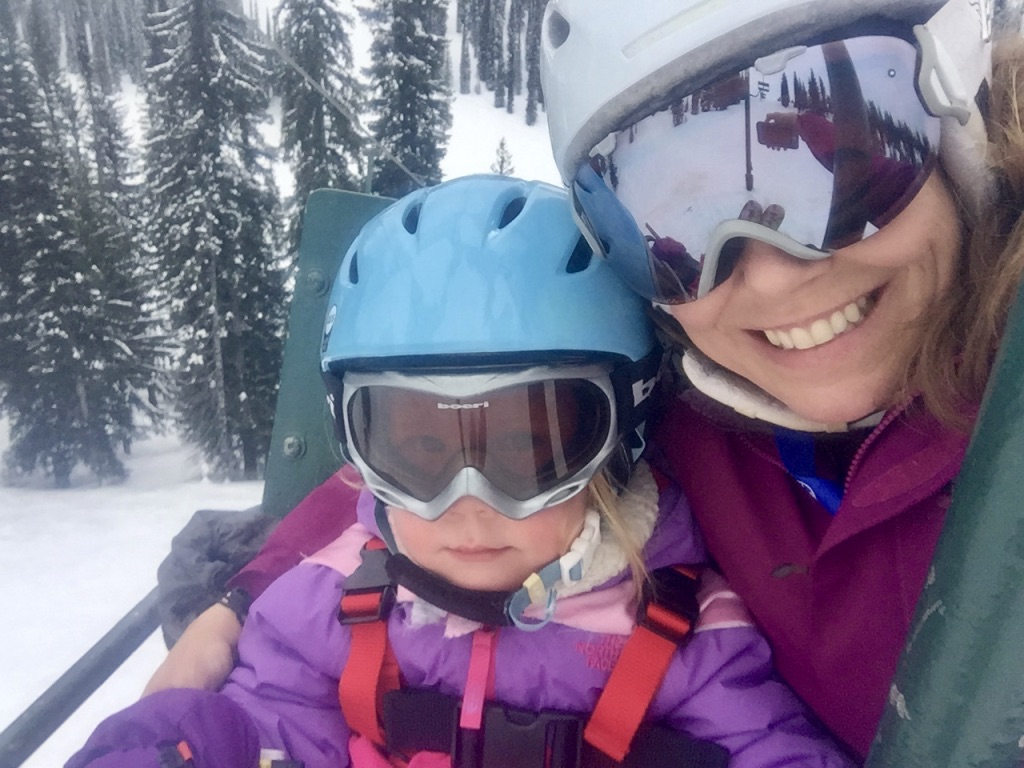




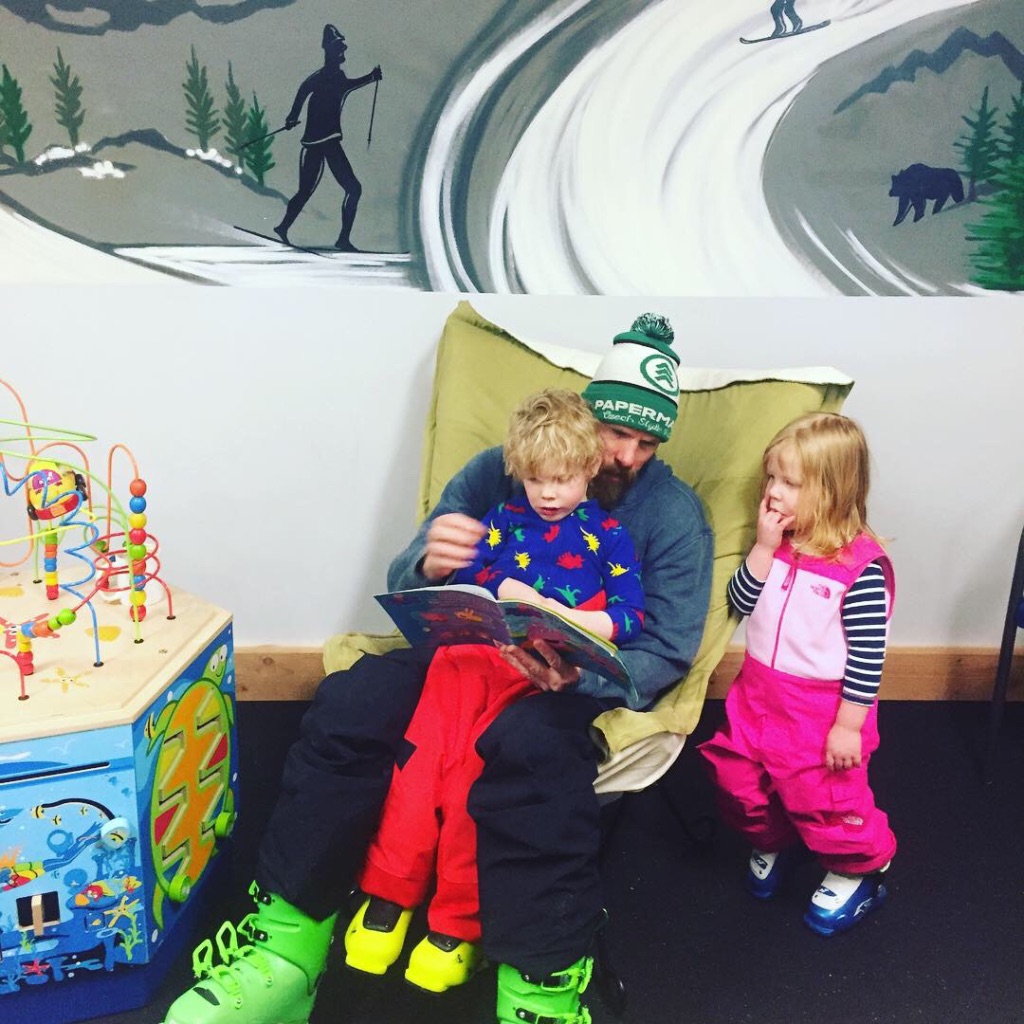
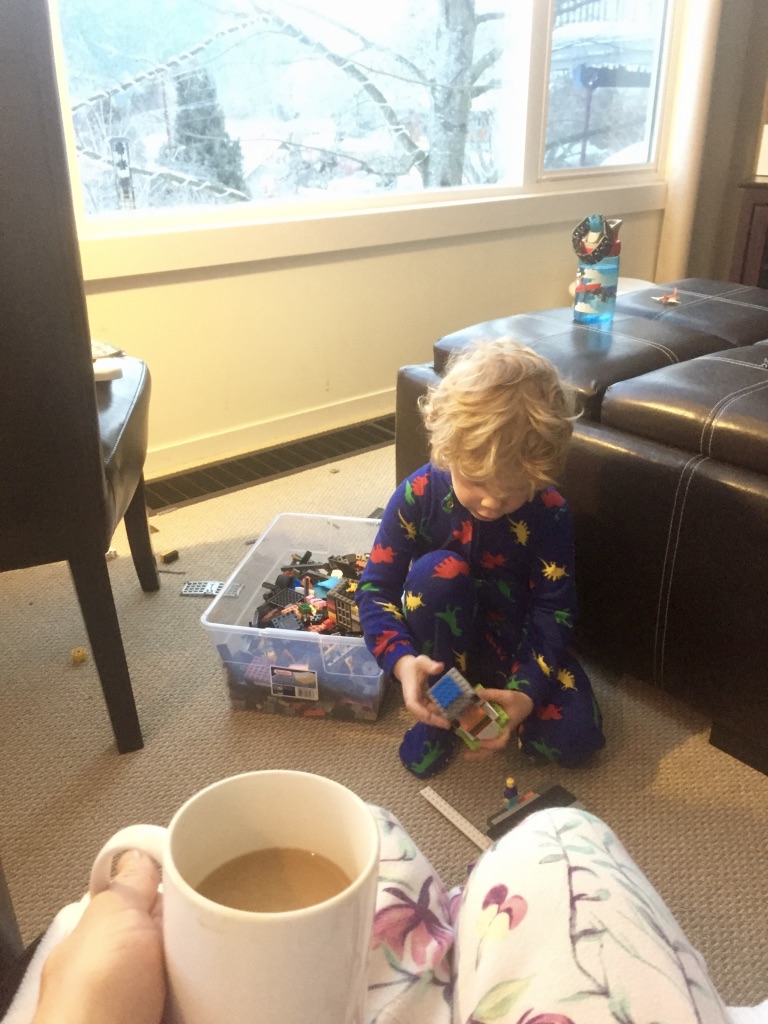




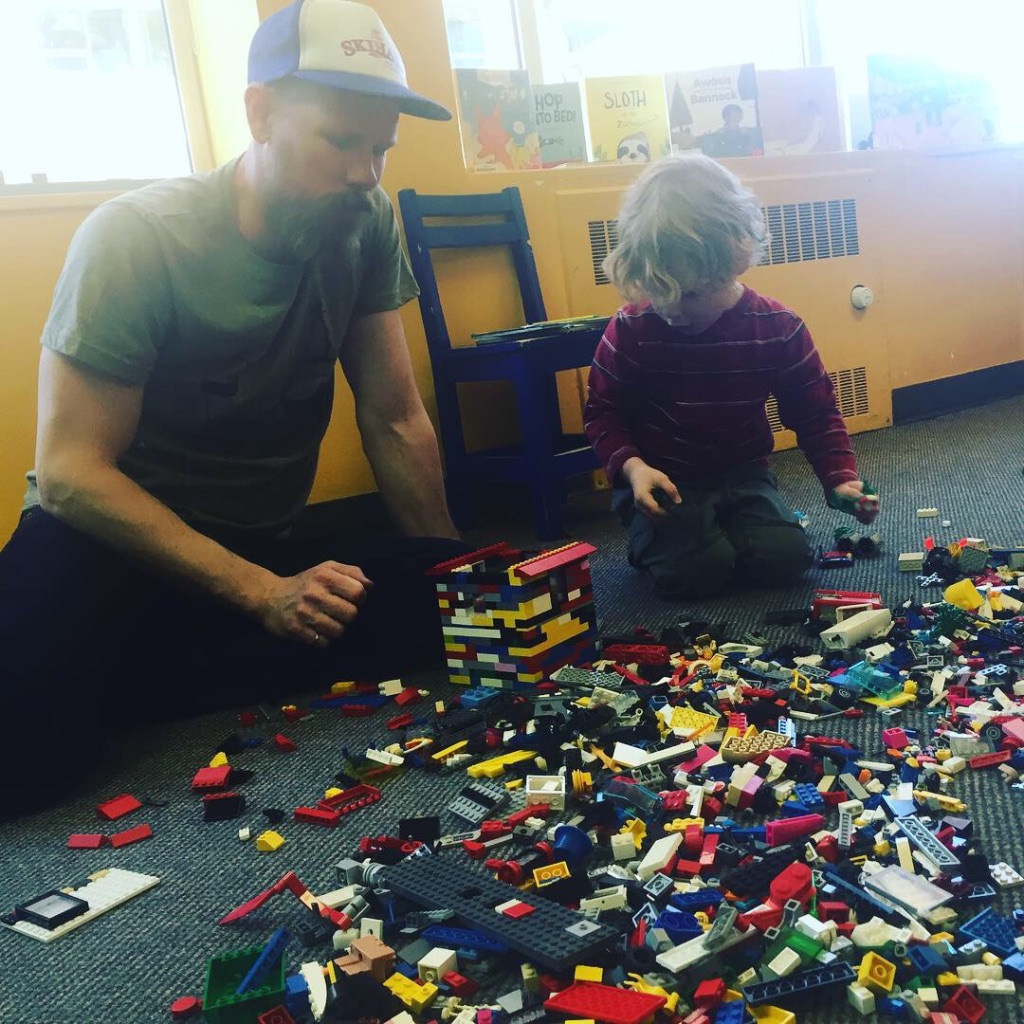
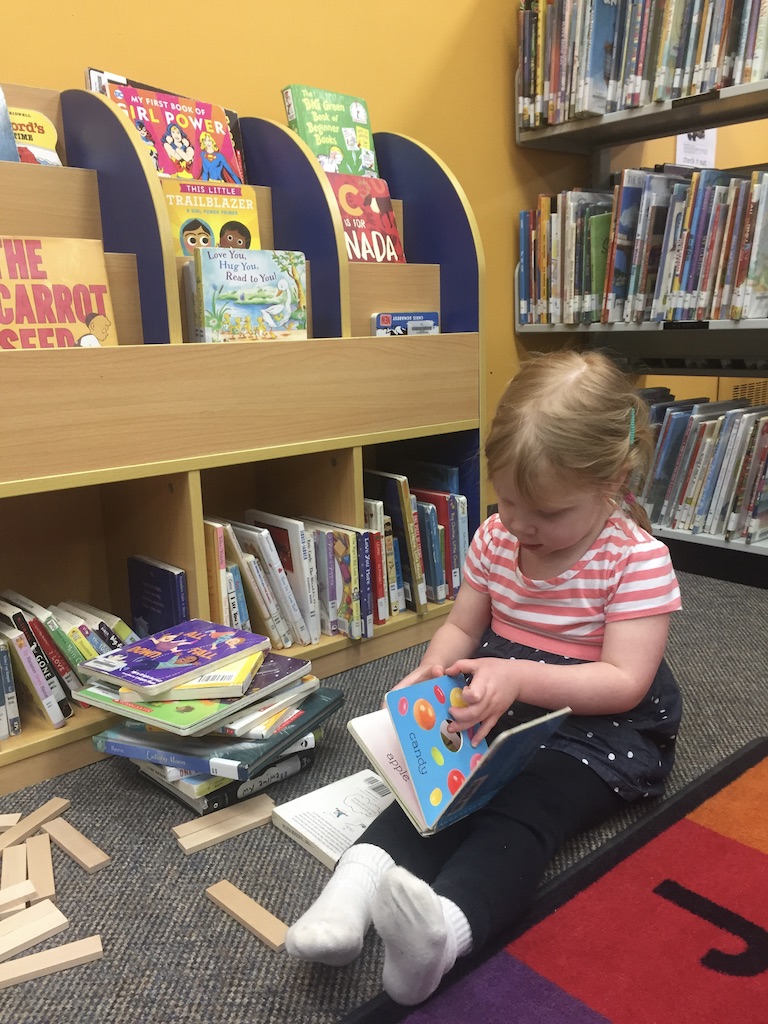
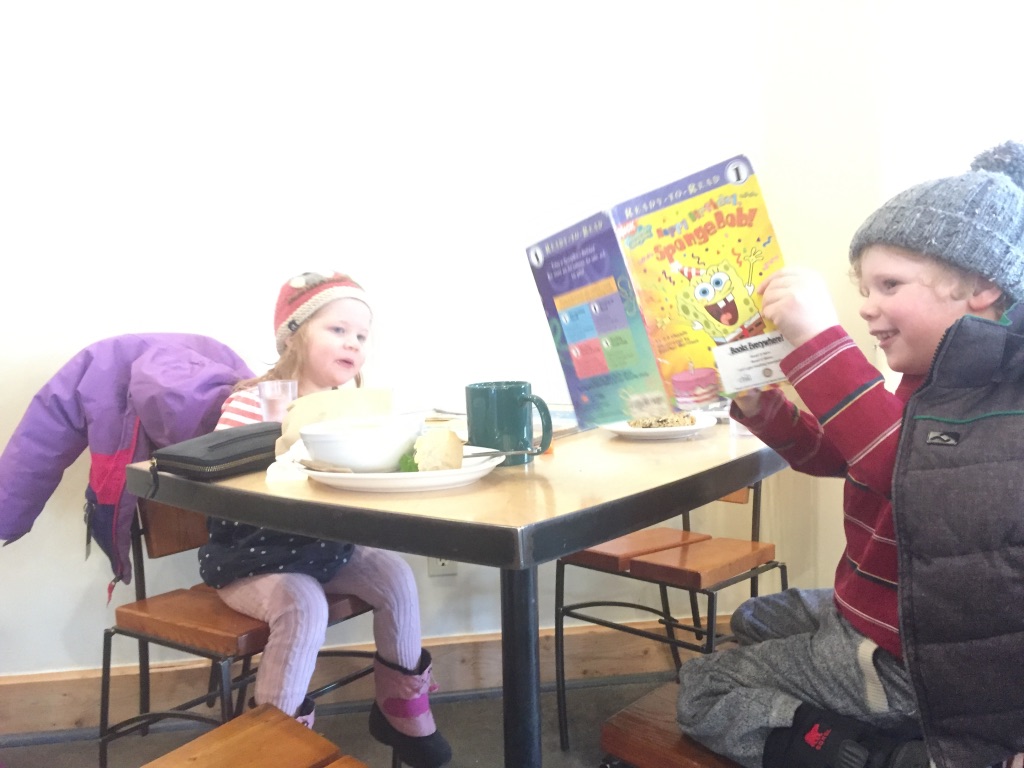

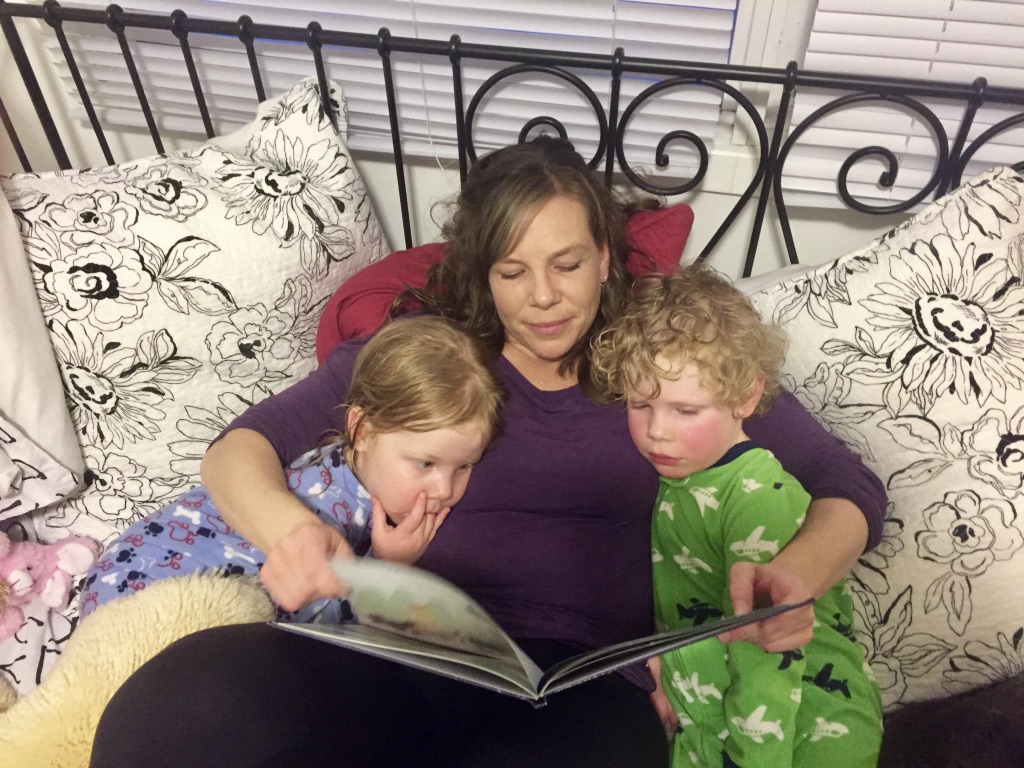









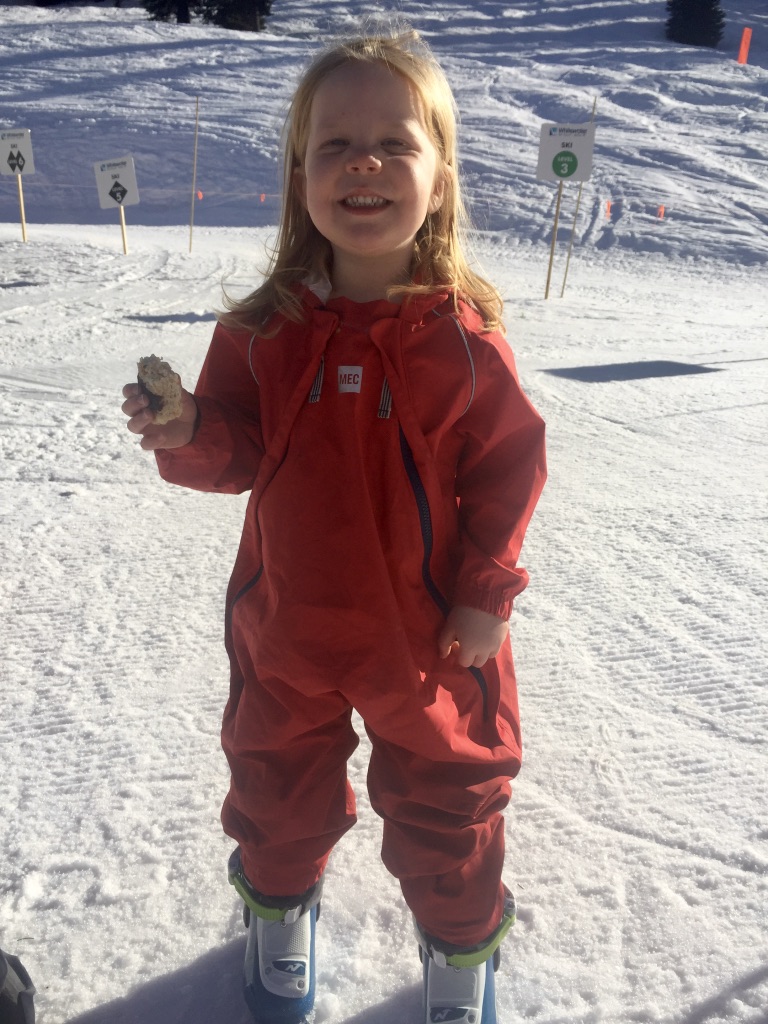
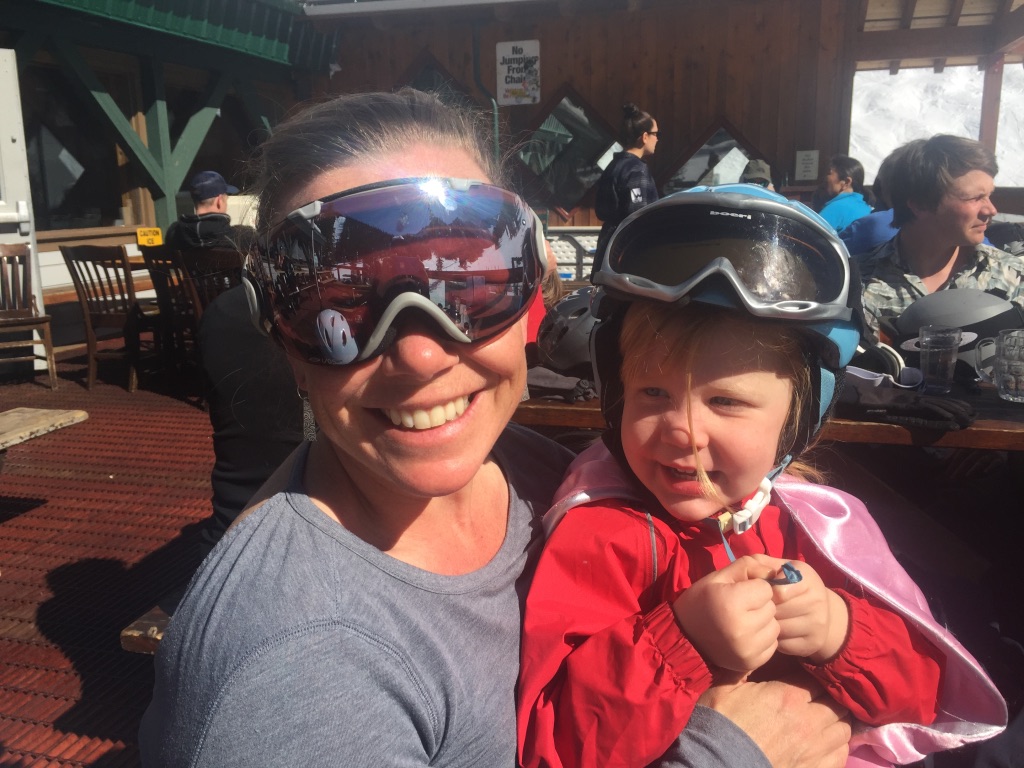

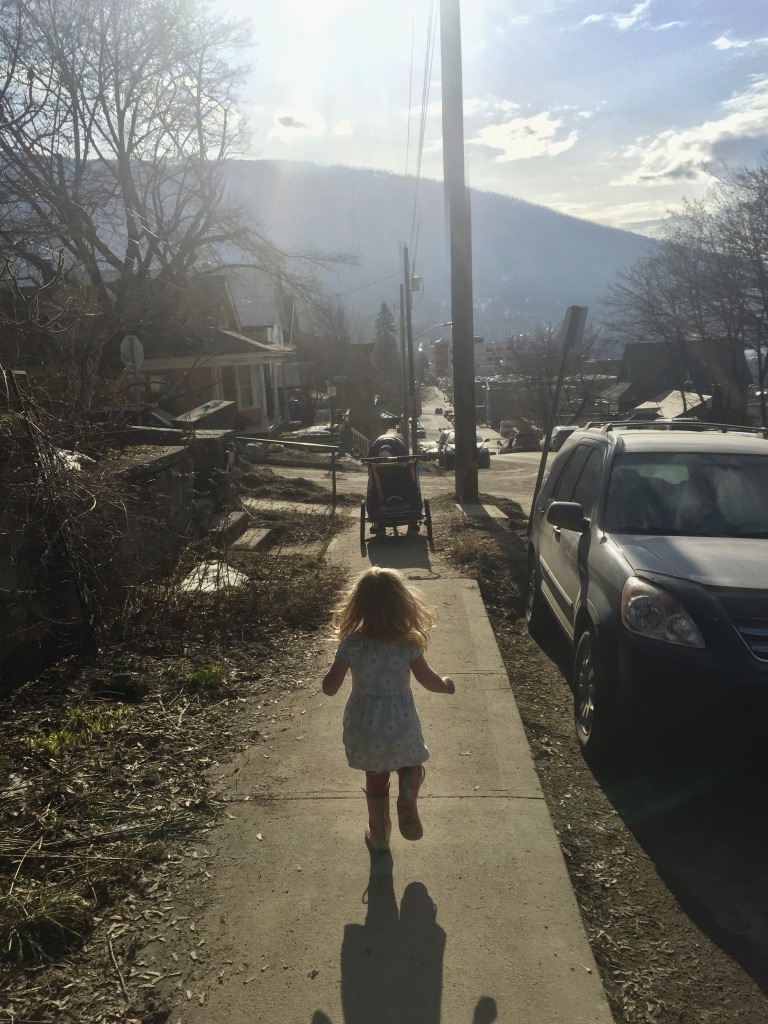






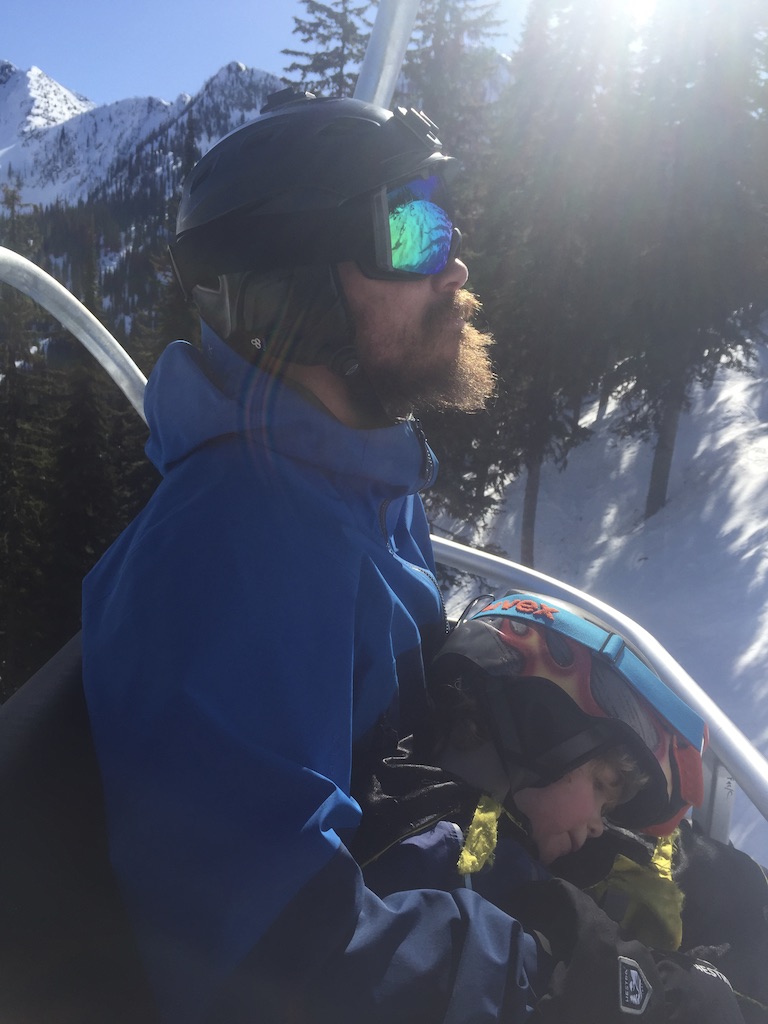


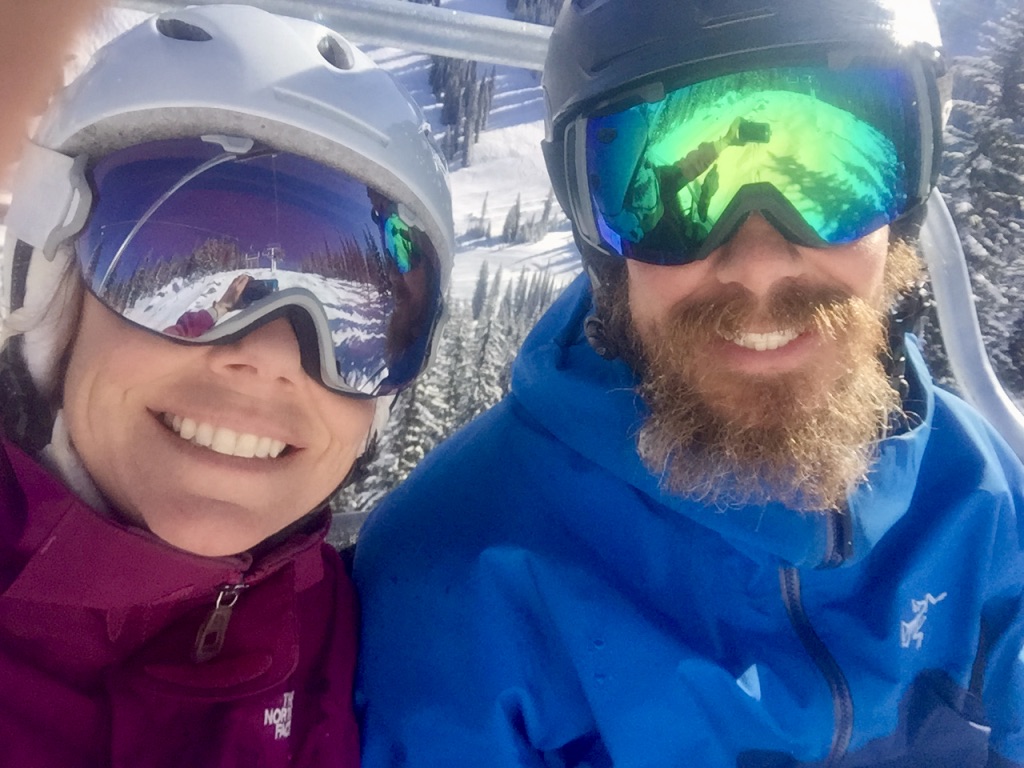

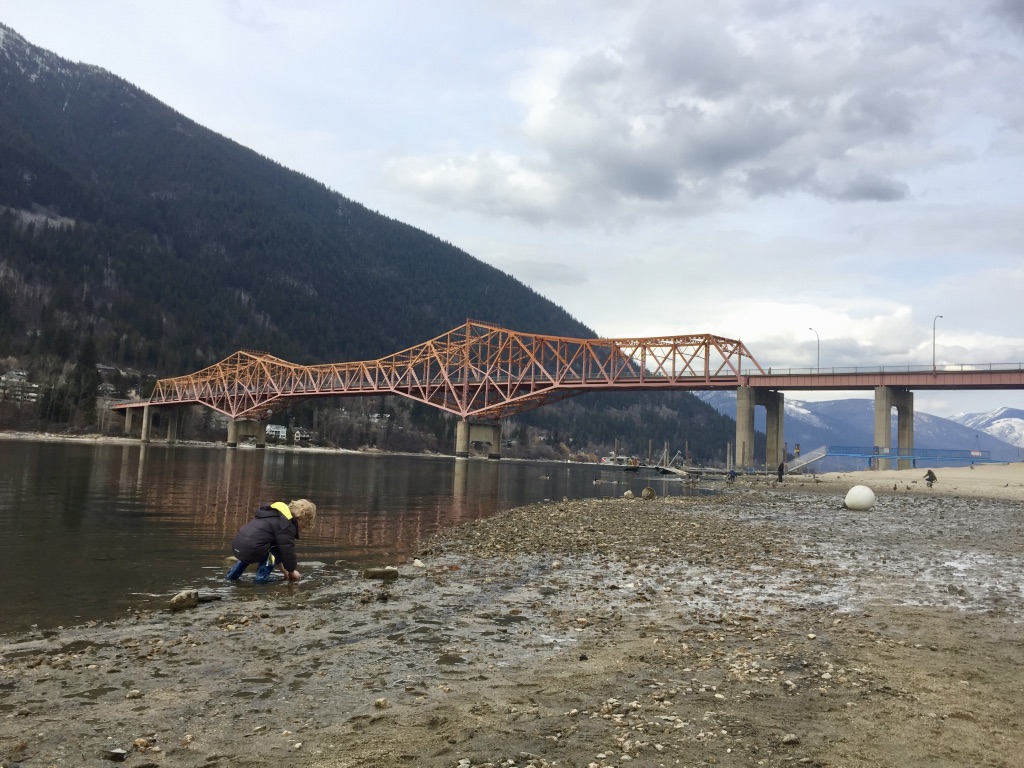
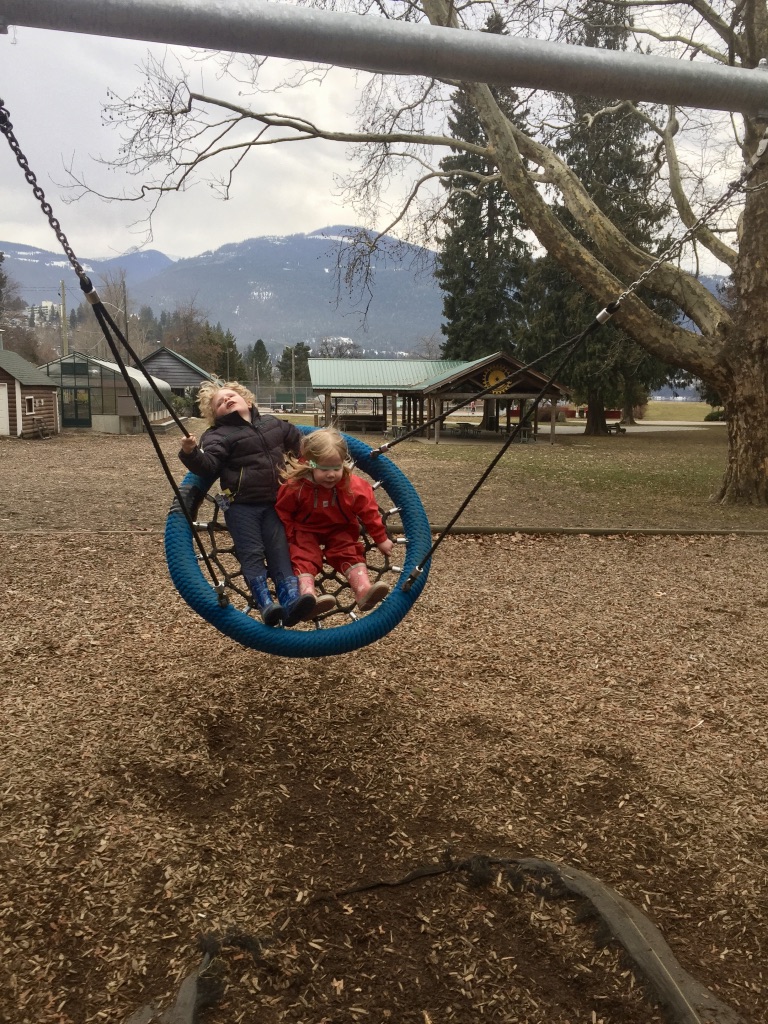
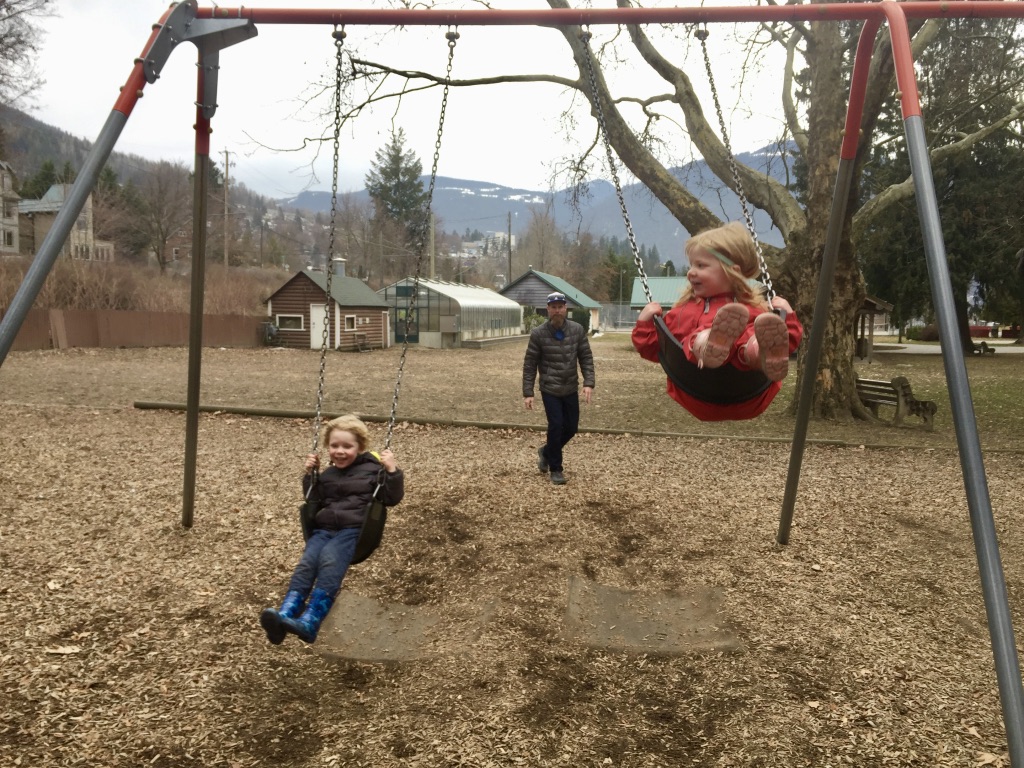
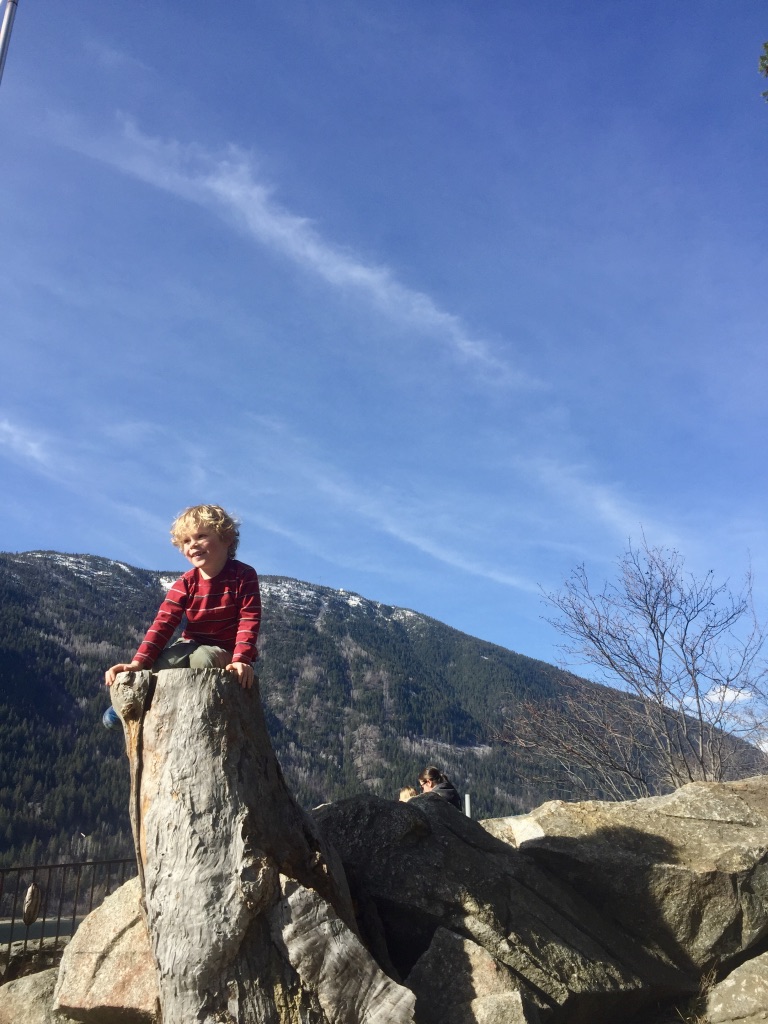
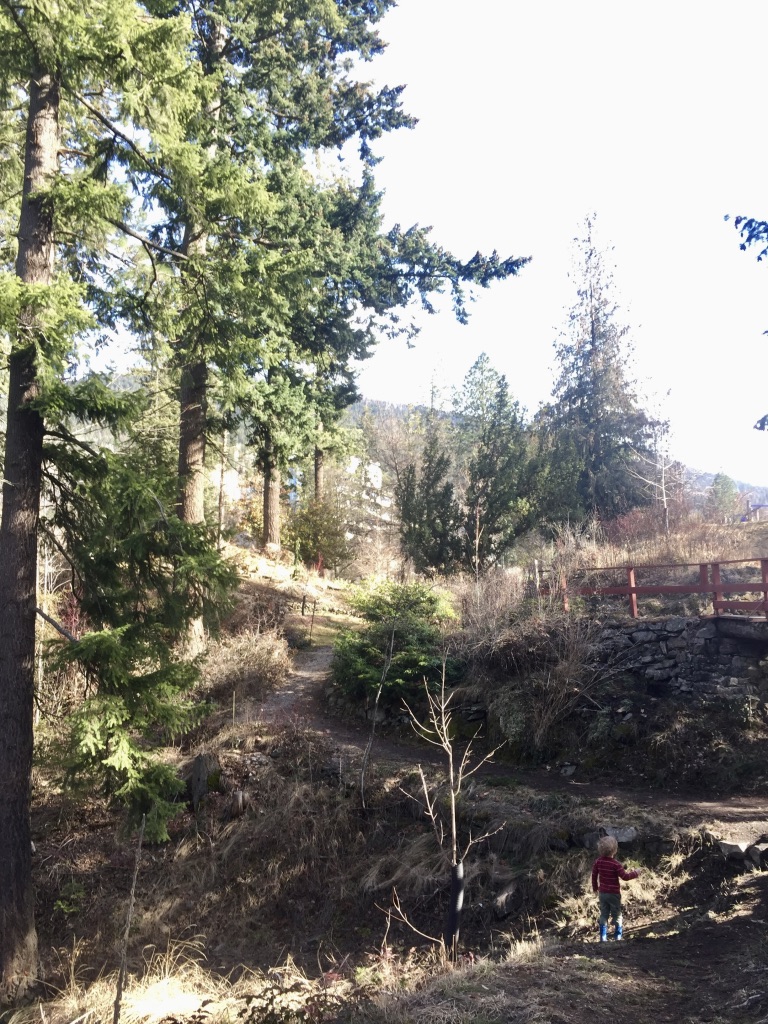


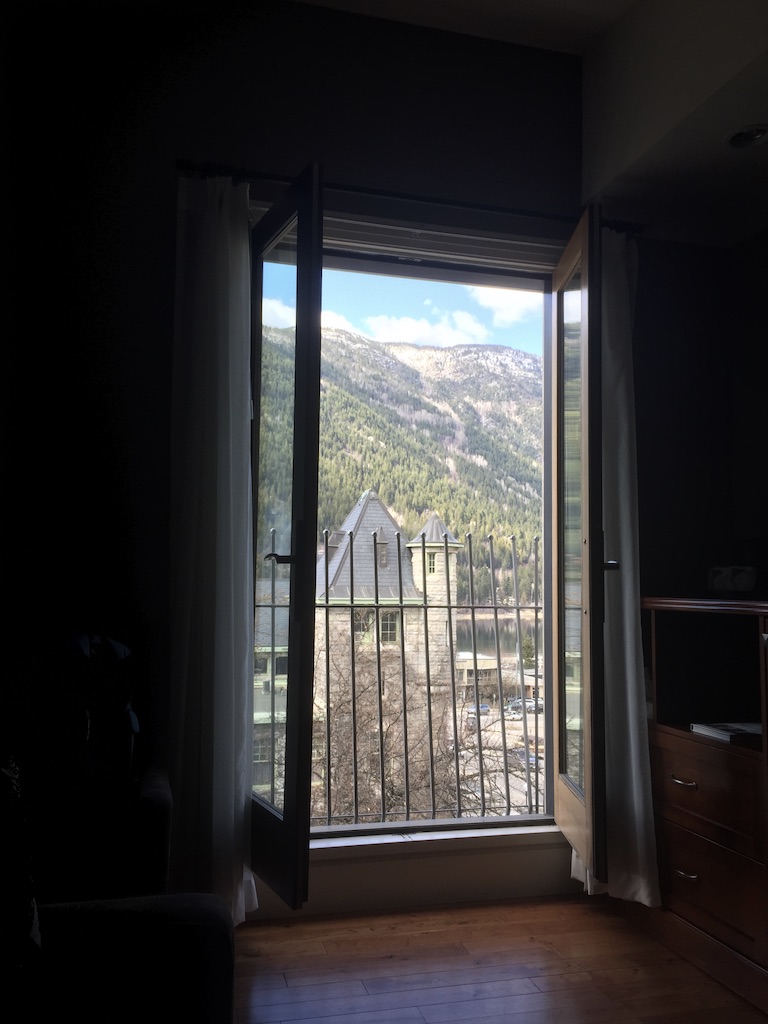


The Getaway
As the therapist soundlessly slips tiny hot pebbles between my toes, I feel my body slip deeper into a state of total relaxation. The ‘wet noodle’ kind of true bliss. A configuration of smooth stones aligned atop the vertebrae of my back disperse their warmth and remind me to slow my breath. In. And out. In. And out. Eucalyptus-scented air fills my lungs. My mind, so used to racing through my never-ending to-do list and being constantly interrupted by ceaseless requests, is quiet. I am on cloud-nine.
It’s been almost a month since Claire’s birth and my two close girlfriends have kidnapped me for a girls weekend – an unconventional baby shower so to speak, post birthing a baby which wasn’t even mine. It’s difficult to explain to strangers, so I don’t even bother anymore. I just let people wonder what I’ve done with my newborn as I sip my wine enthusiastically.
I had been looking forward to this getaway for months. As many working parents of small children (especially Moms) can attest, having time to oneself occurs so seldomly that it has become a recurrent fantasy of mine.
At home, requests for my attention happen at minute-to-minute intervals. “Mommmmm, I need you RIGHT NOW”, “Mommmmm, the wheels of my Lego creation keep falling off!”, “Mommmm, I want you to come play with me”, “Mommmmmm, I need to poop!”. Even if Blake is around, willing and able, the Mom requests keep rolling in. Sound familiar? I hope so, because I can’t be in this boat alone!
No one ever follows Blake around the house in the same way that Henry, Alice and Ada constantly trail behind me. If I try to slip into the shower, it takes mere seconds before the Lego party has moved to the bathmat or a quiet face is pressed against the glass of the shower stall. If I try to have a moment of peace to go to the bathroom, Alice will inevitably settle herself onto the stool right in front of my feet, always accompanied by Ada who sits beside her, exclaiming, “You poopin’ Mom? Are you?” I just cannot get away. Even Ada, our beloved but anxious Labradoodle constantly follows so closely at my heels that I often need to go to our bedroom and close the doors to have a moment alone.
So, when my besties, Meghan and Megan, proposed a kid-free, girls weekend in Winnipeg, I was beyond excited. A day at the spa, coffee in bed, waking up slowly, sleeping in a bed alone, eating unhurriedly at hipster restaurants – all of the elements of my fantasies became a reality. It was a much needed reprieve from the constant go, go, go environment of home and a small break to allow reflection on the changes that have transpired over the past few weeks of my life.


Having the space and time to reflect on my experience as a surrogate has made me realize that there have been many expected and very unexpected emotions, joys and challenges.
Expectedly, the biggest challenge for me has been working through the physical changes in my post-partum body. Immediately after Claire’s birth, I had felt great and so excited to be able to move again. I was on the snowshoeing trails on post-partum day 2 and back at the gym within 72 hours! Then, the moment that inevitably comes for many post-partum mothers unmercifully hit me like a Mack truck on day 4. That moment, when standing in front of the mirror, with engorged and painful breasts, a jiggly, spongy belly protruding over my granny underwear while sporting a menstrual pad an inch-think, I could not wrap my head around the fact that the reflection staring back at me was truly me. Of course I had known that my body would not be the same after growing Claire for nine months, but confronting the new version of myself was a hard reality to ignore. I have to say, it was downright devastating.


Back at the gym 3 days after Claire’s birth 
Snowshoeing with Ada & Alice two days after Claire’s birth 

The beauty trails of Cedar Bay
I struggled through the next several days of that first week coping by having quiet sob-fests in my walk-in closet as I burned through painkillers and many heads of cabbage to ease the engorgement. When this phase eventually abated, I hit another roadblock in my recovery as my very reluctant placenta continued to give me grief with a small piece of the after-birth stubbornly refusing to let go of my womb causing ongoing bleeding and eventually another trip back to the hospital for a procedure under sedation in the OR to remove it.
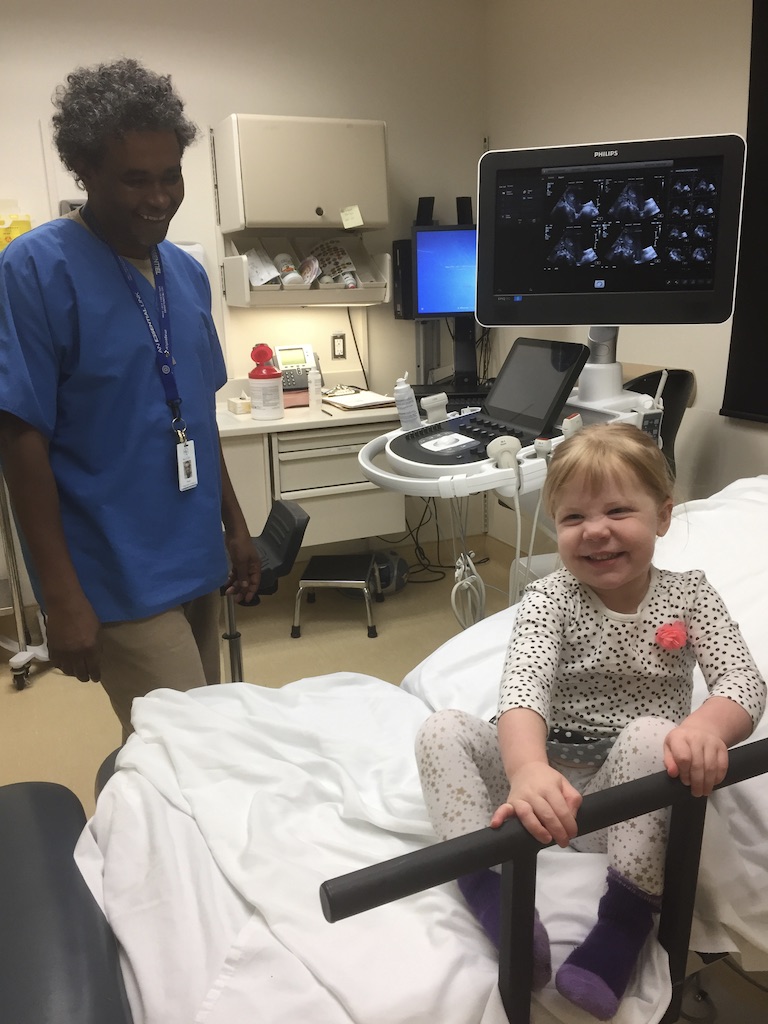


Despite these set-backs, I immediately got back into my gym routine, anxious to feel ‘normal’ again. This too proved to be more challenging than I ever had imagined. I was completely out of shape, of course, but I had also hadn’t expected to feel quite so humbled in the process of rebuilding my body again from scratch. Before the pregnancy, the gym had been a sanctuary for me. A time for self-care, to feel strong and confident in my abilities. Now, surrounded by mirrors that continued to remind me of my physical changes, I felt dismayed and daunted by the mountain I now had to climb to get back to my pre-pregnancy body. My friends and Blake urged me to keep perspective and practice self-compassion. It had only been mere weeks since Claire’s birth, but without a newborn to remind myself of how little time had passed and what an amazing thing my body had done, it was easy to slip into thinking in unrealistic terms.


The struggle coming to grips with this new version of my physical self has been a constant challenge to reconcile. Reminders occurring daily of the almost 20lbs I still need to shed – the inability to do up my ski pants, the ongoing necessity of maternity jeans, the shocking number on the scale… I know that I am not alone in these post-partum challenges and that it will just take some time to get back to my pre-pregnancy self, but again, without toting around a newborn, I continue to feel almost embarrassed to be out in public without an obvious ‘excuse’ for that extra layer around my belly.
Unexpectedly, however, the emotional transition from pregnancy, through Claire’s birth and in the weeks that have followed have been so much smoother than I had ever expected. In the immediate post-partum days, I had an immense amount of support from numerous Sioux Lookout ‘sisters’. Women who all banded together to feed our family, to ensure I was getting rest and most importantly, who lent their listening ears to support me through that first week. What had worried me the most prior to Claire’s arrival, was a fear that somehow I would feel an immense sense of loss and would experience significant loneliness after the excitement of her birth had abated. Thankfully, this never transpired. While Amy, Adam and Claire spent their first week as a new family in Sioux Lookout, we visited daily, but we generally fell right back into our own family’s rhythm as if nothing had really happened. The kids barely blinked when we had introduced them to Claire at the hospital and explained that there was no longer a baby inside my tummy. Even more shockingly to me was that when I held and cuddled Claire, I knew that I cared for her, but there was no part of me that made me feel that she was mine. She didn’t look like me nor Blake and oddly, she didn’t smell like my baby. Weird, right?! It’s hard to explain, but I just knew that she wasn’t mine and I was happy to hand her back to Amy for feeds and diaper changes!


Fighting the engorgement. I tried to pump as little as I could so that I wouldn’t produce more milk, but had to ‘take the edge off’ a few times a day during that first week and a half. Alice loved it and was mesmerized by the ‘pump pumps’.


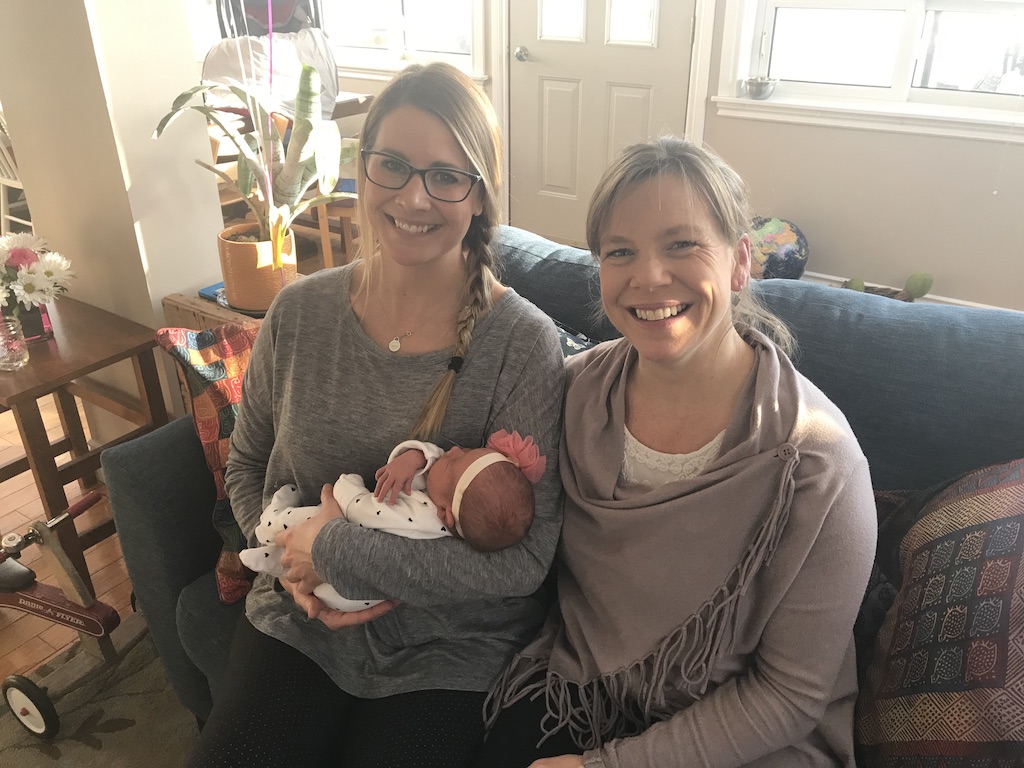


Now that Amy, Adam and Claire have settled in at their home in Kingston, I have been enjoying a very unusual (but highly enjoyable!) pregnancy leave. Without a newborn to attend to, I have been savouring quiet days at home playing with Alice and Henry, cooking, baking, working out and spending time with friends. Aside from the two four-month long maternity leaves that I took following Alice and Henry’s deliveries, I have never taken any extended time away from full-time work. There has been something so special about the simplicity of just being a Mom over the past few weeks. I am incredibly grateful for this time with my family and recognize that this will likely never happen again as I am fairly certain that my ‘career’ as a gestational surrogate is over. This uterus is now closed for buisness 🙂

Aren’t we all!





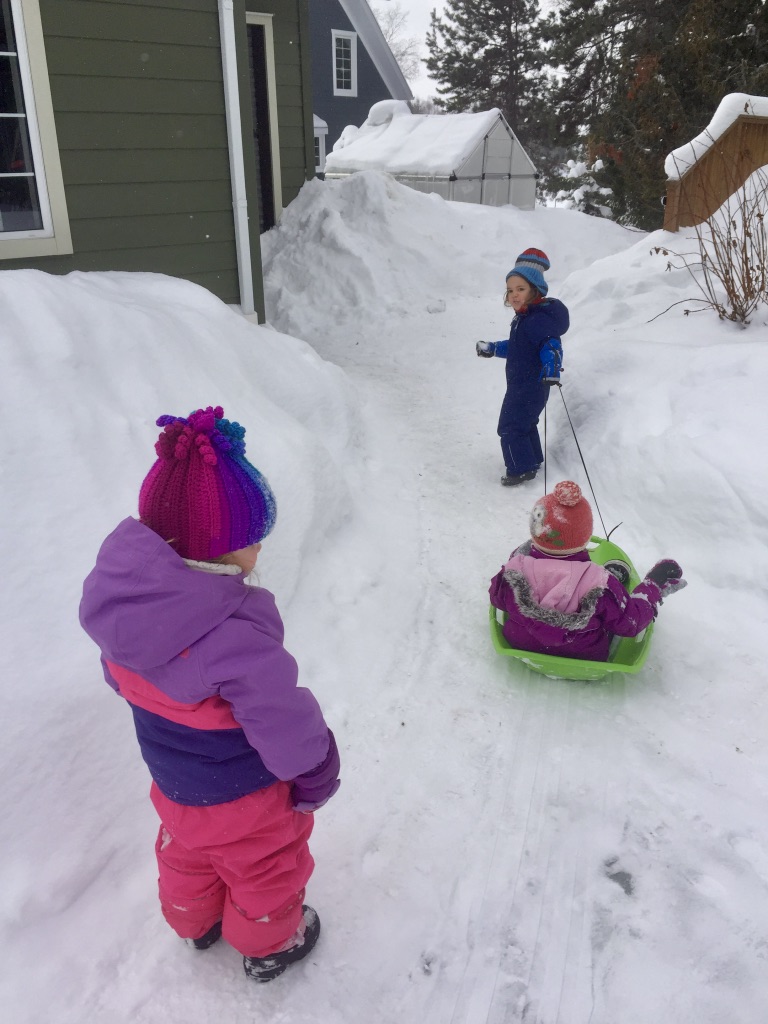


Now we are set to spend the next month in beautiful British Columbia – with three weeks in Nelson and a final week in Kelwona to ski as a family, enjoy a break from the minus-thirty temperatures of Northern Ontario, enjoy some refreshing and quirky Kootenay culture and hopefully be able to greet Spring upon our return home in April! To the ski slopes we go!
 Life on Abram Lake